Asia Art Weekly News Bulletin – ISSUE 46 Week of 5 January 2026
(1) National Gallery Singapore explores art and activism in Fear No Power
National Gallery Singapore’s “Fear No Power” (9 Jan–15 Nov 2026) spotlights five pioneering Southeast Asian women artists challenging patriarchy through art, activism, and community-building across six decades.
(2) Looted and returned: Four sacred Thai Buddha sculptures finally home
U.S. returns four 1,400-year-old bronze Buddhas to Thailand after 60 years; looted from Prakhon Chai temple, handed over by Asian Art Museum. 29 more artefacts to follow repatriation.
(3) Art Central 2026 Returns to Central Harbourfront with New Central Stage Spotlights
Art Central 2026 runs 25–29 March at Central Harbourfront; new “Central Stage” spotlights emerging international artists, debuting with Tokyo collective SIDE CORE.
(4) Controversial ‘Last Supper’ withdrawn from India’s top exhibition
Kochi Biennale withdrew Supper at a Nunnery—a nude Mata Hari reinterpretation of The Last Supper—after Catholic protests. The Syro-Malabar Church decried it as sacrilegious, while the artist defended its historical critique. The case highlights art-religion tensions in India.
(1) National Gallery Singapore explores art and activism in Fear No Power
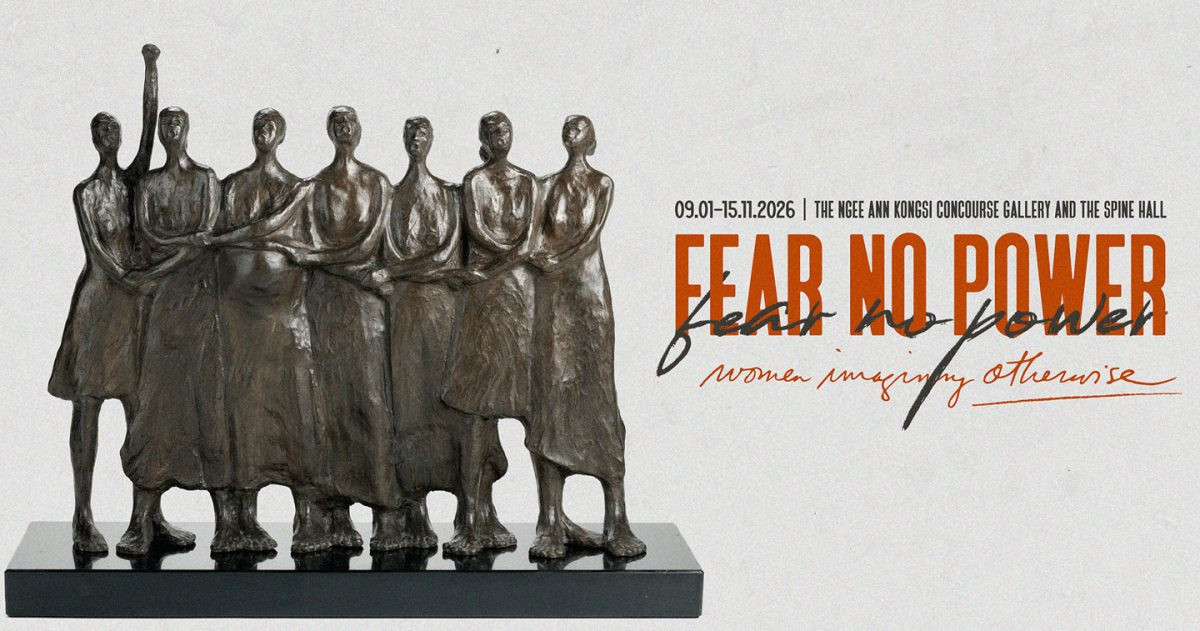
(Photo Credit: Fear No Power)
The National Gallery Singapore opens “Fear No Power: Women Imagining Otherwise” on 9 January 2026—Asia’s first comparative exhibition of five pioneering Southeast Asian women artists: Amanda Heng (Singapore), Dolorosa Sinaga (Indonesia), Imelda Cajipe Endaya (Philippines), Nirmala Dutt (Malaysia), and Phaptawan Suwannakudt (Thailand). Featuring over 45 major artworks and 110 rare archival items spanning the 1960s to 2020s, many shown in Singapore for the first time, the free exhibition runs until 15 November 2026 at the Ngee Ann Kongsi Concourse Gallery.
Curated to highlight how these artists challenged patriarchal norms through performance, sculpture, painting, photography, and participatory works, the show positions them as educators, organisers, and community builders who reshaped cultural discourse. Divided into three zones—“Where the Body Thinks, Worlds Open” (personal experience), “Refusal and Hope” (political/social responses), and “Imagining Otherwise” (collective action)—it draws its title from Sinaga’s 2003 sculpture, celebrating inner strength, resistance, and care.
By centering long-overlooked narratives of gendered labour, dissent, and solidarity amid male-dominated fields, the exhibition affirms the Gallery’s commitment to diverse perspectives and cross-cultural dialogues. It underscores these artists’ enduring legacies in redefining power—not merely political, but personal and communal—inviting visitors to reflect on courage and responsibility in contemporary society.
News Source: https://www.adobomagazine.com/arts-culture/national-gallery-singapore-explores-art-and-activism-in-fear-no-power/
(2) Looted and returned: Four sacred Thai Buddha sculptures finally home
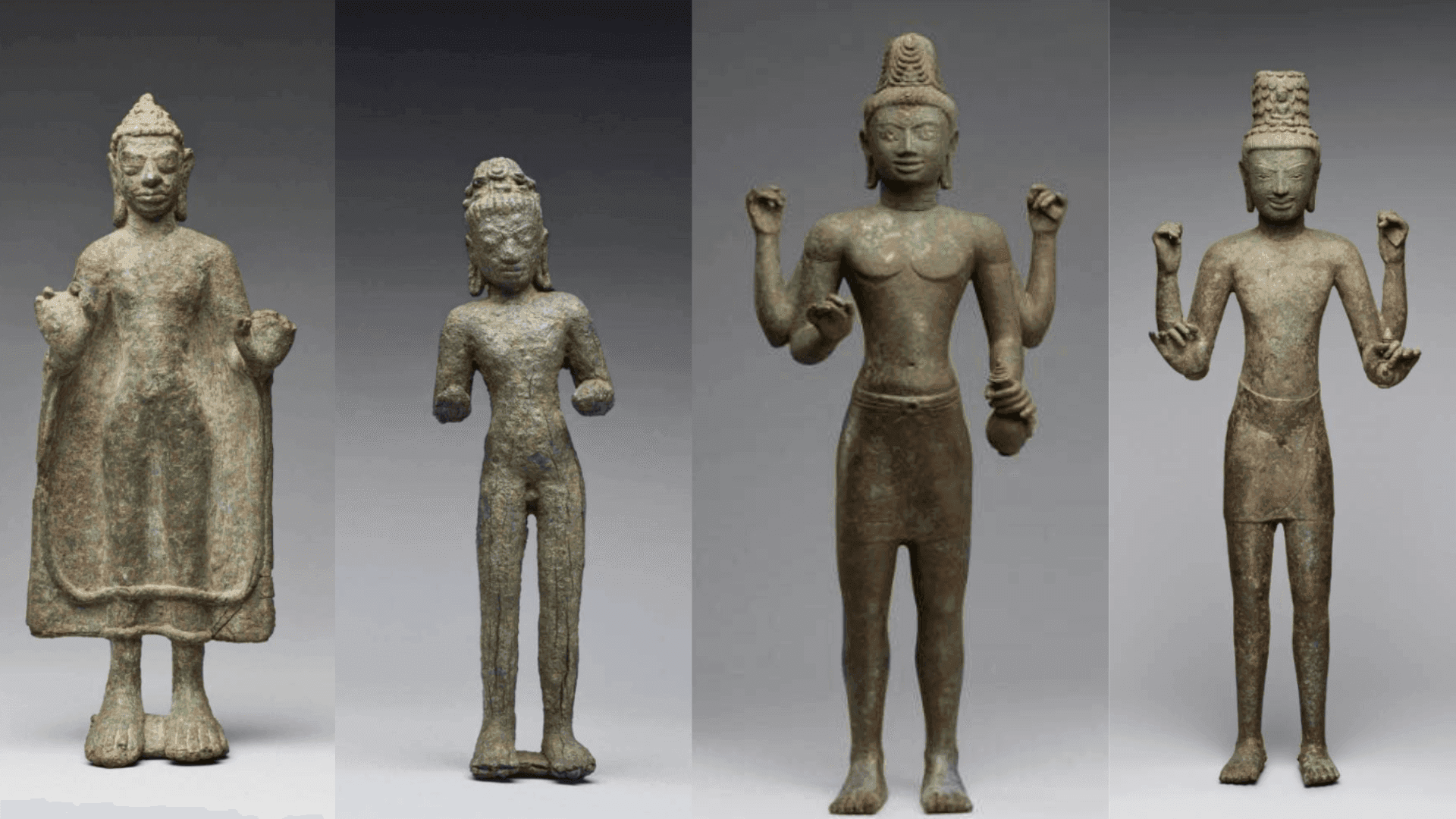
(Photo Credit: Thai PBS World)
The United States officially returned four 1,400-year-old bronze Buddhist sculptures—three Bodhisattvas and one Buddha—to Thailand on 8 December 2025 at a ceremony in San Francisco. These priceless artefacts, looted from the Prakhon Chai temple complex in Buri Ram province over 60 years ago and later exhibited at the Asian Art Museum, were handed over after the museum’s committee agreed to remove them from its collection following extensive provenance research.
Culture Minister Sabida Thaiseth emphasised the statues’ immense historical and archaeological value as evidence of ancient northeastern Thailand’s prosperity. The return resulted from close collaboration between Thailand’s Committee for the Recovery of Thai Antiquities Abroad, the Fine Arts Department, Ministry of Foreign Affairs, and U.S. Homeland Security Investigations. The bronzes are linked to British dealer Douglas Latchford, indicted in 2019 for antiquities trafficking. The National Museum will display the artefacts from 7 January 2026.
The repatriation is a significant victory for Thailand’s decades-long effort to recover smuggled heritage, reinforcing ethical museum practices and bilateral cooperation. With 29 more artefacts (25 from the U.S., 4 from Europe) slated for return, it strengthens Thailand’s cultural narrative and sets a precedent for addressing colonial-era looting. The ceremony also highlighted the U.S.’s global repatriation efforts (over 20,000 items returned to 40+ countries since 2007), fostering trust and cultural diplomacy.
News Source: https://world.thaipbs.or.th/detail/looted-and-returned-four-sacred-thai-buddha-sculptures-finally-home/60088
(3) Art Central 2026 Returns to Central Harbourfront with New Central Stage Spotlights
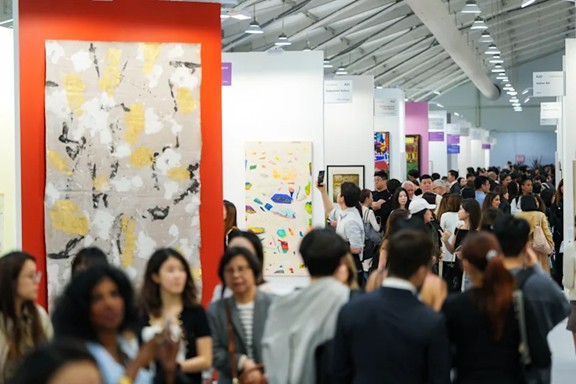
(Photo Credit: Art Central)
Art Central 2026, Hong Kong’s premier contemporary art fair, will return to the Central Harbourfront from 25 to 29 March 2026. The event is co-curated by Berlin-based curator and artist Enoch Cheng (returning as gallery projects curator) and Hong Kong-based independent curator and exhibition consultant Zoie Yung (making her debut in this role). This year’s edition introduces a brand-new spotlight section, “Central Stage”, which will premiere six selected artists or collectives who are currently gaining international recognition through major exhibitions, biennials, and institutional projects. The fair will feature around 70–75% of galleries from the Asia-Pacific region, with approximately 20% from Hong Kong, offering collectors and enthusiasts a vibrant platform for emerging and mid-career contemporary art.
The inaugural “Central Stage” will kick off with Tokyo-based art collective SIDE CORE, founded in 2012 by Sakie Takasu, Tohru Matsushita, and Taishi Nishihiro, with Kazunori Harimoto as video director. Known for public installations and spatial interventions rooted in street culture, SIDE CORE explores the flow of information and aesthetics in urban and community spaces. The section aims to bridge institutional recognition with gallery presentation, highlighting artists at pivotal moments in their careers and fostering dialogue between Hong Kong, Asia, and the global art scene.
Art Central Director Corey Andrew Barr described the fair as entering a new chapter with renewed urgency, building on its core mission to create a unique platform for exploration and conversation. He emphasised that “Central Stage” deepens this vision by connecting artists, galleries, and audiences, cultivating cultural resonance and encouraging collectors to support the community while positioning Hong Kong as a launchpad for contemporary art discourse.
News Source: https://www.stheadline.com/culture/3533135/
(4) Controversial ‘Last Supper’ withdrawn from India’s top exhibition
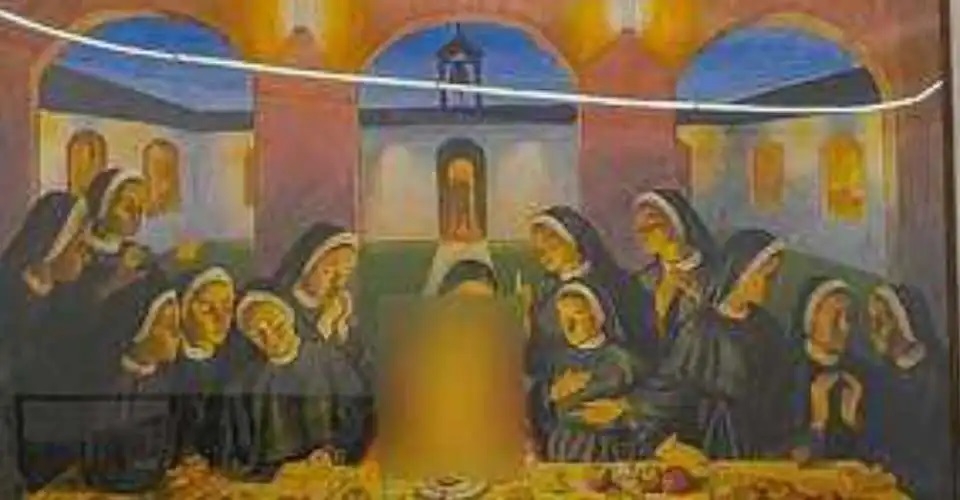
(Photo Credit: Instagram)
The Kochi-Muziris Biennale, South Asia’s premier contemporary art exhibition, has withdrawn Supper at a Nunnery—a controversial reinterpretation of The Last Supper—following objections from Catholic groups in Kerala. The painting, created by Qatar-based artist Tom Vattakuzhy, replaces Jesus and his disciples with a nude depiction of Mata Hari, the executed WWI-era spy, surrounded by nuns. The Kochi Biennale Foundation announced the artwork’s removal on January 4, 2026, citing respect for public sentiment and the “common good,” while reaffirming its commitment to artistic freedom. The decision was welcomed by the Syro-Malabar Church, which condemned the piece as a distortion of sacred Christian symbolism.
Father Tom Olikkarott, spokesperson for the Syro-Malabar Church, criticized the painting as part of a broader trend of targeting Christian iconography through provocative art. The Church’s statement highlighted that the artwork had previously been withdrawn from a 2016 magazine publication due to similar backlash. Vattakuzhy defended his work as a commentary on Mata Hari’s victimization by patriarchal systems, intended to evoke empathy rather than religious offense. However, Catholic leaders like Cheriyan Joseph rejected this justification, asserting that the depiction remained unacceptable to the faith community.
The incident underscores tensions between artistic expression and religious sensitivities in India’s culturally diverse landscape. With Christians constituting 18% of Kerala’s population, the controversy reflects the delicate balance institutions must strike when curating content involving sacred themes. While the Biennale Foundation upheld procedural neutrality, the withdrawal signals the influence of community advocacy on cultural discourse. The episode may prompt future exhibitions to adopt more rigorous consultative processes to preempt such conflicts while navigating creative and ethical boundaries.
News Source: https://www.ucanews.com/amp/controversial-last-supper-withdrawn-from-indias-top-exhibition/111491