Asia Art Weekly News Bulletin – ISSUE 48 Week of 19 January 2026
(1) Singer Nick Jonas at Singapore Art Week: Wife Priyanka Chopra, brother Joe inspired his love of art
Nick Jonas, inspired by wife Priyanka Chopra and brother Joe, embraces Southeast Asian art collecting at Singapore Art Week 2026; eyes regional works to fuel music, shares Sunday Best preview.
(2) How Beijing ink artist Bingyi blurs the lines between history and fiction
In her solo exhibition, ‘Taihang Rhapsody’, at Asia Society Hong Kong, the Yale University-educated artist challenges Western conventions
(3) World’s Oldest Known Cave Art: 67,800-Year-Old Hand Stencils Discovered on Indonesia’s Muna Island
Hand stencils on Muna Island, Indonesia, dated to at least 67,800 years old, become world’s oldest known cave art; distinctive pointed fingertips suggest symbolic transformation, predating prior Sulawesi finds by over 15,000 years.
(4) Stone to jewels: L’ÉCOLE Asia Pacific series of programs to discover the journey of diamonds
L’ÉCOLE’s “Discover the Diamond” series in Hong Kong traces gems from rough stones to high jewelry, featuring exhibitions, Lesotho Legend course, live demos, and Diamond Hill walks until April 2026.
(1) Singer Nick Jonas at Singapore Art Week: Wife Priyanka Chopra, brother Joe inspired his love of art
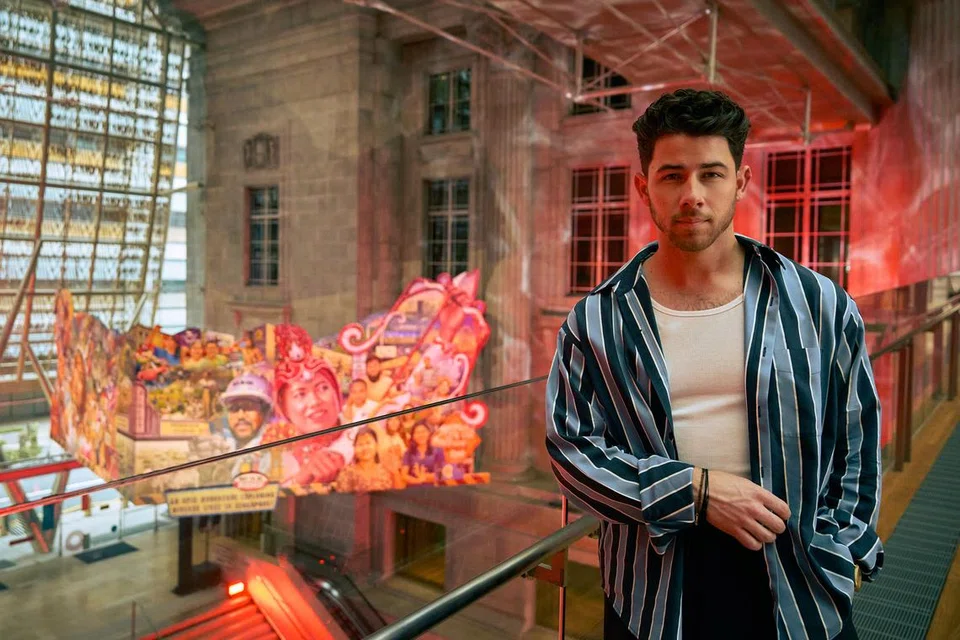
(Photo Credit: Joel Lim)
Nick Jonas, the 33-year-old American singer-actor, attended the Singapore Art Week 2026 opening reception at National Gallery Singapore on January 21, crediting his Indian actress wife Priyanka Chopra, 43, and brother Joe Jonas for sparking his passion for art collecting. Jonas, a self-described “baby collector” who began in 2016-2017 during European museum visits to Van Gogh in Amsterdam, Guggenheim in Venice, and Paris institutions, expressed particular enthusiasm for Southeast Asian art. Influenced by Chopra and Indian works, he was “blown away” by Filipino artist Juan Luna’s pieces and seeks emotionally resonant art with vibrant colours and textures to inspire his music, screen storytelling, and visual thinking.
Jonas’s personal collection features works by English artist Damien Hirst and Spanish artist Coco Davez, with Joe acting as his “art curator” spotting emerging talents. At the event, he praised Singapore’s blend of modernity and heritage, reminiscing about the Jonas Brothers’ 2012 debut concert at Fort Canning Park. Jonas highlighted how art like Claude Monet’s at the National Gallery evokes emotional places that fuel his creativity as a musician and songwriter. He plans to acquire Southeast Asian pieces during his 48-hour stay, viewing the week-long event (until January 31) as an exciting entry into regional art.
Earlier that day, Jonas hosted an exclusive listening session for his fifth solo album Sunday Best—following 2021’s Spaceman—at House of Tan Yeok Nee in Penang Road, with the Jonas Brothers’ seventh album Greetings from Your Hometown released in August 2025. On screen, he reprises his role in the fifth untitled Jumanji instalment, due late 2026, after starring in blockbusters like Night at the Museum: Battle of the Smithsonian (2009), Jumanji: Welcome to the Jungle (2017), and Jumanji: The Next Level (2019). His art venture underscores a deepening cultural engagement amid his multifaceted career.
News Source: https://www.straitstimes.com/life/entertainment/singer-nick-jonas-at-singapore-art-week-wife-priyanka-chopra-brother-joe-inspired-his-love-of-art
(2) How Beijing ink artist Bingyi blurs the lines between history and fiction
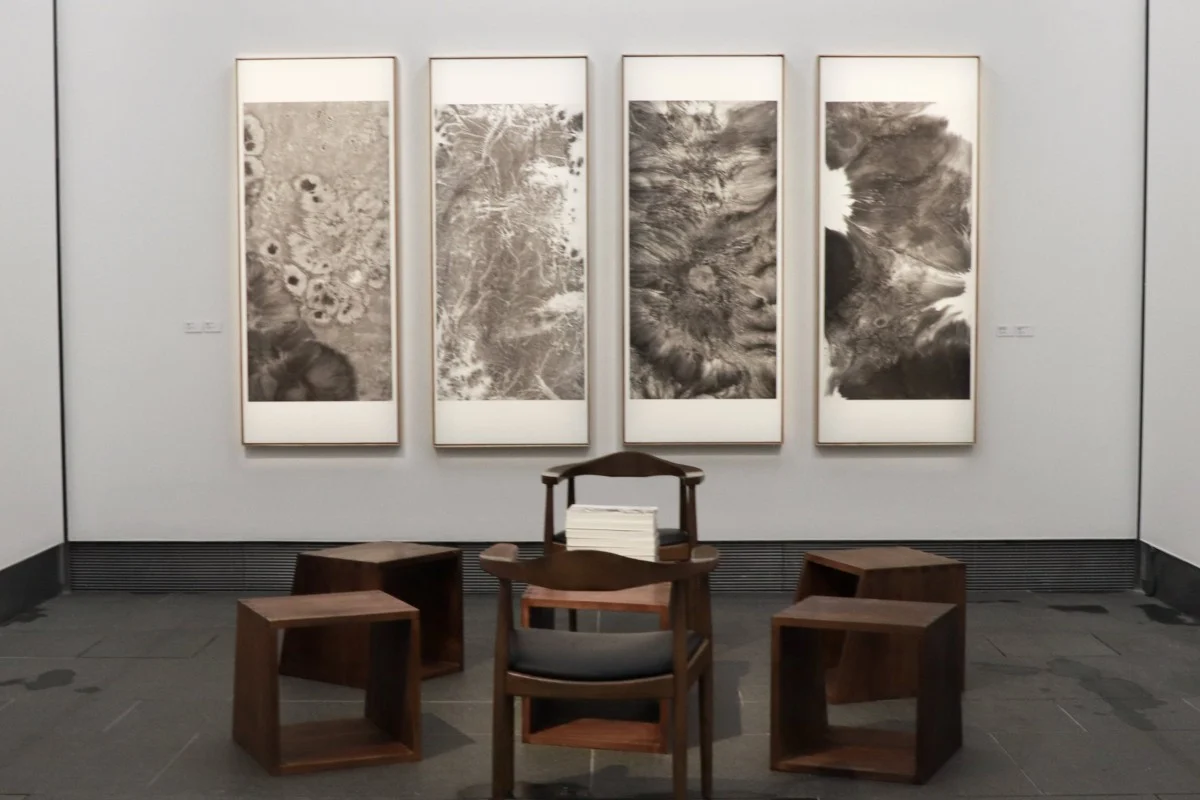
(Photo Credit:Asia Society Hong Kong Centre)
Beijing-based artist Bingyi challenges conventional boundaries between historical artifact and artistic creation in her solo exhibition Taihang Rhapsodyat the Asia Society Hong Kong Centre. Through ink paintings and texts presented as speculative archaeological discoveries, she constructs an alternate history centered on Hua, a fictional “Matriarch of Painting” from China’s Northern Song dynasty, imagined as a courageous, nature-connected woman who defied patriarchal constraints of her time.
Bingyi’s artistic process integrates nature as an active collaborator. Large-scale scrolls like Chaos Opens (2022) and Journey to the Snowy Mountain (2019–2023) were created by applying ink to paper in the Taihang Mountains and then exposing the works to natural elements, allowing weather and terrain to shape the compositions. This method, described by curator Craig Yee as focusing on “nature’s mark-making,” produces landscapes that retain the form of traditional shanshui painting while embodying an organic, unrestrained naturalism.
Bingyi’s practice—which includes unconventional acts like dropping ink “bombs” from a helicopter in her 2014 work Epoché—views ink as “a visible form of water,” a medium to reveal nature’s behavior rather than solely human expression. Rejecting Western labels like “abstract,” she proposes that her work offers an alternative perspective for perceiving reality, one informed by deep historical knowledge and primal intuition. The exhibition, open until March 7, encapsulates her fusion of scholarly research, intuitive creation, and ecological philosophy.
News Source: https://www.scmp.com/lifestyle/arts/article/3340407/how-beijing-ink-artist-bingyi-blurs-lines-between-history-and-fiction
(3) World’s Oldest Known Cave Art: 67,800-Year-Old Hand Stencils Discovered on Indonesia’s Muna Island
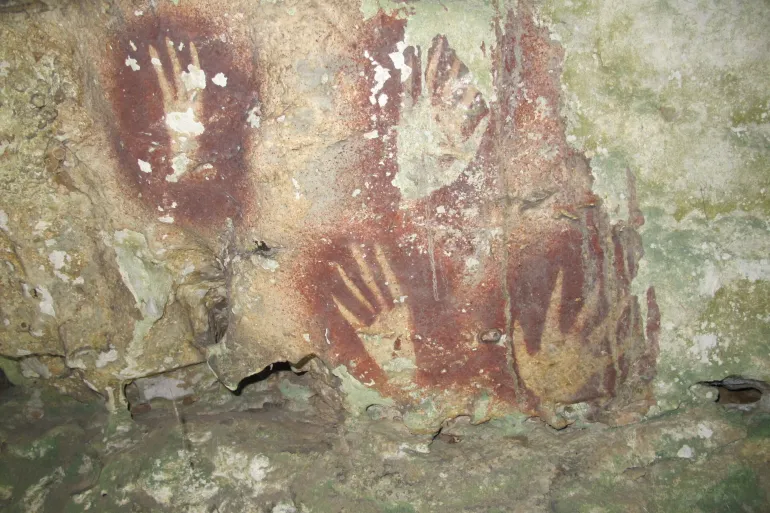
(Photo Credit: Ahdi Agus Oktaviana & Maxime Aubert/AP Photo)
Archaeologists have identified hand stencils in limestone caves on Muna Island, Sulawesi province, Indonesia, as the world’s oldest known paintings, dated to a minimum age of 67,800 years. The tan-coloured outlines were created by placing hands on cave walls and blowing pigment over them, a technique common in early rock art. Indonesian archaeologist Adhi Agus Oktaviana from BRIN, who has searched the region since 2015, discovered the stencils beneath later artworks depicting a rider on horseback with a chicken. The findings, published in Nature on Wednesday, were led by an Indonesian-Australian team including Griffith University researchers Maxime Aubert and Adam Brumm.
The Muna hand stencils stand out for their distinctive Sulawesi style, featuring carefully reshaped, pointed fingertips that may intentionally transform the human hand into something resembling an animal claw. Brumm suggested this alteration reflects a deeper symbolic or spiritual meaning, possibly tied to ancient peoples’ complex relationship with the animal world. Uranium-series dating of overlying calcite layers provided the precise minimum age, confirming the artworks predate previous Sulawesi finds by over 15,000 years. The caves show repeated use over millennia, with some art overlaid up to 35,000 years later, highlighting long-term cultural significance.
This discovery reinforces Indonesia’s role in early human artistic expression and migration routes through Sulawesi, supporting theories of seafaring ancestors who were not only skilled navigators but also sophisticated artists. It pushes back the timeline of figurative and symbolic rock art in Southeast Asia and aligns with the region’s rich archaeological record, including ancient finds in nearby East Timor and Australia. The pointed-finger motif adds nuance to interpretations of early symbolic behaviour, suggesting intentional artistic choices with potential ritual or totemic importance long before similar traditions emerged elsewhere.
News Source: https://www.aljazeera.com/news/2026/1/22/worlds-oldest-cave-art-discovered-in-indonesias-muna-island
(4) Stone to jewels: L’ÉCOLE Asia Pacific series of programs to discover the journey of diamonds
(Photo Credit: The Standard)
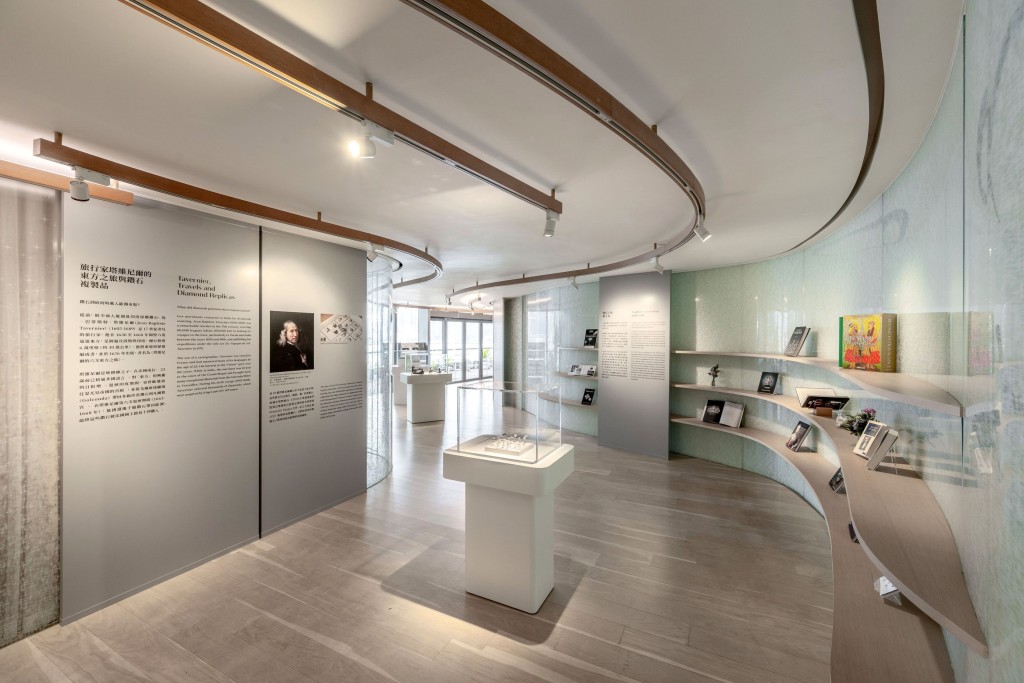
L’ÉCOLE, School of Jewelry Arts, in partnership with Van Cleef & Arpels, has launched “Discover the Diamond: Art & Science” in Hong Kong, an immersive cultural program running until April 2026 at K11 MUSEA. The series combines exhibitions, expert talks, short courses, live demonstrations, and family-friendly activities to explore the transformation of diamonds from rough stones to polished jewels. The centerpiece traces the historical journey of diamonds, beginning with 18th-century India, following the trade routes of French gem merchant Jean-Baptiste Tavernier, and showcasing the evolution of cutting techniques, raw crystals, antique tools, and iconic cuts. Highlights include replica displays of the Tavernier collection (featuring rare 17th-century Mughal cuts) and The Lesotho Legend (illustrating contemporary precision cutting).
Two special “Exploration Days of Diamond” are scheduled for January 31 and February 28, featuring talks, interactive diamond-matching games, educational origami workshops, and live jewelry-making demonstrations by L’ÉCOLE instructors. A new dedicated course, “The Lesotho Legend: From a Rough Diamond to a High Jewelry Collection,” delves into the story of the 910-carat Lesotho Legend rough diamond—discovered in Lesotho and cut into 67 gems for 25 Mystery Set high jewelry pieces—allowing participants to examine its complete transformation. Additional offerings include in-person expert talks and cultural walks led by Sampson Wong, author of Hong Kong Strollology, to Diamond Hill, a historic Kowloon squatter settlement whose name evokes the gem’s allure.
The program reflects L’ÉCOLE’s mission to make jewelry arts accessible through education and storytelling, blending scientific insight, historical context, and hands-on engagement. By spotlighting both ancient trade legacies and modern craftsmanship, it appeals to collectors, enthusiasts, and families alike, while reinforcing Hong Kong’s position as a cultural and luxury hub in Asia-Pacific. The initiative’s multi-generational approach and free/low-cost activities aim to deepen public appreciation of diamonds beyond their commercial value.
News Source: https://www.thestandard.com.hk/hong-kong-news/article/322375/