Asia Art Weekly News Bulletin – ISSUE 87 Week of 19 October 2026
(1) Georgian production of Diary of a Madman opens at Beijing Fringe Festival
As an international invitation programme of the 19th Beijing Fringe Festival, the Georgian-directed stage adaptation of Gogol’s Diary of a Madman premiered at Beijing Tianqiao Performing Arts Center.
(2) CityU 10AFEST opened in Hong Kong with over 100 cultural leaders discussing Asian art, technology and museum transformation
The inaugural 10AFEST 2026, organised by City University of Hong Kong’s Indra and Harry Banga Gallery, opened in Hong Kong as a three-day forum focused on “Asian Art Technology and Cultural Innovations,” drawing more than 120 museum directors, curators, scholars and digital creators from 13 countries and 23 cities.
(3) Simon Suen solo exhibition Synchronicity opened in West Kowloon with over 120 new works
Simon Suen’s solo exhibition Synchronicity — Simon Suen Solo Exhibition opened at WKCDA Tower in the West Kowloon Cultural District, presenting more than 120 new works that blend Chinese and Western aesthetic traditions.
(4) ART TAIPEI 2026 explored art-technology symbiosis and launched AI viewing assistant
ART TAIPEI 2026, themed “Symbiosis,” will run from 30 October to 2 November at the Taipei World Trade Center Exhibition Hall, focusing on the connection between art and technology and introducing its first official AI viewing assistant.
(1) Georgian production of Diary of a Madman opens at Beijing Fringe Festival
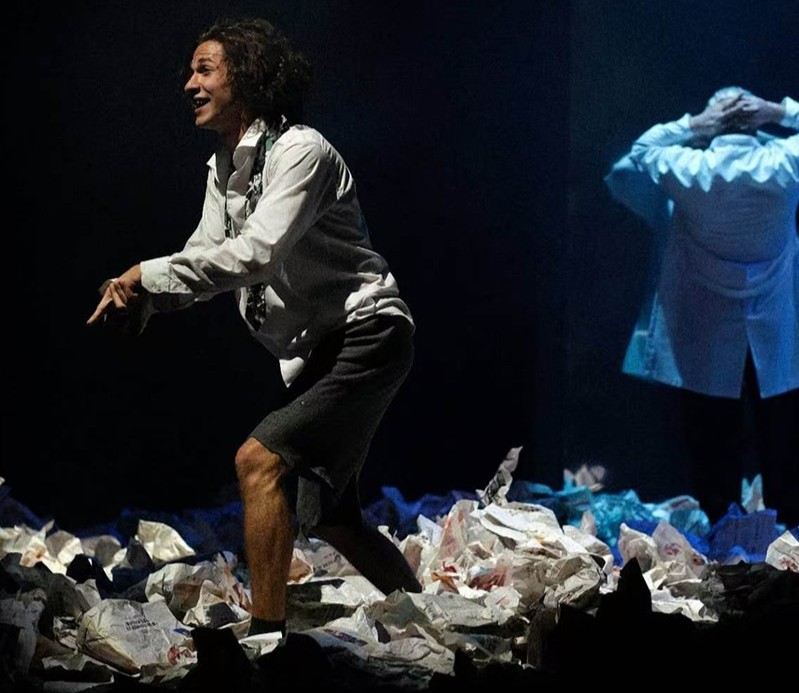
(Photo Credit: People’s Daily)
Directed by Levan Tsuladze (萊文﹒祖拉澤), the 90-minute performance of the 19th Beijing Fringe Festival (北京國際青年戲劇節) adapts Nikolai Gogol (果戈理)’s classic novella. The protagonist, a low-ranking Petersburg clerk named Poprishchin (波普里希欽), descends into madness after developing an obsession with a beautiful actress. He hallucinates conversations with dogs, steals their letters, and eventually crowns himself the King of Spain before crying out for help in despair.
Performed in Georgian with Chinese subtitles, the production relies heavily on expressive physical theatre, precise breath control and strong mime-like gestures. Language barriers are overcome through the actors’ highly physical storytelling, allowing audiences to grasp the character’s loneliness, delusion and emotional breakdown through body language alone. The audience remained deeply engaged, with sustained applause at the curtain call.
Importer Fan Jing (樊晶) noted that the play’s examination of human nature transcends time and borders. She expressed the hope of bringing more outstanding international theatre to Chinese audiences, enabling local viewers to experience the diversity of world theatre without leaving the capital. Beijing’s role as an international exchange and national cultural centre makes it an ideal platform for such cross-border artistic dialogue.
Organised by the China Federation of Literary and Art Circles (中國文學藝術界聯合會) and presented by the Beijing Dramatists Association (北京戲劇家協會) and Beijing Young Drama Workers Association (北京青年戲劇工作者協會), the festival aims to nurture young theatre creators and promote international youth theatre exchange. The presence of international works continues to strengthen Beijing’s identity as a “City of Performing Arts.”
News Source: http://bj.people.com.cn/BIG5/n2/2026/1015/c82846-41722391.html
(2) CityU 10AFEST opened in Hong Kong with over 100 cultural leaders discussing Asian art, technology and museum transformation
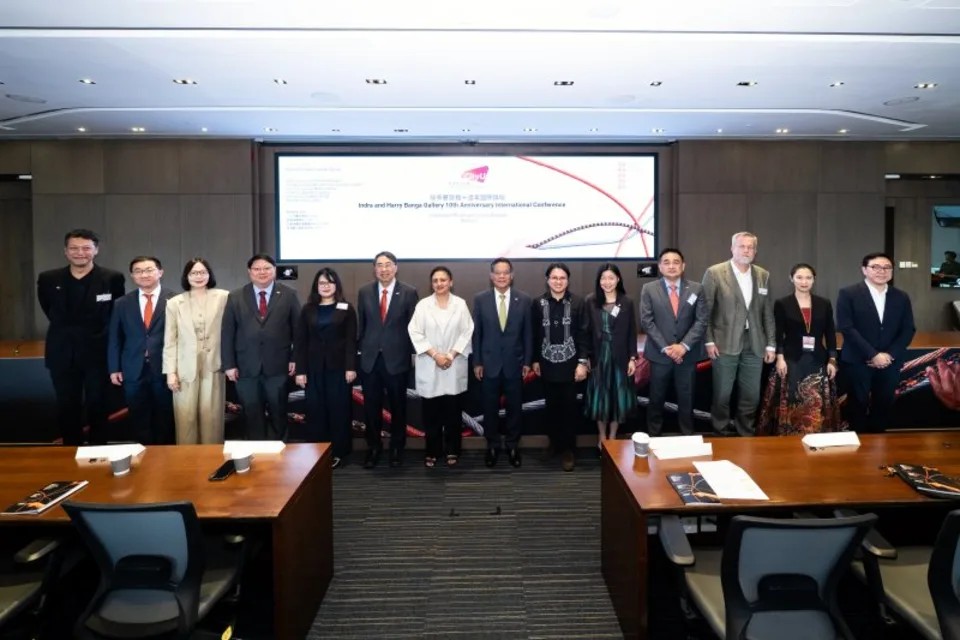
(Photo Credit: Yahoo! News)
The opening keynote dialogue of the inaugural 10AFEST 2026, “(De)globalisation and (Re)connectivity ((去)全球與(新)連接),” featured Professor Kyong Park (朴景) from Seoul and Professor Matthias Böttger from the Basel Academy of Art and Design (巴塞爾藝術與設計學院), examining how cultural institutions can forge new forms of collaboration amid shifting geopolitics and technology.
Subsequent sessions addressed institutional practice: Tsinghua University’s professor Lu Xiaobo (魯曉波) and Pinacoteca Ambrosiana’s director Monsignor Alberto Rocca discussed balancing historical depth with public participation; Central Academy of Fine Arts’ director Professor Jin Jun (靳軍) and Fitzwilliam Museum’s director Luke Syson explored experiential education in university museums; and Hong Kong Cultural Festival’s founder Hing Chao (趙式慶) spoke with Dresden State Art Collections’ Cora Würmell on digital preservation of intangible cultural heritage.
The event also marks the tenth anniversary of the Indra and Harry Banga Gallery (般哥展覽館). Since 2016 the gallery has staged interdisciplinary exhibitions such as “Leonardo da Vinci: Art and Science,” “The Atlas of Maritime Buddhism” and “Zodiac Heads from the Yuanmingyuan and Important Treasures”, blending historical artefacts with immersive digital technology. Founding sponsor Indra Banga highlighted the gallery’s ongoing role as a platform connecting art, culture, technology, education and research.
Alongside the four main dialogues, parallel sessions covered cross-cultural collaboration, cultural entrepreneurship and digital museology. Physical exhibitions, displays and performances were staged across the CityU campus and other local venues, allowing the public to experience the practical application of art and technology in Hong Kong.
(3) Simon Suen solo exhibition Synchronicity opened in West Kowloon with over 120 new works
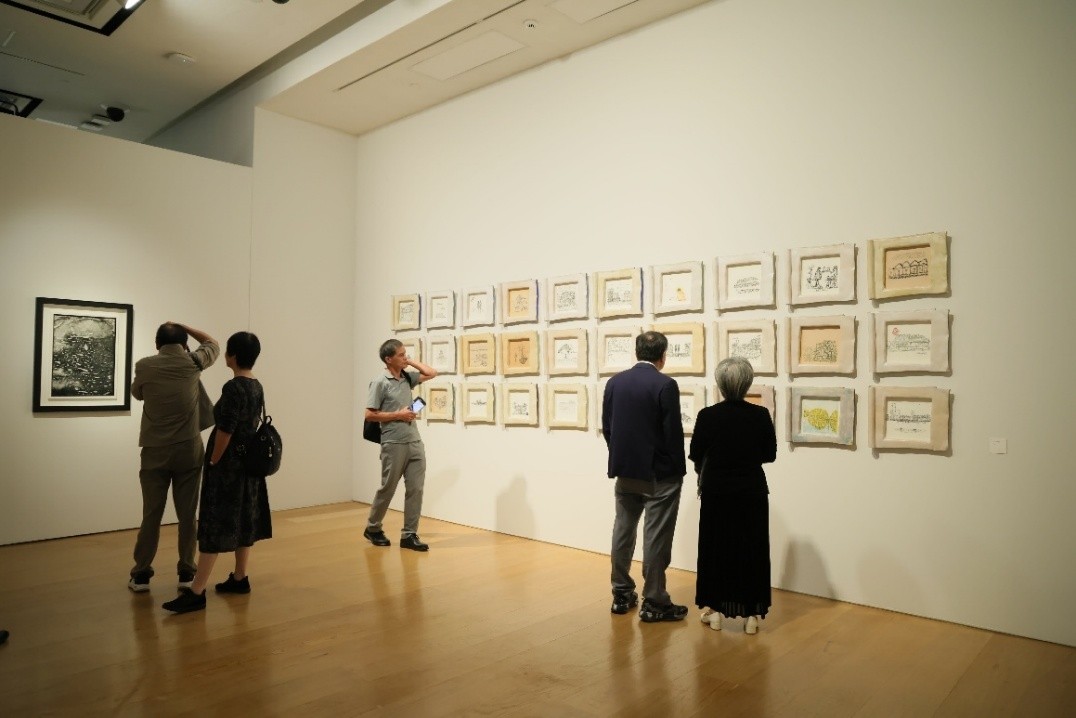
(Photo Credit: HKTKWW)
Curated by Faye Tong (童菲), the exhibition explores the concept of “encounter”, simultaneous presence in the same time and space. The curator’s preface describes every moment as an encounter with dawn, mountains, stars or dust, whether conscious or not, and invites viewers to recognise shared moments of existence through the works.
Suen’s paintings merge Eastern brushwork with Western landscapes and Western techniques with Eastern landscape spirit and philosophical ideas. Media include acrylic and oil on canvas and wood, ink and colour on paper, mixed media, monoprints and acrylic-panel ink works. Styles range from abstract expressionism and contemporary ink to contemplative natural landscapes and large-scale installations, with sizes varying from intimate pieces to works exceeding two metres.
This is Suen’s third solo exhibition following I Paint My Heart (我畫我心) at Shanghai’s 8342 Cultural Center in 2024 and Path to Heart (心遊記) at Beijing’s Song Art Museum in 2025. The artist personally guided guests through the exhibition, sharing his creative philosophy of integrating Chinese and Western ink traditions. Opening guests included Legislative Council member Kenneth Fok (霍啟剛), Peking University’s professor Wang Bo (王博), haute-couture artist Guo Pei (郭培), and other cultural and academic figures.
News Source: https://www.tkww.hk/a/202610/14/AP6acf5614e4b0e1e2ee73a386.html
(4) ART TAIPEI 2026 explored art-technology symbiosis and launched AI viewing assistant
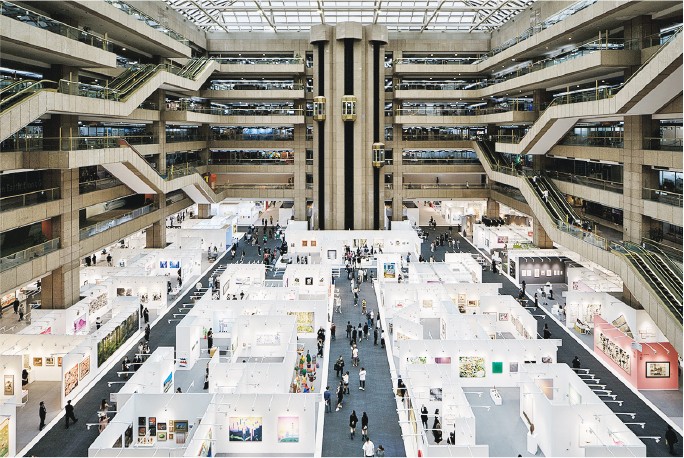
(Photo Credit: Ming Pao)
Participating galleries of ART TAIPEI 2026 (台北國際藝術博覽會) are roughly evenly split between Taiwanese and international participants. Taiwanese galleries include Tina Keng Gallery (耿畫廊) and Liang Gallery (尊彩藝術中心). Korean galleries have increased from about 15 last year to around 25 this year, reflecting strong previous sales of Korean artists’ works. Japanese galleries returning include Takashi Murakami (村上隆)’s Kaikai Kiki Gallery.
A new Japanese contemporary art section, “Turning the frown upside-down,” curated by Jeffrey Ian Rosen of MISAKO & ROSEN, will highlight shifts in Japan’s contemporary art ecosystem since 2008. Gallery COMBINE / BAMI will present Takumi Kama (釜匠)’s new KAIJU series, which reimagines Edo-period ukiyo-e (浮世繪) with modern “monster” elements constructed from everyday objects, toys and architectural fragments.
For the first time, the official website features an “AI Viewing Smart Assistant.” Visitors can use their phones to obtain guided tours, exhibitor and artwork information, recommended viewing routes and on-site event overviews, transforming the fair experience from passive reception into interactive dialogue. The chairperson of the Taiwan Art Gallery Association Claudia Chen (陳菁螢) said the tool aims to lower the barrier to art appreciation.
Beyond the fair, Taipei Art Week, themed “Velocity,” will link approximately 100 galleries, museums and art institutions across the city, extending the artistic atmosphere throughout Taipei.