Asia Art Weekly News Bulletin – ISSUE 91 Week of 16 November 2026
(1) Fine Art Asia Made Shenzhen Debut: From Qi Baishi to Qing Furniture and Star Wars Posters
Fine Art Asia, one of Asia’s leading fine art and antiques fairs, will hold its first edition in Shenzhen at the end of this month, expanding beyond its long-standing Hong Kong base and reflecting the cross-category collecting tastes of the Greater Bay Area market.
(2) “Cabinets of Wonders” at DesignInspire 2026: Curator Chilai Howard on Craft and Cross-Regional Resonance
DesignInspire 2026, organised by the Hong Kong Trade Development Council, runs from 18 to 21 November at the Hong Kong Convention and Exhibition Centre, bringing together 20 to 25 Hong Kong and Swiss designers, artists and brands across visual arts, typography, ceramics, paper sculpture, metalwork, watchmaking and interactive installations.
(3) Yayoi Kusama’s Giant “Dancing Pumpkin” Installed in Kai Tak as Asia’s Only Permanent Display
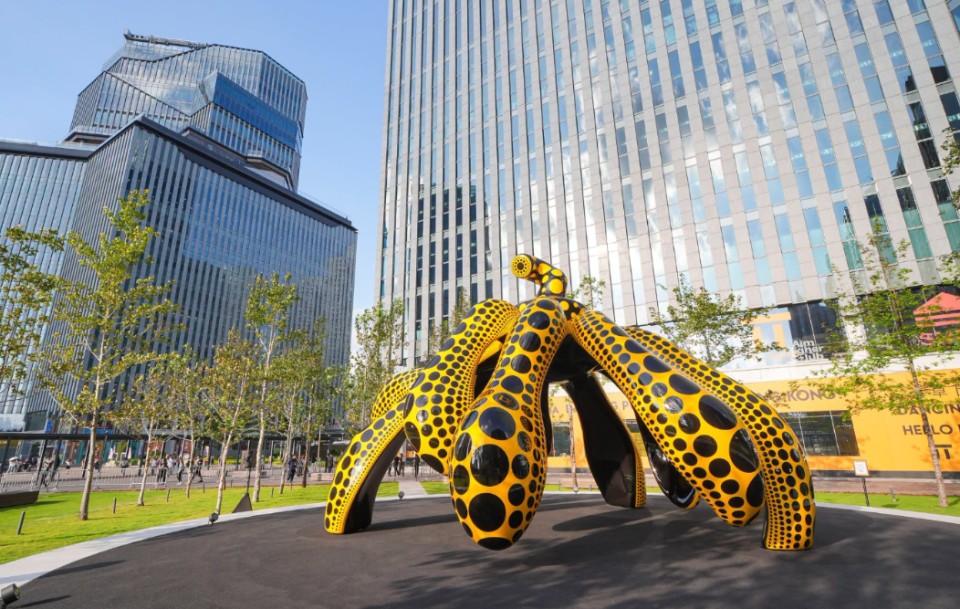
A giant sculpture by Japanese artist Yayoi Kusama, titled “Dancing Pumpkin,” has been installed in Hong Kong’s Kai Tak area, becoming the only permanent display of its kind in Asia. The work adds a major contemporary art landmark to the former airport site, which is being redeveloped into a new residential, commercial and cultural district.
(4) The Metropolitan Museum of Art and Shanghai Museum Signed Major Partnership Agreement
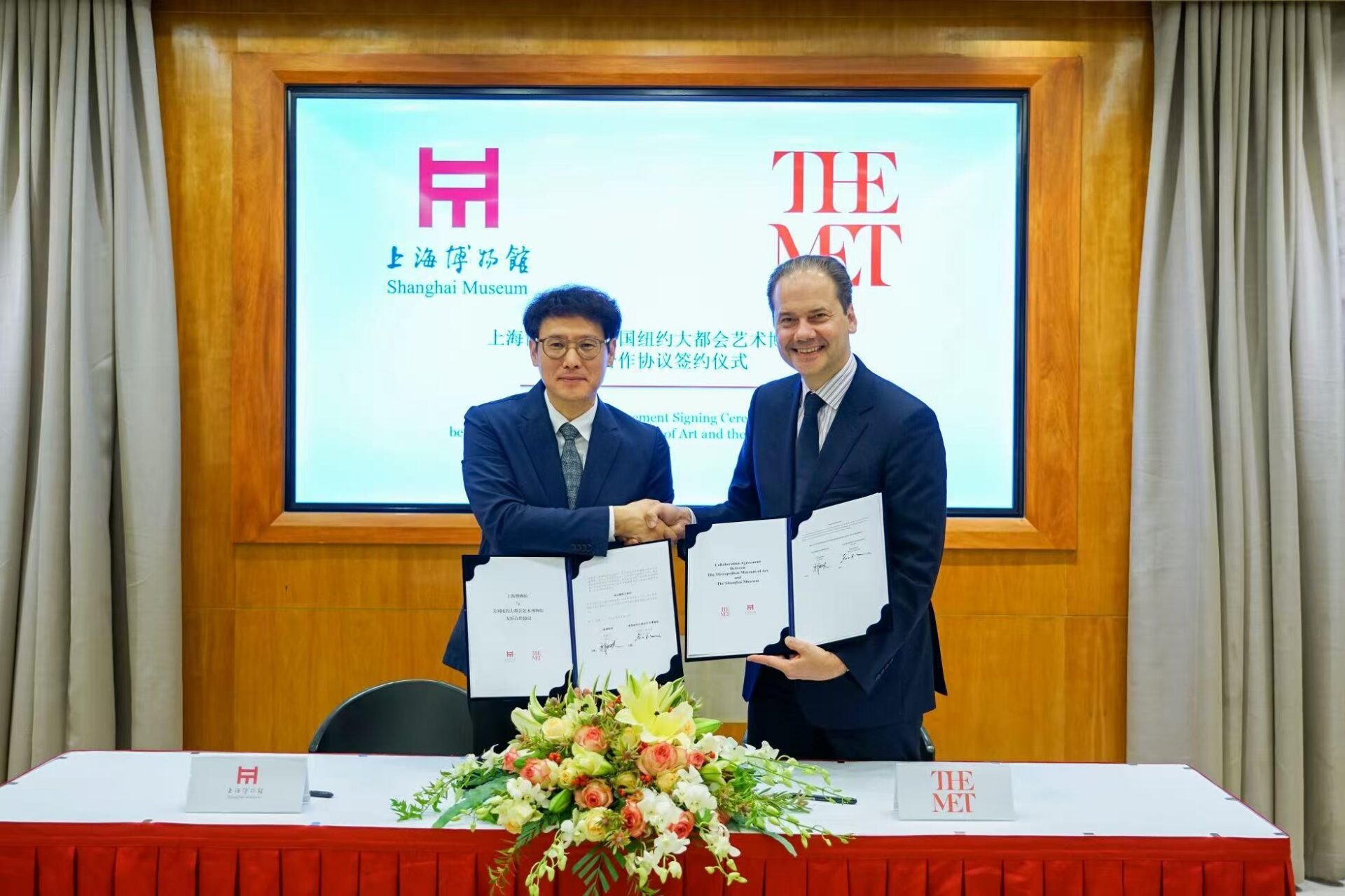
The Metropolitan Museum of Art and the Shanghai Museum signed a Memorandum of Understanding formalising their commitment to collaborate on exhibitions, research projects and curatorial exchanges.
(1) Fine Art Asia Made Shenzhen Debut: From Qi Baishi to Qing Furniture and Star Wars Posters
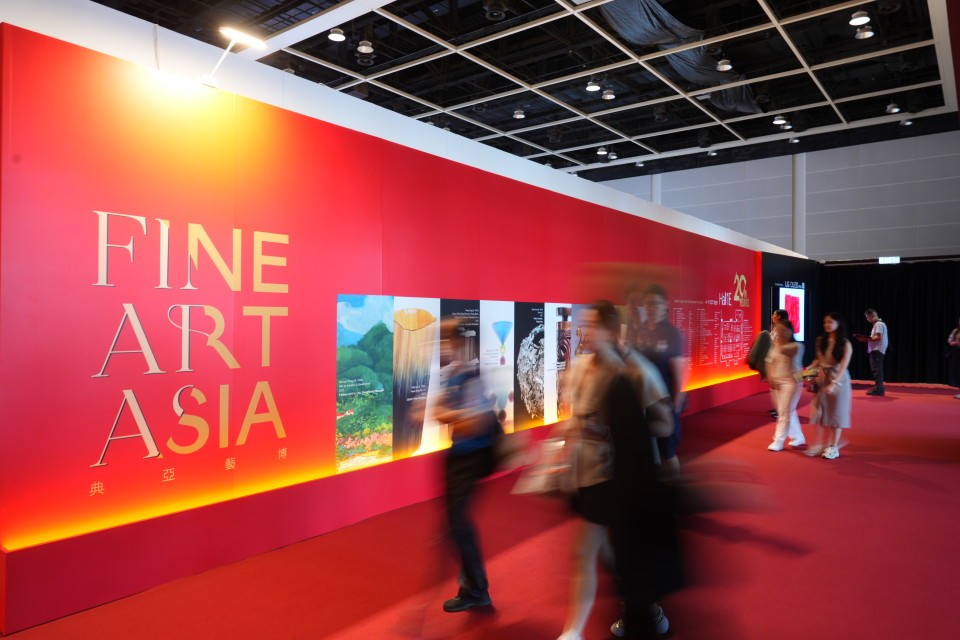
(Photo Credit: Orange News)
The Shenzhen debut marks a significant step in Fine Art Asia (典亞藝博)’s regional strategy. Having established itself in Hong Kong as a platform for museum-quality Asian and Western art and antiques, the fair is now testing demand in mainland China’s growing art and design market. The move aligns with broader efforts to deepen cultural and commercial links across the Greater Bay Area.
The fair’s presentation is expected to span traditional and contemporary categories. Highlights cited for the Shenzhen edition include works by modern Chinese master Qi Baishi (齊白石), examples of Qing dynasty furniture, and Star Wars posters, a combination that signals the organisers’ intention to appeal to both classical collectors and younger, pop-culture-inclined buyers.
Further details on exhibitors, venue and programming for the Shenzhen edition are expected to be announced closer to the opening. The fair’s expansion comes as Shenzhen continues to build its cultural infrastructure, including new museum and gallery spaces, positioning itself as a growing hub for art trading and exhibitions in southern China.
(Photo Credit: HKET)
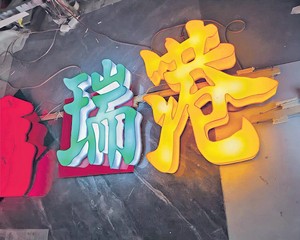
The centrepiece of DesignInspire 2026 (創意設計博覽) curated by Chilai Howard (鄭智禮) is a dynamic Swiss wooden cabin with a single entrance, its exterior clad in wooden flaps that open and close slowly like louvres. The semi-enclosed design allows visitors to shut out the noise outside and focus on the juxtaposed Chinese and Western works within.
The exhibition adopts a “side-by-side (並排)” curatorial strategy, placing works from different cultural backgrounds but with similar concepts together. Swiss letterpress master Dafi Kuhne is paired with Hong Kong “true-form character (真體字)” master Au Yeung Cheong (歐陽昌), whose lightbox reading “瑞港” links the auspicious meaning of “瑞” with Switzerland on one side and “港” with Hong Kong on the other. Belgian audiovisual artist Antoine De Schuyter and Hong Kong new media artist Carla Chan are also shown together.
In the courtyard, Hong Kong kinetic artist Joseph Chan (陳家俊)’s mechanical bird installation is displayed alongside works by Swiss watch brand Parmigiani Fleurier (帕瑪強尼), both relying on precise mechanical structures. Local wooden furniture brand “CHICHOIMAO (自在貓)” founder Chow Wing-shing (周穎聖) presents his “011” stool, made from recycled Hong Kong acacia wood and designed for flat-pack assembly so that customers can see and touch the mortise-and-tenon structure inside.
(3) Yayoi Kusama’s Giant “Dancing Pumpkin” Installed in Kai Tak as Asia’s Only Permanent Display
(Photo Credit: Orange News)
The installation “Dancing Pumpkin” is understood to be part of Yayoi Kusama (草間彌生)’s ongoing engagement with Hong Kong and the wider region. It features the artist’s signature pumpkin motif and polka-dot patterns, which have become among the most recognisable visual signatures in contemporary art. The work’s permanent status distinguishes it from the many temporary Kusama presentations that have toured Asia in recent years.
Kai Tak has been positioning itself as a cultural destination, with new public art and waterfront spaces forming part of its redevelopment. The placement of a permanent Kusama work is expected to draw art visitors and tourists to the district, complementing existing cultural facilities in Kowloon East and reinforcing Hong Kong’s role as a regional hub for public art.
The work joins a growing list of major public art commissions in Hong Kong, as both the public and private sectors continue to invest in art in public spaces to enhance the city’s cultural offerings and visitor appeal.
(4) The Metropolitan Museum of Art and Shanghai Museum Signed Major Partnership Agreement
(Photo Credit: Metropolitan Museum of Art)
Max Hollein, the Director and CEO of the Metropolitan Museum of Art (大都會藝術博物館), said the partnership stems from a shared belief that art can foster understanding between cultures. Dr. Chu Xiaobai (褚曉波) noted that the two institutions’ more than forty-year friendship is built on a shared love of art and cultural heritage and mutual trust, and that the Memorandum of Understanding will deepen cooperation in collections, exhibition planning and academic research.
The signing coincides with the opening on 18 November of “Jewelry: The Body Transformed, Treasures from The Metropolitan Museum of Art (環宇璀璨:大都會藝術博物館珠寶珍藏展)” at the Shanghai Museum (上海博物馆), running until 5 May 2027. The exhibition, drawn mainly from the collection of the Metropolitan Museum of Art with additional loans from Shanghai, continues a collaboration dating back to the 1980s “The Great Bronze Age of China (偉大的中國青銅時代).”
Over the decades, the two museums have lent works to each other for exhibitions such as “Innovation and Spectacle: Chinese Ritual Bronzes (創新與奇觀:中國青銅禮器)” (2014), “The World of Khubilai Khan: Chinese Art in the Yuan Dynasty (忽必烈的世界:中國元代藝術)” (2010) and “Eccentric Visions: The Worlds of Luo Ping (獨特的視野:羅聘的藝術世界)” (2009).
In 2025, the two museums co-organised their first joint exhibition, “Recasting the Past: The Art of Chinese Bronzes, 1100–1900 (鎔古鑄新:宋元明清銅器藝術),” which brought together around 200 works from around the world. Later this year, the Metropolitan Museum of Art will lend five important works to support Shanghai’s major exhibition “Sonorous Silence: The Painting and Calligraphy of Bada Shanren on the 400th Anniversary of His Birth (大音 希聲:八大山人誕辰 400 周年書畫藝術大展),” running from 19 December 2026 to 22 March 2027.
News Source: https://www.metmuseum.org/press-releases/shanghai-museum-mou-traditional-chinese