Asia Fashion Weekly News Bulletin – ISSUE 46 Week of 5 January 2026
(1) K-fashion Accelerates Push into Japan and China with Offline Expansion
Various South Korea’s fashion companies, including LF, Musinsa and Satur, are accelerating overseas expansion in China and Japan this year.
(2) Adidas’ “Tang-style” jacket with Chinese-style “frog buttons” Has Become a Viral Hit on Social Media
A limited-edition “Tang-style” Adidas jacket featuring traditional Chinese frog buttons has gained popularity on social media. Launched during Shanghai Fashion Week in October 2025, it combines modern streetwear with Chinese design, appealing to consumers ahead of the Lunar New Year. Frog buttons, rich in symbolism, reflect a blend of culture and contemporary style.
(3) Shinsegae’s Alibaba Deal Signals Boost for Korean Fashion, Beauty Brands in China
Shinsegae Group partners with Alibaba to export Korean goods to China, signaling warming bilateral ties. Korean brands expand aggressively, but analysts stress differentiation and localization as key to long-term success in China’s competitive market.
(4) Victoria’s Secret PINK Reunites With TWICE for Valentine’s Day Campaign
TWICE partners with Victoria’s Secret PINK for a 2026 Valentine’s campaign, building on their historic 2025 Fashion Show appearance. The collaboration highlights their fashion influence and PINK’s youth-focused rebrand, signaling TWICE’s expansion beyond music.
(1) K-fashion Accelerates Push into Japan and China with Offline Expansion
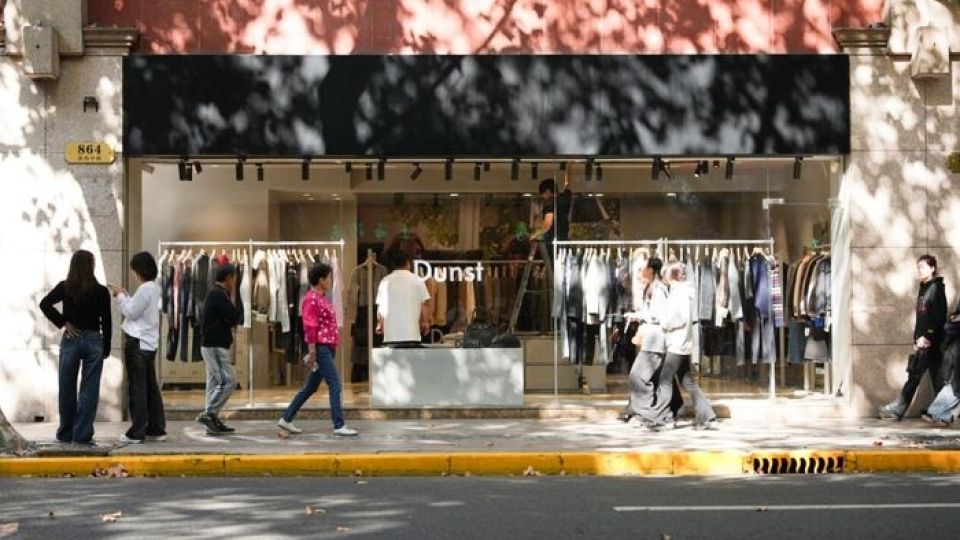
(Photo Credit: DUNST/THE KOREA HERALD)
With ongoing global interest in Korean culture, K-fashion is poised to emerge as a significant export category alongside K-food and K-beauty. South Korean fashion brands are increasing their store counts and implementing offline strategies in China and Japan.
Taking Musinsa as an example, its first overseas multi-brand store was opened on Anfu Road in Shanghai, one of the city’s most prominent fashion districts. The brand Satur is expanding its offline presence in both Japan and China, having launched a flagship store in Harajuku, Japan, and its first location in Beijing’s Chaoyang district last November. Since then, Satur has opened six additional stores across major cities in China including Qingdao, Yanji, Beijing, Shanghai, and Jinan. Satur also plans to open a store at Osaka’s Lucua Mall and Nagoya Parco within this year.
Since Korean fashion companies expand their offline presence in Japan and China, the emphasis is shifting toward long-term brand development through experiential retail in prime locations.
News Source: https://asianews.network/k-fashion-accelerates-push-into-japan-china-with-offline-expansion/
(2) Adidas’ “Tang-style” jacket with Chinese-style “frog buttons” Has Become a Viral Hit on Social Media
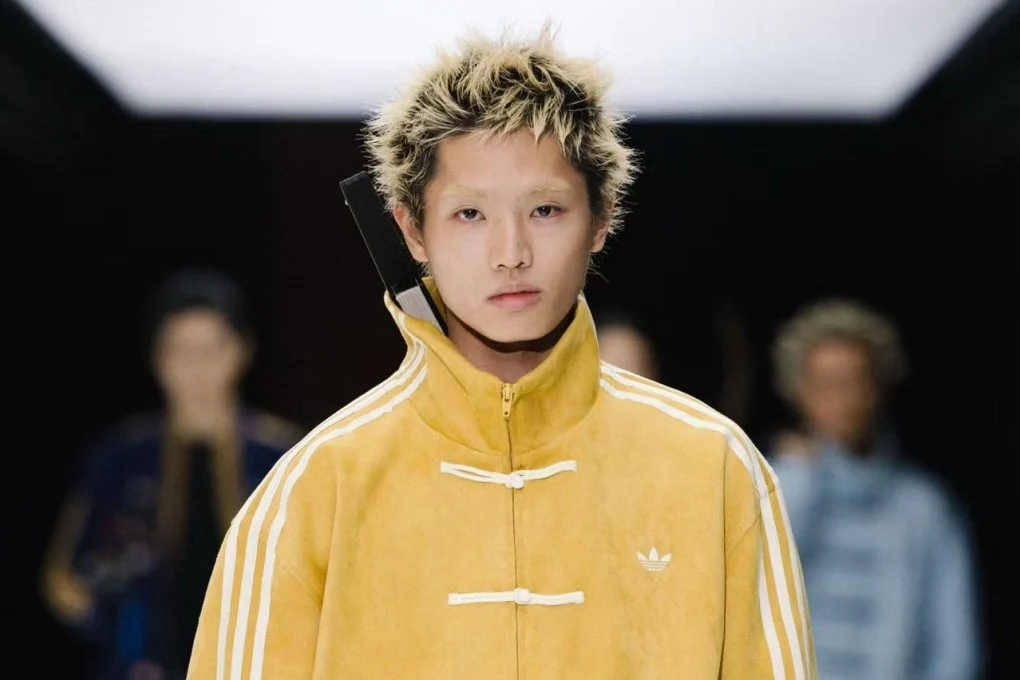
(Photo Credit: Adidas Power of Three)
The recent popularity of a limited-edition “Tang-style” Adidas jacket, which features traditional Chinese frog buttons, has captured social media attention and highlights the blend of contemporary fashion with rich cultural heritage. Launched during Shanghai Fashion Week in October 2025, this stylish jacket combines streetwear aesthetics with Chinese design elements, making it a highly coveted item ahead of the upcoming Lunar New Year. Available only in mainland China, Hong Kong, and Taiwan, the jacket’s uniqueness extends to a version designed for pets, further amplifying its appeal.
Frog buttons, also known as pankou in Mandarin, have been utilized in Chinese fashion for centuries as decorative and functional fasteners. These knotted cord loops, resembling frogs, are rich in symbolism and significance, often linked to auspicious blessings like love and longevity. Unlike their Western counterparts, where frog buttons have primarily decorative connotations, in China they maintain a deeper connection to tradition, serving both a practical purpose and embodying cultural philosophies that emphasize mindfulness and ceremony in everyday practices.
The resurgence of frog buttons in modern design reflects a broader movement towards blending cultural identity with contemporary style. As fashion trends shift towards a “Zen-inspired” aesthetic characterized by minimalism and serenity, items like the Adidas jacket not only pay homage to Chinese craftsmanship but also resonate with consumers seeking subtle cultural references in their wardrobe. Huang Xiaojing, a design expert, notes that these buttons bridge the gap between contemporary life and Eastern heritage, allowing for a dialogue between past and future in fashion.
News Source: https://www.scmp.com/lifestyle/chinese-culture/article/3338928/history-chinese-style-frog-buttons-seen-viral-tang-style-adidas-jacket
(3) Shinsegae’s Alibaba Deal Signals Boost for Korean Fashion, Beauty Brands in China

(Photo Credit: Yicai Global)
The Shinsegae Group, a prominent South Korean conglomerate, has entered into a strategic partnership with Alibaba International to facilitate the export of Korean consumer goods to China via Alibaba’s e-commerce platform. Industry analysts interpret this collaboration as indicative of improving bilateral relations between South Korea and China, with particular optimism surrounding the resurgence of Korean fashion and beauty brands in the Chinese market. The agreement was formalized during the recent China–South Korea Business Forum, reflecting a broader trend of revitalized political and commercial engagement between the two nations. Experts anticipate that this development will generate short-term positive sentiment toward Korean consumer brands, particularly in sectors such as apparel and cosmetics.
The partnership coincides with a notable increase in market entry by Korean brands into China, with over ten labels, including Emis, Rest&Recreation, and Musinsa, expanding their physical retail footprint since 2025. These brands have adopted aggressive expansion strategies, with Rest&Recreation emerging as the fastest-growing Korean label in China last year, while Musinsa has outlined ambitious plans to open over 100 stores within five years. However, analysts caution that the competitive dynamics in China have shifted significantly, with domestic brands gaining traction and consumer preferences increasingly influenced by social media. Success for Korean brands will hinge on their ability to differentiate themselves through localized supply chains, cost efficiencies, and integrated omnichannel strategies.
Chen Jingjing of Jingjie Brand Consulting characterized the recent high-level business delegation from South Korea as a “reset signal” in bilateral relations, fostering short-term optimism for Korean consumer brands. Nevertheless, sustaining long-term growth will require continuous innovation and engagement with Chinese consumers, particularly given the rapid evolution of Korean fashion trends. Wang Minhua, a senior retail professional, emphasized that while Korean cultural influence remains strong, brands must adapt to China’s dynamic market conditions to maintain relevance. The Shinsegae-Alibaba collaboration thus represents both an opportunity and a challenge, underscoring the need for strategic agility in a highly competitive environment.
News Source: https://www.yicaiglobal.com/news/shinsegae-deal-with-alibaba-signals-revival-of-korean-trend-brands-in-china
(4) Victoria’s Secret PINK Reunites With TWICE for Valentine’s Day Campaign

(Photo Credit: Victoria’s Secret)
Global K-pop sensation TWICE has been unveiled as the new ambassadors for Victoria’s Secret PINK’s 2026 Valentine’s Day campaign, featuring members Nayeon, Jihyo, Momo, and Tzuyu. This collaboration follows the group’s historic participation in the 2025 Victoria’s Secret Fashion Show, where they became the first K-pop girl group to both perform and walk the runway. The partnership, initially sparked by Tzuyu’s viral appearance in a PINK ensemble, has evolved into a full-fledged campaign, leveraging TWICE’s massive fanbase and cultural influence to amplify PINK’s youth-oriented brand identity. The campaign aligns with PINK’s “Wink” collection, which blends playful, romantic aesthetics with everyday wearability.
The collaboration underscores TWICE’s expanding influence beyond music, positioning them as key players in the global fashion and lifestyle sectors. Coming off their milestone 10th anniversary in 2025—marked by a commemorative album and high-profile festival appearances—the group is now entering a new phase of cross-industry engagement. The campaign not only reinforces TWICE’s marketability but also highlights Victoria’s Secret PINK’s strategic pivot toward Gen Z and millennial consumers through culturally resonant partnerships. Industry analysts note that such collaborations are increasingly critical in maintaining brand relevance amid shifting consumer preferences and digital-first engagement trends.
While the campaign is expected to drive significant commercial traction, its success will depend on sustained audience engagement and seamless integration of TWICE’s brand identity with PINK’s aesthetic. The partnership exemplifies the growing convergence of entertainment and fashion, where celebrity influence and social media virality play pivotal roles in shaping consumer behavior. As TWICE continues to diversify its portfolio, this collaboration serves as a benchmark for future cross-industry ventures in the K-pop and retail sectors.
News Source: https://ouispeakfashion.com/victorias-secret-pink-reunites-with-twice-for-valentines-day-campaign-010726/