Asia Fashion Weekly News Bulletin – ISSUE 74 Week of 20 July 2026
(1) How Taiwanese Model NAH Became the South Korean Fashion and K-Pop Scene’s Newest Muse
Taiwanese model NAH has become a breakout talent in Seoul’s fashion and K-pop scene, as highlighted by Bella. Known for his distinct style, he has expanded from high-profile magazine editorials to starring roles in music videos for SEVENTEEN’s subunit DxS and BLACKPINK’s Jennie.
(2) Uniqlo to Overtake H&M as World’s Second-Largest Fast Fashion Group
Driven by a 17% surge in projected fiscal 2026 revenues to €21.4 billion, Uniqlo parent Fast Retailing is set to overtake H&M as the world’s second-largest fast-fashion retailer. Strong overseas expansion in North America and Europe continues to drive its pursuit of industry leader Inditex.
(3) Inaugral Shenzhen “AI + Fashion” Competition Draws 5,000 Global Innovators
The inaugural Shenzhen “AI + Fashion” Competition brought together 5,000 global participants to showcase cutting-edge applications of artificial intelligence in design and manufacturing. Featuring runway presentations and technology roadshows, the event highlighted the rapid growth of digital fashion across international markets.
(4) LACMA Unveils Landmark Exhibition of 70 Rare Qipaos Tracing Modern Chinese Female Empowerment
The Los Angeles County Museum of Art (LACMA) has launched “Fashioning Chinese Women: Empire to Modernity,” an exhibition featuring over 70 rare qipaos donated by collector Chere Lai Mah. Designed with custom 3D mannequins by Jason Wu, the showcase examines how Chinese female attire evolved from imperial loose robes into global symbols of modern identity and empowerment.
(1) How Taiwanese Model NAH Became the South Korean Fashion and K-Pop Scene’s Newest Muse
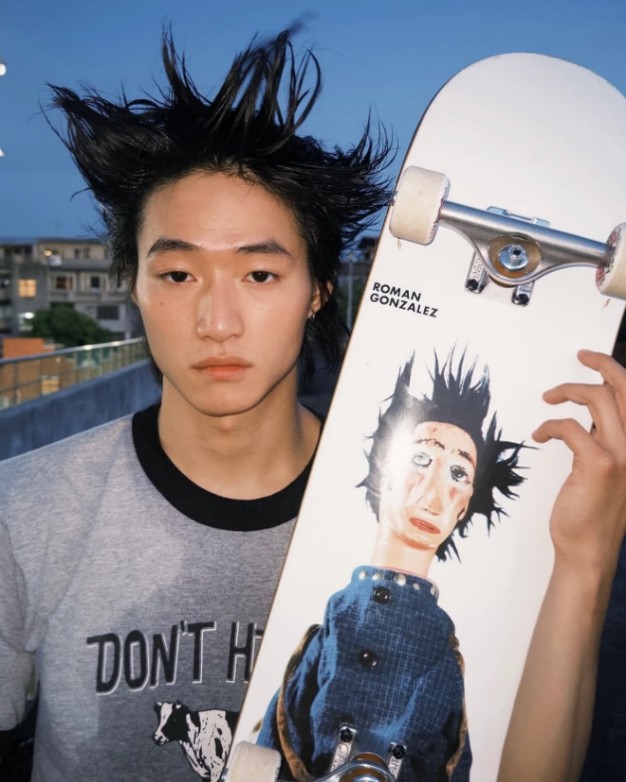
(Photo Credit: NAH / Instagram)
Taiwanese male model NAH, originally hailing from Kaohsiung, has emerged as a rising star within the South Korean fashion and entertainment industries. Renowned for his distinctively cool, elegant features and effortlessly natural presence in front of the camera, NAH has successfully bridged the gap between commercial fashion modeling and high-profile K-pop music video appearances, earning widespread international recognition.
NAH’s ascent in South Korea includes feature roles in major K-pop projects, notably starring in the music video for “Blue” by SEVENTEEN’s subunit DxS. Most recently, he caught massive online attention after being identified as the male lead in a music video teaser for BLACKPINK member Jennie’s upcoming solo release. Even prior to official credits being released, a single teaser photo featuring NAH alongside Jennie sparked widespread excitement across social media, causing his Instagram follower count to surge rapidly. Beyond music video appearances, NAH continues to build a versatile portfolio spanning high-fashion editorials, luxury brand campaigns, and streetwear lookbooks across Asia. His subtle, expressive modeling style and versatile aesthetic continue to make him one of the most sought-after Taiwanese faces working in international fashion today.
News Source: https://www.bella.tw/articles/celebrities/59048/taiwanese-model-nah
(2) Uniqlo to Overtake H&M as World’s Second-Largest Fast Fashion Group
(Photo Credit: Bella)
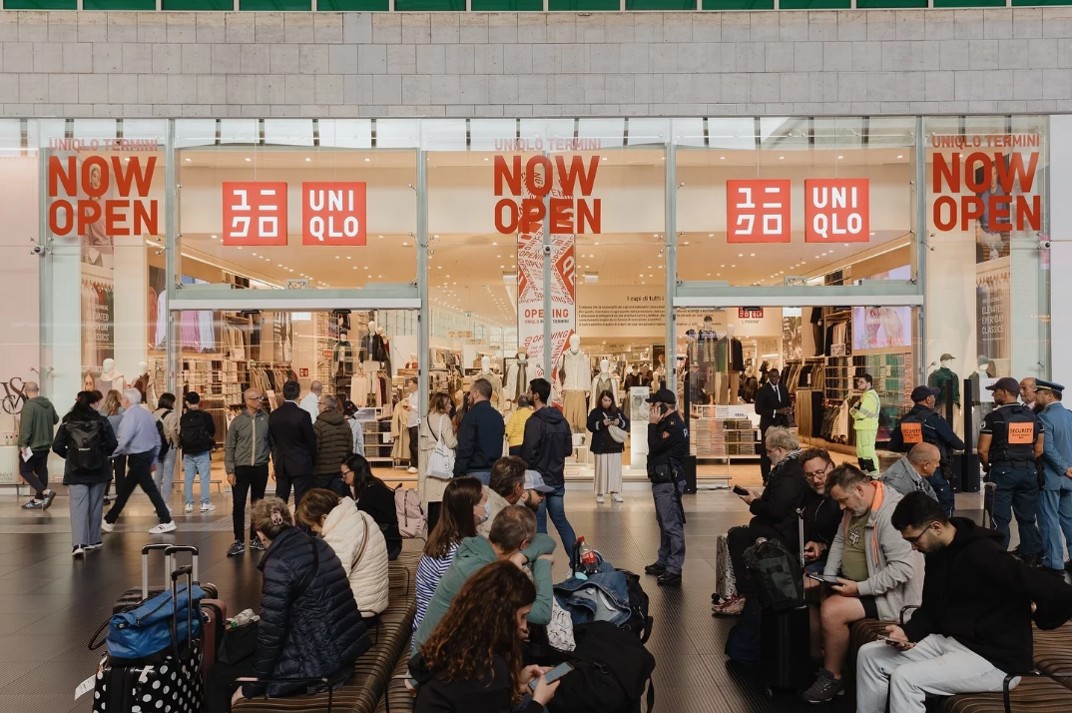
Fast Retailing, the Japanese parent company of Uniqlo, is poised to surpass the H&M Group to become the world’s second-largest fashion retail group. Driven by robust international growth, Fast Retailing’s fiscal year 2026 performance projections estimate annual revenue reaching 3.97 trillion yen (approximately 21.4 billion euros). This total eclipses H&M’s projected annual revenue of 19.9 billion to 20.8 billion euros, positioning Fast Retailing directly behind Inditex, the parent company of Zara, which retains the top industry spot with approximately 38.6 billion euros in revenue.
Fast Retailing’s growth momentum has shifted significantly from Asia to Western markets. In the first three quarters of fiscal year 2026, overseas Uniqlo revenue posted a 26% year-over-year increase, powered by double-digit expansion across Europe, North America, and Southeast Asia. To capture further market share where Uniqlo currently holds under 1% market penetration, the group plans to open roughly 15 stores annually in Europe and 25 in North America, focusing on flagship locations in key cities like New York, London, and Paris to promote its “LifeWear” concept. While Fast Retailing’s market capitalization of 134.4 billion euros is closing the gap with Inditex’s 170 billion euros, analysts note that further expansion will depend on cultivating secondary growth engines like sister brand GU to reduce heavy reliance on Uniqlo.
News Source: https://www.bella.tw/articles/news/58976/uniqlo-second-largest-fast-fashion-brand-revenue-growth-hm
(3) Inaugral Shenzhen “AI + Fashion” Competition Draws 5,000 Global Innovators
(Photo Credit: 胡永愛 / Wenweipo)
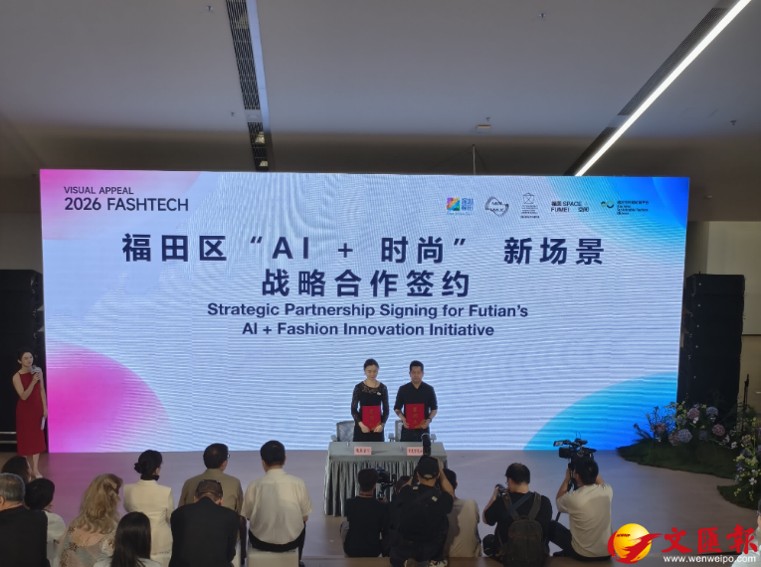
The finals of the inaugural Shenzhen “AI+Fashion” Innovation Application Competition and 2026 FashTech event took place in Futian, Shenzhen, from July 16 to 17. The event attracted nearly 1,000 teams and approximately 5,000 fashion and technology professionals from over ten countries and regions, including China, France, Italy, the UK, Australia, and South Korea, yielding 2,500 design solutions and technical innovations.
The competition comprised two core tracks: the Creative Design Track, focused on AI-driven fashion creation around themes like future fashion and human-nature symbiosis, and the Innovation Solution Track, targeting practical industry applications such as AI design tools, smart marketing, wearable tech, and virtual spaces. During the finals, 76 award-winning garments were showcased alongside live project roadshows. A panel of 18 international judges awarded the top Golden Egret Award to Symbiotic Parasitic Boundary, created by a team from the London College of Fashion. Designers from Italy and Taiwan secured Silver Egret Awards, while teams from Hong Kong, South China Normal University, and University of the Arts London received Bronze Egret Awards. By combining competitive design with industry matchmaking, the initiative supports China’s national strategy of leveraging artificial intelligence to empower traditional manufacturing, establishing Shenzhen as a high-value hub for the digital fashion industry.
News Source: https://www.wenweipo.com/a/202607/18/AP6a5b1e0be4b0b49ad1c3db8e.html
(4) LACMA Unveils Landmark Exhibition of 70 Rare Qipaos Tracing Modern Chinese Female Empowerment
(Photo Credit: worldjournal.com)
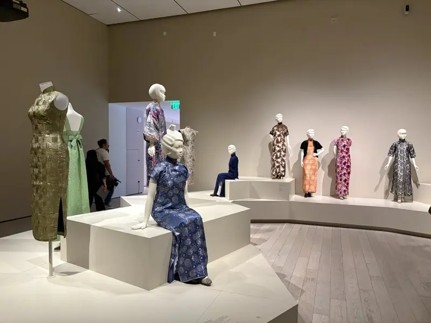
The Los Angeles County Museum of Art (LACMA) has opened its major exhibition, Fashioning Chinese Women: Empire to Modernity, running through October 12, 2026. The showcase gathers over 70 rare pieces tracing the transformation of Chinese women’s attire from late Qing Dynasty imperial robes to 20th-century qipaos. The core collection originates from designer Chere Lai Mah, who spent over 45 years preserving her family’s sartorial heirlooms across global Chinese diaspora hubs like Shanghai, Hong Kong, Bangkok, and San Francisco.
Designed in collaboration with Taiwanese-Canadian fashion designer Jason Wu—who created custom 3D-printed mannequins—and architect Chu-Gooding, the exhibition visually charts how women redefined their social identity through clothing. It chronicles the shift from loose, floor-length Qing gowns to the form-fitting, waist-cinching qipaos of the 1930s Shanghai era, as well as its refined global rebirth in 1950s Hong Kong. Highlighted in the archival materials is the iconic 1941 LIFE magazine cover featuring Madame Chiang Kai-shek (Soong Mei-ling) in a tailored black-and-white chrysanthemum qipao, illustrating how the garment evolved into a powerful symbol of international diplomacy, cultural resilience, and modern female identity.
News Source: https://www.worldjournal.com/wj/story/124947/9624463