Asia Gaming Weekly News Bulletin – ISSUE 44 Week of 15 December 2025
(1) Philippines police step up border patrols, intel to crush remaining POGOs
Philippines intensifies POGO crackdown over a year after 2024 ban, with police patrolling secret routes amid ongoing worker trafficking to Myanmar/Cambodia and a recent life sentence for ex-mayor Alice Guo on trafficking charges.
(2) Casino Macau casinos lower minimum bets to compete for mass players, Citi says
Analysts say lower minimum bets target displaced players from satellite casinos.
(3) India’s online gaming ban drives surge in offshore gambling
New research suggests the prohibition on real-money games has pushed players toward unregulated foreign platforms.
(4) Japan to launch second round of IR applications in May 2027
Japan opens second IR application round 6 May–5 Nov 2027 for up to two casino resorts; Hokkaido, Nagasaki likely bidders after Osaka’s sole approval, aiming to enhance tourism and economy.
(1) Philippines police step up border patrols, intel to crush remaining POGOs

(Photo Credit: iGB)
More than 18 months after Philippines President Ferdinand Marcos Jr. banned Philippine Offshore Gaming Operations (POGOs) with a December 2024 shutdown deadline, the Philippine National Police (PNP) has ordered intensified patrols to combat remaining illegal activities. Lieutenant General Jose Melencio Nartatez Jr., acting PNP chief, instructed police to intensify patrols along “backdoor routes” exploited by syndicates to continue illegal POGO operations. The licensed industry, which boomed under former president Rodrigo Duterte and contributed an estimated PHP35 billion (US$570 million) in revenue in 2023, was eventually unveiled as scam centers profiting from cyberfraud, including online love and crypto scams.
Despite the 2024 ban and subsequent delicensing, the industry continues to solicit Filipino workers through deceptive recruitment practices. In one case, operators lured job-seekers to “POGO-like” operations in Cambodia, promising US$1,000 a monthly but paying only US$300 while forcing them to work as online romance scammers. Workers reportedly travel via “back-door” sea passages from Palawan Island to Sabah, Borneo, then overland through Malaysia to final destinations in Myanmar or Cambodia. Recruitment continues, with the PNP working with intelligence communities and foreign counterparts to address this transnational issue.
The Philippines has aggressively pursued and prosecuted POGO operatives, including high-ranking officials. Last month, former Bamban, Tarlac mayor Alice Guo was convicted of human trafficking at a POGO center and sentenced to life in prison—the first conviction under a “qualified” trafficking statute. Earlier this month, the Department of Justice offered a PHP1 million reward for information leading to the arrest of Cassandra Li Ong, a key figure in the Lucky 99 South POGO compound operation who is reportedly in Japan. Officials have also asked Interpol to help apprehend Harry Roque, an attorney and former Duterte spokesman who acted as legal representative for Lucky 99 South and Ong, who is currently seeking asylum in the Netherlands.
News Source: https://igamingbusiness.com/gaming/online-casino/philippines-police-increase-efforts-crush-remaining-pogos/
(2) Casino Macau casinos lower minimum bets to compete for mass players, Citi says

(Photo Credit: Gambling Insider)
Macau casino operators have been lowering minimum bets for mass baccarat tables to compete for players displaced by the closure of satellite casinos, according to Citigroup analysts. Since October, several major resorts including Wynn Macau, City of Dreams, StarWorld, and Casino Lisboa have opened new gaming areas with minimum bets as low as HK$300(US$38), leading to a sequential decline in average mass baccarat minimums despite remaining higher year-on-year.
This tactical pricing adjustment represents a direct response to the year-end deadline requiring all satellite casinos to cease operations, with operators using pricing flexibility to attract former patrons seeking alternative gaming venues. The strategy aims to defend mass market share while capitalizing on the continued strength of the premium mass segment, which has shown increased player numbers and higher average wagers.
Citigroup identified premium mass as the primary driver of Macau’s gaming growth in 2025, with average wagers per player rising at double-digit rates. Non-gaming attractions such as concerts have also contributed to increased visitation and premium mass engagement. The bank expects competition for mass players to remain intense through 2026 as operators continue to adapt their strategies in the evolving market landscape.
News Source: https://focusgn.com/asia-pacific/macau-casinos-ease-mass-bets-as-premium-mass-drives-growth-citi-says
(3) India’s online gaming ban drives surge in offshore gambling
(Photo Credit: Focus Asia Pacific)
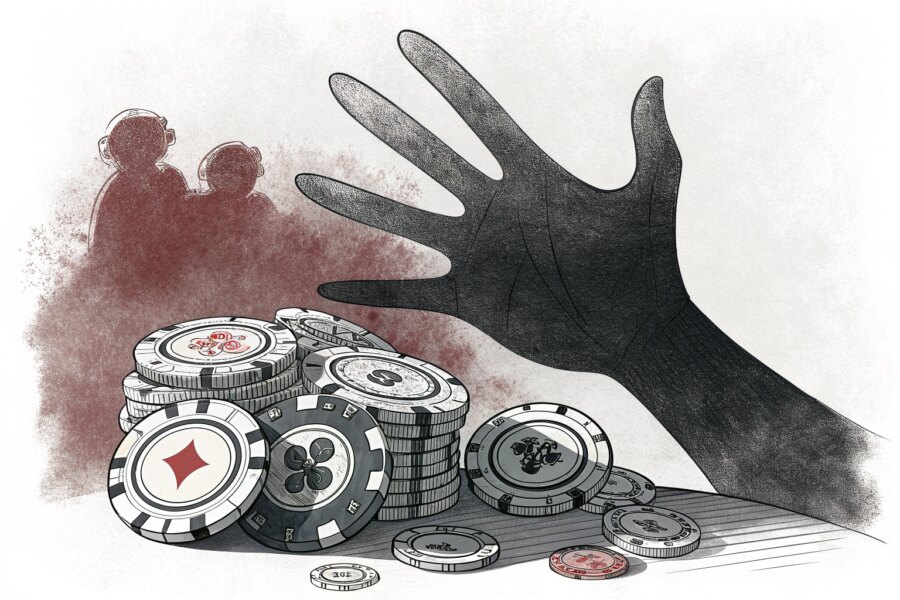
India’s comprehensive ban on online real-money games, enacted in September 2025, has triggered a significant shift in the gambling landscape. The legislation, which prohibits all forms of online betting involving monetary stakes, has forced domestic platforms to cease operations while inadvertently driving users toward unregulated offshore alternatives. This regulatory crackdown reflects the government’s response to growing concerns about gambling addiction, financial losses, and associated social harms that have affected millions of Indian consumers.
According to a survey by consumer organization CUTS International, the use of offshore gambling platforms in India has surged by 20% since the ban’s implementation. The study, which surveyed 1,000 former real-money gaming users in the Delhi NCR region, revealed that offshore platform usage jumped from 68.3% before the ban to 82% afterward. Notably, nearly one in four respondents reported starting to use offshore sites only after domestic platforms were shut down. Spending patterns have also intensified, with the proportion of users spending between INR5,000-9,999 per month rising from 7.6% to 26.2%, while 13.5% now spend over INR10,000 monthly.
The ban has fundamentally altered where people play and spend rather than reducing overall demand, raising significant consumer protection concerns. Daily usage of offshore betting platforms has increased dramatically from 3.4% before the ban to 42% afterward, with the proportion of users spending more than two hours per session rising from 3.4% to 44%. CUTS International is conducting additional surveys across other states to assess whether these trends are emerging nationwide, highlighting the challenges of regulating cross-border digital gambling activities and the need for comprehensive consumer safeguards in the evolving regulatory environment.
News Source: https://focusgn.com/asia-pacific/indias-online-gaming-ban-drives-surge-in-offshore-gambling-survey-finds
(4) Japan to launch second round of IR applications in May 2027

(Photo Credit: Inside Asian Gaming)
Japan’s Tourism Agency announced on 17 December 2025 a draft Cabinet order for a second round of integrated resort (IR) applications, with a six-month window from 6 May to 5 November 2027 for local governments to submit bids for casino-inclusive developments. The draft, now open for public comment until mid-January 2026, aims to fill the remaining two slots under the national cap of three IRs, following the sole approval of MGM’s Osaka project (targeted for 2030 opening) in the first round concluded in 2023.
Localities such as Hokkaido and Nagasaki—whose prior bid was rejected over financing uncertainties—are expected to apply. Japan Tourism Agency Commissioner Shigeki Murata emphasized IRs’ role in promoting “stay-based tourism” toward a “tourism-oriented nation.” The process will follow formal adoption of the order, allowing up to two additional licenses after evaluation.
This second round reflects Japan’s steady push to leverage IRs for economic revitalization and international tourism competitiveness, despite delays from the pandemic and stringent reviews. With only Osaka advancing, the new window offers redemption for rejected bidders like Nagasaki while attracting fresh interest, potentially diversifying locations beyond Kansai and boosting regional growth—though success hinges on robust financing and operator experience to meet national criteria.
News Source: https://asgam.com/2025/12/18/japan-to-launch-second-round-of-ir-applications-in-may-2027/