Asia Art Weekly News Bulletin – ISSUE 50 Week of 2 February 2026
(1) Art storage companies expand in Hong Kong as government promotes sector
Hong Kong art logistics firms Crozier and Eythos are rapidly expanding storage amid government ambitions to build a global art trading hub. With new high-tech facilities eyeing Greater Bay Area growth, executives urge talent training and policy support to catch up with sophisticated collector demands.
(2) Smithsonian to return sculptures to India after provenance research confirmed they were illegally removed from temple sites
The Smithsonian’s National Museum of Asian Art will repatriate three looted Hindu bronzes to India, stolen from Tamil Nadu temples decades ago.
(3) Who Owns Traditional Art in the Age of AI? DPIIT’s Royalties Plan Risks Excluding Copyright of Original Creators
Critics at Indian university IIIT Hyderabad slammed India’s proposed AI training royalties body for excluding traditional artists and Free and Open-Source creators, questioning loopholes under their fair dealing policy and the vague framework prepared by India’s Department for Promotion of Industry and Internal Trade.
(4) M.F. Husain in Qatar: bridging Asia and the Arab world
Qatar’s new M.F. Husain Museum, Lawh Wa Qalam, illuminates the late years of India’s Picasso-like artist Maqbool Fida Husain, who died in exile as a Qatari citizen. It traces his shift from Indian heritage to Arab influences after controversy forced him from his homeland.
(1) Art storage companies expand in Hong Kong as government promotes sector
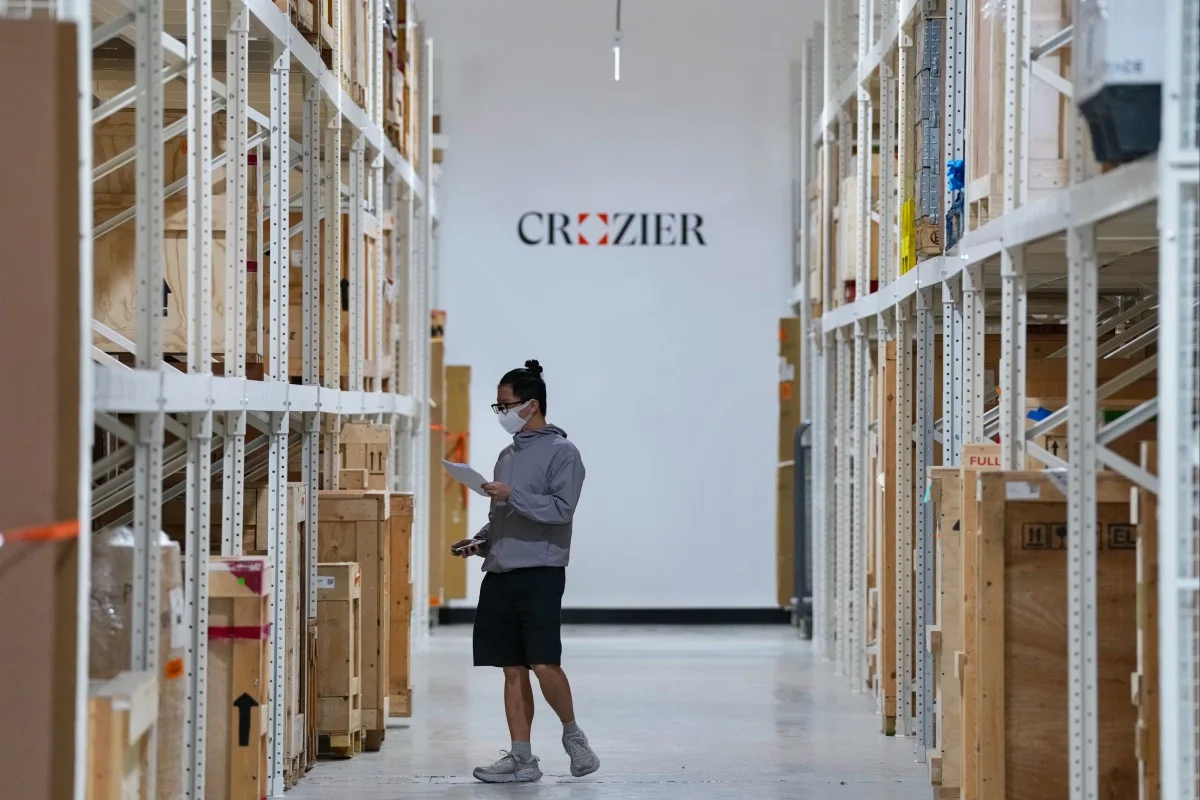
(Photo Credit: SCMP)
Hong Kong’s art logistics sector is booming as companies such as Crozier and homegrown Eythos seize on the government’s vision to crown the city a world-leading art trading capital. Crozier, a US firm with global outposts from New York to Paris, boosted its Hong Kong footprint by 50% last year, unveiling a cutting-edge Kwai Chung facility despite market ups and downs. General manager Ken Ng attributed the tens-of-millions-HKD renovation to attractive rents and promise of business from the Greater Bay Area, equipping the space with round-the-clock museum-grade climate control costing quadruple the standard AC, as well as enhanced fire safety and event lounges overlooking viewing galleries.
Eythos, founded in 2024 by Lewis Cheng, echoes this momentum with its 6,400 sq m Tsing Yi site featuring tailored rooms for paintings, films, photos, and luxury products. Biometric security, gas suppression technology, and special hanging racks set it apart from other facilities. The facility is also backed by Hong Kong powerhouses Art Basel Hong Kong and Maison&Objet via partnerships. As Hong Kong leverages its frictionless hub status, these investments position it to serve privacy-seeking clients and international galleries with lower shipping costs and a physical space for more privacy while trading their works.
Cheng laments that Hong Kong still lags behind in the logistics and storage of artworks, and that the industry has not truly caught up to the sophisticated level where collectors and institutions are today.
Subsequently, both executives also press for government action to aid the expansion of this industry further; and the government is working to meet this need, as Secretary for Culture, Sports and Tourism Rosanna Law Shuk-pui told the Legislative Council earlier that the government would conduct a study on taxes, financing, talent and other areas related to art trading, to be completed within the year.
News Source: https://www.scmp.com/news/hong-kong/hong-kong-economy/article/3341975/art-storage-companies-expand-hong-kong-amid-government-promotion-sector
(2) Smithsonian to return sculptures to India after provenance research confirmed they were illegally removed from temple sites
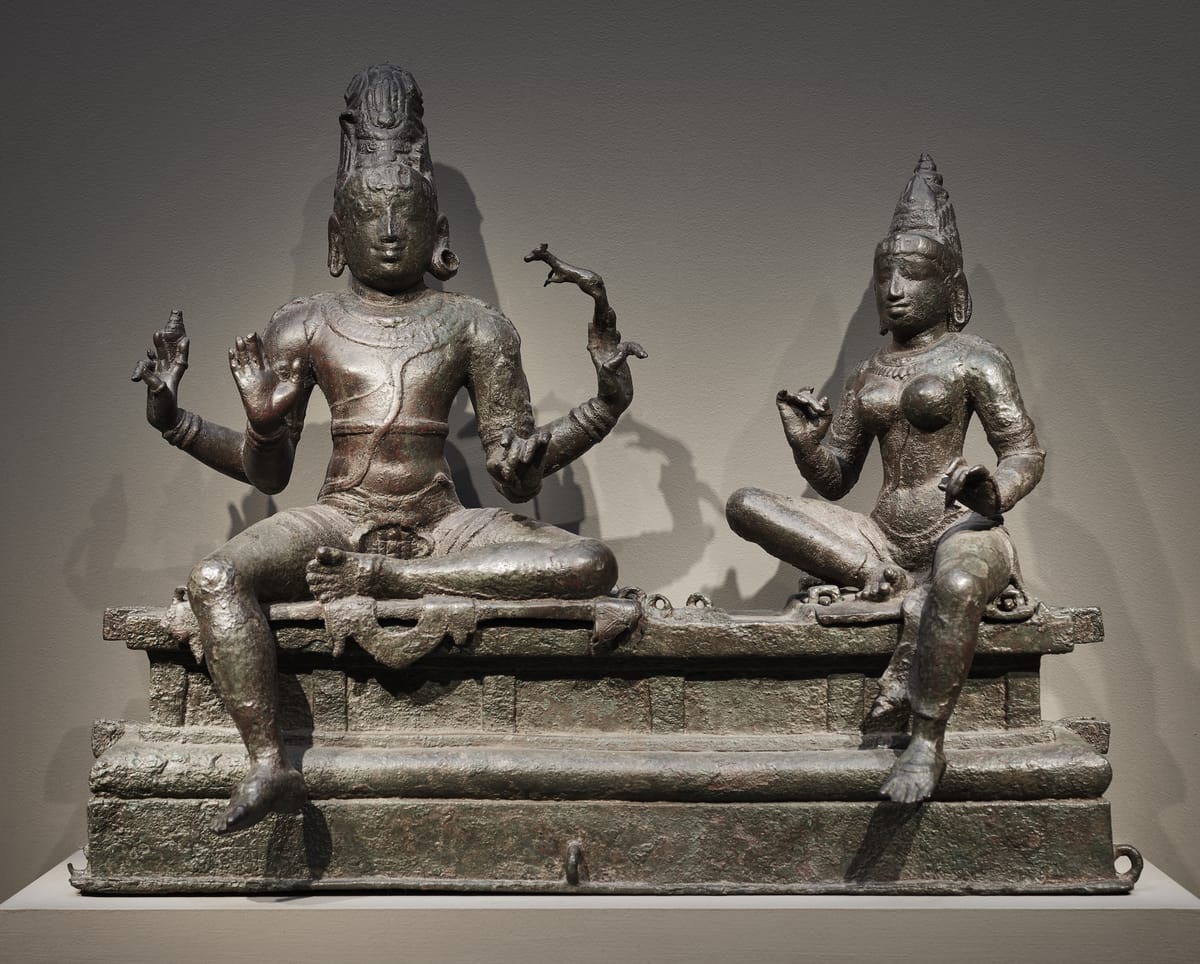
(Photo Credit:National Museum of Asian Art)
The Smithsonian Institution’s National Museum of Asian Art announced on 28 January 2026 that it will return three ancient cast-bronze Hindu sculptures to India, which were looted from Tamil Nadu temples and smuggled abroad in the mid-20th century. The centuries-old artifacts surfaced through murky provenance before entering the museum’s collection.
Two bronzes being the 12th-century “Somaskanda,” depicting Shiva, Parvati, and son Skanda from Alattur’s Visvanatha Temple, and 16th-century “Saint Sundarar with Paravai,” portraying Tamil poet-saint Sundarar and wife from Veerasolapuram’s Shiva Temple first arrived in the US via Arthur M. Sackler’s 1987 gift of 1,000 objects to inaugurate his namesake gallery. The statues will be transferred to India’s Embassy in Washington, DC.
While the other two are to be returned outright, “Shiva Nataraja” remains on long-term loan for an ongoing exhibition, sparking questions from activists including India Pride Project’s co-founder Vijay Kumar, who insists that bronzes are “living gods” belonging to temples and not for the Indian government to lend out.
India Pride Project’s research has reclaimed over 10 bronzes for temples in five years. The Smithsonian’s move highlights a global momentum for repatriation amid scrutiny of Western museums’ colonial-era holdings and illicit trade networks.
News Source: https://hyperallergic.com/smithsonian-to-return-three-looted-bronzes-to-india/
(3) Who Owns Traditional Art in the Age of AI? DPIIT’s Royalties Plan Risks Excluding Copyright of Original Creators

(Photo Credit: Pixabay)
At a forum hosted by the Software Freedom Law Centre at India’s IIIT Hyderabad on 31 January 2026, experts dissected flaws in the DPIIT’s Copyright Royalties Collective for AI Training (CRCAT) proposal, which seeks to pool and redistribute payments for content used in training large language models via collective management organisations (CMOs).
A core concern is the ownership of photographed traditional arts, such as textiles or truck murals. Photographers may copyright their images, but underlying cultural works from untraceable communities such as India’s Bhojpur fabrics or Kutch designs will exclude its rural artisans, who do not even know about the existences of CMOs.
Some participants noted that the system will essentially benefit high-profile musicians such as Arijit Singh, who earn a living through royalties. However, the same cannot be said for the creators whose identity remains unknown. One participant notes the irony of letting AI train on the works of these unknown creators, while they themselves receive no remuneration or representation.
In addition to this, the unclaimed royalties of these unknown creators that CRCAT intends to offer risk sitting idle for three years in CRCAT’s welfare fund before flowing to government schemes, effectively granting AI developers a free pass while side-lining these grassroots talents.
AI companies frequently invoke India’s fair dealing provisions, claiming their models merely “learn” from data without outright copying. Forum participants challenged this vigorously, questioning whether such provisions should apply only to individuals or profit-driven corporations as well. They explained that AI systems essentially ingested knowledge for later regurgitation, which in itself is hardly true “learning”, enabling firms to sidestep payments by seemingly “humanizing” their technology.
News Source: https://www.medianama.com/2026/02/223-dpiit-royalties-plan-risks-excluding-copyright-original-creators/
(4) M.F. Husain in Qatar: bridging Asia and the Arab world
(Photo Credit: The Art Newspaper)
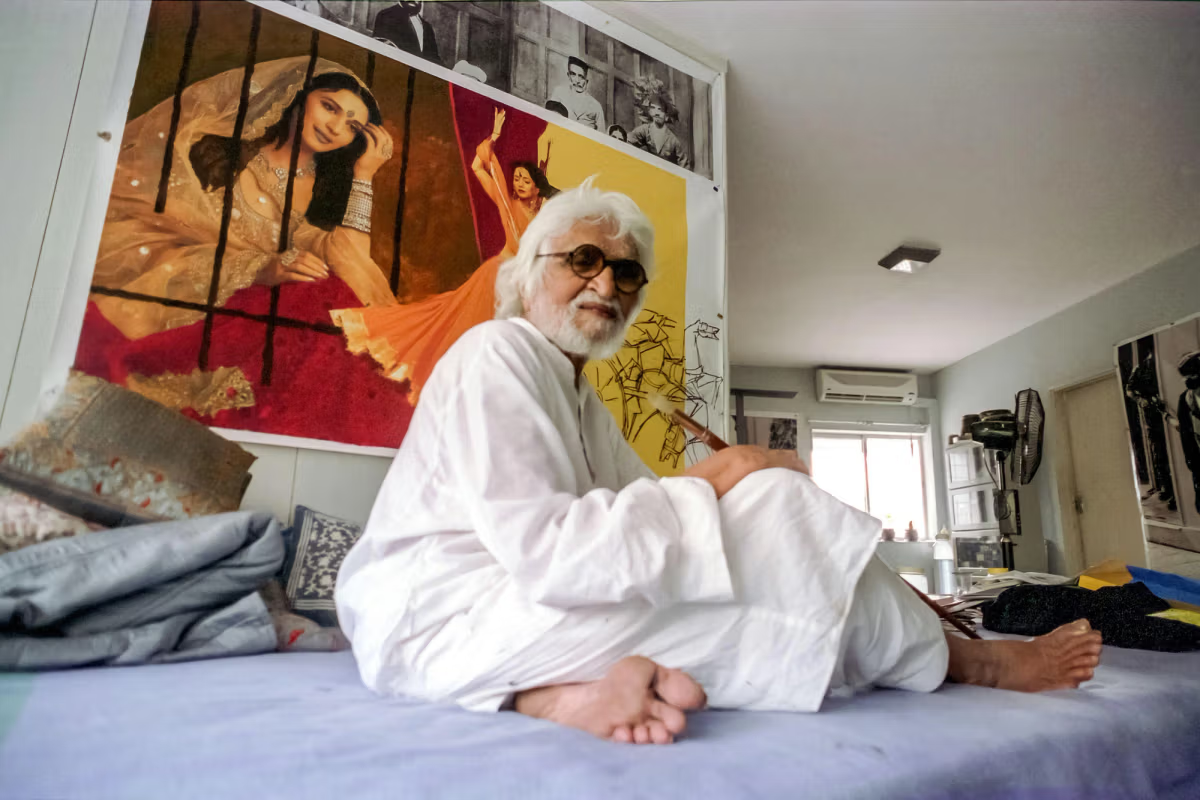
Often hailed as India’s Picasso, Maqbool Fida Husain mirrored his nation’s birth pangs, from Partition violence to secular democracy through a blend of traditional culture and contemporary modernism. Born in 1913 to a Shia Muslim family near Mumbai, he co-founded the Progressive artists group, bridging Eastern concepts and Western techniques while celebrating India’s multiplicity.
A practicing Muslim and cosmopolitan figure, Husain embodied the politics of Nehruvian as an Indian National Congress senator. In the 1990s, he was driven away from India after receiving accusations of blasphemy for depicting a Hindu goddess in the nude. By 2009, he has settled in Qatar, accepted a citizenship in 2010 and died in London a year later. Curator Noof Mohammed said that Qatar offered Husain creative sanctuary, who, while in Qatar, took on a massive project called “Arab Civilisation”, which consists of 99 works on different aspects of Islamic and Middle Eastern history.
In works from this time, Husain’s expressive power comes through in the interaction of forms, each representing one of the major strands of beliefs in the world, and showcases how Husain’s inner cultural identity would slowly shift away from India. Just by a comparative study of Husain’s horse-themed artworks shown at the Doha Museum, visitors would notice how Husain’s symbolism in the horse would start as a reflection of his Indian identity to eventually, an Arabic burst.
News Source: https://www.theartnewspaper.com/2026/02/03/mf-husain-in-qatar-bridging-asia-and-the-arab-world