Asia Art Weekly News Bulletin – ISSUE 53 Week of 23 February 2026
(1) ‘Belongs to everyone’: wheelchair dancers move beyond boundaries in Hong Kong
Wayfaring Beyond, a collaboration between the Hong Kong Dance Company and the China Hong Kong Para Dance Sport Association, unites able-bodied and wheelchair dancers in an inclusive performance that celebrates equality, connection, and the freedom of artistic expression.
(2) Collector Belinda Tanoto’s Art Foundation Showcases Cutting-Edge Art with a Mission to Build Out Singapore’s Art Scene
Belinda Tanoto’s Rituals of Perception, the inaugural exhibition of the Tanoto Art Foundation in Singapore, transforms a former school hall into an experimental showcase of global.
(3) Art as advocacy: Philippine mural contest adds to South China Sea messaging push
The Philippines has launched a nationwide mural contest encouraging artists to depict the “West Philippine Sea” through themes of unity, peace, and environmental pride, using art to raise public awareness and promote a peaceful national narrative amid the South China Sea dispute.
(4) Amid global Korean art boom, nat’l museum chief calls for bigger budget, new halls
The National Museum of Korea is expanding globally and modernizing at home through international exhibitions, K-pop collaborations, and institutional reforms to strengthen its collections and infrastructure amid surging global interest in Korean art.
(1) ‘Belongs to everyone’: wheelchair dancers move beyond boundaries in Hong Kong
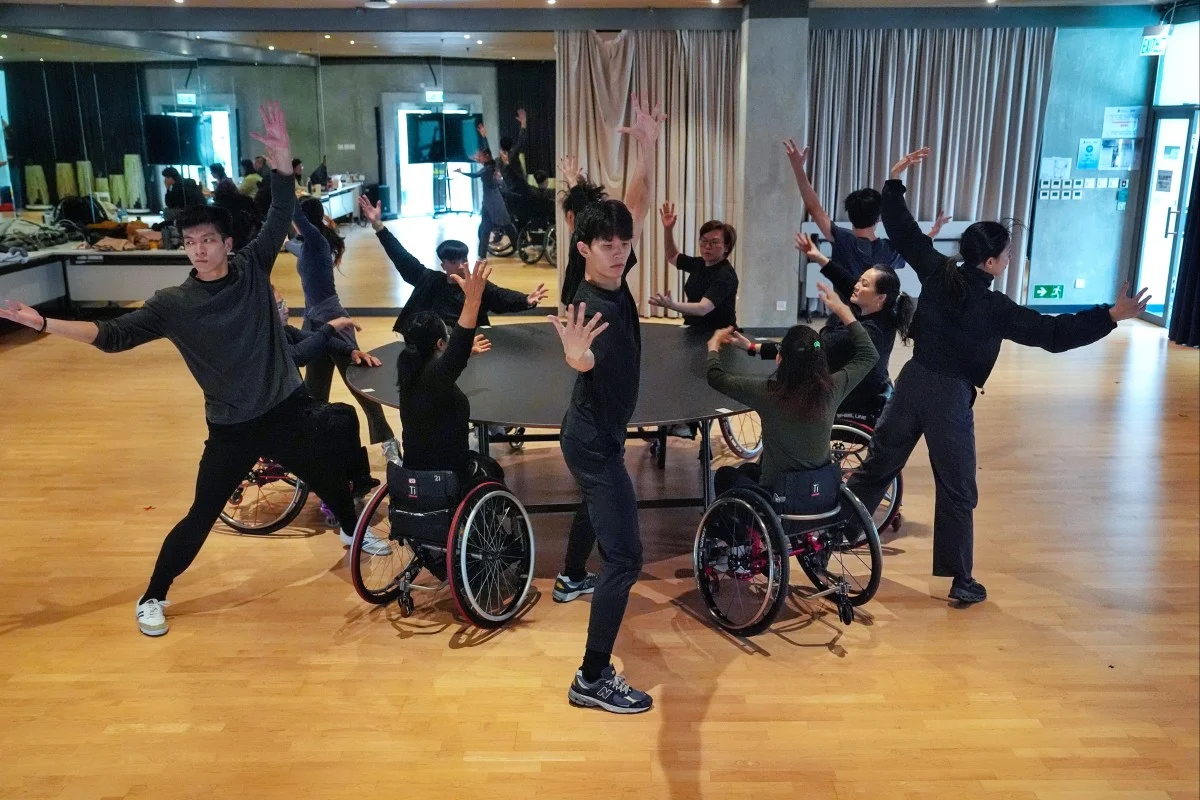
(Photo Credit: Elson Li)
A group of dancers, both able-bodied and wheelchair users, rehearsed passionately in a Hong Kong studio for Wayfaring Beyond, a barrier-free performance created by the Hong Kong Dance Company and the China Hong Kong Para Dance Sport Association. The production is part of the inclusive arts festival No Limits, taking place at Tai Kwun. It aims to promote accessibility and artistic equality through free public performances that unite dancers of all abilities.
Choreographer Ong Tze-shen drew inspiration from the teachings of the Chinese philosopher Zhuangzi, who challenged the concept of perfection and argued that true freedom exists in the mind rather than the body. The piece blends contemporary Chinese and wheelchair dance, using physical interaction and shared movement to express understanding, connection, and liberation from physical boundaries. Dancers communicate not through words but through body language, emphasizing harmony, resilience, and the beauty of collective motion.
Wheelchair dancer Evina Wong, who has over a decade of experience, said the collaboration allowed her to learn from professional dancers and deepen mutual respect between both groups. She expressed hope for more support and recognition of wheelchair dancing as both an art form and sport, highlighting that it involves complex movements using the spine and core, beyond what audiences might expect. Her goal is to inspire others with disabilities to participate in the arts and feel empowered to engage with the wider community.
Participants and organizers shared the vision of turning inclusivity from a slogan into daily practice. Dancer Ng Yuen-man said the project broke her initial fears and helped her see all dancers as equals, while co-choreographer Kelvin Lok stressed that everyone, regardless of ability, needs understanding and support. HKDance executive director Meggy Cheng added that their involvement in No Limits marks an important step toward future collaborations that celebrate diversity through art.
News Source: https://www.scmp.com/news/hong-kong/society/article/3344206/belongs-everyone-wheelchair-dancers-move-beyond-boundaries-hong-kong
(2) Collector Belinda Tanoto’s Art Foundation Showcases Cutting-Edge Art with a Mission to Build Out Singapore’s Art Scene
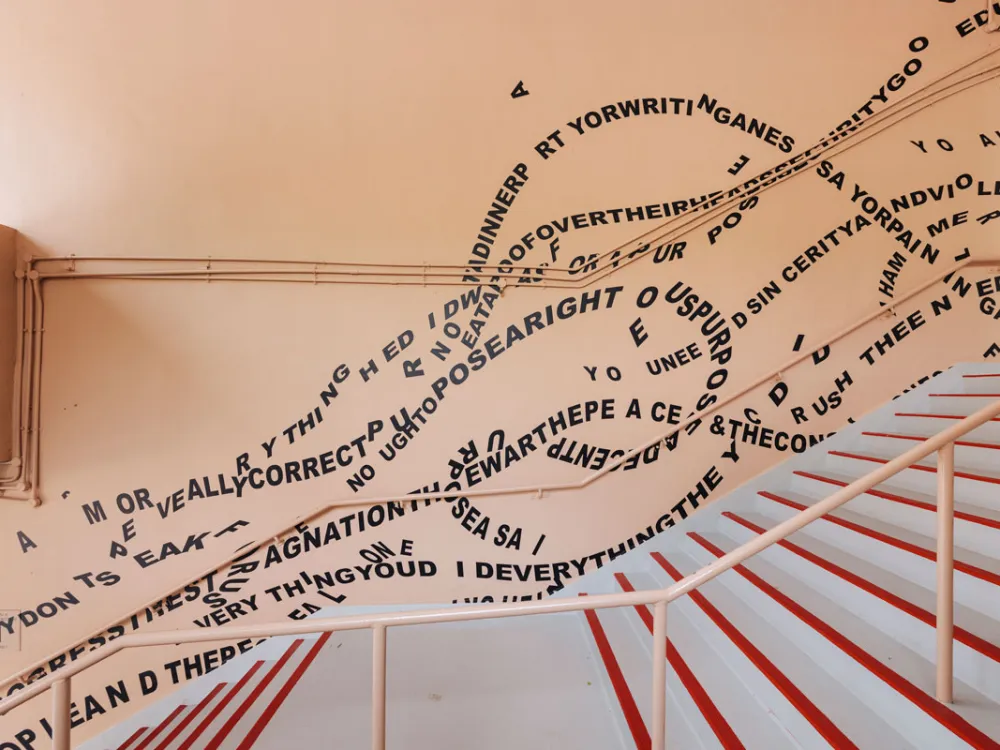
(Photo Credit:Tsang Kin-Wah/Art News)
In Singapore, collector Belinda Tanoto transformed a former 1960s school hall into an unconventional art venue for Rituals of Perception, the debut exhibition of her Tanoto Art Foundation (TAF). The foundation, launched just over a year ago, seeks to encourage dialogue across Southeast Asia’s art scene and promote accessibility by hosting exhibitions in approachable spaces rather than traditional galleries. Tanoto explained that the foundation’s flexibility, without a permanent home, allows it to experiment with formats that make art feel less exclusive.
Curated by artistic director Xiaoyu Weng, the exhibition features over 50 works by 23 artists from the Global South, exploring the theme of materiality in the digital era. It includes tactile creations crafted from clay, silk, and cement alongside high-tech installations involving artificial intelligence, 3D video, and robotics. The show balances contrasts, such as Anicka Yi’s futuristic kelp sculptures with animatronic insects and Pan Caoyuan’s luminous mother-of-pearl paintings, to invite viewers to reflect on the intersection of physical and technological worlds.
More than half the exhibited pieces come from Tanoto’s own collection, reflecting her interest in process-based art. The lineup spans diasporic voices like Berlin-based Filipina Canadian artist Stephanie Comilang and London-based Balinese-descended artist Sriwhana Spong. Two new commissions add depth: THE E PLE AND THE P O LE ALONE by Hong Kong’s Tsang Kin-wah reimagines Mao Zedong’s famous quote as a fragmented text installation on free thought, while Trisha Baga’s 3D video MORE immerses viewers in surreal imagery exploring how technology envelops human existence from birth.
The show also includes distinct works like Carolina Fusilier’s surreal sci-fi installation and Chinese artist Tong Wenmin’s performance pieces that confront humankind’s changing relationship with nature and power. Rituals of Perception marks a rare private initiative in Singapore’s art scene, which has long been shaped by state institutions. Its success suggests growing room for independent endeavors that prioritize experimentation, inclusivity, and cross-cultural exchange.
News Source: https://www.artnews.com/art-news/news/tanoto-art-foundation-inaugural-exhibition-1234773925/
(3) Art as advocacy: Philippine mural contest adds to South China Sea messaging push
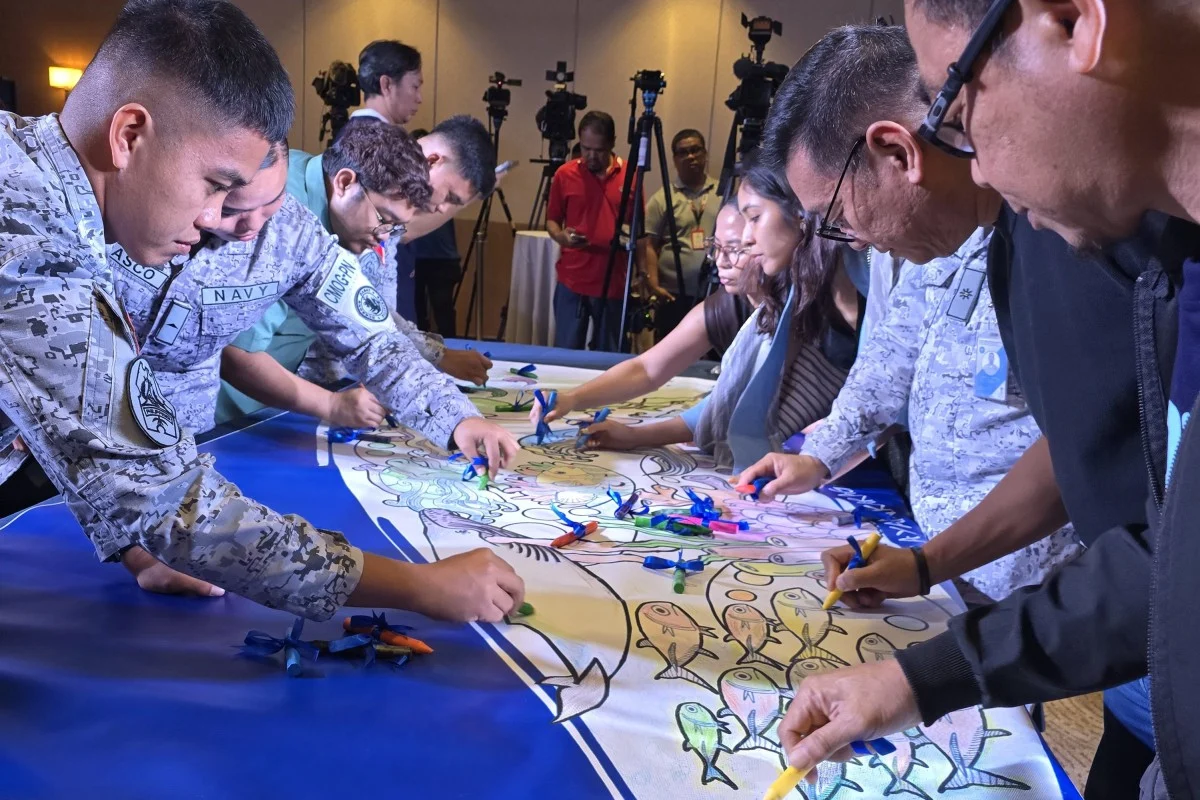
(Photo Credit: SCMP)
A nationwide mural competition has been launched in Manila to encourage Filipinos to creatively express their connection to the “West Philippine Sea,” part of the country’s disputed maritime territory in the South China Sea. Supported by several government institutions and organised by the We Protect Our Seas Foundation, the initiative offers over 5 million pesos in prizes and invites artists, students, and amateurs to produce public artworks that embody themes of freedom, peace, unity, and environmental awareness without resorting to political or violent imagery. Director and artist A.G. Sano emphasised that the goal is to present the maritime issue in a positive light while inspiring national solidarity.
Participants are asked to submit murals under the theme “Colour the Sea for Freedom”, depicting everyday life and the cultural significance of the sea to Filipinos. The contest’s organisers, including former Supreme Court justice Antonio Carpio, maritime law expert Jay Batongbacal, and Philippine Coast Guard spokesman Commodore Jay Tarriela, said the campaign aims to raise public awareness and integrate civic participation into the broader maritime dialogue. Winners will be chosen in July, with top prizes reaching up to 1 million pesos, and distinctions given across amateur and professional categories to ensure inclusivity.
Beyond celebrating art, the project is part of a larger cultural strategy to reshape how citizens engage with the South China Sea conflict. Filmmaker Baby Ruth Villareal, one of the contest’s conceptual advisers, described the initiative as a peaceful alternative to geopolitical confrontation: a “war of narratives” fought through creativity instead of weapons. This mirrors other artistic movements in the country, such as the 2025 rap competition organised by Atin Ito and Morobeats, which transformed patriotic sentiment into music and digital art.
By merging artistic expression with civic advocacy, the mural contest reinforces the Philippines’ long-standing appeal for peaceful assertion of its maritime rights. It also reflects growing efforts among local artists and activists to mobilise national pride through culture rather than traditional diplomacy, echoing the 2016 Hague ruling that dismissed China’s vast claims in the South China Sea but left enforcement to the realm of politics and public will.
News Source: https://www.scmp.com/week-asia/lifestyle-culture/article/3344326/art-advocacy-philippine-mural-contest-adds-south-china-sea-messaging-push
(4) Amid global Korean art boom, nat’l museum chief calls for bigger budget, new halls
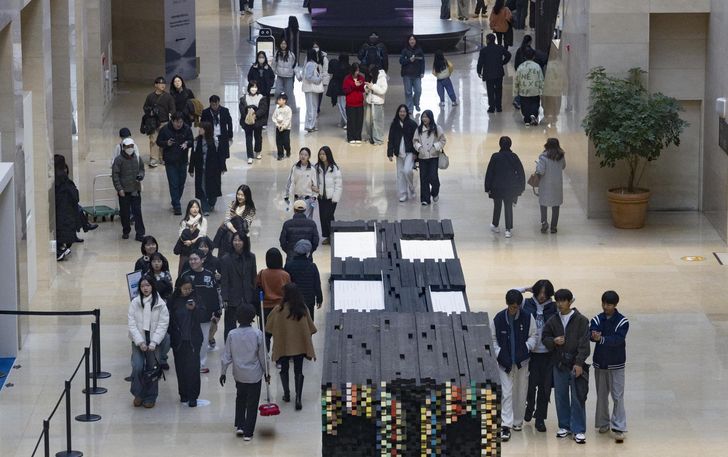
(Photo Credit: The Korea Times)
The National Museum of Korea (NMK) is expanding its global footprint as Korean art garners unprecedented international attention, sending major cultural treasures from the Lee Kun-hee collection to institutions like the Art Institute of Chicago, the British Museum, and the Guimet Museum in Paris. From ancient Silla artifacts to Goryeo Buddhist masterpieces, these traveling exhibitions underscore the depth of Korea’s artistic heritage and the increasing global appetite for it. Director You Hong-june noted that international institutions are actively seeking partnerships, reflecting Korea’s growing cultural influence.
To connect historical legacy with modern cultural trends, NMK is pursuing new collaborations that merge tradition and pop culture. Its upcoming partnership with K-pop group Blackpink and entertainment company HYBE will link Korean artistry with contemporary global fandom, introducing new museum merchandise inspired by music and cultural icons. At the same time, NMK is planning a large-scale international exhibition titled 5,000 Years of Korean Art, set to tour globally in 2027 and showcase the nation’s creative evolution across millennia.
Director You emphasized that broadening international exposure is only one part of the museum’s mission. He called for stronger domestic investment in collection building, pointing out that NMK’s limited acquisition budget of 4 billion won restricts its ability to secure important works. He argued that museum directors should have greater autonomy to make swift acquisitions and see such efforts as a lasting part of their institutional legacy.
The surge in attendance, now far exceeding the facility’s intended capacity, has also underscored the need for expansion. Plans are underway to build an additional exhibition hall and improve visitor amenities, including new dining and parking facilities. Organizational reforms are also being explored, such as introducing a deputy director system to align NMK’s operations with international museum standards and ensure the institution can support its growing global collaborations.