Asia Art Weekly News Bulletin – ISSUE 65 Week of 18 May 2026
(1) “Hong Kong showcases cultural rise at Venice Biennale” says Rosanna Law
M+ and the Centre Pompidou have signed a five-year partnership that will send Hong Kong artworks to Paris, launch joint exhibitions and research, and deepen cultural exchange between the two museums ahead of a major cross continental show expected around 2029 or 2030.
(2) China’s main event for International Museum Day opens in Hohhot
China celebrated International Museum Day 2026 in Hohhot by highlighting record growth in its museum sector, stronger international exchange and a major new relics exhibition. Officials said museums are becoming more important as cultural bridges, with rising visitor numbers and expanded overseas cooperation driving that role.
(3) Seoul’s Centre Pompidou Hanwha Museum opens next month, can it live up to expectations?
The calligraphy on Chinese university gates reflects more than aesthetics. It embodies political history, cultural prestige and institutional identity. Many elite universities use inscriptions linked to leaders such as Mao Zedong, while others draw on literary figures, showing how art, power and education have long been closely intertwined in China.
(4) The National Museum of Modern and Contemporary Art exhibition revisits Korea-Japan artistic ties since 1945
The calligraphy on Chinese university gates reflects more than aesthetics. It embodies political history, cultural prestige and institutional identity. Many elite universities use inscriptions linked to leaders such as Mao Zedong, while others draw on literary figures, showing how art, power and education have long been closely intertwined in China.
(1) Hong Kong’s M+ museum to showcase collections in Paris under 5-year deal
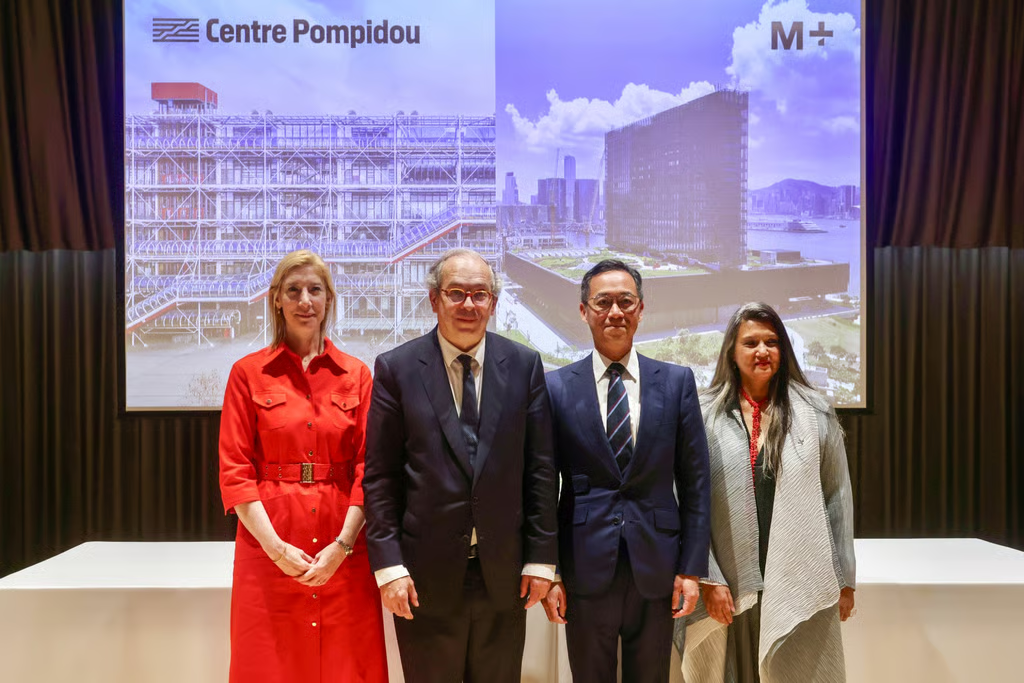
(Photo Credit: Jonathan Wong / SCMP)
Hong Kong’s M+ museum and France’s Centre Pompidou have agreed to a five-year partnership that will bring works from Hong Kong to Paris for the first time, while also expanding research, exhibitions and professional exchanges between the two institutions.
The agreement was signed at M+ on Friday by museum director Suhanya Raffel and Centre Pompidou president Laurent Le Bon, with French Consul General Christile Drulhe attending the ceremony. Under the deal, a major joint exhibition will open first in Paris after the Pompidou completes its planned renovation, likely in 2029 or 2030. The show will later travel to Hong Kong, where it will focus on visual culture in France and China.
Raffel said the collaboration marked an important step for M+, which opened only five years ago, and described the Pompidou as an early model for the Hong Kong museum. She said the partnership reflected Hong Kong’s role as a cultural bridge between East and West.
Beyond the headline exhibition, the two museums will commission new artworks, stage further shows at M+ from 2027 and support four years of joint research. The agreement also includes exchanges for curators and researchers, as well as a funded postdoctoral fellowship focused on Western and Asian art from the 20th and 21st centuries.
(2) China’s main event for International Museum Day opens in Hohhot
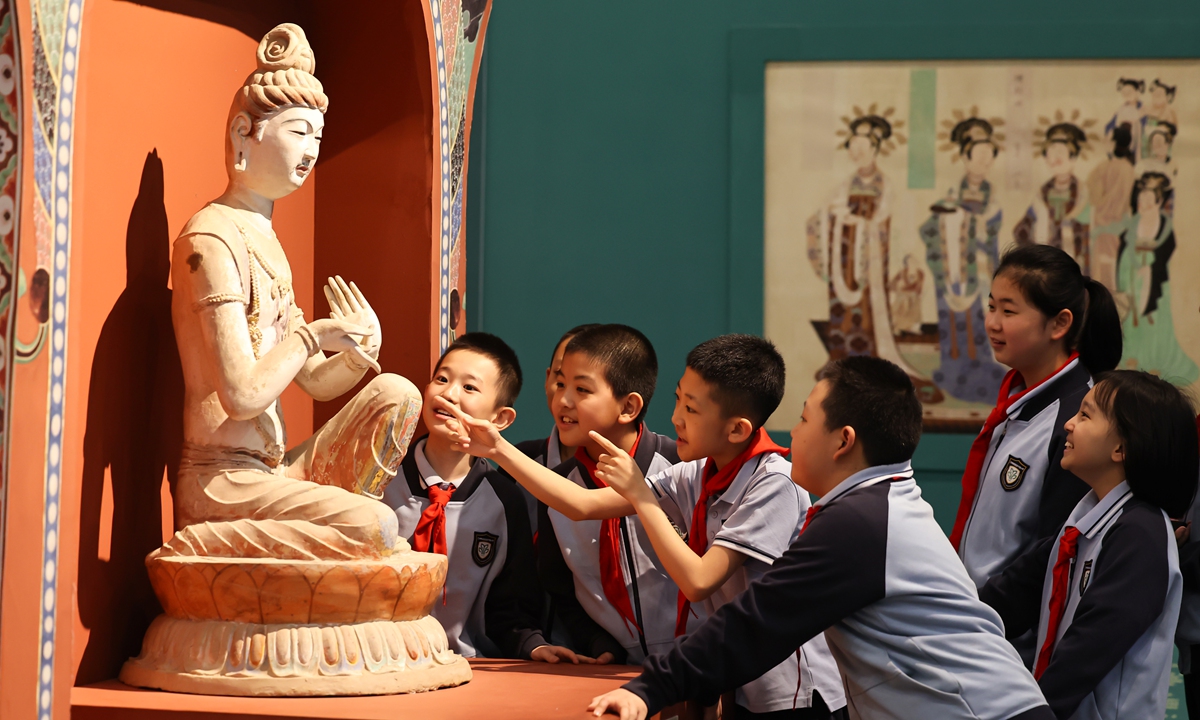
(Photo Credit: VCG)
China marked International Museum Day 2026 on Monday with its main national event held at the Inner Mongolia Museum in Hohhot, as officials highlighted the country’s fast growing museum sector and its expanding role in global cultural exchange. By the end of 2025, China had 7,188 registered museums, more than 1,400 higher than five years earlier, with over 91 percent offering free admission.
Officials said museums across the country staged more than 40,000 exhibitions and over 580,000 educational events in 2025, drawing a record 1.56 billion visits. This year’s international theme, “Museums Uniting a Divided World,” aligned with China’s push to preserve history, enrich public cultural life and deepen dialogue with other civilizations.
At the ceremony, authorities launched the 2026 Civilization Bridge Program to promote overseas exhibitions of Chinese cultural relics. In 2025 alone, China organized more than 110 exhibitions abroad and hosted over 240 inbound exhibitions across more than 20 countries and regions.
A major highlight of this year’s celebration is the Golden and Jade Brilliance, Diverse and Splendid China exhibition, which features 386 sets of top tier bronze, gold and jade artifacts from 58 institutions. Organizers said the display reflects the depth of Chinese civilization and the museum sector’s role in connecting cultures, regions and historical periods.
News Source: https://www.globaltimes.cn/page/202605/1361307.shtml
(3) Seoul’s Centre Pompidou Hanwha Museum opens next month, can it live up to expectations?
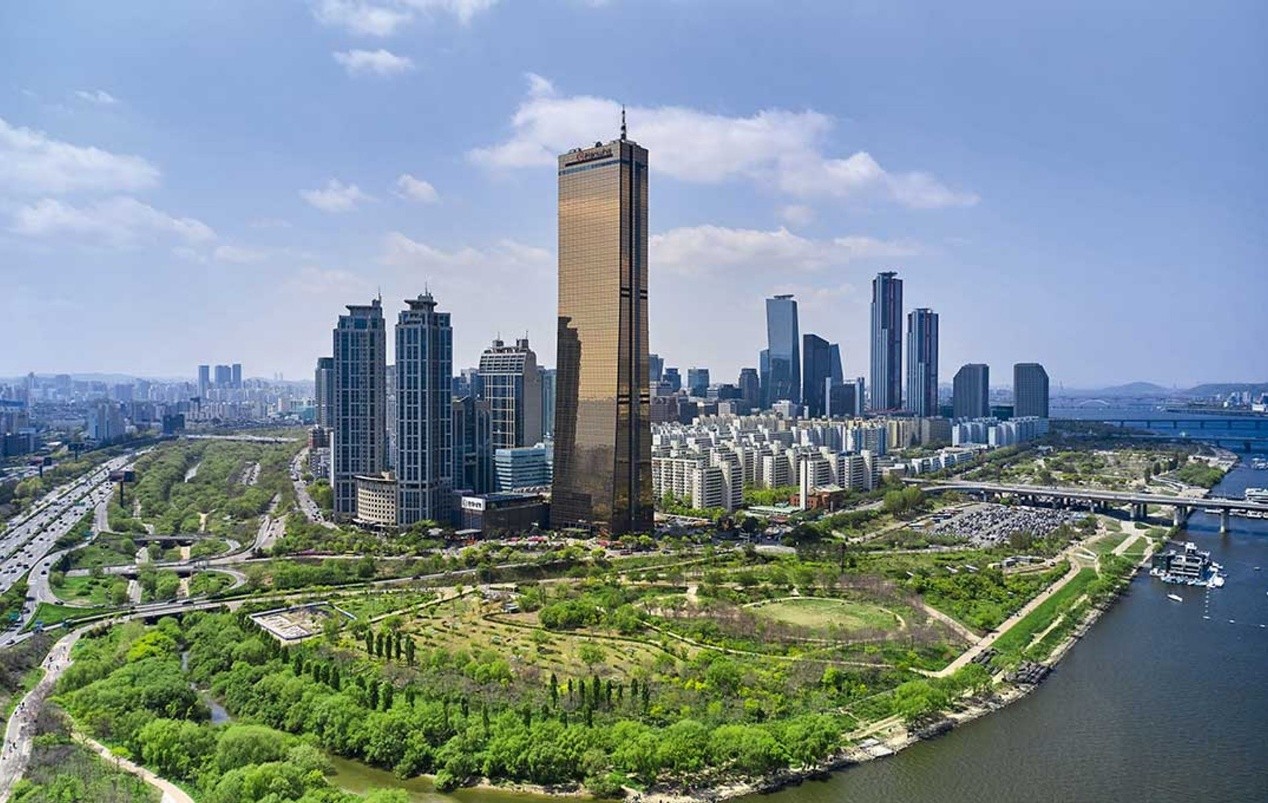
(Photo Credit: JinChang / The Art Newspaper)
Seoul’s new Centre Pompidou Hanwha will open on 4 June 2026, becoming the Pompidou’s second outpost in Asia after its Shanghai partnership launched in 2019. The museum will run as a four-year collaboration between the Hanwha Foundation of Culture and the Centre Pompidou, bringing two exhibitions a year from the French institution to South Korea. The first, The Cubists: Inventing Modern Vision, features more than 90 works by 40 artists and will run until 4 October 2026.
Housed across four floors of Hanwha Group’s 63 Building, the 11,000 square metre museum is designed as both an international platform and a locally focused institution. One main gallery will show early 20th century European art from the Pompidou collection, while another will present contemporary global art with a Korean emphasis. Organisers say the opening display places Korean artists such as Kim Whanki and Yoo Youngkuk in dialogue with Western Cubism, while also giving overdue attention to women including Sonia Delaunay, Natalia Goncharova, Suzanne Duchamp and María Blanchard.
The launch comes as the Paris Pompidou undergoes a five year closure for renovation and expands abroad through new partnerships. Yet the Seoul project has also drawn criticism. Some in Korea’s art world question the cost and fear growing dependence on imported museum brands, while protesters have linked the opening to wider concerns over Hanwha Group’s defence industry ties.
(4) Legacy in ink: how calligraphy links China’s political heritage to academic institutions
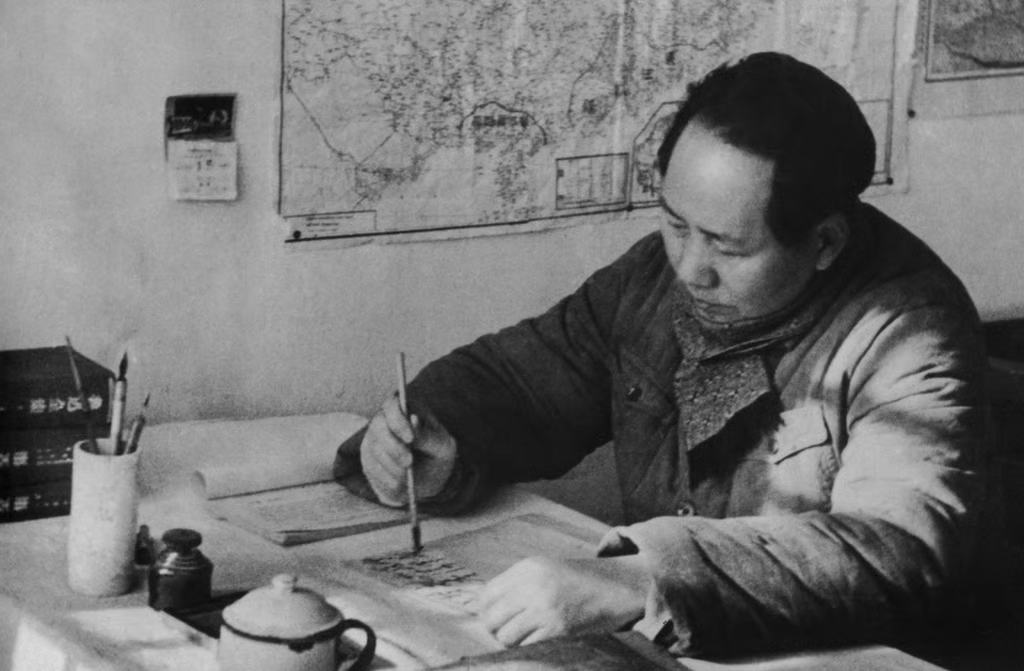
(Photo Credit: FPG / Hulton Archive / Getty Images)
The names displayed on the gates of many leading Chinese universities are more than simple signs. They reflect a long tradition in which calligraphy carries artistic weight, political symbolism and institutional prestige. In China, calligraphy has long been regarded as one of the highest art forms, shaped by both cultural taste and state authority since imperial times.
That tradition continues in modern higher education. More than 70 per cent of universities in the elite Project 211 group are said to feature titles written, or later assembled, from the handwriting of political leaders. Mao Zedong is the most prominent example, with about 40 universities using inscriptions linked to his distinctive script. Peking University and Tsinghua University were among the institutions that sought his calligraphy in the early years of the People’s Republic.
Not all university titles were written directly for the purpose. Many were compiled from characters drawn from letters, manuscripts or older documents, a common practice known as ji zi. Other institutions adopted calligraphy from historical cultural figures such as Wang Xizhi or Lu Xun, adding literary and artistic significance to their public identity.
At the same time, university inscriptions also reveal political change. In recent years, anti-corruption efforts have curbed officials’ involvement in artistic associations, while inscriptions tied to disgraced figures have sometimes been removed from campuses.