Asia Fashion Weekly News Bulletin – ISSUE 56 Week of 16 March 2026
(1) Oscars glory for ‘K-Pop Demon Hunters’ puts K-fashion in the spotlight
Netflix’s KPop Demon Hunters, blending K-pop idol life with Korean demon-hunting mythology, became the platform’s most-watched title ever and swept Oscars for Best Animated Feature and Best Original Song, with Arden Cho amplifying Korean culture on the red carpet in Miss Sohee couture.
(2) In their words: Tania Mohan on the rise of Asian luxury brands in Hong Kong
Hong Kong-born Tania Mohan, founder of luxury lifestyle brand Tabla highlights Asia’s rising dominance in global fashion.
(3) Chinese fashion designers take off from European runways
Chinese designers like Guangzhou-based Mithridate, Shanghai’s Susan Fang, Uma Wang, Ruohan, and Qin Xu are dominating London and Paris Fashion Weeks by fusing traditional Chinese craftsmanship
(4) Guess says it will shut all mainland China stores amid retail rethink
Guess is closing all mainland China stores by March’s end to adopt a new business model, joining other foreign brands like Old Navy and Topshop in retreating amid weak localization and fierce domestic competition
(1) Oscars glory for ‘K-Pop Demon Hunters’ puts K-fashion in the spotlight
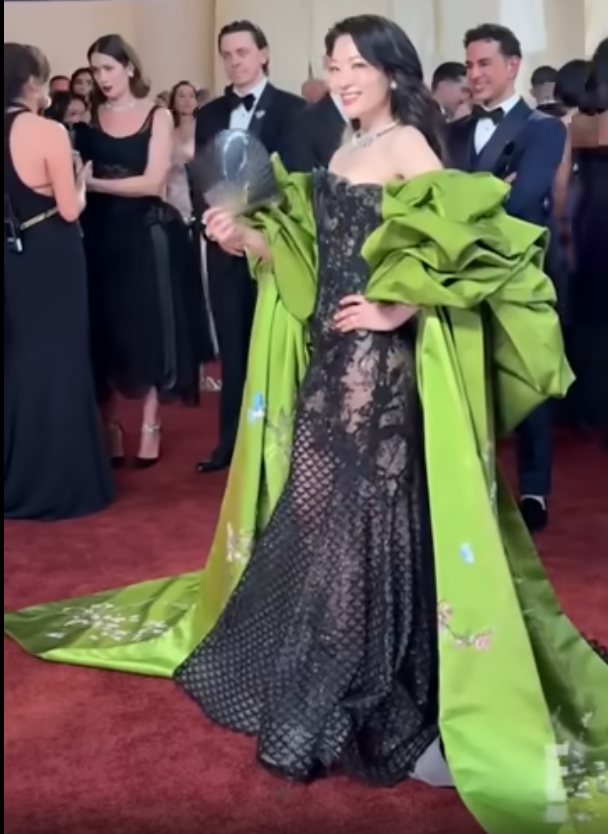
(Photo Credit: enews)
Netflix’s KPop: Demon Hunters, the most-viewed film in its platform’s history with over 500 million views, dominated the 98th Academy Awards by winning Best Animated Feature and Best Original Song for its K-pop track “Golden“, the first ever for the genre.
On the Oscars red carpet, KPop Demon Hunters voice star Arden Cho spotlighted Korean fashion in a Miss Sohee Spring 2026 couture black lace mermaid gown with emerald silk sleeves embroidered in natural motifs, amplifying the film’s cultural motifs
Sohee Park founded Miss Sohee in London in 2020. The label reinterprets hanbok silhouettes, Korean Minhwa paintings, and nacre crafts into haute couture. Celebrities like Blackpink’s Lisa and Anya Taylor-Joy have worn its designs. Miss Sohee debuted officially on the Paris Haute Couture calendar in 2025. This signals K-fashion’s rising global influence.
News Source: https://jingdaily.com/posts/oscars-glory-for-k-pop-demon-hunters-puts-k-fashion-in-the-spotlight
(2) In their words: Tania Mohan on the rise of Asian luxury brands in Hong Kong
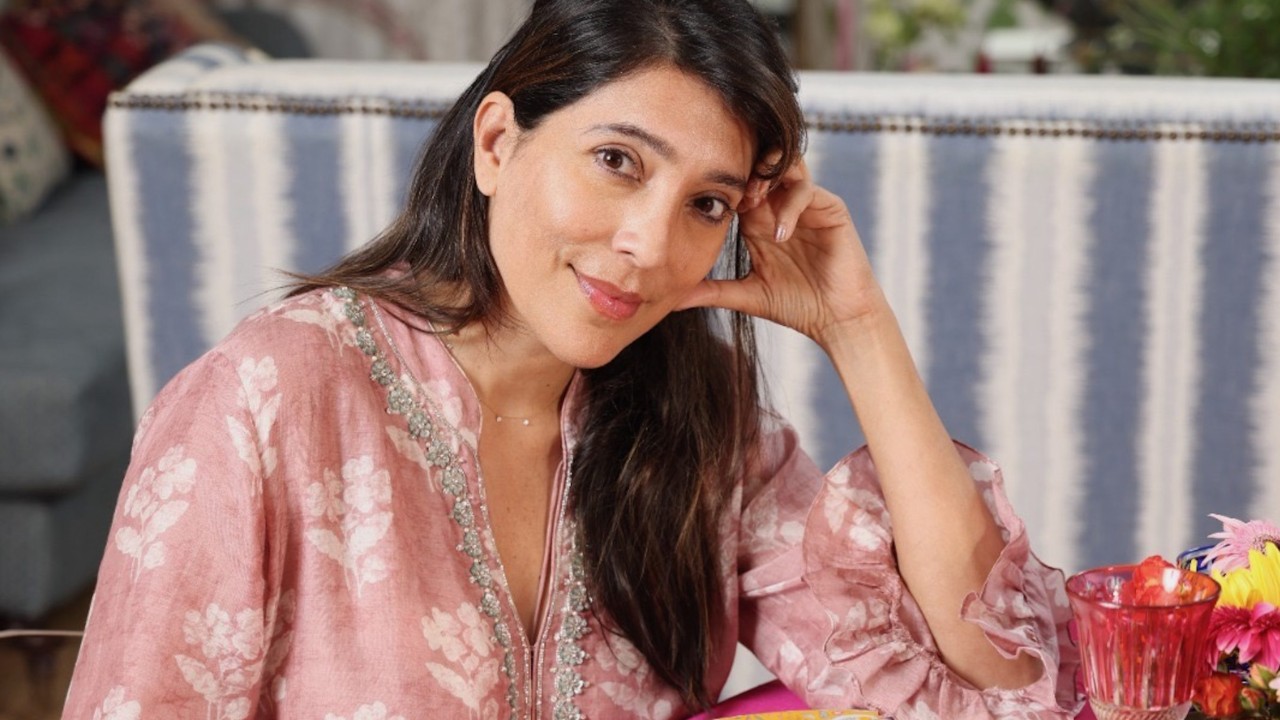
(Photo Credit: Tania Mohan)
Tania Mohan, born and raised in Hong Kong, founded Tabla, a luxury lifestyle brand where she serves as creative director. Widely recognised as a style expert, she has appeared in media across Asia and beyond. Her work reflects a deep connection to local roots while embracing global appeal.
She draws inspiration from landmark events like the 1994 launch of Shanghai Tang by David Tang, which blended traditional Chinese artistry, such as Mao jackets and cheongsams, with modern fabrics, vibrant colours, and innovative silhouettes. This fusion revitalised classic garments into must-haves, setting a benchmark for Asian luxury. For Tania, her own milestone was Tabla’s 25th anniversary party in October 2024 at her Prince’s Building boutique, where friends gathered to celebrate.
Looking ahead, Tania sees Asia reshaping the global fashion industry as it moves beyond Western dominance. Craftsmanship from “Made in China” and “Made in India” labels now garners worldwide acclaim, signalling an era of celebrated Asian luxury. She predicts an “Asian invasion” in high fashion. Among local talents, she admires G.O.D. for its quirky, Hong Kong-proud products, like mahjong-themed mugs and coasters, which resonate with her as a player of the game.
(3) Chinese fashion designers take off from European runways
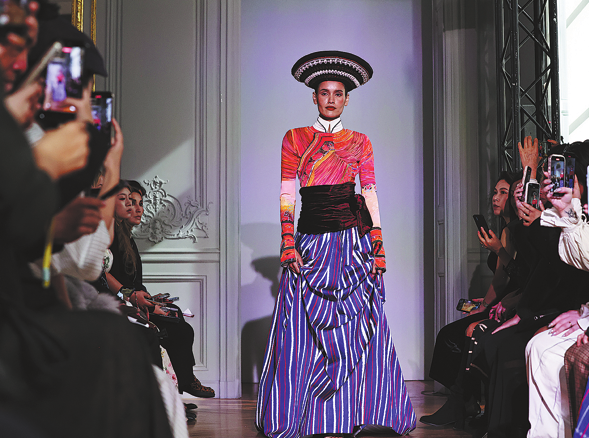
(Photo Credit: GAO JING/XINHUA)
London and Paris Fashion Weeks continue to spotlight emerging Chinese designers, underscoring China’s growing sway in global fashion. Mithridate, launched in London in 2018 but now Guangzhou-based, earned applause for blending Chinese embroidery with modern aesthetics across eight seasons. The fashion house’s shift to Guangzhou, where it is close to manufacturing hubs, fosters tighter artisan ties. Younger consumers have also driven this shift, who favors experiential self-reward over conspicuous luxury.
Wang Yuhan and Susan Fang, both Central Saint Martins alumni, also shone at London Fashion Week with intricate traditional-modern fusions. Fang relocated to Shanghai, enabling artisan collaborations and consumer insights, while Wang remains London-based despite her sophisticated Chinese integrations. This home-base choice highlights tensions between Western prestige and domestic roots.
Paris Fashion Week featured Shanghai’s Uma Wang, Ruohan, and Qin Xu, the latter of which showcased Hami Uygur embroidery via artisan Ranagul Sopi. Feng Chen Wang balances Shanghai and London presences. These designers prize Chinese bases for coordinating with youth markets and long-term craftspeople.
Global demand surges for traditional Chinese elements modernised, as seen in diverse embroideries. Younger consumers propel this heritage internationalisation, urging designers to base in China or risk disadvantage against peers leveraging local advantages.
News Source: https://www.chinadaily.com.cn/a/202603/14/WS69b4b745a310d6866eb3dcbb.html
(4) Guess says it will shut all mainland China stores amid retail rethink
(Photo Credit: SCMP)
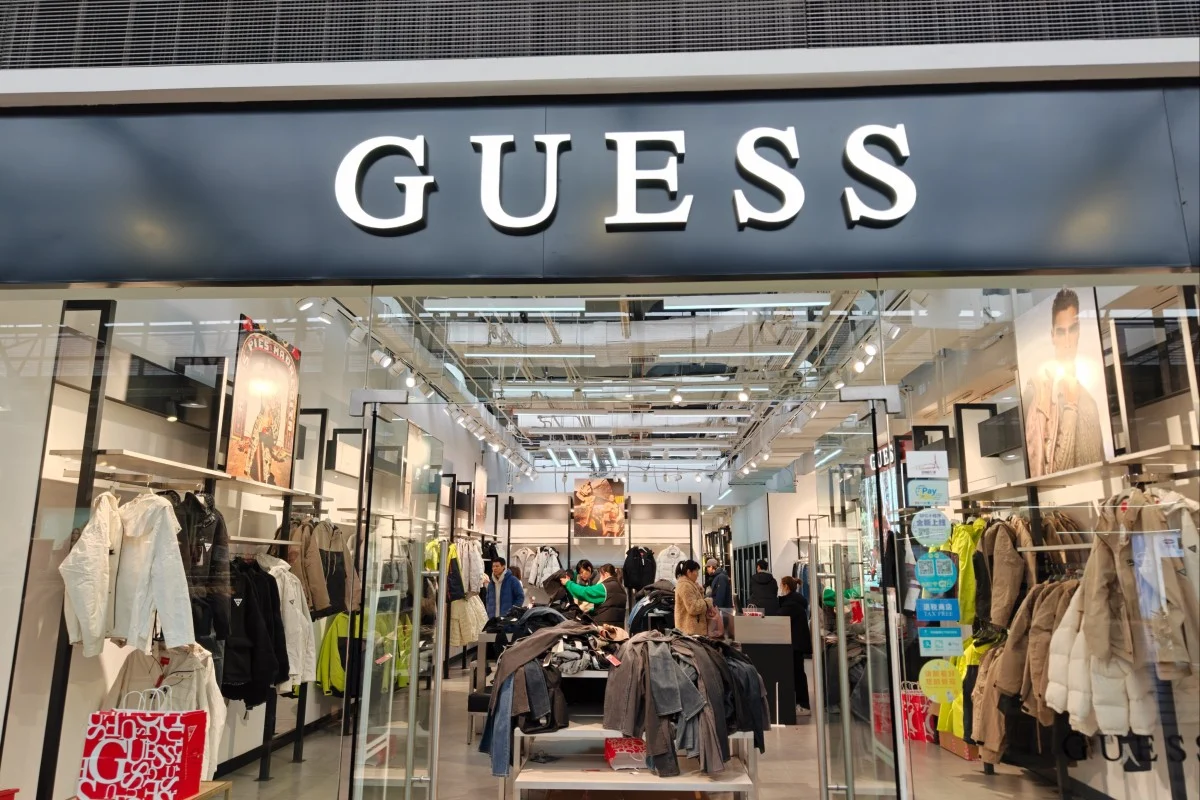
US fashion brand Guess announced it will close all its stores in mainland China by the end of March. The company seeks a new business model amid challenges like weak localisation and slow decision-making. This retreat reflects broader struggles for international fashion retailers in the market.
Other foreign brands have fully withdrawn from China in recent years. These include US label Old Navy, UK brand Topshop, and several Inditex-owned labels such as Bershka, Pull&Bear, Stradivarius, and Oysho. Guess entered China in 2007 and peaked at 250 stores in 2019. However, it now faces declining resonance with younger consumers.
Analysts point to outdated business models and macro shifts as root causes. Foreign brands often lack China-specific strategies. They struggle with rapid e-commerce growth, live streaming, and competition from domestic players. Guess’s new majority owner, Authentic Brands Group, may relaunch via licensing rather than direct retail.
Brands like Zara adapt by closing underperforming outlets while opening flagship stores with digital innovations. Forever 21 exited in 2019 but returned via e-commerce platforms under ABG. Experts urge “surgical localisation,” such as rapid-response systems and tailored product strategies for China’s diverse markets.