Asia Fashion Weekly News Bulletin – ISSUE 62 Week of 27 April 2026
(1) Cross-Strait fashion summit featuring Chinese aesthetics opens in Shanghai
Designers, artists and cultural figures from mainland China and Taiwan gathered in Shanghai to promote Chinese aesthetics, cross Strait exchange and new opportunities for youth collaboration.
(2) Chinese netizens find French fashion brand Lemaire’s Qing Dynasty-style braid campaign offensive, apology lacks sincerity
French fashion Lemaire faced backlash in China after a campaign image featuring a braid and scissors was seen as evoking Qing era humiliation, and its apology failed to ease criticism.
(3) Foreigners Sweep Head-to-Toe K-Fashion
Foreign tourists in South Korea are buying more fashion items, from clothing to underwear, as K fashion spreads globally and Seongsu rises as a major shopping destination.
(4) Is Southeast Asia fashion’s next sustainability frontier?
Southeast Asia is reshaping fashion through craft, regenerative materials and AI driven production, showing how heritage, innovation and sustainability can work together.
(1) Cross-Strait fashion summit featuring Chinese aesthetics opens in Shanghai
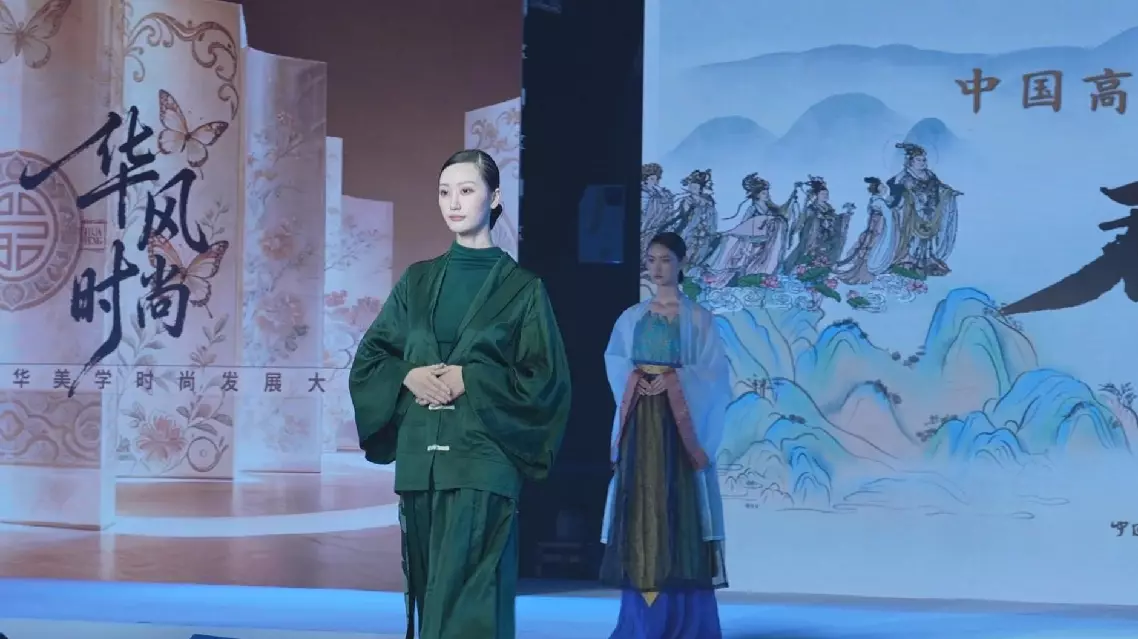
(Photo Credit: Bastille Post Global)
Participants from mainland China and Taiwan gathered in Shanghai on Saturday, 25 April 2026, for the first Oriental Chic Development Summit. The event aimed at showcasing how traditional Chinese culture can be reinterpreted through contemporary design and creativity.
With young designers and artists at the centre of the programme, the summit focused on how both sides of the Taiwan Strait can work together to bring Chinese aesthetics to a wider global audience. Speakers said shared history and cultural roots offer a strong basis for creative exchange and new collaborations.
Taipei based new media artist Lin Jiun ting said dialogue between the fashion and creative industries across the Strait could help transform a shared cultural elegance into fresh possibilities for the world stage. Gao Qing, a representative inheritor of traditional incense making techniques, echoed that view. She recalled past exchanges with Taiwan, including visits in 2018 and recent training for Taiwanese students, saying such interactions had strengthened mutual understanding.
Former Kuomintang chairperson Hung Hsiu chu also addressed the summit, stressing the need for continued communication across the Strait. She said rebuilding trust and expanding exchanges were essential to deeper cooperation. Hung added that future efforts should include industrial collaboration and more entrepreneurship and job opportunities for young people on both sides.
The event framed cultural exchange not only as an artistic project, but also as a way to strengthen ties and create practical opportunities for the next generation.
News Source: https://www.bastillepost.com/global/article/5808481-cross-strait-fashion-summit-featuring-chinese-aesthetics-opens-in-shanghai
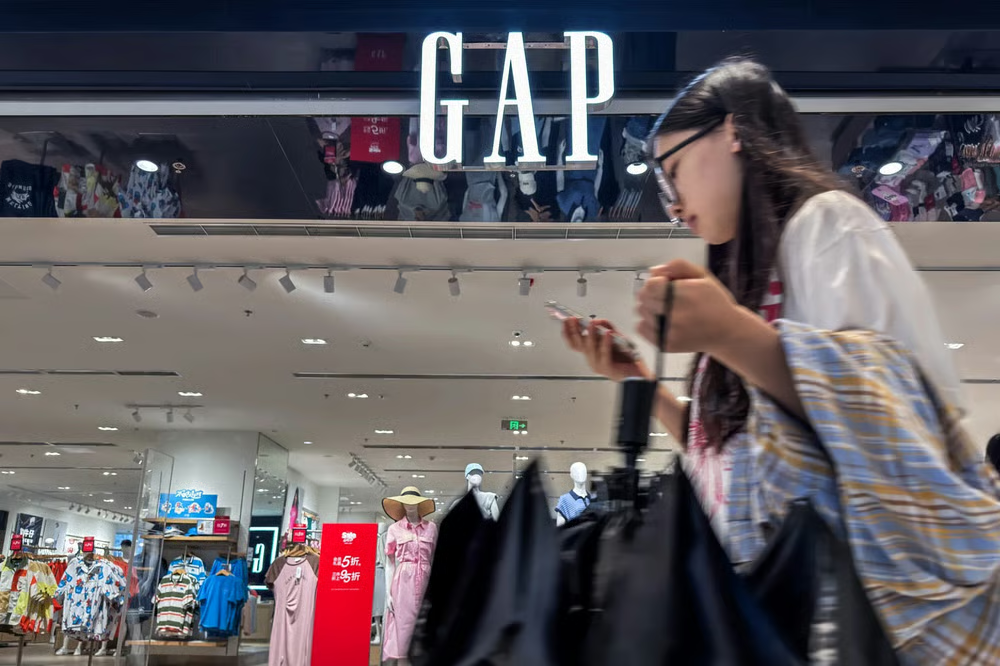
(Photo Credit: Bloomberg)
French fashion label Lemaire is facing backlash in China after a promotional campaign for its Objets Senteur collection was accused of invoking the Qing era trauma of forced hair cutting and clothing change. The controversy focused on images of a braided linen fragrance object displayed alongside scissors and traditional style clothing, which many Chinese netizens saw as loaded historical symbolism.
Lemaire issued an apology on Monday 27 April 2026, saying it had failed to fully consider how the imagery might be understood in different cultural contexts. The brand said it regretted any distress caused and would review its internal processes to improve cultural awareness in future campaigns. But the statement did little to calm criticism online, where many users said the response lacked sincerity and dismissed the concerns as a matter of cultural misunderstanding.
Some netizens said they would stop supporting the brand, while others argued the visual choices were too pointed to be accidental. The dispute has also reopened broader criticism of international luxury houses that draw on Chinese aesthetics without showing sufficient historical sensitivity or respect.
Founded in Paris in 1991 by Christophe Lemaire, the label is known for understated, minimalist design. It has expanded rapidly in China in recent years, opening its largest flagship store in Shanghai in January and another major location in Beijing in March 2026. The incident now threatens to overshadow that growth, turning a branding campaign into a debate over history, symbolism and cultural responsibility.
News Source: https://ww.fashionnetwork.com/news/Hybrid-is-the-key-for-global-retailers-in-china,1825627.html
(3) Foreigners Sweep Head-to-Toe K-Fashion
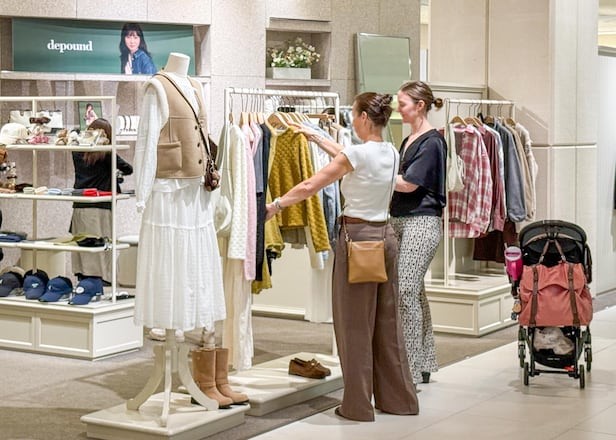
(Photo Credit: Hyundai Department Store)
Foreign visitors are spending far more on fashion in South Korea, as K fashion becomes a key part of the travel experience rather than a casual souvenir purchase. Driven by the global appeal of Korean dramas, films and K pop, tourists are increasingly buying clothes, accessories and even underwear to continue the Korean style they admire after returning home.
Department stores are seeing especially strong growth. In the first quarter, Hyundai Department Store reported a 131 per cent jump in fashion sales to foreign shoppers, outpacing luxury goods and food. Spending per customer also rose sharply, with demand focused on Korean brands in the mid price range. Similar trends appeared at Shinsegae and Lotte, where foreign purchases of women’s fashion, men’s fashion and sportswear all climbed strongly, prompting retailers to expand K fashion zones and other fashion focused spaces.
The range of products attracting tourists is also broadening. Visitors who once bought inexpensive clothing in areas such as Myeongdong and Dongdaemun are now turning to sportswear, accessories and undergarments. Tourism data suggests fashion is becoming a more important category in visitor spending, helped by growing confidence in Korean products and the wider influence of Korean popular culture.
At the same time, Seoul’s Seongsu district is emerging as a major destination for fashion tourism. Once known mainly for food and beauty pop ups, it is now attracting flagship stores from leading Korean and global brands, reinforcing its growing reputation as a centre of K fashion.
News Source: https://moneyweek.com/investments/china-stock-markets/invest-in-china-as-it-comes-back-into-fashion
(4) Is Southeast Asia fashion’s next sustainability frontier?
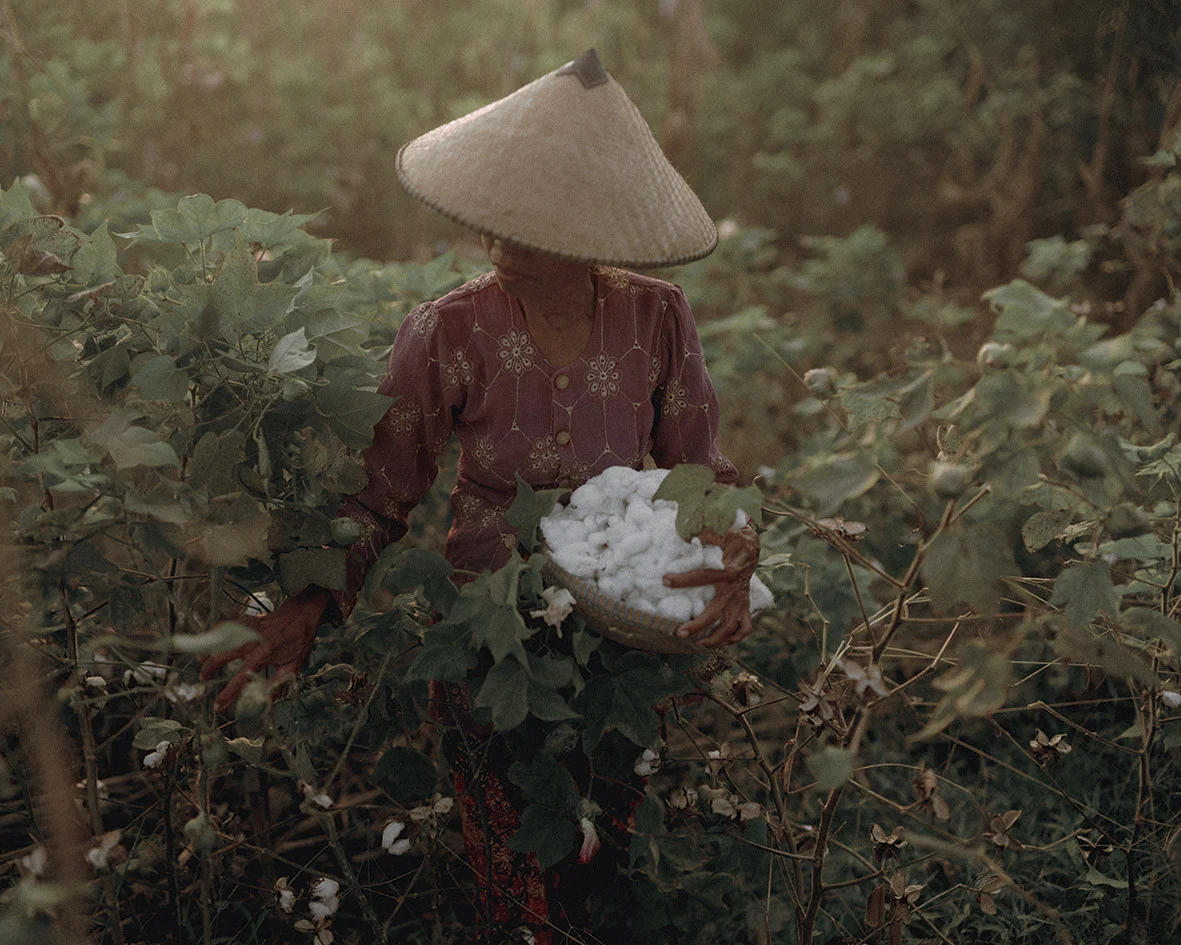
(Photo Credit: SukkhaCitta)
As issue of climate change influences and supply chain pressures reshape global fashion, Southeast Asia is emerging with a different model of value, one rooted in craft, regenerative materials and smarter production. Across the region, designers, material innovators and technology firms are showing that luxury and sustainability need not be at odds.
In Indonesia, traditional textile knowledge is being adapted for modern fashion through brands such as SukkhaCitta and KaIND. Natural dyes, indigenous cotton, agroforestry and hand loomed silk are being used not as nostalgic heritage, but as the basis for contemporary design and more resilient local economies. Similar efforts are visible in Vietnam, where silk makers are reconnecting fashion to place, history and long standing craft communities.
The region’s material innovation is also expanding beyond conventional fibres. In the Philippines, pineapple leaf waste is being turned into fabric, while in Indonesia, mycelium based materials grown from agricultural waste are offering an alternative to leather. These developments reflect a wider shift toward fibres and processes shaped by local climate realities, circular thinking and resource efficiency.
At the same time, new digital systems are changing how clothes are made. Companies such as Singapore based Six Atomic are using artificial intelligence to enable on demand production, reducing waste and excess inventory. Platforms like EcoLens are pushing sustainability further upstream by measuring environmental impact at the design stage. Together, these developments position Southeast Asia not as a follower, but as a serious force in shaping a more responsible global fashion industry.
News Source: https://www.tatlerasia.com/power-purpose/impact/southeast-asia-fashion-next-sustainability-frontier