Asia Gaming Weekly News Bulletin – ISSUE 63 Week of 4 May 2026
(1) South Korean police launch new enforcement campaign against unlicensed gambling
South Korea will intensify a four month crackdown on illegal gambling venues, targeting operators, brokers and players as authorities respond to more sophisticated underground betting networks.
(2) Hong Kong to tighten grip on claw machines under new licensing proposal
Hong Kong plans tighter rules for claw machines and internet cafes, aiming to close legal loopholes, curb youth addiction risks and strengthen fairness standards without hurting mall traffic.
(3) Will Hong Kong’s claw machine regulations curb gaming habits and gambling risks in light of rules in Singapore, Taiwan, mainland China and Thailand
Sands China has introduced new baccarat side bets, Monkey no Monkey and Pairs+, across multiple Macau casinos, expanding its gaming options on main floors and high limit tables.
(4) Higher house edge makes side bets new GGR lever for Macau: Citigroup
Macau’s new baccarat side bets may lift casino revenue growth, while strong Labor Day visitation and premium mass play point to continued demand from high spending mainland tourists.
(1) South Korean police launch new enforcement campaign against unlicensed gambling
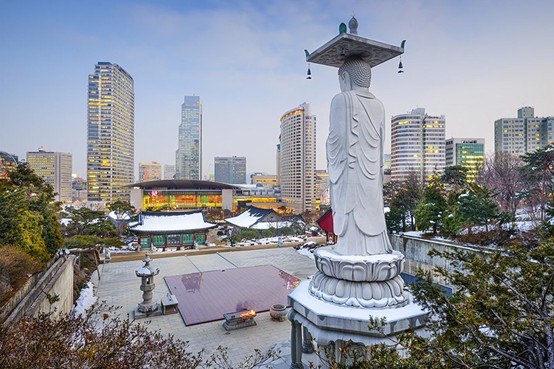
(Photo Credit: Focus Asia Pacific)
South Korea will step up enforcement against unlicensed gambling venues from May through August, with police targeting operations that run outside the country’s legal framework. The campaign will focus in particular on so called Texas Hold’em pubs and other sites where gaming chips are converted into cash or cryptocurrencies, or where operators earn commissions by steering players toward underground betting.
Authorities say the crackdown reflects growing concern over how quickly illegal gambling businesses are evolving. Many venues are now said to rely on encrypted messaging platforms such as Telegram, along with membership only entry, advance reservations and surveillance systems that make them harder to detect and investigate. In response, police plan to go beyond frontline participants and dismantle the wider networks behind these operations.
The National Police Agency said 6,285 people were detained between 2023 and 2025 for either running illegal gambling venues or taking part in unlawful betting. During the same period, officials seized about KRW24bn, or US$16.3m, in suspected gambling proceeds. Those figures underline both the scale of the problem and the financial incentives driving it.
Police said enforcement will target all levels of the business model, including venue owners, dealers, brokers and players. Investigators also plan to pursue asset confiscation, while principal organisers could face detention. Where operations are found to be structured as organised criminal activity, suspects may face additional charges beyond gambling related offences.
News Source: https://focusgn.com/asia-pacific/south-korean-police-launch-new-enforcement-campaign-against-unlicensed-gambling
(2) Hong Kong to tighten grip on claw machines under new licensing proposal
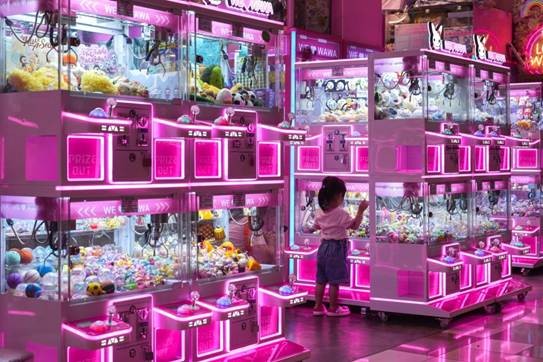
(Photo Credit: Sam Tsang / SCMP)
The ubiquitous presence of claw machines in Hong Kong’s shopping malls and restaurants has prompted a significant legislative shift. On Monday, the Home and Youth Affairs Bureau proposed amendments to the Gambling Ordinance that would decouple “Amusements with Prizes” licenses from the broader Places of Public Entertainment license. This move follows a 2022 High Court ruling that effectively exempted claw machine shops from existing permits, creating a legal grey area that officials now label as “unideal.”
Under the new framework, authorities aim to license individual machines rather than entire premises: a practical response to the industry trend where a single shop may host devices owned by multiple independent operators. Beyond licensing, the bureau is considering mandatory anti-addiction warnings and prominent entry notices. The proposal also takes aim at internet cafes, suggesting they be reclassified under the Amusement Game Centres Ordinance. This could result in a total ban on patrons in school uniforms, a measure intended to prevent students from spending excessive hours in online gaming environments.
Lawmakers and industry stakeholders remain divided on the scope of the new rules. While some, like unionist Bill Tang, highlighted the concern over “prizes” like mobile phones that far exceed the current HK$300 value cap, others warned against stifling a sector that helps struggling malls drive foot traffic. Meanwhile, operators and the Consumer Council have pointed to the need for “fair play” guarantees, such as “guaranteed-win” settings, to prevent machines from being rigged into high-stakes gambling tools. The home affairs panel is scheduled to formally debate these measures next Monday.
(3) Will Hong Kong’s claw machine regulations curb gaming habits and gambling risks in light of rules in Singapore, Taiwan, mainland China and Thailand
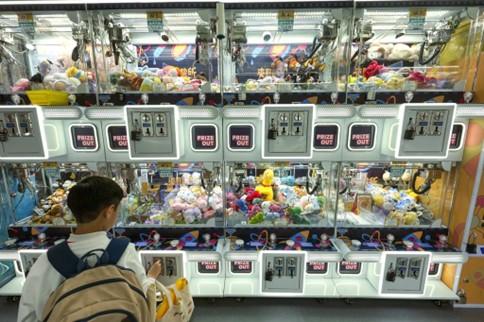
(Photo Credit: Jelly Tse / SCMP)
Hong Kong is moving to tighten control over claw machines and other prize based amusement games as concern grows over addiction, especially among teenagers. After a 2022 court ruling left many claw machine shops outside the public entertainment licensing regime, officials are now proposing a new system that would require individual licences for each machine and could add warning notices about addiction risks.
The proposed changes come as some operators offer increasingly valuable prizes or use practices such as gift redemption and private buy backs, blurring the line between amusement and gambling. Existing rules already cap spending at HK$5 per play and prize values at HK$300 for licensed operators, but the government says a more targeted framework is needed to improve oversight while balancing consumer protection and business interests.
Other jurisdictions offer possible models. Singapore introduced a cap of S$100 on prizes at amusement centres from 2024 to reduce gambling inducement, especially among young people. Taiwan has adopted a guaranteed win mechanism in some claw machines, allowing players to secure a prize once their spending reaches its retail value, while mainland China requires operators to display winning probabilities more clearly. Thailand, meanwhile, treats claw machines as gambling devices and restricts them near schools without a licence.
These approaches suggest that prize caps, better transparency and location controls could all inform Hong Kong’s next steps. But experts say regulation alone will not be enough, and that stronger public education and counselling support will also be needed to address youth addiction and help families distinguish between gaming and gambling.
News Source: https://www.scmp.com/news/hong-kong/society/article/3352534/will-hong-kongs-claw-machine-regulations-curb-gaming-habits-and-gambling-risks
(4) Higher house edge makes side bets new GGR lever for Macau: Citigroup
(Photo Credit: Asia Gaming Brief)
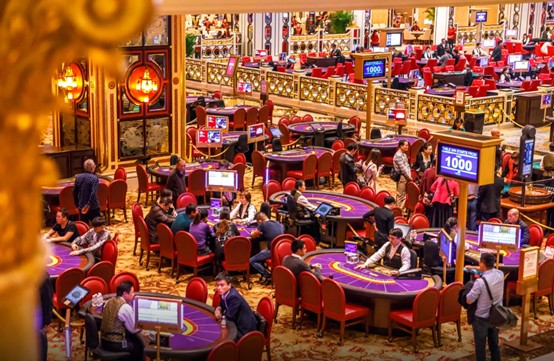
Macau’s new baccarat side bets could become an important driver of casino revenue growth, according to Citigroup, because they offer a much larger house edge than traditional wagers. While standard Banker and Player bets typically carry an advantage of about 1 percent, the newly introduced side bets are estimated at 16 to 18 percent, giving casinos a far stronger earnings profile if players begin using them more widely.
Citigroup said all six Macau concessionaires have already rolled out at least some of the new options. Sands China, Wynn Macau, Melco Resorts and SJM are offering both Monkey no Monkey and Pairs+, while MGM China has gone further by adding Banker 4 and Player 4. Galaxy Entertainment is currently offering Monkey no Monkey at Galaxy Macau. The new bets can pay up to 50 to 1 and 300 to 1, although analysts noted they were introduced only shortly before the Labor Day survey, so many players may not yet have had time to adopt them. For now, Lucky 6 and Lucky 7 remain the more established side bet choices.
Citigroup’s Labor Day survey also found solid activity in Macau’s premium mass market. It recorded HK$23 million in wagers, the second highest reading of 2026 and only 6 percent below Chinese New Year levels. Although that total was 15 percent lower than a year earlier, analysts said the comparison was distorted by unusually large bets in May 2025. Visitor arrivals exceeded 200,000 on each of the first two days of the holiday, while 58 whales were identified, the highest count of the year, reinforcing Macau’s appeal to high spending mainland Chinese tourists.
News Source: https://agbrief.com/news/macau/04/05/2026/higher-house-edge-makes-side-bets-new-ggr-lever-for-macau-citigroup/