Asia Sports Weekly News Bulletin – ISSUE 89 Week of 2 November 2026
(1) Kenneth Fok: Sports Industrialisation requires Government, Business and Community Cooperation
Legislative Council member Kenneth Fok called for stronger government support in attracting major events, better corporate governance by sports associations, and greater long-term commercial sponsorship to drive sports industrialisation under Hong Kong’s first Five-Year Plan.
(2) Smaller Sports Associations Struggle with Costs; calling for Kai Tak Sports Park to Fulfil Social Responsibility
Smaller sports associations face high venue costs at Kai Tak Sports Park and have urged the facility to balance commercial operations with greater social responsibility and support for community and elite sports development.
(3) HKBU Conducted Environmental Monitoring at Dakar Youth Olympic Games to Safeguard Athletes’ Health
Hong Kong Baptist University is the only Asian academic team conducting environmental monitoring research at the 2026 Dakar Youth Olympic Games, deploying sensors across venues to protect athlete health, safety and performance.
(4) Tse Wing-fai ends Hong Kong handball career on a high note, urges younger players to cherish resources
Hong Kong handball captain Freddie Tse Wing-fai announced his retirement from the national team after helping the side win bronze at the China Handball Super League finals, calling on the next generation to value the growing support and resources available to the sport.
(1) Kenneth Fok: Sports Industrialisation requires Government, Business and Community Cooperation
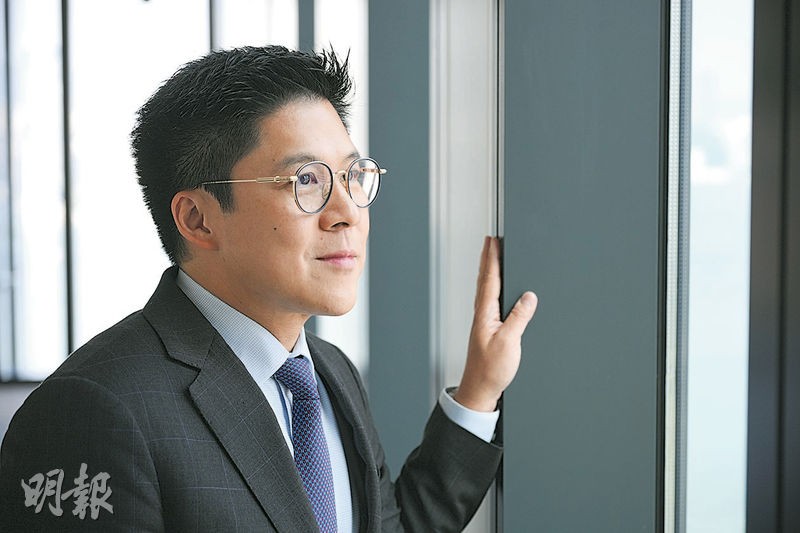
(Photo Credit: Ming Pao)
Legislative Council member for the Sports, Performing Arts, Culture and Publication functional constituency Kenneth Fok (霍啟剛), who also serves as vice-president of the Sports Federation & Olympic Committee of Hong Kong, China, said achieving the Five-Year Plan’s goals of elite, major-event, professional and industrial development in sports requires close cooperation among government, business and the community.
Fok emphasised that sports associations must take the lead and strengthen corporate governance to gain public trust and attract commercial support. He cited basketball as an example, noting that improved governance could encourage greater involvement from the NBA and the Hong Kong Jockey Club. He also highlighted opportunities for greater Greater Bay Area collaboration in youth training and for Hong Kong to leverage its international status under “one country, two systems” to help secure major football events for the nation.
On the government side, Fok suggested assisting associations in bidding for high-level events such as ATP 500 tennis tournaments, which could generate broadcast rights income and create a virtuous cycle of talent development and professionalisation. He observed that the local sports ecosystem remains overly dependent on government funding and expressed hope that more long-term private investment would emerge within five years.
Fok further proposed tax incentives to encourage commercial participation and cautioned against simply increasing public spending without ensuring resources are effectively directed toward sustainable growth.
(2) Smaller Sports Associations Struggle with Costs; calling for Kai Tak Sports Park to Fulfil Social Responsibility

(Photo Credit: Ming Pao)
Smaller national sports associations have reported difficulty absorbing the high rental and operational costs at Kai Tak Sports Park, raising concerns that the flagship venue may prioritise commercial events over the needs of local sports bodies.
Associations noted that while the Park offers world-class facilities, the pricing structure remains challenging for sports with limited commercial revenue or spectator bases. Some groups have called for more flexible booking policies, subsidised rates for training and domestic competitions, and clearer mechanisms to ensure elite and community sports retain regular access.
Observers have linked the issue to the broader debate on the Park’s dual role as both a commercial engine for major events and a public sports asset. Calls have been made for the operator and government to strengthen the venue’s social-responsibility mandate, including measures that support smaller sports and long-term athlete development pathways.
The discussion forms part of ongoing scrutiny of how Hong Kong’s major sports infrastructure can better serve both the “major events economy” and the grassroots-to-elite continuum of local sport.
(3) HKBU Conducted Environmental Monitoring at Dakar Youth Olympic Games to Safeguard Athletes’ Health
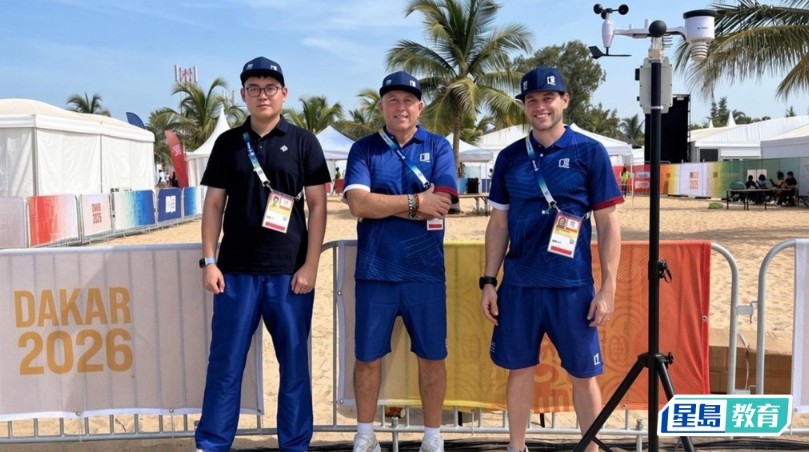
(Photo Credit: Ming Pao)
Hong Kong Baptist University (HKBU) has launched the “HKBU–BNBU Dakar 2026 Living Laboratory” environmental monitoring project at the Youth Olympic Games (青年奧運會) in Dakar, Senegal. Led by Professor Yannis Pitsiladis, Director of the University’s Centre for Sports and Exercise Medicine, the team is the only Asian academic group conducting scientific research at the event.
Approximately 20 environmental monitoring stations have been deployed across nine main competition venues to measure micro-climate conditions, including temperature, humidity and heat stress. Real-time data are transmitted to a digital research platform, enabling comparisons between different venues and locations within the same site. The project covers all 25 sports on the Youth Olympic programme.
The research builds on the team’s previous monitoring work at the Paris 2024 Olympics and the Milano Cortina 2026 Winter Olympics. Findings will support evidence-based safety guidelines and risk assessment for athletes competing in extreme or variable environmental conditions.
Beyond the immediate Games, the team aims to develop a longer-term research platform integrating environmental science, digital innovation and postgraduate training, with potential application at the 2028 Los Angeles Olympics and other major events.
(4) Tse Wing-fai ends Hong Kong handball career on a high note, urges younger players to cherish resources
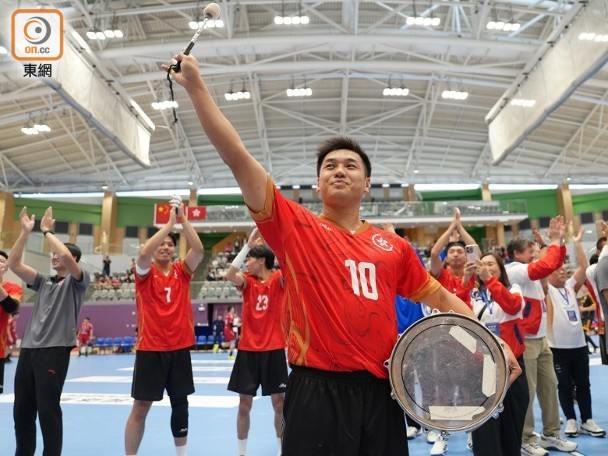
(Photo Credit: on.cc)
Hong Kong handball captain Freddie Tse Wing-fai (謝永輝) brought his national-team career to a close on 1 November after the side defeated Anhui 29–28 to secure third place in the 2025–26 China Handball Super League (中國手球超級聯賽) finals held in Hong Kong. He described the home victory as a perfect ending to more than a decade with the representative team.
Tse first represented Hong Kong at the 2014 Asian Games in Incheon and later captained the side through the National Games, Asian Games and multiple international campaigns. He said the decision to step down while still competitive was deliberate, allowing a new leadership core to emerge and enabling him to explore roles outside full-time playing.
Looking ahead, Tse plans to remain involved in handball, particularly in youth development and administrative work. He urged current and future players to maintain high training standards and competitive results so that the increased attention and resources the sport has received in recent years continue to grow.
He expressed confidence that teammates such as Lee Siu-chung (李少聰) and Leung Laam-hei (梁嵐熹) possess the leadership qualities to take the team forward, while leaving the final decisions on succession to the coaching staff.
News source: https://hk.on.cc/hk/bkn/cnt/sport/20261101/bkn-20261101164533544-1101_00882_001.html