China Media and Entertainment Weekly News Bulletin – ISSUE 108 Week of 6 July 2026
(1) Eric Tsang Launches New Entertainment Company, Aggressively Recruits Artists
Entertainment mogul Eric Tsang has launched a new production company to recruit departing television talent. He is currently competing with director Stephen Chow to sign award-winning actress Sisley Choi. Choi recently starred in Chow’s upcoming film, but she is still considering multiple corporate offers for her future career.
(2) CAC Cracks Down on Network Entertainment Group Livestreaming Chaos, Targeting Irregular PKs, Vulgar Scenes and More
China’s internet regulator launched a two-month campaign to clean up group live-streaming platforms. The operation targets vulgar content, illegal multiplayer battles, and deceptive viewer tipping practices. Authorities will enforce real-name registration and strict financial limits to protect minors and correct corporate mismanagement.
(3) Lawrence Ng Sells His 20-Year-Old Likeness to AI for a Movie
Veteran Hong Kong actor Lawrence Ng announced he has sold his portrait rights to a film production company. The studio will use artificial intelligence to digitally recreate his twenty-year-old likeness for an upcoming movie. Ng did not need to visit the set, but he received substantial financial compensation.
(4) Equipment Fault Postpones Sammi Cheng’s Landmark Kai Tak Concerts
Hong Kong pop icon Sammi Cheng postponed her highly anticipated concerts at the new Kai Tak Main Stadium due to major equipment malfunctions. Media company Media Asia Entertainment announced a compensatory ninety-minute fan meeting at the original venue. Ticketholders retain the right to attend the makeup shows or request a full refund.
(5) China’s Micro-Drama Industry Shifts Toward High-Quality Live Action
China’s vertical micro-drama industry is shifting from cheap, automated content to high-quality, live-action productions due to strict new government regulations. The updated policy raises investment thresholds to clear out low-end projects. Major platforms are now diverting traffic and funding toward high-quality, live-action content.
(6) Independent Filmmakers Adopt ByteDance’s Seedance Video Model
ByteDance’s artificial intelligence video model Seedance is gaining rapid traction among independent American filmmakers due to its strong financial advantages. Despite initial resistance from major Hollywood unions over celebrity copyright protections, the affordable platform has become a popular tool for independent content creators.
(7) Listed Chinese Entertainment Firms Embrace Multi-Business Theater Models
China’s National Film Administration (NFA) and the State Administration for Market Regulation (SAMR) have jointly issued a policy encouraging cinemas to diversify into further retail and leisure entertainment. The move comes as the industry shifts from a single box-office model to integrated offline scenario operations, with listed companies racing to capture the offline traffic monetization opportunity.
(8) Haixi Media Group Makes Strategic Investment in Shenyang “HAI Park” Entertainment Complex
T Chinese entertainment conglomerate Haixi Media Group has completed a strategic investment in Shenyang’s emerging “HAI Park” entertainment complex, creating a youth culture destination integrating celebrity appearances, reality show production, anime conventions and comedy performance in Northeast China.
(9) Realistic Themes and Hong Kong Legal Dramas Dominate Chinese Television
Chinese television dramas transitioned from reliance on celebrity power to high-quality realism in the first half of 2026. Realistic historical stories earned the highest ratings among domestic viewers. Concurrently, Hong Kong legal dramas regained significant popularity across the Greater Bay Area by focusing heavily on authentic local court cases.
(10) China’s Micro-Dramas Invest in High-Profile Original Soundtracks
China’s rapidly expanding micro-drama industry is heavily investing in professional original soundtracks to boost marketing power. Leading production teams are hiring mainstream pop singers to perform custom theme songs. This expensive strategy successfully enhances emotional storytelling, but analysts note it remains a luxury reserved only for high-budget projects.
(11) Stephen Chow’s New Film Dominates Pre-Sales and Sparks Scalping Crackdown
Comedy icon Stephen Chow’s new film Kung Fu Female Football topped mainland pre-sale charts ahead of its July 11 release. The movie captured over ninety percent of the opening day market share. However, the production team quickly issued warning notices to combat illegal ticket scalping and online promotional scams.
(12) Shanghai Film Festival Signals Shifts in Investment and Cinema AI
The 28th Shanghai International Film Festival highlighted two major trends in China’s entertainment market. First, investors are prioritizing low-budget films and fresh narratives from younger directors over expensive star-studded projects. Second, film executives are actively working to build specialized artificial intelligence models to fix technical flaws and safely lower production costs.
(1) Eric Tsang Launches New Entertainment Company, Aggressively Recruits Artists
(Photo Credit: Weibo)
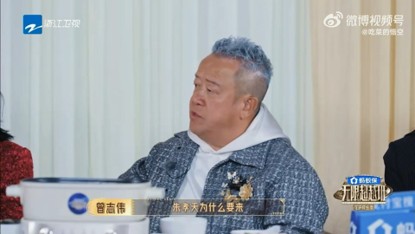
Hong Kong media mogul Eric Tsang has launched a brand-new entertainment enterprise following his departure from his executive management role at Television Broadcasts Limited, famously known as TVB. Tsang is aggressively recruiting seasoned acting talent to expand his new multimedia empire. His expansion plans have initiated a high-profile bidding war with iconic filmmaker Stephen Chow over award-winning actress Sisley Choi.
Choi officially ended her thirteen-year tenure with TVB in March, making her the most sought-after free agent in the regional entertainment market. She recently delivered a standout performance in Chow’s upcoming sports blockbuster, Kung Fu Female Football. Because of her excellent acting, Chow is eager to sign her to his personal management agency. However, Tsang is making a competitive push to recruit her alongside other prominent former TVB artists, including Christine Kuo and Jonathan Cheung. Choi has not finalized her decision yet, stating that she is currently reviewing multiple scripts for films and stage plays while considering launching her own independent studio.
Tsang’s new company aims to become a fully integrated entertainment powerhouse. The studio is already producing a high-profile suspense drama titled Hunting Lies, which is directed by Sunny Luk and stars mainland idol Cheng Yi alongside cinema veteran Anita Yuen. Beyond traditional television dramas, corporate roadmaps indicate that the agency will quickly expand into theatrical features, large-scale variety programs, and live music concerts. By securing top film industry professionals and popular television veterans, Tsang is positioned to reshape the competitive landscape of the regional entertainment industry.
News Source: https://www.hk01.com/%E5%8D%B3%E6%99%82%E5%A8%9B%E6%A8%82/60365767/%E6%9B%BE%E5%BF%97%E5%81%89%E6%88%90%E7%AB%8B%E5%85%A8%E6%96%B0%E5%A8%9B%E6%A8%82%E5%85%AC%E5%8F%B8%E7%A9%8D%E6%A5%B5%E5%90%B8%E7%B4%8D%E8%97%9D%E4%BA%BA-%E5%90%8C%E5%91%A8%E6%98%9F%E9%A6%B3%E7%88%AD%E5%A5%AA%E8%94%A1%E6%80%9D%E8%B2%9D
(2) CAC Cracks Down on Network Entertainment Group Livestreaming Chaos, Targeting Irregular PKs, Vulgar Scenes and More

(Photo Credit: Chinanews.com)
The Cyberspace Administration of China has launched a nationwide, two-month campaign to eliminate severe irregularities within the online group live-streaming sector. This regulatory operation focuses on correcting deep-rooted issues in user account registration, competitive gameplay design, streaming environments, and minor protection protocols.
The enforcement campaign targets six critical problem areas to clean up the digital space. Specifically, authorities are targeting illegal accounts, deceptive monetization strategies, vulgar live-streaming scenery, and the exploitation of minors. Regulators are also addressing improper management within multi-channel network agencies, which manage groups of digital influencers. Platforms and corporate agencies must now strictly enforce real-name user registration alongside strict daily financial caps on virtual tips. Government officials warned that digital networks failing to implement these compliance rules will face heavy legal penalties and public exposure.
This crackdown follows several high-profile financial and ethical scandals involving major internet personalities. In one recent case, a prominent online influencer had their account permanently banned after using fake identification cards to bypass age restrictions. This creator also forced junior staff to perform dangerous stunts with wild animals and tricked underage viewers into gifting over 100,000 yuan. In another severe financial incident, a nineteen-year-old employee embezzled seventeen million yuan from her father’s corporate account to tip popular live-streamers, pushing the family business to the brink of bankruptcy. Industry analysts conclude that these strict administrative measures are necessary to curb erratic digital expansion and force long-term compliance across the regional streaming economy.
(3) Lawrence Ng Sells His 20-Year-Old Likeness to AI for a Movie

(Illustration Credit: Tencent)
62-year-old Hong Kong actor Lawrence Ng Kai Wah recently revealed to local media that he has sold the rights to his likeness for use in an AI-generated film. The news quickly sparked heated discussion and topped trending searches.
According to Ng, the production team will use artificial intelligence to recreate his appearance at age 20 as the central character for the movie. He himself will not need to appear on set or perform at all during filming.
“I’ve seen the finished product and I’m very satisfied. It’s a great way to relive the feeling of being the male lead,” Ng said. Due to the signed contract, he is not worried about his likeness being misused in other projects, as the agreement clearly limits its usage scope.
When asked about financial benefits, Ng openly admitted the remuneration was “quite good.” Regarding concerns that AI might replace real actors, he responded optimistically: “In the future, I can just sit back without shooting — it’s a guaranteed win!”
Ng views AI technology as an additional development path for the film industry rather than a complete threat to traditional acting careers, offering more options for practitioners. As for missing the on-set experience, he remarked casually that it’s simply “another road” in his career.
Known for iconic roles such as Zhang Wuji in The Heaven Sword and Dragon Saber, Dr. Cheng Chi Mei in Healing Hands, and Fang Tangjing in The Nine Gates, Ng remains a beloved figure from multiple generations of Hong Kong audiences.
News Source: https://www.wenweipo.com/s/202607/02/AP6a45d267e4b0b49ad1c1ae88.html
(4) Equipment Fault Postpones Sammi Cheng’s Landmark Kai Tak Concerts

(Photo Credit: HK01)
Hong Kong pop diva Sammi Cheng has postponed the highly anticipated final stop of her world tour at the newly constructed Kai Tak Main Stadium. Organizer Media Asia Entertainment announced that critical mechanical components failed during the stage construction and testing phase. Despite immediate technical inspections, the crew was unable to locate substitute components or implement a swift solution that met the stadium’s strict safety standards. Consequently, the company prioritized safety and production quality by officially delaying the massive concert series.
To compensate disappointed fans, the organizers and Cheng will host a ninety-minute appreciation gathering during the originally scheduled dates from July 10 to July 12. Ticket holders can enter the Kai Tak Main Stadium for free to enjoy simplified vocal performances and interactive fan segments. Attendees must retain their original stubs to remain eligible for the rescheduled tour dates or a full ticket refund once the subsequent logistics are finalized.
Netizens praised the agency’s creative compensatory event as a highly effective crisis management strategy. By turning a mechanical failure into an intimate acoustic fan experience, the production team successfully preserved public goodwill while minimizing the immediate economic disruptions often associated with sudden stadium cancellations.
(5) China’s Micro-Drama Industry Shifts Toward High-Quality Live Action

(Photo Credit: Wenweipao)
China’s National Radio and Television Administration has implemented a pioneering regulatory framework titled the Classification and Layering Standards for AI Micro-Dramas. Taking effect on July 1, this policy represents the first dedicated regulatory code targeting artificial intelligence within the entertainment sector. It effectively integrates automated digital productions into the government’s standard broadcasting oversight framework by evaluating both budget sizes and content sensitivity.
Under the new directives, any artificial intelligence drama with a budget exceeding 800,000 yuan, or any project covering sensitive topics like national security and military affairs, will be managed under strict key project rules. General theme projects with budgets between 300,000 and 800,000 yuan are classified as standard dramas, while those costing under 300,000 yuan fall into a basic tier. This tiered system directly responds to a massive production boom. Industry data reveals that over 128,000 short-form dramas were launched in the first quarter of 2026, with artificial intelligence-generated content making up over ninety-five percent of those titles.
This commercial transition signals the maturation of the micro-drama format. The industry has largely moved away from repetitive, clichéd tropes about wealthy executives and instant revenge. Instead, newer productions are diversifying into historical life, traditional cultural heritage, and realistic healing themes that appeal to all age groups. Industry officials and media critics note that replacing cheap, sensationalized plots with logical storytelling and positive social values is effectively helping the sector achieve long-term financial sustainability.
News Source: https://qiye.chinadaily.com.cn/a/202607/01/WS6a448790a310d709c2fbb3c2.html
(6) Independent Filmmakers Adopt ByteDance’s Seedance Video Model

(Photo Credit: APOS)
ByteDance’s artificial intelligence video generator Seedance is rapidly expanding into the American entertainment market despite initial pushback from major Hollywood studios. The momentum built after a viral simulated video featuring realistic celebrity likenesses alarmed industry labor unions. ByteDance has continued recruiting local tech talent and hosting product demonstrations in Los Angeles to appeal directly to independent film creators.
The primary driver behind this growing market adoption is cost efficiency. Industry data reveals that generating high-definition video with synchronized audio costs roughly nine dollars per minute on Seedance, which is significantly lower than competing Western platforms. While mainstream studios maintain an unofficial don’t ask, don’t tell policy regarding automated software, independent directors are actively integrating the Chinese model into their active workflows. For example, the production crew of an upcoming horror film uses Seedance to generate daily footage revisions alongside real Union actors. Individual digital animators also praise the platform for maintaining strong visual consistency across multiple complex cinematic camera angles.
Competitors note that while independent artists appreciate cheap rendering costs, major Hollywood corporations still hesitate to use Chinese software for final theatrical releases due to intellectual property disputes and complex geopolitical considerations. Nevertheless, the tool is heavily altering the global digital entertainment landscape by outperforming Western rivals in price and processing speed. Industry critics conclude that while Seedance faces regulatory barriers regarding actor likeness permissions, its widespread use among smaller creators is successfully altering traditional cinematic production standards.
News Source: https://www.cnbeta.com.tw/articles/movie/1567882.htm
(7) Listed Chinese Entertainment Firms Embrace Multi-Business Theater Models
(Photo Credit: Retail Design Blog)
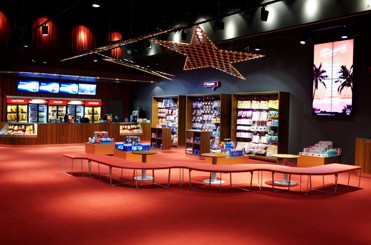
The National Film Administration (NFA) and the State Administration for Market Regulation (SAMR) have jointly issued the “Notice on Promoting the Diversified Operation of Cinemas and Flourishing Cinema Culture,” encouraging cinemas to integrate multiple business formats. The policy explicitly supports cinemas in introducing for example, light meals, coffee, bookshops, retail and leisure entertainment formats including AI agents and video games.
The move addresses long-standing industry pain points: heavy reliance on box office revenue, low space utilization, and insufficient non-ticket income. Previously, cinema revenue was heavily dependent on ticket sales and basic concessions, with large amounts of venue space and idle hours generating little additional income. The new regulations encourage cross-format integrated operations, transforming cinemas from single-purpose screening venues into urban cultural complexes.
Industry data shows that in 2025, China’s film industry reached 1:15.77-every RMB1 of box office revenue drives RMB 15.77 of related industry output. The total output value of China’s film industry chain reached RMB 817.26 billion in 2025.
Listed companies are actively responding. Ruyi Film Entertainment is building “super entertainment spaces” through IP collaborations with popular games and anime. Wuhan Mingcheng Culture & Sports Group is exploring microdramas and stage plays. Analysts note that the industry’s valuation logic is shifting, the market no longer evaluates cinema chain value solely by box office scale, but increasingly values offline venues.
News Source: https://www.stcn.com/article/detail/3999172.html
(8) Haixi Media Group Makes Strategic Investment in Shenyang “HAI Park” Entertainment Complex

Prominent Chinese media conglomerate Haixi Media Group has officially finalized a strategic investment in Shenyang HAI Park, a major entertainment complex located in northeastern China. The partnership aims to combine celebrity management, reality television production, pop-culture conventions, and physical commercial retail into a single trendy landmark. This transaction marks a significant expansion for Haixi Media as it moves beyond traditional media production into physical location-based entertainment and experiential consumer spaces.
The strategic plan utilizes three distinct promotional channels to drive heavy consumer foot traffic to the venue. Haixi Media will deploy its extensive roster of signed actors and pop musicians for scheduled celebrity appearances and pop-up variety show tapings directly inside the park. Furthermore, the venue will host routine anime conventions and costume play competitions. Celebrated digital creators like the prominent influencer known as Wukong have already committed to hosting fan meeting sessions to satisfy a growing regional demand for youth-centric subcultures.
This commercial integration reflects a growing industry trend where production houses transform empty retail properties into profitable cultural hubs. To anchor this experience, the Shenyang complex will feature a flagship merchandise store alongside a dedicated stand-up comedy theater. The store will distribute exclusive artist merchandise and city-themed cultural souvenirs, while the venue’s live theater will host nightly comedic performances. Haixi Media executives emphasize that the company is transitioning from simple brand licensing to acting as an active offline content supplier. The developers plan to introduce virtual idol interactive zones and immersive interactive theater spaces later this year to secure long-term subscriber monetization.
News Source: https://i.ifeng.com/c/8uSXk9yTs9h
(9) Realistic Themes and Hong Kong Legal Dramas Dominate Chinese Television

(Photo Credit: 正義女神)
The Chinese television industry underwent a significant structural shift in the first half of 2026 by moving away from superficial celebrity-driven stories toward deep, realistic content. Audience data shows that viewers now reject weak scripts regardless of actor popularity. As a result, authentic historical portrayals and real-world social commentary secured the highest critical ratings of the season.
Historical and documentary series became the safest investments for production companies. The wildlife preservation drama Tree of Life (生命樹) set viewership records on state television and won major honors at the Shanghai Television Festival. Similarly, the historical epic The Peaceful Years (太平年) achieved top critical acclaim for its meticulous reconstruction of medieval Chinese municipal life. In contrast, traditional fantasy romance projects suffered sharp declines in performance. While high-budget romance titles achieved rapid streaming counts, audiences heavily criticized their shallow writing, while highly anticipated fantasy sequels collapsed entirely due to predictable plot choices.
The resurgence of Hong Kong broadcasting television remains a notable trend. After suffering severe critical drops last year, Hong Kong studios stabilized their market share by focusing entirely on legal dramas. Several co-produced court dramas found immense success within the Greater Bay Area development zone. Successful shows like Goddess of Justice (正義女神) and Court! discarded old police action tropes to explore complex social problems like juvenile delinquency and legal ethics. Incorporating genuine local legal cases and addressing modern social realities has become the ultimate strategy for success in China’s evolving television market.
News Source: https://www.wenweipo.com/a/202607/06/AP6a4ab8f7e4b0b49ad1c2206a.html
(10) China’s Micro-Dramas Invest in High-Profile Original Soundtracks

(Photo Credit: 知乎)
China’s vertical micro-drama industry has initiated an expensive marketing upgrade by recruiting top-tier pop stars to perform original soundtracks, which were previously exclusive to long-form television series. High-profile vocalists like Zhou Shen, Shan Yichun, and Janice Vidal are now lending their voices to short-form mobile programs. This cross-media promotional strategy effectively shatters the traditional stereotype that short digital dramas lack professional musical production.
Studio executives now prioritize casting theme song vocalists with the same urgency as hiring main actors. Chosen performers must possess significant social media traffic while their specific musical styles must align perfectly with the core emotional beats of the script. For example, the acclaimed family drama Inside and Outside the House 2 (家裡家外2) hired Zhou Shen to deliver a warm theme song that successfully amplified the show’s domestic narrative. Similarly, a high-budget micro-drama produced by state broadcaster CCTV features an elite soundtrack lineup alongside prominent actors to directly match the production quality of traditional cinema.
Custom soundtracks function as a high-stakes financial investment rather than a standard production requirement. Industry insiders note that a theme song must be played at least seven to ten times during critical plot points to effectively stick in the minds of viewers. Consequently, scriptwriters emphasize that custom soundtracks remain a financial luxury, requiring a minimum project budget of two million yuan to execute properly. Smaller creative crews simply lack the funding to participate in this trend. Nevertheless, the integration of famous musical talent continues to elevate the commercial standards of China’s digital short-form landscape.
News Source: https://www.wenweipo.com/a/202607/06/AP6a4ab8d5e4b0b49ad1c22066.html
(11) Stephen Chow’s New Film Dominates Pre-Sales and Sparks Scalping Crackdown
(Photo Credit: HK01)
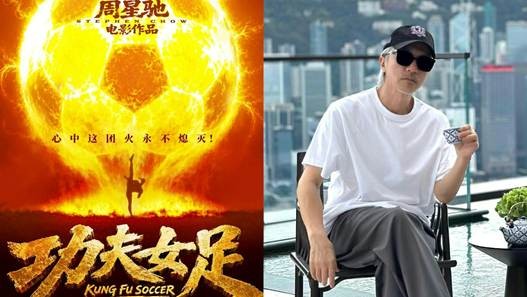
Legendary comedy director Stephen Chow has achieved massive commercial success ahead of the theatrical release of his highly anticipated cinematic blockbuster, Kung Fu Female Football. Official studio data confirms that the movie is scheduled to premiere across mainland China on July 11. According to real-time ticketing metrics, initial opening day pre-sales swiftly surpassed twenty-five million yuan. This robust performance allowed Chow’s upcoming feature to secure over ninety-four percent of the national pre-sale market share, easily claiming the premier box office crown for the highly competitive summer movie season.
However, this explosive box office momentum has attracted severe market irregularities from third-party ticket scalpers. The film’s official production committee issued an emergency public statement warning consumers about fraudulent booking activities circulating on unauthorized private social media accounts. Unregulated sellers have been aggressively advertising false access to offline promotional events and charging exorbitant fees to secure advanced seating. Studio representatives strongly urged the public to rely solely on official platforms to purchase valid admission stubs.
This aggressive anti-fraud campaign underlines the critical regulatory steps taken by local studios to stabilize consumer markets during massive cultural releases. Official authorities noted that individuals purchasing through grey-market vendors risk severe financial losses and identity theft. Furthermore, the event organizers stated that security staff will deny venue entry to anyone possessing invalid tickets or fake internal press passes. Film industry critics praised the production team’s prompt public relations response, noting that protecting consumers from online financial scams is essential for maintaining brand trust and ensuring stable box office growth.
News Source: https://www.hk01.com/%E9%9B%BB%E5%BD%B1/60367907/%E5%8A%9F%E5%A4%AB%E5%A5%B3%E8%B6%B3-%E5%91%A8%E6%98%9F%E9%A6%B3%E6%96%B0%E7%89%87%E9%A0%90%E5%94%AE%E7%A5%A8%E6%88%BF%E7%99%BB%E6%A6%9C%E9%A6%96-%E5%AE%98%E6%96%B9%E7%81%AB%E9%80%9F%E7%99%BC%E8%81%B2%E6%98%8E%E6%89%93%E6%93%8A%E9%BB%83%E7%89%9B
(12) Shanghai Film Festival Signals Shifts in Investment and Cinema AI
(Photo Credit: Shanghai International Film Festival)
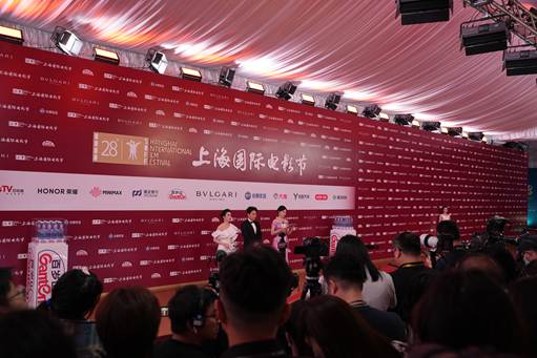
The 28th Shanghai International Film Festival has revealed major structural shifts in China’s movie industry as total box office returns lag behind previous records. Industry forums at the festival delivered two central messages regarding the future of the domestic market. Investors are increasingly pivoting toward low-budget projects led by young directors, while technical experts are focusing on creating specialized artificial intelligence frameworks to overcome current manufacturing limitations.
The primary change involves a complete restructuring of traditional film investment logic. Following the massive commercial success of the low-budget hit A Letter to Grandma (给阿嬷的情书), which grossed over 1.7 billion yuan, major entertainment executives are moving away from expensive celebrity packages. Distribution companies are establishing long-term incubation initiatives to fund younger creators who can build genuine emotional connections with modern audiences. Industry data confirms that over half of the successful domestic films over the past two years were directed by emerging talent. Studio heads emphasize that sincere storytelling matters much more than massive budgets or chasing short-lived internet trends.
Film executives noted that general consumers’ artificial intelligence platforms still create an artificial visual texture that fails to support complex, ninety-minute theatrical narratives. To solve this bottleneck, studios are attempting to train specialized, vertical film models using their own intellectual property libraries. These custom tools aim to maintain strict character consistency and reduce production workflows from years to months. Furthermore, government scientific institutions are currently leading efforts to establish international artificial intelligence standards to safely regulate automated media generation.
News Source: https://qiye.chinadaily.com.cn/a/202606/17/WS6a3238e2a310d709c2fb89c1.html