China Media and Entertainment Weekly News Bulletin – ISSUE 89 Week of 23 February 2026
(1) How Anthony Chen’s We Are All Strangers captures the beauty of working-class Singapore
Singaporean director Anthony Chen’s new film We Are All Strangers completes his unplanned “Growing Up” trilogy, portraying the dignity and struggles of ordinary Singaporeans while reflecting his own journey from youthful filmmaker to mature artist.
(2) The two Chinese-American Olympians competing for rival superpowers
At the Milano Cortina 2026 Winter Olympics, US-born athletes Eileen Gu (competing for China) and Alysa Liu (for the US) face starkly different online narratives. Gu is praised in China but criticised in the US as a “traitor,” while Liu is hailed as a patriot due to her father’s Tiananmen activism and family history.
(3) From AI to aerospace: China meme rocket shares take off in race with US
Chinese investors are shifting enthusiasm from AI to commercial aerospace stocks, driving a gauge of Shanghai and Shenzhen-listed companies up 10 per cent this year after a 76% surge in 2025. The sector outpaces the broader market, fuelled by policy support, reusable rocket progress, and rivalry with the US.
(4) K-pop’s big freeze: are cracks in China’s cultural blockade a thaw?
A decade-long unofficial Chinese ban on South Korean entertainment, triggered by the 2016 THAAD deployment, continues to limit K-pop and dramas in mainland China. Recent signs of thawing include a Chinese remake of My Mister and more fan events, but full concerts remain barred, pushing fans to Hong Kong, Macau, and abroad.
(5) Chen Mo – the man behind Heroes of Jin Yong – on AI and making a blockbuster gameChen Mo – the man behind Heroes of Jin Yong – on AI and making a blockbuster game
CreateAI founder’s Chen Mo is developing Heroes of Jin Yong, a billion-yuan AAA game adapting all 14 wuxia novels by late Hong Kong author Jin Yong. A trailer sparked backlash over a character error and AI-use suspicions, which Chen denied, vowing corrections for the 2029 release.
(6) Pokemon cards worth HK$8,000 stolen in Hong Kong shop burglary
A 25-year-old shop owner in Kwun Tong reported a burglary in which thieves have stolen Pokemon trading cards worth around HK$8,000. The incident marks the second reported crime involving the collectibles in Hong Kong in two months, following a HK$200,000 robbery in January.
(7) Zhang Yiming: How a reluctant CEO built a $66B empire
Zhang Yiming, ByteDance founder and China’s second-richest person with a US$65.9 billion fortune, built TikTok and Douyin through patient engineering, an AI-driven recommendation engine, and a global-first vision. His reluctant management style emphasises systems, transparency, and empowerment, offering key lessons for digital-age entrepreneurship.
(8) HK$52m earmarked for establishing new IP academy
Hong Kong’s Financial Secretary Paul Chan has announced HK$52 million for a new Intellectual Property Academy in his budget speech on Wednesday. The two-year pilot scheme will offer on-the-job training. Additional measures include tax deduction consultations for IP purchases and HK$28 million to support patent evaluations at the Hong Kong Technology and Innovation Support Centre.
(9) T1’s shock elimination triggers Hong Kong LCK Cup ticket fire sale
After T1 and superstar Faker were reverse-swept out of the LCK Cup by Dplus Kia, resale tickets for the Hong Kong finals at Kai Tak Arena plunged below face value. Disappointed fans and scalpers dumped them as bargain hunters snapped up deals over 40% off.
(10) China Box Office: ‘Pegasus 3’ Dominates Lunar New Year Holiday Frame
China’s box office exploded during the 2026 Lunar New Year holidays , grossing RMB 4.47 billion. Pegasus 3 led with $369.3 million, followed by espionage thriller Scare Out, martial arts epic Blades of the Guardians, animation staple Boonie Bears: The Hidden Protector, and action-comedy Panda Plan 2.
(11) Night King breaks Hong Kong first-week box office record with $45.89m
Jack Ng Wai-lun’s Night King shattered Hong Kong’s first-week box office record for local and Chinese-language films during the Lunar New Year holiday, overtaking science fiction blockbuster Back to the Past. It grossed HK$48.77 million across Hong Kong and Macau, with HK$45.89 million from Hong Kong alone.
(12) Temple of boom! Why Taiwan’s religious sites are becoming unlikely rave venues
At Tainan’s Puji Temple during Lunar New Year, Andrew Dawson hosts Temple Meltdown, blending underground dub, reggae, and bass music with Taiwan’s vibrant temple culture. Partnering with local sound system builder Archi Tsai, the event reflects a shift in attitudes toward nightlife in a historically conservative society.
(1) How Anthony Chen’s We Are All Strangers captures the beauty of working-class Singapore

(Photo Credit: We Are All Strangers, directed by Anthony Chen, produced by Giraffe Pictures, 2026)
Singaporean filmmaker Anthony Chen never planned a trilogy, but his latest film, We Are All Strangers, completes what he now calls the “Growing Up” series. The project began with his 2013 debut Ilo Ilo, which won the Camera d’Or at Cannes, followed by Wet Season in 2019. We Are All Strangers premiered in competition at the Berlin International Film Festival this week.
Though the films share no characters or plots, the return of Yeo Yann Yann and Koh Jia Ler links them. Koh starred as the boy in Ilo Ilo and as Yeo’s student in Wet Season. Chen rediscovered Koh for the second film and later drew on his real-life experiences to shape the new story.
We Are All Strangers follows noodle hawker Boon Kiat (Andi Lim) and his aimless son Junyang (Koh), who pursues romance and fails at selling luxury condos. Boon Kiat finds love with Malaysian beer hawker Bee Hwa (Yeo). Chen uses their lives to portray the pressures of Singapore’s working and middle classes, challenging stereotypes of the affluent city-state.
The director aimed to capture ordinary people with dignity, warmth, and poetic light rather than gritty “poverty cinema.” He described the challenge of finding beauty in Singapore’s harsh tropical light and familiar tower blocks. Now 41 and living in Hong Kong as a husband and father, Chen sees the trilogy as a personal record of his own maturation from young filmmaker to adult.
News Source: https://www.scmp.com/lifestyle/entertainment/article/3344024/how-anthony-chens-we-are-all-strangers-captures-beauty-working-class-singapore
(2) The two Chinese-American Olympians competing for rival superpowers

(Photo Credit: BBC)
An online controversy has overshadowed the Milano Cortina 2026 Winter Olympics, pitting two American-born, Chinese-heritage athletes against each other: freestyle skier Eileen Gu, competing for China, and figure skater Alysa Liu, representing the US. Both are young champions, yet public reactions diverge sharply along national lines.
Gu, nicknamed “Snow Princess” in China, was born in California to a Chinese mother and American father. Raised partly in Beijing during childhood summers, she switched allegiance to Team China in 2019, inspired by her mother’s roots. She won two golds and a silver at the 2022 Beijing Games and has since become a major sports icon in China, earning millions in endorsements and widespread admiration on social media.
Liu, 20, is the daughter of Arthur Liu, who fled China after participating in the 1989 Tiananmen Square protests. Raised in California, she became the youngest US national champion at 13 and recently won Olympic gold in the team figure skating event. Her family’s history has drawn sympathy in the US, where some view her as a symbol of loyalty.
Critics on X and other social media platforms accuse Gu of opportunism, citing her silence on Chinese human rights issues while criticising US politics. Supporters praise Liu as a true patriot who rejected potential wealth from competing for China. Experts note that heightened US-China rivalry has intensified scrutiny of dual-identity athletes, framing Gu as a “mercenary” and Liu as the principled choice. The debate highlights the complex pressures Asian Americans face, reducing their achievements to symbols in a geopolitical narrative they did not create.
News Source:https://www.bbc.com/news/articles/czr07r0vengo
(3) From AI to aerospace: China meme rocket shares take off in race with US
(Photo Credit: Xinhua)
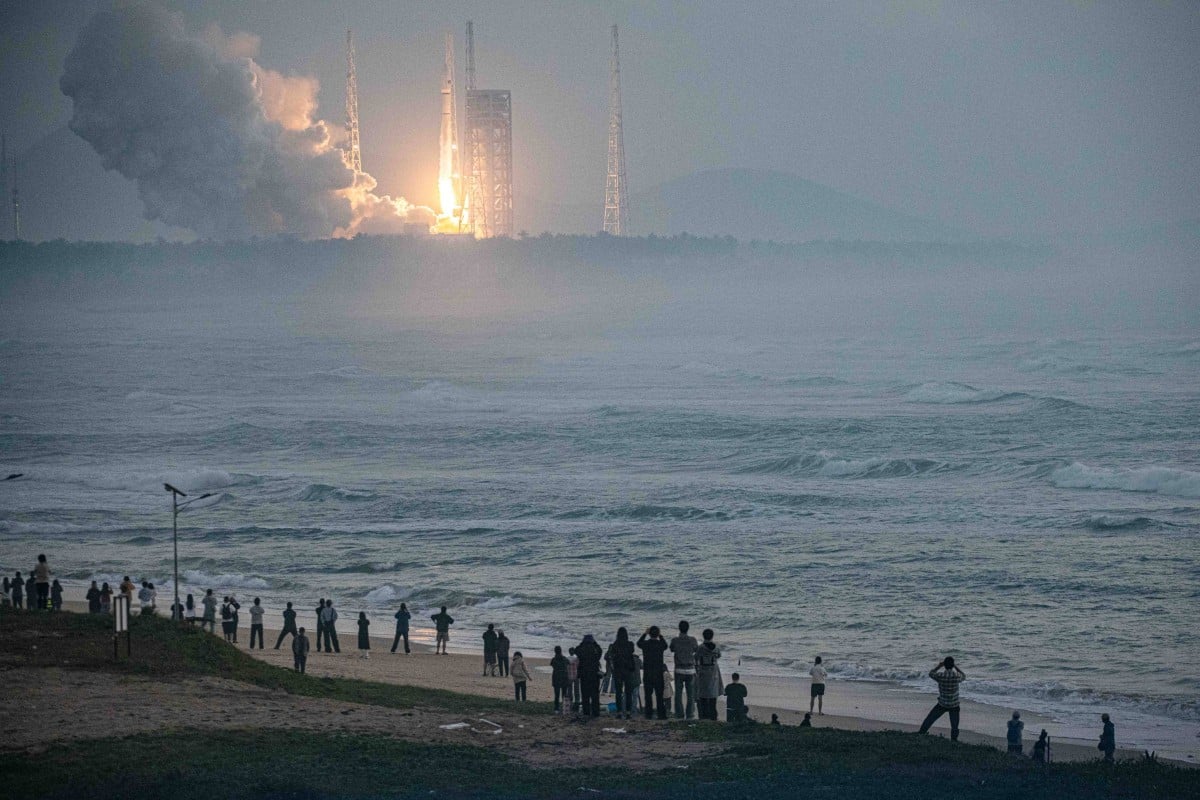
Chinese retail investors have identified a fresh hotspot in commercial aerospace, and betting that it will eclipse the fading AI trade as the next frontier in the US-China technological rivalry. A benchmark index tracking aerospace firms on the Shanghai and Shenzhen exchanges has climbed about 10% year-to-date, building on a 76% gain in 2025. This performance far exceeds the CSI 300 Index’s modest 2 per cent rise.
Standout performers include China Spacesat and Hunan Aerospace Huanyu Communication Technology. Analysts point to strong policy backing, which is expected to slash rocket launch costs and enable domestic firms to rival Elon Musk’s SpaceX. Great Wall Securities analyst Hou Bin highlighted accelerating substitution in commercial aerospace, creating opportunities across downstream sectors.
The surge reflects widespread belief that Beijing will spare no effort to close the gap with the US, where SpaceX currently dominates reusable rockets and lunar ambitions. China has prioritised aerospace in its latest five-year plan, conducting key tests for reusable technology and the Long March-10 rocket. The fast-track IPO review for LandSpace, a leading reusable rocket contender, has further ignited the frenzy.
With AI stocks stalling amid concerns over infrastructure returns and potential disruptions, aerospace offers a patriotic, state-supported alternative. Individual investors, who hold roughly a third of available shares, are driving inflows. One 21-year-old Shanghai student invested three months of his living expenses in an aerospace fund, viewing it as support for national development. A Beijing investor committed one million yuan, confident in China’s manufacturing edge and policy tailwinds.
Recent successes, including a critical safety test for manned lunar missions, bolster optimism despite earlier launch setbacks and rising volatility. Analysts expect short-term dips to present buying opportunities, forecasting explosive global growth in commercial aerospace over the next two years.
News Source: https://www.scmp.com/business/china-business/article/3343815/ai-aerospace-china-meme-rocket-shares-take-race-us
(4) K-pop’s big freeze: are cracks in China’s cultural blockade a thaw?

(Photo Credit: Reuters)
South Korea’s entertainment industry, despite K-pop’s global dominance, remains largely shut out of mainland China due to an unofficial ban imposed in 2016 after Seoul deployed the US THAAD missile defence system against Beijing’s objections. K-Pop concerts were cancelled, Korean dramas vanished from streaming platforms, and South Korean stars were removed from variety shows. Beijing has never acknowledged the ban on hallyu, or the “Korean wave.”
Chinese President Xi Jinping’s recent meeting with South Korean President Lee Jae-myung yielded no full market reopening, but small openings have emerged. In January, Youku released Loving Strangers, a Chinese remake of the South Korean drama My Mister starring IU, marking the first public distribution of such a remake since the restrictions began. CJ ENM partnered with JYP Entertainment’s Chinese arm and Tencent Music to launch Onecead, a new artist management firm targeting China.
K-pop acts including ITSY, IVE, Hearts2Hearts, WayV, NCT Dream, EXO, and CNBlue have held fan meetings and autograph sessions in China recently, though large-scale concerts stay prohibited. These events often keep venues secret until after ticket sales to avoid scrutiny.
Fans adapt by travelling to Hong Kong and Macau for concerts by groups like Super Junior, Seventeen, and IVE, or to nearby countries. High ticket prices for domestic events and intense competition drive many to seek alternatives abroad. Hong Kong saw massive mainland visitor surges during recent Blackpink shows.
Experts view the restrictions as economic coercion and protection for China’s cultural industry. While football, Go, and film/TV consultations were agreed upon, a sudden lift seems unlikely. For many fans, the passion for live performances endures despite the barriers.
News Source: https://www.scmp.com/news/china/diplomacy/article/3344205/k-pops-big-freeze-are-cracks-chinas-cultural-blockade-thaw
(5) Chen Mo – the man behind Heroes of Jin Yong – on AI and making a blockbuster game

(Photo Credit: Handout)
A flashy trailer for Heroes of Jin Yong, previewed at a Beijing anime mall, promises China’s priciest video game yet: a billion-yuan AAA title drawing from all 14 wuxia novels by the late Hong Kong legend Jin Yong, or Louis Cha. The footage showcased iconic fighters like Eastern Heretic, Western Venom, Southern Emperor, Northern Beggar, and the enigmatic Dongfang Bubai in stunning martial arts clashes.
The project, helmed by 42-year-old entrepreneur Chen Mo of CreateAI, aims to rival 2015 Polish RPG The Witcher 3: Wild Hunt. Chen, who returned to China after co-founding and cashing out from US-listed autonomous trucking firm TuSimple, calls it his “retirement dream.” He has already invested over 200 million yuan, with total costs projected at one to 1.2 billion yuan.
Days after the late-January reveal, fans criticised a graphic error: hero Yang Guo appeared with his wrong arm intact: left instead of right from the novel. Suspicions arose of AI-generated content using TV adaptations, which is a taboo in the gaming industry. Bilibili’s top comment mocked the “AI-created” visuals and theme song.
Chen denied AI use in animation, apologised for the mistake, and pledged fixes ahead of the 2029 launch. Inspired by the first incarnation of Jin Yong’s martial arts world, a RPG developed by Soft-World International Corporation, Chen hopes the game unites Chinese fans worldwide, much like Jin Yong’s stories did for him as an immigrant teen in Canada.
(6) Pokemon cards worth HK$8,000 stolen in Hong Kong shop burglary
(Photo credit: Getty Images)
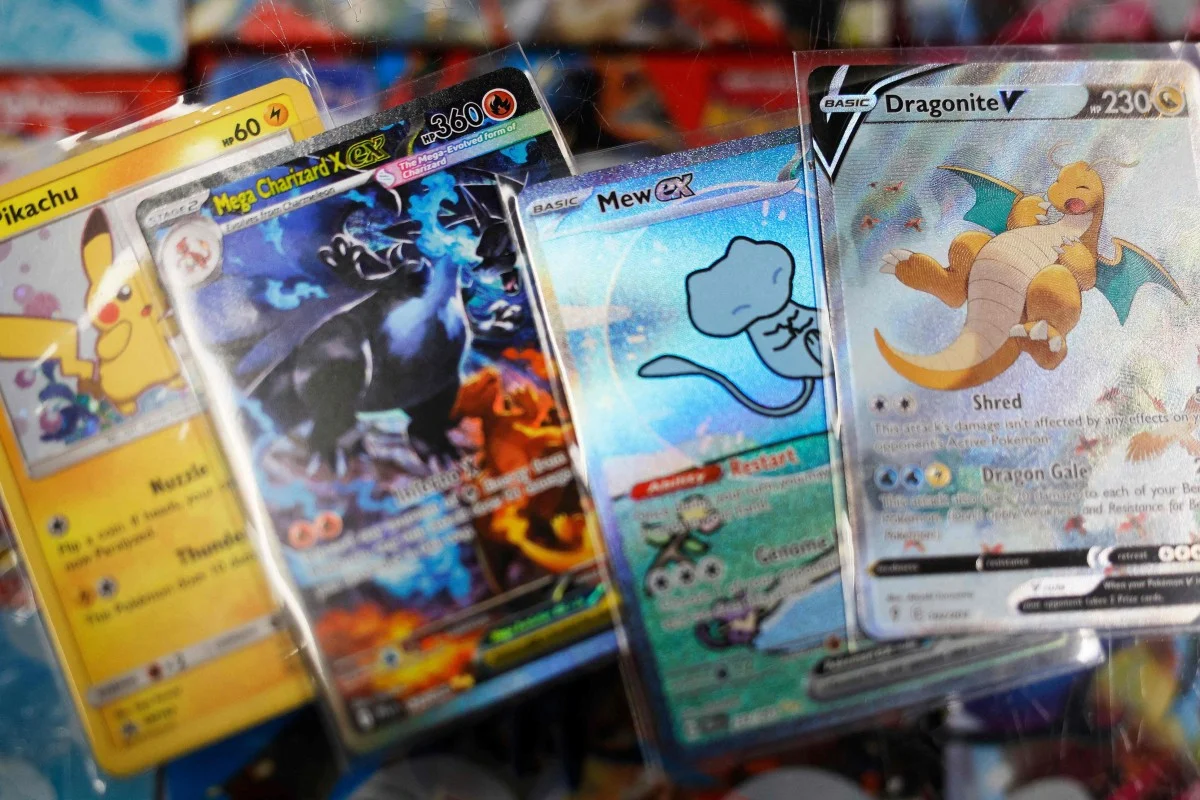
A burglary at a Pokémon card shop in Kwun Tong, Hong Kong, has led to the theft of trading cards valued at around HK$8,000, marking the second reported crime involving the collectibles within two months. The incident occurred at a 1,000 sq ft store in Chung Mei Centre on Hing Yip Street, where the 25-year-old owner discovered the break-in around 2:50 a.m. on Sunday. The thief disabled more than 10 security cameras by spraying them with red paint and escaped with three boxes of cards, entering via scaffolding and forced window grilles while leaving the main door untouched.
Police are hunting for a suspect described as 1.7 metres tall with a medium build, last seen wearing a surgical mask, yellow safety helmet, black jacket, and dark trousers. The Kwun Tong district investigation team has classified the case as burglary and is actively pursuing leads. This follows a January robbery at Lam Tin MTR station, where a 33-year-old man lost 19 valuable Pokémon cards worth HK$200,000 to a fraudulent online buyer who fled without paying.
Pokémon trading cards, first released in Japan in 1996, have become a global phenomenon with immense collector value. While common cards sell for just a few Hong Kong dollars, rare or high-grade versions fetch extraordinary sums. Recently, American YouTuber Logan Paul shattered records by selling an ultra-rare Pikachu Illustrator card for US$16.5 million at auction, more than tripling his original purchase price from 2021 and cementing its status as the world’s most expensive trading card.
(7) Zhang Yiming: How a reluctant CEO built a $66B empire

(Photo Credit: ByteDance)
Zhang Yiming, the 42-year-old founder of ByteDance, ranks as China’s second-wealthiest individual with a US$65.9 billion fortune on the 2025 Hurun Rich List. While China’s richest man, Zhong Shanshan, built his empire on bottled water, Zhang created an invisible kingdom powered by algorithms that feed human desire through TikTok and Douyin.
A software engineering graduate from Nankai University, Zhang cultivated patience, wide learning, and long-term thinking early on. His first startup, IAM, failed due to poor market understanding. These lessons shaped ByteDance, founded in 2012 with a deliberate global name and outlook.
Toutiao, launched as ByteDance’s flagship, pioneered algorithm-driven content recommendation. The company allowed personalised feeds to replace editorial curation and search. The AI engine learned user behaviour to predict preferences, a breakthrough that scaled to Douyin and Tiktok. ByteDance became the world’s largest social media company by revenue in Q1 2025, with a valuation between US$350 billion and US$370 billion.
Unlike many founders, Zhang admits he lacks natural management skills. In 2021, he stepped down as CEO to focus on strategy, building flat hierarchies, empowering local teams, and fostering open debate. Employees describe him as rational, pragmatic, and accessible.
Zhang’s success proves that in the digital era, empires arise from code and attention mechanics rather than physical products. His story teaches entrepreneurs to prioritise systems, self-awareness, and patient vision over charisma, creating platforms that shape global culture through endless, irresistible scrolls.
News Source: https://jingdaily.com/posts/zhang-yiming-how-a-reluctant-ceo-built-a-usd66b-empire
(8) HK$52m earmarked for establishing new IP academy

(Photo Credit: Elson Li)
Financial Secretary Paul Chan has allocated HK$52 million to establish an Intellectual Property Academy as part of efforts to strengthen Hong Kong’s IP sector. Unveiled in his budget speech on Wednesday, the two-year pilot scheme will be run jointly by the Intellectual Property Department and the Vocational Training Council. It will focus on on-the-job training to develop skilled professionals for the growing industry. The academy is slated to begin operations by the end of this year.
To position Hong Kong as a leading regional IP trading hub, Chan revealed plans to introduce an amendment bill this year. The legislation follows consultations with the trade on tax deductions for capital expenditure related to purchasing IP or rights to use IP. He explained that lowering such costs would encourage more trading activities, support knowledge-intensive industries, and reinforce the city’s role in regional IP commerce.
Chan also committed HK$28 million to the Hong Kong Technology and Innovation Support Centre. The funding will enable the centre to provide innovation and technology firms with patent evaluation services. It will also pilot a two-year scheme to assist enterprises in valuing their patent assets.
The measures align with broader goals to diversify the economy and capitalise on Hong Kong’s designation under the national 14th five-year plan as a key IP trading hub.
News Source: https://gbcode.rthk.hk/TuniS/news.rthk.hk/rthk/en/component/k2/1844981-20260225.htm?spTabChangeable=0
(9) T1’s shock elimination triggers Hong Kong LCK Cup ticket fire sale
(Photo Credit: the Standard)
The League of Legends Champions Korea (LCK) marked a milestone with its first overseas event: the 2026 LCK Cup Finals at Hong Kong’s Kai Tak Arena on February 28 and March 1. The lineup features the losers’ bracket final and grand final.
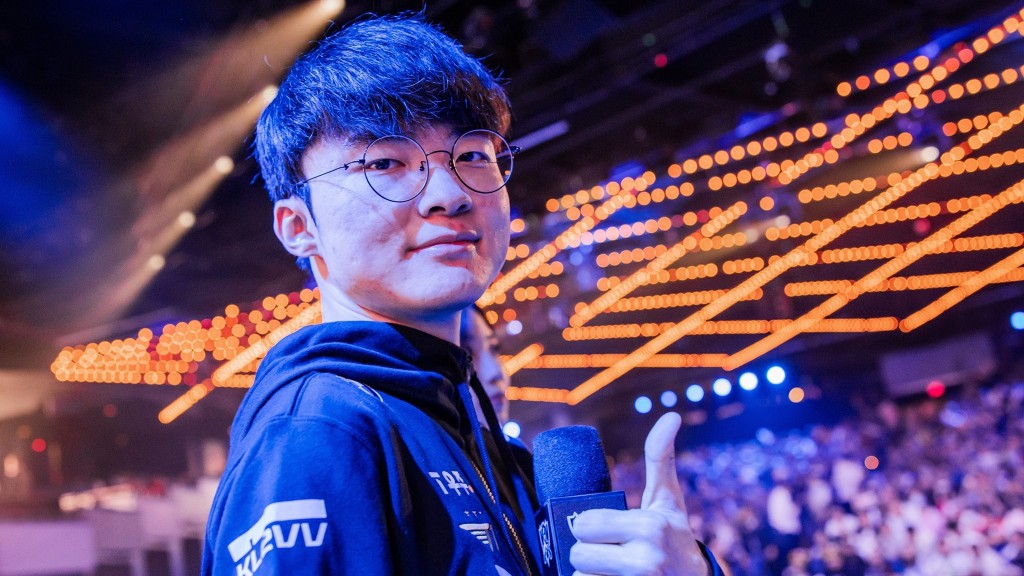
Tickets sold out instantly on January 30, fuelled by hype around T1’s legendary mid-laner “Faker”, whose real name is Lee Sang-hyeok. The 29-year-old, dubbed esports’ “GOAT”, boasts six Worlds titles, ten LCK crowns, two MSIs, and a 2022 Asian Games gold. South Korea honoured him with the Cheongnyong Medal in January 2026, the first for an esports star.
Excitement soured on February 22 when T1 blew a 2-0 lead against Dplus Kia (DK) in the losers’ qualifier, suffering a 3-2 reverse sweep and elimination. Without Faker’s star power, resale platforms erupted with desperate listings.
Sellers flooded resale sites with phrases like “tearful cheap sale” and “burnt stock clearance.” Premium HK$1,188 seats dropped over 40%, with ticket pairs offered for HK$1,400 total. Netizens joked that the “hidden T1 premium” has evaporated to zero.
Meanwhile, bargain seekers pounced on Carousell, with some demanding a 60% discount for the resale price. Yet the event retains value: DK faces BNK FEARX on February 28, with the winner tackling GEN.G on March 1 in a high-stakes action. For Hong Kong fans, it’s still a historic esports showcase.
(10) China Box Office: ‘Pegasus 3’ Dominates Lunar New Year Holiday Frame

(Photo Credit: Pegasus 3, directed by Han Han, produced by Beijing Mahua Funage Company, 2026)
China’s cinemas enjoyed a blockbuster Lunar New Year holiday from February 17 to 22, 2026, collecting RMB 4.47 billion across six days, according to Artisan Gateway data. The strong performance briefly propelled China to the world’s highest-grossing theatrical market for the year.
Five major films released simultaneously on Tuesday dominated the frame. Pegasus 3, directed by Han Han and starring Shen Teng, soared to first place with $369.3 million. The racing comedy follows underdog driver Zhang Chi leading China’s national team at the international Muchen 100 Rally.
Zhang Yimou’s espionage thriller Scare Out claimed second with $110.7 million. Starring Jackson Yee and Zhu Yilong, it depicts a tense counterintelligence mission to stop a classified data leak.
Martial arts epic Blades of the Guardians landed third at $97.3 million. Directed by Yuen Woo-ping and featuring Wu Jing, Nicholas Tse, and Jet Li, the manhua adaptation tracks mercenary Dao Ma escorting a mysterious fugitive across treacherous deserts, only to uncover a larger national conspiracy.
Animation favourite Boonie Bears: The Hidden Protector took fourth with $89.7 million. The 12th entry in the Fantawild series sends Briar, Bramble, and Vick on a fresh adventure in Eve City.
Jackie Chan’s action-comedy Panda Plan 2 rounded out the top five at $24.6 million. Chan protects panda Hu Hu from thieves after discovering a hidden tribe that reveres the animal as divine.
Year-to-date box office stands at $1.08 billion, down 64.6% from 2025, but the holiday surge has substantially closed the gap for the spring season.
News Source: https://variety.com/2026/film/box-office/china-box-office-pegasus-3-lunar-new-year-holiday-1236670017/
(11) Night King breaks Hong Kong first-week box office record with $45.89m

(Photo Credit: Night King, directed by Jack Ng Wai-Lun, produced by Edko Films, 2026)
Night King, directed by Jack Ng Wai-Lun and starring Dayo Wong Tze-wah and Sammi Cheng Sau-man, achieved a historic first-week box office of HK$48.77 million across Hong Kong and Macau from February 17 to 23, including HK$45.89 million in Hong Kong alone.
This performance shattered the previous record for Hong Kong and Chinese-language films, surpassing Back to the Past’s HK$45.56 million from January.
Industry reports indicate it is expected to break more records as its momentum continues.
News Source: https://www.thestandard.com.hk/arts-and-culture/article/325132/Night-King-breaks-Hong-Kong-first-week-box-office-record-with-4589m
(12) Temple of boom! Why Taiwan’s religious sites are becoming unlikely rave venues
(Photo Credit: Wang Dahow)
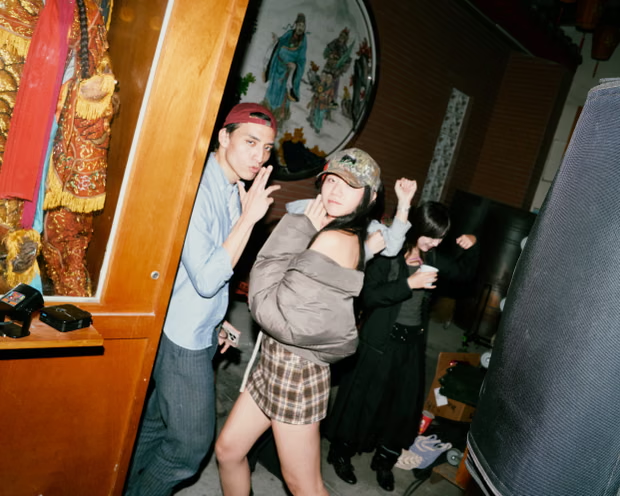
In Tainan, Taiwan, Andrew Dawson has turned Lunar New Year celebrations at Puji Temple into an underground music event called Temple Meltdown. For three years, he has brought a powerful sound system to the temple plaza, where deities like Caishen (god of prosperity) and the thousand-year-old Chifu Wangye watch over swaying crowds dancing to dub, reggae, and bass. Families burn incense nearby while fried chicken is shared on the dance floor.
Dawson, half-American and half-Taiwanese, sees temples as natural civic hubs. Taiwan’s temples, which are more per capita than anywhere else, feature open plazas for gathering, cooking, and socializing, rooted in a blend of Buddhist, Taoist, and folk traditions. Tainan, with one of the world’s highest temple densities, offers countless such spaces.
Local sound system builder Archi Tsai supplies the rig, a handmade Formosa Sound System inspired by his 2014 trip to Croatia’s Outlook festival. After years of self-taught research via YouTube and forums, he and friends built a four-way stack costing nearly 2 million TWD. Tsai views the project as part of changing outdated views that once linked partying or drinking to immorality.
Taiwan’s four decades of martial law until 1987 banned public dancing and cultural events, leaving lasting social conservatism. Police raids on nightlife persisted into the 2000s amid drug-related headlines. Dawson and Tsai believe temple events help normalize underground culture, merging it with everyday religious life. “This is our religion, and this is our culture,” Tsai says, calling the temple-front parties a natural extension of local traditions.
News Source: https://www.theguardian.com/music/2026/feb/24/taiwan-religious-sites-rave-venues-temple-meltdown