China Media and Entertainment Weekly News Bulletin – ISSUE 94 Week of 30 March 2026
(1) Popular YouTuber Kizuna AI is virtual. The screaming fans are not
Kizuna AI, a virtual YouTuber created by Activ8, has become a global VTuber pioneer whose shows how human‑driven motion‑capture and fan loyalty have turned digital anime avatars into a major force in modern entertainment.
(2) How Leslie Cheung broke all the rules to become Hong Kong’s greatest modern superstar
Leslie Cheung Kwok‑wing, a trailblazing Cantopop and film icon, reshaped Hong Kong’s conservative entertainment landscape with his artistry, leaving a lasting legacy that fans still honour every year on 1 April.
(3) Paralysed Hong Kong dancer Mo Li shares video of himself steering wheelchair
Hong Kong dancer Mo Li Kai‑yin, left paralysed after a Mirror concert stage accident in 2022, has shown for the first time on social media that he can move independently in an electric wheelchair, sharing a hopeful update on his slow recovery and regained mobility.
(4) China ‘left-behind aunties’, known as senior girl group, gain popularity for charm, dance skills
A troupe of left‑behind rural women in Henan’s Junying village has gained online fame through Gen Z‑managed live‑streamed dance performances, turning livestreaming into a source of income.
(5) China Box Office: ‘Project Hail Mary’ Overtakes ‘Hoppers’ to Claim Top Spot
Columbia’s Project Hail Mary topped China’s box office in its second weekend, while Han Han’s Pegasus 3 continued to lead the domestic tally.
(6) China’s AI music is a new money machine, but copyright disputes loom
AI‑made music in China is quickly becoming a profitable business, as seen in a programmer selling an AI‑generated song for tens of thousands of dollars and companies rolling out advanced music models, even as unresolved copyright issues loom.
(7) Chinese mainland AI short dramas targets 24 bln yuan market size
Chinese AI‑powered short dramas, fuelled by video‑generating models like ByteDance’s Seedance 2.0, are projected to reach 280 million users and a 24‑billion‑yuan market by 2026 as hyper‑realistic AI content reshapes production and cuts labor costs.
(8) Kris Jenner Becomes Viral “Lucky Charm” In China; Now, Chinese Social Media Is Flooded With Kris Jenner Profile Pics
Chinese social media users on Xiaohongshu and Weibo are using photos of Kris Jenner as profile pictures in a viral meme that treats her as a “Empress Dowager‑style” good‑luck charm for success and wealth.
(9) Streaming giant iQiyi joins homecoming wave with proposed US$300m Hong Kong listing
Nasdaq‑listed iQiyi has filed a confidential application for a Hong Kong secondary listing to boost its access to Asian capital and investors, while also announcing a US$100 million share buyback and a new AI‑driven long‑form video tool called Nadou Pro.
(10) Kim Kyung-wook reclaims ‘Good night, miss’ copyright from China
South Korean comedian Kim Kyung‑wook says he has regained ownership of the hit song “Good Night, Miss” after a Chinese music company briefly claimed the track, resolving a copyright dispute.
(11) CEO’s China Journal: Global immersive entertainment giant opens its first global flagship experience center in Shanghai
Jackie Chan has teamed up with director Leo Zhang for Pawfect Agents, an action-comedy hybrid set to start filming in September. The film pairs Chan with a high-tech spy dog on a global chase to protect a national treasure.
(12) Taiwanese celebrity Prince Chiu arrested in draft evasion crackdown
Taiwanese boy band star Prince Chiu Sheng‑yi was arrested in Taipei for allegedly paying a draft‑evasion group more than 10 years ago to fake his blood‑pressure records and obtain a false medical exemption from military service.
(1) Popular YouTuber Kizuna AI is virtual. The screaming fans are not

(Photo Credit: Kyodo / SCMP)
Kizuna AI, one of the most famous virtual YouTubers, drew sold-out crowds in Tokyo even though she never appeared on stage in person, showing how far VTubers have moved into the mainstream entertainment world. Created in 2016 by Activ8, Kizuna AI helped define the VTuber trend by using a two-dimensional anime-style character powered by real voice and motion-capture performers behind the scenes. Her success helped turn virtual entertainers into major online stars, with Kizuna AI now backed by more than 3 million YouTube followers and a comeback in 2025 after a hiatus.
The article shows that VTuber performances rely heavily on human skill, even if the character appears digital. In Tokyo, dancer Amika wore a motion-capture suit in a studio filled with cameras so her movements could be transferred to an avatar, while choreographer Yuka Araki said the rise of VTubers has created new career paths for dancers who may not have become traditional backup performers or idols. That shift reflects a broader change in Japan’s entertainment industry, where appearance and age matter less in motion-capture work.
Kizuna AI was created by Takeshi Osaka and Junji Matsuda, who wanted to build an online character that could connect with people in the same way a human creator might. Her name combines “Kizuna,” meaning bond, with “AI,” and her design was meant to be cute and widely appealing rather than overly stylized. Osaka said overseas fans embraced her concept quickly, while Japanese audiences took longer to warm to VTubers. He also pointed to Japan’s strong fan-support culture, where loyal followers spend heavily on idols and online personalities, as a key reason for the sector’s growth.
News Source: https://www.scmp.com/lifestyle/entertainment/article/3347977/how-popular-virtual-youtuber-kizuna-ai-thrills-fans-provides-jobs-human-talents?module=perpetual_scroll_0&pgtype=article
(2) How Leslie Cheung broke all the rules to become Hong Kong’s greatest modern superstar
(Photo Credit: SCMP)
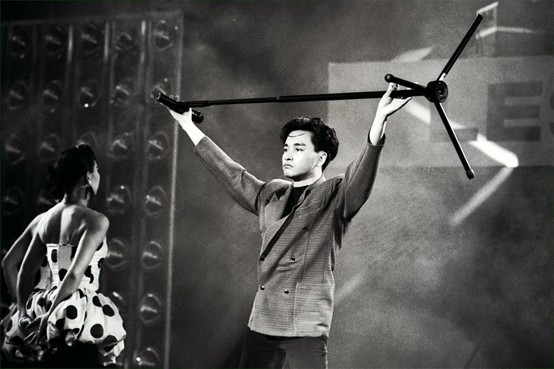
Leslie Cheung Kwok‑wing remains one of Hong Kong’s most defining pop‑culture icons, a Cantopop and film superstar who reshaped conservative Asian entertainment with his artistry, openness and gender‑fluid performances. Nicknamed “Gor Gor” (older brother), Cheung was born in 1956 into a large, affluent family but felt lonely and unloved as a child, growing up largely under his grandmother’s care before being sent to a boarding school in England. He briefly studied textiles at the University of Leeds but returned to Hong Kong after his father’s stroke, where he discovered his passion for singing and began performing publicly.
Cheung’s rise was rocky at first: his 1977 debut single and early film work flopped, and he was even booed on stage early in his career. That changed in the early 1980s when he joined Capital Artists and released his breakthrough album The Wind Continues to Blow (1983), followed by the hit “Monica” in 1984, which helped launch a wave of dance‑oriented Cantopop. By the late 1980s he had become a pan‑Asian superstar, starring in classics such as A Chinese Ghost Story, whose fantasy‑driven appeal reached far beyond Hong Kong, especially in South Korea.
Exhausted by fan rivalries and media pressure, Cheung stunned the industry by announcing his retirement in 1989 and moving to Vancouver, but he returned to the silver screen after being lured back by John Woo. His work in Wong Kar‑wai’s Days of Being Wild, Ashes of Time and Chen Kaige’s Farewell My Concubine earned him major awards and festival recognition, while he also took a Golden Horse for his song in The Bride with White Hair and later joined the Berlin International Film Festival jury. Off‑stage, Cheung quietly lived his 20‑year relationship with childhood friend Daffy Tong, at first keeping his bisexuality private because homosexuality was still highly stigmatised in Hong Kong, but later declaring, “My mind is bisexual,” and using his roles and music to normalise queer and gender‑fluid identities for a mainstream audience.
Cheung’s 1997 Red tour, where he performed in sparkling red high heels, and his 2000–2001 Passion Tour, dressed in Jean Paul Gaultier’s androgynous creations, pushed Hong Kong’s conservative norms and drew both admiration and mockery. As he aged, he suffered from clinical depression, worsened by funding setbacks for a planned directorial debut and the hostile reception of his more experimental work. His final role in Inner Senses echoed his inner turmoil, and in 2003, at 46, he fell from the 24th floor of the Mandarin Oriental hotel and died. The loss shook the region, especially when close friend Anita Mui died the same year, and Cheung’s legacy endures through annual April 1 memorials outside the hotel and exhibitions such as the “Miss You Much Leslie” show at the Hong Kong Heritage Museum, which keep his humanity and artistry vividly alive for new generations.
(3) Paralysed Hong Kong dancer Mo Li shares video of himself steering wheelchair

(Photo Credit: Li’s Instagram/SCMP)
Mo Li Kai‑yin, the Hong Kong dancer left paralysed after being hit by a giant falling screen at a Mirror concert in 2022, has shown for the first time on social media that he can move independently in an electric wheelchair, three and a half years after the accident. In an Instagram video posted on Saturday, the 31‑year‑old steered the chair with his right hand and reacted playfully when he noticed someone filming him, reversing away and joking that one of his motivations to train is “to get away from the crowd.” The clip, which also revealed his breathing stoma and mask, marked the first clear public demonstration of his regained mobility since the incident.
Mo was seriously injured when a 560kg overhead video screen broke free at the Hong Kong Coliseum on 28 July 2022, cutting short a high‑profile show and sparking a major safety review. Before this video, he had shared clips in February showing himself lifting and moving a stick to strengthen muscles needed for wheelchair control, saying he had been able to make such movements since December. His father, Reverend Derek Li Shing‑lam, has been posting biweekly prayer letters since the accident, updating followers on his son’s treatment and his own worsening cardiovascular concerns, while noting that Mo has regained some feeling in his right arm and limited sensation during bodily functions, supported by technology and faith.
(4) China ‘left-behind aunties’, known as senior girl group, gain popularity for charm, dance skills

(Photo Credit: mp.weixin.qq.com)
A group of left‑behind rural women in Junying village, Henan province, has gained online fame through daily live‑streamed dance performances managed by local Gen Z villagers. More than 20 women, most around 60, perform in a disused courtyard in bright outfits and sunglasses, copying popular youth dance trends while viewers send virtual gifts, vote on song choices, and decide who takes the spotlight. Behind the scenes, their young managers hype the crowd, call out usernames, and keep the energy high, with some sessions drawing over 10,000 people watching live at once.
For these women, the livestreams are about far more than views. With husbands and children working in cities, many are left behind to farm, care for livestock and look after older relatives, often living in isolation and financial strain. Group live‑streaming has given them friendship, a sense of purpose and a way to break the routine of rural life. They usually go live once after lunch and again in the evening until around 10:30 p.m., having learned more than 100 routines and adapting to fans’ requests, with playful lines like “princess, please have some tea” and “prince, wishing you prosperity in business.”
The project started with three young villagers born after 2000, who now organise the troupe, teach the dances, share the livestream earnings and even hand out eggs to local supporters. The women reportedly earn about 2,000 yuan a day collectively, or roughly 100 yuan each, and have gathered more than 120,000 followers, with fans praising the group for giving older people income, exercise and social connection.
(5) China Box Office: ‘Project Hail Mary’ Overtakes ‘Hoppers’ to Claim Top Spot

(Photo Credit: MGM/Courtesy Everett Collection)
Columbia Pictures’ sci‑fi film Project Hail Mary rose to number one at the China box office over the 27–29 March weekend, taking in RMB53.3 million (about $7.5 million) in its second week and bringing its total to $18.3 million. Disney’s animated film Hoppers fell to second place in its second weekend, adding $5 million for a cumulative $16.3 million, while the homegrown racing‑comedy Pegasus 3, produced by PMF Pictures and directed by Han Han, stayed in third with another $3.4 million, pushing its total to $612.3 million since release. The film follows racer Zhang Chi as he leads an underdog team in an international rally.
Yuen Woo‑ping’s martial arts epic Blades of the Guardians landed in fourth, earning $1.9 million and reaching $200.1 million overall; the film, based on a popular manhua, follows a wandering mercenary escorting a fugitive across the Western Regions toward Chang’an. The top five was rounded out by the comedy‑drama It’s OK, which debuted in fifth with $1.7 million. Directed by Yang Lina and produced by China Film, it stars Wen Qi and Qin Hailu and centres on a young woman whose medical plans are interrupted by her mother’s unexpected arrival. Mainland China’s total box office for the weekend was $25.3 million, and 2026’s year‑to‑date revenue now stands at $1.67 billion, a 51.3% drop compared with the same period in 2025.
Despite HYBE’s expansion into other markets, BTS remains the company’s main profit driver. Growth had slowed during the group’s hiatus, making the success of this comeback critical for both the band and its agency.
(6) China’s AI music is a new money machine, but copyright disputes loom
(Photo credit: China Daily illustration)
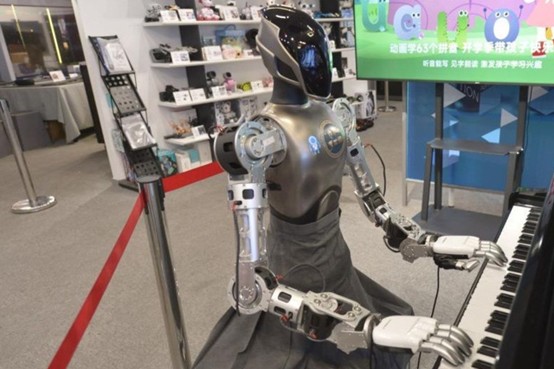
AI‑made music is rapidly shifting from an experimental tech trend into a real business in China, as shown by a young Chengdu programmer, Yang Ping, who sold the rights to an AI‑generated song, Seven‑Day Lover, for 50,000 yuan (about US$7,238). The song, which mimics the style of singer Jay Chou, racked up millions of views within a short time, highlighting how quickly AI content can be produced, commercialized and monetized. Yang said he has already earned over 200,000 yuan in nine months using his AI‑based technical and content skills, and he attributes the trend’s growth to the low barriers for creating and selling AI music.
At the industry level, companies are moving fast to develop AI music tools. Kunlun Tech, for example, showcased its latest music model, Mureka, at the Zhongguancun Forum in Beijing, claiming that its earlier version outperformed global rivals like Suno in vocal and instrumental benchmarks. The firm’s CEO, Fang Han, said the model is updated every three months, reflecting strong engineering capacity and expanding applications for AI in music. The commercial use of AI music is also broadening: an AI singer named Yuri gained millions of views with her debut video and was later appointed as a creative officer for digital exploration by The North Face, while partnerships are emerging in gaming, technology and automotive sectors. Market research firms forecast that the global generative AI‑music market could reach US$2.8 billion by 2030, with Asia‑Pacific led by China as the fastest‑growing region, and China’s AI music‑software market alone is projected to approach US$600 million by 2032. Yet legal experts warn that copyright issues – from data training rights to ownership of AI‑generated songs – remain unresolved and could complicate the sector’s rapid expansion.
News Source: https://variety.com/2026/film/news/tony-leung-chiu-wai-thriller-fox-hunt-global-deals-1236694631/
(7) Chinese mainland AI short dramas targets 24 bln yuan market size

(Photo Credit: REUTERS/Dado Ruvic/Illustration)
Chinese AI‑powered short dramas, including those using hyper‑realistic virtual humans, are on track to reach 280 million users in 2026, with the market size projected to hit 24 billion yuan (about HK$27.2 billion), driven by rapid advances in video‑generating AI such as ByteDance’s Seedance 2.0. Currently, more than 1,000 AI short dramas are released every day, with many combining AI‑generated visuals and voice‑over commentary, and some top titles surpassing 100 million views. During this year’s Spring Festival period, AI‑animated short dramas made up almost 30 percent of all short‑drama views (8.67 billion) and hyper‑realistic AI videos alone accounted for over 80 percent of that share.
AI models are also reshaping production economics. The new tools are compressing costs so sharply that the industry is moving toward a “one person, one drama a day” model, cutting the share of spending on labor from about 80 percent down to roughly 20 percent, while shifting core expenses to computing power and AI tokens. As the technology matures, mainland reports suggest AI short dramas could become a mainstream form of entertainment, with both user numbers and revenues expanding rapidly in the coming years.
(8) Kris Jenner Becomes Viral “Lucky Charm” In China; Now, Chinese Social Media Is Flooded With Kris Jenner Profile Pics

(Photo Credit: Xiaohongshu / 8days)
Chinese social media users on platforms like Xiaohongshu and Weibo have turned a silly meme into a viral good‑luck trend by setting photos of Kris Jenner as their profile pictures, treating the Kardashian‑Jenner matriarch as a kind of “Empress Dowager” who embodies success and wealth. Many netizens joke that by adopting her image they are “manifesting” better careers and bigger paychecks, riffing on her reputation as a sharp businesswoman and powerful momager. The trend has spawned endless variations, with the same headshot edited to show Kris in a construction helmet, a nurse’s uniform, holding a paintbrush or dressed as a tech‑startup founder, plus absurd twists like her sipping bubble tea or posing against a People’s Republic of China flag filter.
Online comments play along with the joke, with one user claiming their mother suddenly wired them 50,000 dollars after they changed to a Kris Jenner profile picture, and others declaring, “I am Kris Jenner, and everyone is manifesting nine‑figure wealth with me.” The wave of circular Kris Jenner avatars has become a running gag, with people saying they have not laughed so hard in a long time from endlessly scrolling past the same image. Some even joke that the sheer volume of profile pictures looks like a mass ritual to summon the real Kris Jenner, even though she has not yet publicly reacted to the trend.
News Source: https://www.8days.sg/entertainment/asian/kris-jenner-profile-pics-china-855886
(9) Streaming giant iQiyi joins homecoming wave with proposed US$300m Hong Kong listing

(Photo Credit: SCMP)
Nasdaq‑listed iQiyi, a Baidu‑backed online entertainment video platform, has filed a confidential application for a secondary listing in Hong Kong, aiming to strengthen its funding base and investor reach in Asia while US regulators keep tightening supervision on Chinese companies. The Beijing‑based firm said details of the proposed Hong Kong offering have not yet been finalised and depend on approvals from both the Hong Kong Stock Exchange and China’s securities regulator, as well as the company’s own final decision, warning there is no guarantee the listing will actually happen. The move would list iQiyi’s Class A ordinary shares on the Hong Kong main board and is meant to improve access to Hong Kong capital markets, broaden its investor base among Asia‑based institutions and retail investors, and raise its international profile.
Bloomberg previously reported that iQiyi plans to raise about US$300 million from the Hong Kong float, in a broader push that follows Hong Kong Exchanges and Clearing’s major listing‑reform package this month, which eased rules on confidential filings and secondary listings to attract more offshore‑listed Chinese firms.
At the end of 2025, some 377 Chinese companies remained listed solely in the US with no Hong Kong listing, making them potential candidates for similar dual‑listing moves. With over 400 million monthly active users, iQiyi’s video platform is one of China’s most popular, and the company also announced on Monday a US$100 million share‑buyback programme over the next 18 months to signal confidence in its long‑term prospects, plus a planned launch of Nadou Pro, a long‑form video‑generation AI tool.
(10) Kim Kyung-wook reclaims ‘Good night, miss’ copyright from China

(Photo Credit: OSEN / ChosunBiz En)
South Korean comedian Kim Kyung‑wook, who performs as the alter ego Tanaka, says he has regained full ownership of the hit song “Good Night, Miss” after a copyright dispute with a Chinese music company. In 2023, he complained on social media that the track had been registered as a Chinese song and that his original ownership rights were effectively taken over when a local firm rearranged a famous tune and uploaded it to a streaming platform, sparking confusion and fan backlash. In a recent YouTube interview on the channel Zzanbro, he said that after he publicly called the situation unfair, the company acted quickly and returned the song’s ownership to him.
“Good Night, Miss,” which Kim released with YouTuber Nimmol Cash, gained popularity overseas as music distribution on foreign platforms expanded, but this also raised the risk of similar copyright conflicts. Kim explained that the character Tanaka, inspired by nightlife hosts in Japan, started off as a joke about his friend Crush, who once said Tanaka content was the only thing that kept him from feeling lonely during Covid quarantine. The persona went on to become a massive hit, even gaining a following in Japan and appearing on major TV shows, and the comedian now frames the copyright resolution as a way of protecting his creative work and reassuring fans that he can defend his rights.
News Source: https://biz.chosun.com/en/en-entertainment/2026/03/31/5LVJUCSA7NF7LIPWNH5GJMXHQA/
(11) CEO’s China Journal: Global immersive entertainment giant opens its first global flagship experience center in Shanghai

(Photo Credit: Cappu Films)
Dolby, the well‑known audio‑visual technology company, is opening its first global flagship experience center in Shanghai, marking a major push into China’s entertainment and tech ecosystem.
In a report for “CEO’s China Journal,” CGTN’s Chen Tong spoke with Dolby’s Vice President Javier Foncillas, who explained that the Shanghai center is designed to showcase immersive experiences using Dolby Atmos and Dolby Vision across music, esports, and car audio. Foncillas highlighted that although Dolby does not sell directly to consumers, it works closely with local partners in Shanghai, where it has a dense network of businesses using its technology.
Inside the center, guests can feel a private‑concert effect from Atmos music, such as the Ariana Grande track “7 rings,” but the team notes that current on‑camera equipment cannot fully capture the surround‑sound experience. Despite the rise of low‑cost micro‑dramas and phone‑dominated viewing habits, Foncillas said consumers are demanding higher‑quality audio and video on mobile devices, creating new demand for Dolby’s smartphone‑adapted tech.
The company is also seeing strong interest from Chinese carmakers like Li Auto, which has integrated Dolby’s most advanced audio‑visual systems into new‑energy vehicles and pushed Dolby to add visual content and streaming platforms such as Bilibili inside cars. The reporter concludes that the Shanghai flagship center reflects not only foreign optimism about the Chinese market, but also how Chinese companies are pushing global brands to innovate.
News Source: https://news.cgtn.com/news/2026-03-31/VHJhbnNjcmlwdDg5OTM5/index.html
(12) Taiwanese celebrity Prince Chiu arrested in draft evasion crackdown

(Photo Credit: the Standard)
Taiwanese celebrity Prince Chiu Sheng-yi, a member of the popular boy band Lollipop F, was arrested on Wednesday in the latest round of a crackdown on draft evasion by male celebrities.
Authorities detained him at his residence in Nangang, Taipei, in the morning. Chiu was handcuffed and taken to the police station for questioning. During interrogation, Chiu admitted that more than 10 years ago he paid a draft evasion group NT$330,000 to falsify his blood pressure records in order to obtain a medical exemption from military service. He was granted bail of NT$500,000 pending further investigation.
Chiu is the third member of Lollipop F to be arrested for draft evasion, following William and Liljay. The total number of celebrities involved in the ongoing crackdown now stands at 19.
The authorities have been intensifying efforts since last year to investigate and prosecute men, including public figures, who falsified medical records to dodge compulsory military service.
Among those previously arrested was award-winning actor and singer Hsueh Shih-ling, who was accused of paying NT$300,000 to obtain a false “moderate hypertension” diagnosis for exemption.
News Source: https://www.thestandard.com.hk/china/article/328339/Taiwanese-celebrity-Prince-Chiu-arrested-in-draft-evasion-crackdown