How NewJeans nearly turned the K-pop industry upside down
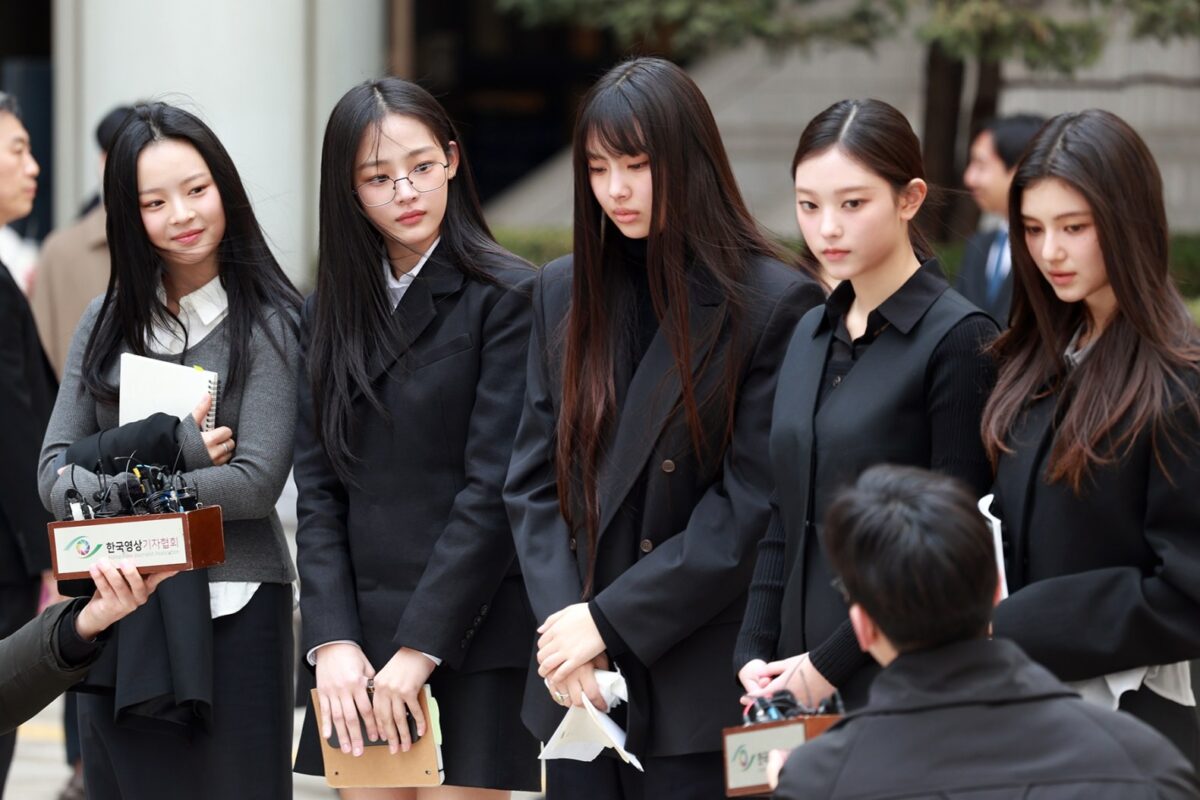
On 31 October 2025, the Seoul Central District Court ruled that an exclusive management contract between K-pop girl group NewJeans and its agency, ADOR, remained valid until June 2029 (Court Citation: 2024가합113399).[i] Though NewJeans members originally indicated that they would lodge an appeal against the ruling, by mid-November, all members announced their intentions to return to ADOR, though ADOR has only formally announced the return of 2 out of the 5 members of NewJeans.
This marks the end of a protracted legal battle that began in April 2024, arising from multiple accusations surrounding former ADOR CEO Min Heejin, who was also NewJeans’s producer and creative director and whom the group shared a close relationship with. The accusations included, among others: (i) plagiarism of NewJeans by another girl group, ILLIT, and (ii) alleged attempts to seize full control of ADOR from parent label HYBE. It should also be noted that Min is still engaged in ongoing legal dispute with HYBE.
After Min’s dismissal as CEO of ADOR in August 2024, NewJeans accused ADOR’s new management of breaching terms of their management contract and a breakdown of trust, leading to their unilateral termination of the management contract in November 2024. From then until March 2025, NewJeans performed under both a new name, NJZ, and the names of individual members, most notably at ComplexCon in Hong Kong. However, ADOR then obtained an injunction to ban NewJeans from independently entering endorsement deals or performing under the group’s name, failing which each member would pay ₩1 billion per violation. An appeal against such order was also dismissed in June 2025.
Why was the case so important?
This case follows a recent trend of artist-agency conflicts where an artist shares a close relationship with certain music producers or other third parties, who may attempt to poach the artist away from his/her agency:
- Girl group Fifty Fifty was coaxed by producer Ahn Sung-il (who produced their hit single, “Cupid”) to terminate their management contracts with ATTRAKT in 2023. Three of the original four members would depart and ATTRAKT re-organized Fifty Fifty into a 5-piece group;[ii] and
- Since 2023, EXO-CBX (A subunit of boy group EXO) and its label, INB100 have been in conflict with SM Entertainment (agency of EXO) as to joining music production company ONE HUNDRED as a subsidiary and being poached to terminate their artist contracts with SM in turn.[iii]
Furthermore, this case may have implications towards the K-pop industry as a whole. A potential NewJeans victory symbolizes artists may have a lower threshold to pass to terminate their management contracts. This may also open an avenue to poach promising and/or successful K-pop artists away from their agencies. agencies provide significant upfront investment to develop pre-debut artists, with no guarantee of return of investment unless an artist succeeds. Training expenses for a K-pop trainee can amount to ₩120 million (~US$91,000) a year, while estimated costs for creating a K-pop group are between US$2.2 million to $3.6 million.[iv] For an artist to easily terminate their management contract with no financial liability could threaten the survival of K-pop agencies and upend long-established industry practices, for better or worse.
Given the above, many industry bodies, including the Korea Entertainment Producers Association, Korea Music Content Association, and Korea Management Federation, appealed to NewJeans to honor its management contract with ADOR, concerned that the contract termination and alleged tampering of their contract by Min would lead to a ripple effect affecting the functioning of talent agencies and deterring future investment in the K-pop industry, and thus affect the survival of the industry.
The importance of trust
The NewJeans case is not the first of its kind in the history of K-pop. The Supreme Court of Korea (the country’s highest court) had ruled on artist management contract disputes, notably the case of 2017다258237 (which the NewJeans case had referred to). The 2017 case surrounded singer Song Sohee and her termination of the exclusive management contract with her former agency Deokin Media, based on her request to remove her manager who was found to have drugged and raped a female singer, while managing Song, then a minor.[v]
Through the Song Sohee case, the Supreme Court ruled that an exclusive management contract between an artist and an agency is to be treated akin to an “unnamed contract similar to a mandate” (위임과 비슷한 무명계약), and where the mutual trust between the contracting parties is broken, a party may terminate the exclusive management contract. Korean law treats such contracts as distinguishable from a typical agency contract, because they involve a “strong intertwining of the parties’ interests concerning its continuation” (존속과 관련하여 당사자들의 이해관계가 강하게 결부되어 있으므로). Therefore, an exclusive contract requires a high degree of trust to be maintained, and the Supreme Court ruled that forcing an artist to perform obligations under an exclusive contract against his/her will was seen as infringement on an artist’s personal rights, and subsequently, a justified termination of the exclusive management contract by an artist. This was in addition to the already established ground that a contract could be terminated if there was significant reason as to why the contract could not be expected to continue.
It should be noted that, apart from Song’s case above, other examples of sufficient grounds for termination include failure/refusal to pay an artist its payment entitlement and unlawful transfer of contract rights to a third-party agency without an artist’s consent. These grounds were used by girl group LOONA, all of whose members successfully terminated their management contracts with Blockberry Creative through multiple lawsuits (See: 2021가합28437, 2023나2037934, 2024다230589, and 2023가합20734).[vi]
However, in the NewJeans case, the Seoul Central District Court ruled that the financial risks a talent agency assumed must be considered in cases involving termination of K-pop management contracts. Furthermore, artist management agencies in Korea assume multiple responsibilities beyond that of a normal agency, by providing comprehension career support, in-house content production and promotion, for artists to build up sufficient recognition and fandom post-debut. Therefore, simply by ruling that an exclusive management contract is nullified due to forced activities against an artist’s free will, would be an easy escape from such a contract without just cause.
The court therefore gave clarifying guidance that: (i) where an artist makes unreasonable demands or exercises decision-making authority which an agency does not accept, such may not constitute to an excessive infringement of the artist’s personal rights, and (ii) termination of an exclusive contract based on breach of trust must be based on objective finding of faults, but not solely on emotional charges. Although NewJeans had demanded ADOR to implement corrective action, the court also ruled that NewJeans’ management contract did not give the artists such decision-making authority that would override ADOR’s management mandate and know-how. Furthermore, as further explained below, some of the demanded corrective action made by the artists, such as the reinstatement of Min as CEO of ADOR, are impossible to implement in practice.
Evaluating NewJeans’ claims of a breakdown of trust
To support their claims for termination, NewJeans cited multiple incidents that they alleged to cumulatively contribute to a breakdown of trust. As, in the author’s opinion, some allegations made are quite frivolous and weak (such as the leaking of pre-debut training footage by online media platform Dispatch and correction of album sales figures), this article will focus on three key points: (i) Min’s role as a director and producer in ADOR, (ii) HYBE’s audit of Min during her time as CEO of ADOR, and (iii) an alleged failure to stop another girl group copying NewJeans’ musical styles and concepts. It should also be noted that throughout the judgment, the Seoul Central District Court repeatedly stated that NewJeans had not submitted sufficient evidence to back up their allegations.
- Min’s role as CEO and producer in ADOR, and a subsequent gap in management and music production due to Min’s dismissal
Prior to her dismissal, Min had always been NewJeans’ producer and creative director, and has been acknowledged as being integral to the group’s unique musical identity. However, the court found that the management contract did not stipulate Min’s retention as CEO of ADOR, or her being the main handler of NewJeans’ management and music production, as conditions for NewJeans’ agency arrangement. Thus, the court refused NewJeans’ argument that they entered into the exclusive management contract based on personal trust in Min.
Despite Min’s dismissal as CEO, ADOR’s new management had requested her to stay on as an internal director and producer for NewJeans – which would grant Min control as to the group’s creative and musical direction. However, Min had shortly after resigned from ADOR on her own accord, thus the court held that ADOR had not prevented Min from performing her producer duties for NewJeans. As there is no requirement under the management contract that the production services must be provided through Min, Min’s departure would not hinder ADOR’s ability to fulfil its content production duties to NewJeans.
Although the court noted that ADOR was unable to recruit a producer for NewJeans for some time after Min’s dismissal as CEO, which NewJeans claimed to be an instance of ADOR failing to perform its management duties, the court accepted ADOR’s explanation that it had been waiting on Min to respond to its offer to stay on as an internal director and producer. Furthermore, ADOR had not been idle – it planned future album releases, fan meetings, world tours, advertisement filming, and other events for NewJeans. Therefore, the judge rejected NewJeans’ allegation that ADOR had failed to fulfil its obligations under the management contract.
- HYBE’s audit of Min being illegal and retaliatory
According to NewJeans, after Min communicated to ADOR her demands for corrective action over her belief that ILLIT had copied NewJeans’ musical concepts and identity (see point 3 below), HYBE (ADOR’s parent label) had allegedly conducted a retaliatory audit against Min from her tenure as CEO at ADOR, as well as replaced the board of directors that was put in place by Min. This argument seemingly repeats the point that NewJeans view Min’s presence at ADOR as necessary for ADOR to fulfil its management duties to NewJeans. However, the court received documentary evidence to the effect that: (i) Min was planning for a public opinion war (that took place before NewJeans released “How Sweet” and “Supernatural” between May and June 2024) by spreading messages that HYBE had treated NewJeans unfairly, and releasing news to parties including investors and the Korea Fair Trade Commission, in the hope that the audit would be conducted and damage HYBE’s reputation, and (ii) Min had privately sought outside investors to acquire ADOR from HYBE. This led the court to conclude that Min had intentions to separate ADOR from HYBE and take NewJeans alongside it, instead of protecting NewJeans from ADOR’s alleged breach of the management contract. The court therefore found HYBE’s audit of ADOR to be a reaction to these findings, and therefore was neither retaliatory in nature, nor an act that breached the trust between ADOR and NewJeans.
- Failure to stop attempts by ILLIT to “damage and replace” the uniqueness of NewJeans (i.e. plagiarizing NewJeans’ musical style and concepts)
ILLIT is a girl group under BELIFT LABS, a sister label of ADOR under the same parent label HYBE and debuted 2 years after NewJeans. Due to the similarities in age, musical and visual concepts, ILLIT has been evaluated by industry experts as a girl group similar to NewJeans.[vii] This has led to allegations by NewJeans that ADOR had failed to stop ILLIT from copying NewJeans’ unique concept, and thus damaging the NewJeans brand.
Although the court acknowledged that there were similarities between the two groups’ plans and pictorials, it could not rule that ILLIT had plagiarized NewJeans, since a “concept” of a girl group is not protected by trade mark, publicity and intellectual property rights. Furthermore, the court considered ADOR’s actions to verify a possible leak of NewJeans’ plans to ILLIT, as well as request for security management measures to better protect NewJeans’ plans, and thus it would not conclude that ADOR had failed to take further action to protect NewJeans’ concepts, especially when ADOR’s actions took place after Min’s dismissal as CEO.
Comments
The NewJeans case further clarifies that despite sharing a close relationship with an artist, the change in certain management and production personnel does not entitle an artist to terminate his/her exclusive management contracts. In reaching this judgment, the Korean courts have shown their awareness of the potential risks and damage to the K-pop industry if artists can terminate their exclusive management contracts very easily. The threshold that artists face now to establish a breakdown of the relationship of trust with their managing agencies is no longer as low as perceived.
However, given that the K-pop industry business model is known for rigid contacts, power imbalances and a relative lack of control by artists over their careers the Korean government has intervened multiple times to address unfair contractual terms and provide legal protection for artists. Most recently, the Ministry of Culture, Sports and Tourism updated a standard contract template in 2024 (대중문화예술인(가수·연기자) 표준전속계약서) for artists that addresses, among other things, obligations on attribution of IP rights, prevention of abuse, management rights, profit distribution and respective obligations of parties.[viii] However, certain loopholes persist; notably, artists and entertainers still do not receive the same protections as those received by labourers/employees, as they do not meet the definition of “workers” under Korea’s Labour Standards Act, which provides for fixed working hours and other statutory rights.[ix] Instead, they are deemed “independent contractors” despite seemingly working under strict conditions and with little autonomy. The success enjoyed by the industry means that non-artist stakeholders may not be motivated to substantially change K-pop’s business model or relevant legislation.
The frequency and magnitude of conflicts between artists and agencies as of recent should not be overlooked. Beyond this lawsuit, NewJeans are obliged to return to ADOR and work with new management staff. Given how many bridges have been burned over the course of this lawsuit (not just with ADOR, but also with HYBE and other affiliate labels), NewJeans will struggle to re-establish a positive relationship with ADOR in the long run. While NewJeans remains a chart-topping group whose commercial successes will motivate ADOR to fulfill its management duties, other less successful groups may find themselves shelved by their management instead.
Avoid addressing these issues will likely lead to more lawsuits and instability, just as creative industries from neighboring countries are beginning to compete with their Korean counterparts. It would be prudent therefore for stakeholders to revisit such management contracts to ensure that there is sufficient accountability and transparency, flexibility for artists as they develop professionally, as well as mediation/dispute resolution mechanisms to avoid high-profile and destructive lawsuits. Mutual respect towards artists’ creative independence and need for fair treatment, as well as the need for financial sustainability by agencies, will go a long way in ensuring the long-term success and growth of one of the world’s fastest growing genres.
(Neither the author, nor the solicitors of Haldanes, are qualified attorneys of the Republic of Korea, and cannot advise on matters of Korean law)
[i] Original judgment text available at: https://lbox.kr/v2/case/%EC%84%9C%EC%9A%B8%EC%A4%91%EC%95%99%EC%A7%80%EB%B0%A9%EB%B2%95%EC%9B%90/2024%EA%B0%80%ED%95%A9113399 (Korean)
[ii] Yoon So-yeon, 4/10/2023, Fifty Fifty’s agency sues production company for 1 billion won over breach of contract, Korea Joongang Daily, https://koreajoongangdaily.joins.com/news/2023-10-04/entertainment/kpop/Fifty-Fiftys-agency-sues-production-company-for-1-billion-won-over-breach-of-contract/1882648
Kim Ji-ye, 8/1/2024, Fifty Fifty recruiting new members to join Keena, Korea Joongang Daily, https://koreajoongangdaily.joins.com/news/2024-01-08/entertainment/kpop/Fifty-Fifty-recruiting-new-members-to-join-Keena/1953525
[iii] Dong Sun-hwa, 10/6/2024, ‘No rights without responsibilities’: EXO-CBX, SM clash again after 1 year, The Korea Times, https://www.koreatimes.co.kr/entertainment/k-pop/20240610/no-rights-without-responsibilities-exo-cbx-sm-clash-again-after-1-year
[iv] Park Geon, 20/3/2022, She created the education system BTS also went through… “The most important thing for idols is the ability to make their own decisions.”, Korea Joongang Daily, https://n.news.naver.com/article/025/0003266923 (Korean)
Kim Jae-hyun, 23/10/24, K-pop is all about money, Korea Herald, https://asianews.network/k-pop-is-all-about-money/
[v] Case Summary available at: https://casenote.kr/%EB%8C%80%EB%B2%95%EC%9B%90/2017%EB%8B%A4258237 (Korean)
Hong In-Seok, 6/11/2025, Court narrows trust breakdown standard in NewJeans–ADOR dispute, Chosun Biz, https://biz.chosun.com/en/en-industry/2025/11/06/XTOSY5X4XBGXTMHA2NSSMBOJ3Q/
[vi] Case Summaries available at: https://casenote.kr/%EC%84%9C%EC%9A%B8%EB%B6%81%EB%B6%80%EC%A7%80%EB%B0%A9%EB%B2%95%EC%9B%90/2021%EA%B0%80%ED%95%A928437 (2021가합28437), https://casenote.kr/%EC%84%9C%EC%9A%B8%EA%B3%A0%EB%93%B1%EB%B2%95%EC%9B%90/2023%EB%82%982037934 (2023나2037934), https://casenote.kr/%EB%8C%80%EB%B2%95%EC%9B%90/2024%EB%8B%A4230589 (2024다230589), https://lbox.kr/v2/case/%EC%84%9C%EC%9A%B8%EB%B6%81%EB%B6%80%EC%A7%80%EB%B0%A9%EB%B2%95%EC%9B%90/2023%EA%B0%80%ED%95%A920734 (2023가합20734)
[vii] Allkpop, 14 May 2024, Music industry experts discuss whether ILLIT is a copy of NewJeans, https://www.allkpop.com/article/2024/05/music-industry-experts-discuss-whether-illit-is-a-copy-of-newjeans
Korea Times, 17 June 2024, NewJeans, ILLIT agencies’ tit-for-tat copying allegations fuel fan anger, https://www.koreatimes.co.kr/entertainment/20240617/agencies-of-newjeans-illit-fuel-fan-anger-girl-group-conflicts-turn-chaotic
[viii] Kim Min-Young, 3/6/2024, Culture Ministry revises industry’s standard contract for music artists, Korea JoongAng Daily, https://koreajoongangdaily.joins.com/news/2024-06-03/entertainment/kpop/Culture-Ministry-revises-industrys-standard-contract-for-music-artists/2060380
[ix] Fan Wang, 21/11/2024, Are K-pop stars workers? South Korea says no, BBC News, https://www.bbc.com/news/articles/c8jyvmew0njo