Asia Art Weekly News Bulletin – ISSUE 51 Week of 9 February 2026
(1) Indonesia’s 68,000-year-old handprint: the birth of human art?
A 67,800-year-old Sulawesi hand stencil is the world’s oldest rock art, challenging European origins and facing modern threats.
(2) Will DDP survive? Seoul’s landmark turns into political battlefield
Seoul’s DDP faces demolition push from mayoral candidates despite high visitor numbers.
(3) HK to host the world’s largest jewellery marketplace in early March with over 4,000 exhibitors
Hong Kong will host the world’s largest jewellery trade event in early March, featuring twin shows with 4,000 international exhibitors, record export growth, luxury showcases, AI and design seminars, and tourism experiences to boost global appeal.
(4) China’s Nanjing Museum artwork scandal probe uncovers historic mismanagement, corruption
Nanjing Museum scandal reveals corruption enabling sale of Ming-Qing treasures donated in 1959. Probe recovers three of five paintings after an 88-million-yuan artwork surfaced at an auction, prompting management purge and relic safety overhaul.
(1) Indonesia’s 68,000-year-old handprint: the birth of human art?
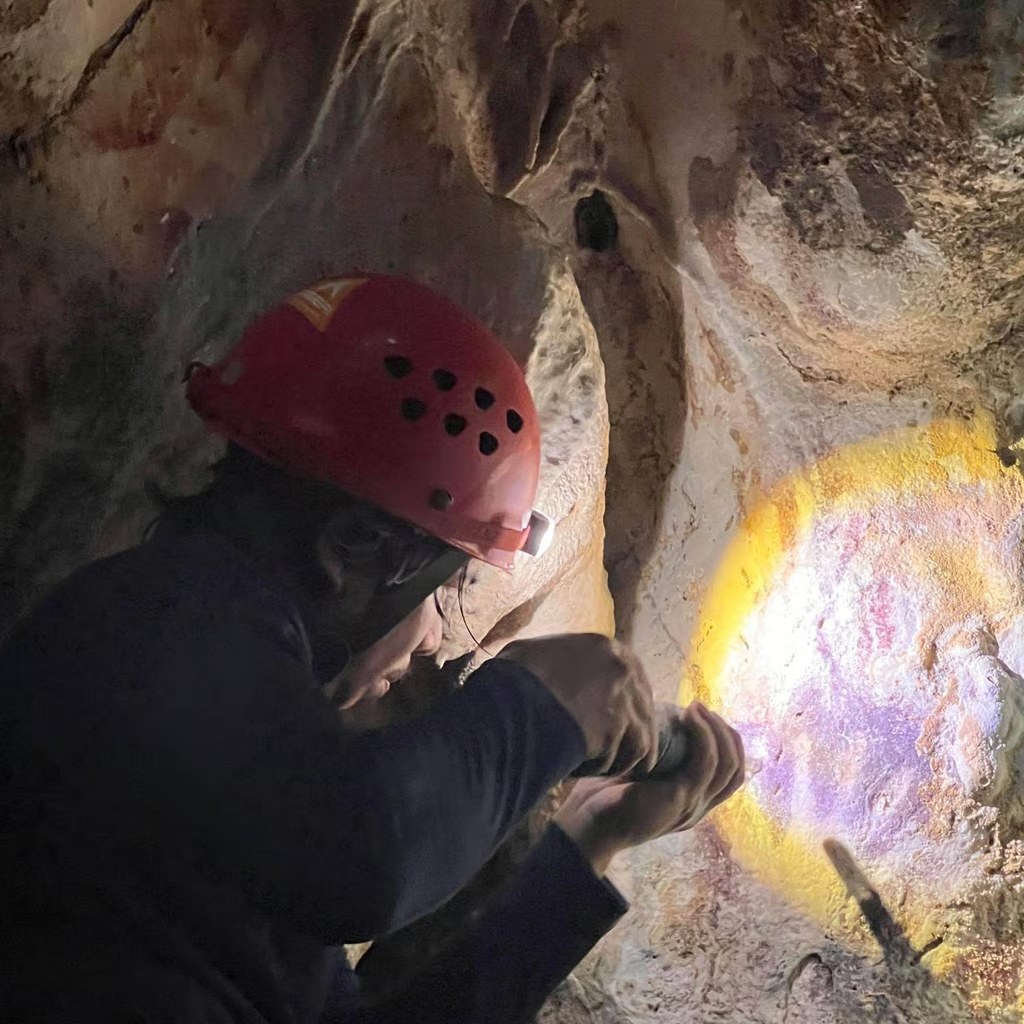
(Photo Credit: Maxime Aubert/AP)
A faint hand stencil found in Metanduno cave on Indonesia’s Sulawesi island dates back at least 67,800 years, making it the world’s oldest known rock art and challenging the old idea that human artistic expression started in Ice Age Europe. Discovered in 2015 by Indonesian researcher Dr Adhi Agus Oktaviana and dated using samples analyzed in Australia, the faded outline was hidden under a recent chicken sketch; its claw-like fingers may symbolize a link between humans and animals, simply marking “I was here.”
This find, published in Nature on 21 January, confirms Sulawesi as a major center of early creativity. The island already holds other ancient works, like a 51,200-year-old mural of figures with a pig and a 48,000-year-old hunting scene with spears and bows. Archaeologists say it shows a “cognitive explosion” around 65,000 years ago, when people crossed open seas to reach Australia using boats, and made jewellery from animal parts, proving they cared about beauty and symbols, not just survival.
The paintings are at risk from climate change, pollution like sulphur, and nearby factory blasting. Indonesia has over 700 rock art sites, but only a few are protected; experts are using 3D laser scans to save them digitally, though low funding limits progress. Officials plan to upgrade Metanduno’s heritage status soon for securing its protection.
(2) Will DDP survive? Seoul’s landmark turns into political battlefield
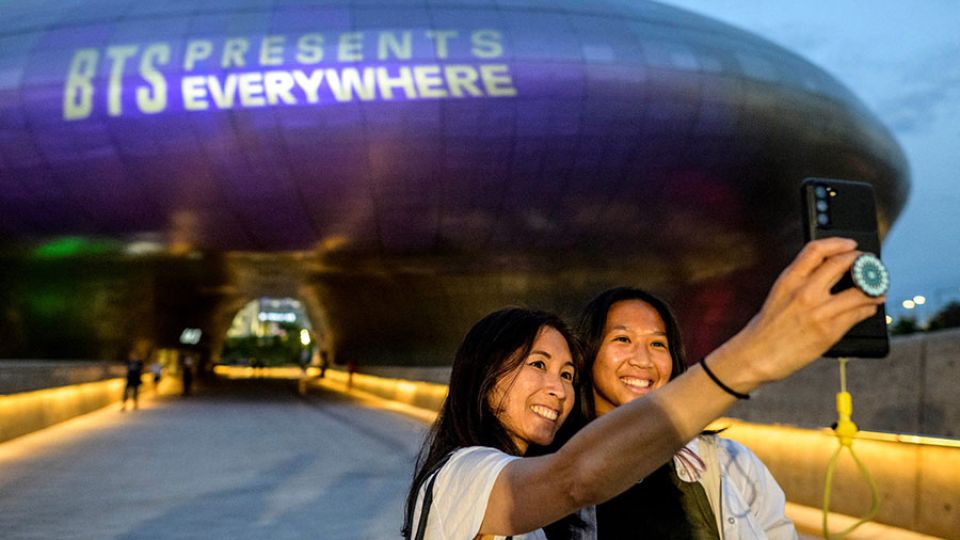
(Photo Credit: AFP)
Seoul’s Dongdaemun Design Plaza, known as DDP, is a futuristic cultural hub designed by Zaha Hadid. It has drawn tourists for over a decade with fashion shows and exhibitions. Now, ahead of the June mayoral election, candidates question its value and some want to tear it down.
Seongdong-gu Mayor Chong Won-o started the debate. He said the old Dongdaemun Stadium site should have become a sports dome instead. He claims DDP brings few economic benefits because people just take photos and leave. Seoul officials disagree. They point to 17.1 million visitors last year and 126 million total since opening. They also note a 25.5 percent rise in nearby credit card spending from 2022 to 2024. Foreign card use grew over six times in that period.
Democratic Party candidate Rep. Jeon Hyun-hee called DDP a sign of bad government. She promises to replace it with the world’s largest Seoul Dome. Traditional markets nearby do struggle with fewer shoppers. Experts blame online shopping, high labor costs, and Chinese competition. They say DDP is not the problem. The building cost 500 billion won to construct in 2014. Demolition and a new dome would cost taxpayers even more.
Scholars call DDP an iconic asset that boosts city identity. They argue for keeping it and building domes in outer areas instead.
News Source: https://asianews.network/will-ddp-survive-seouls-landmark-turns-into-political-battlefield/
(3) HK to host the world’s largest jewellery marketplace in early March with over 4,000 exhibitors

(Photo Credit: The Standard)
Hong Kong will host the world’s largest jewelry trade event in early March with twin shows attracting around 4,000 exhibitors from over 40 countries. The 42nd Hong Kong International Jewellery Show runs 4-8 March at the Convention Centre, while the 12th Diamond, Gem & Pearl Show takes place 2-6 March at AsiaWorld-Expo.
Seventy percent of exhibitors hail from abroad, including newcomers from Uzbekistan alongside expanded presence from Brazil, UAE, and India. HKTDC deputy director Jenny Koo highlighted robust export growth, with premium jewelry shipments to ASEAN up 51% last year, plus gains to the UK (36%), Australia (28%), and Switzerland (10%).
Highlights include artist Hera Chan unveiling HK$8 million and US$250,000 jewelry sets, a new mainland China Hard Pure Gold Pavilion, and an expanded Hall of Fame featuring rare diamonds from local firms. Seminars cover AI commercialization, e-commerce strategies with influencers, and two design competitions focused on gold and jadeite pieces targeting ASEAN and Middle East youth markets.
The HKTDC has teamed up with the Tourism Board for city experiences like harbor cruises and tram parties to draw visitors beyond the fairs.
(4) China’s Nanjing Museum artwork scandal probe uncovers historic mismanagement, corruption
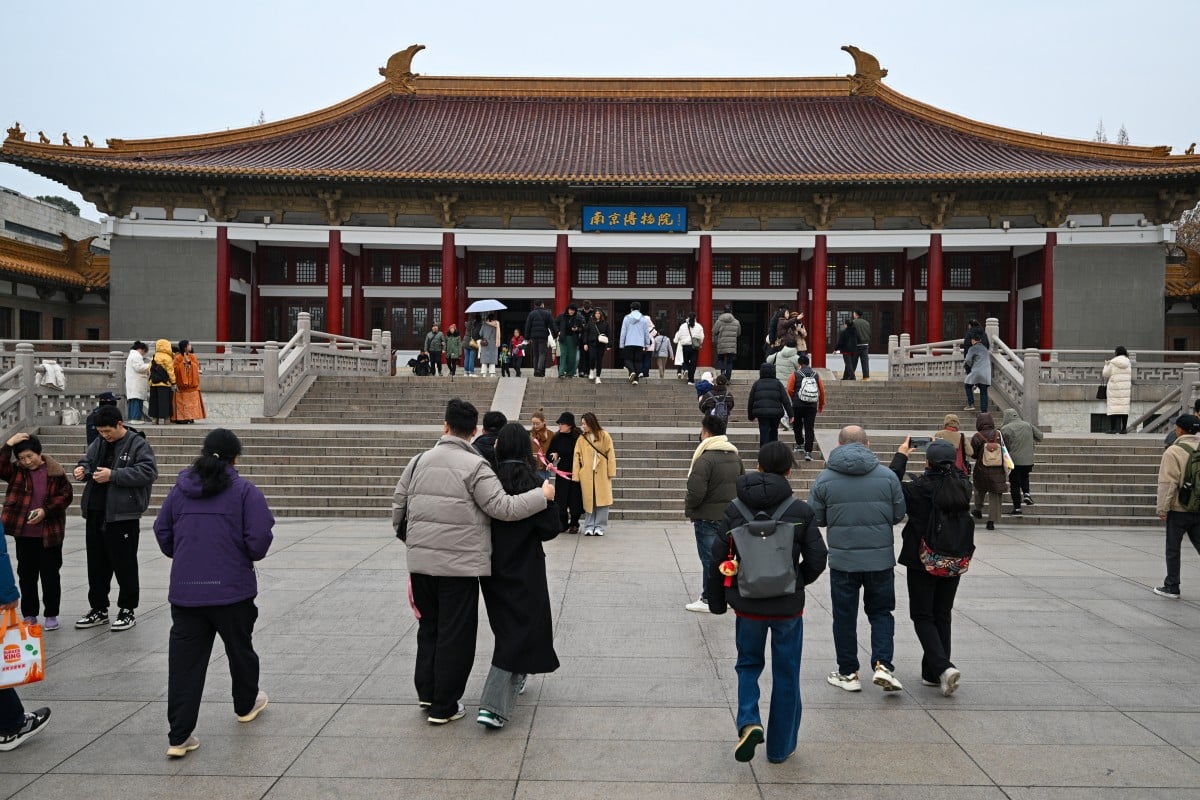
(Photo Credit: CFOTO/Future Publishing via Getty Images)
A sweeping investigation into a scandal at Nanjing Museum has uncovered decades of mismanagement and corruption that allowed national treasures to slip into private hands, Chinese authorities revealed this week. The probe, launched after reports surfaced in late 2024 that donated artworks had been secretly sold, focused on five Ming- and Qing-era paintings gifted by collector Pang Laichen’s family in 1959. One of them, Qiu Ying’s Spring in Jiangnan, resurfaced at an auction in early 2025 valued at 88 million yuan (US$12.7 million), triggering public outrage and a government inquiry.
Investigators reviewed 65,000 documents and interviewed more than 1,100 people, and concluded that former museum vice-director Xu Huping illegally approved the transfer of the donations to a state-run relics store in the 1990s, where they were later sold at manipulated prices. Three paintings have since been recovered, one misfiled, and one remains missing.
Authorities blamed Xu and 23 others for “serious duty-related violations” and systemic oversight failures. The Jiangsu government ordered a full overhaul of museum management and a province-wide relic safety review. In a public apology, the Nanjing Museum admitted it had “betrayed the trust” of donors. State media called the outcome a “powerful deterrent,” warning that crimes involving heritage relics will face harsh punishment.