Asia Fashion Weekly News Bulletin – ISSUE 66 Week of 25 May 2026
(1) Mainland brands power Hong Kong retail recovery as F&B is joined by fashion and beauty
In the midst of an uneven recovery in the retail market, Hong Kong has been attracting more mainland Chinese retail brands, however the city has been experiencing a surge of presence from non-food and beverage retailers, boosted by a growing number of tourists and Hongkongers’ growing familiarity with mainland brands.
(2) These Designers Prove “Made in China” is Anything But Cheap
A new generation of Chinese designers are redefining what it means to produce clothes in China, making some of the world’s finest clothes through a small-scale, artisanal approach. The increasing visibility of these designers draw inspiration from a traditional aesthetic both real and imagined, building its own “ecosystem” in the country.
(3) AI reshapes Korea’s fashion retail, manufacturing landscape
AI is leapfrogging conventional practices in the Korean fashion industry, with companies across the country adapting in order to survive unprecedented changes to areas such as customer services and operational improvement, marking a shift in orientation for e-commerce in fashion.
(4) Chinese Fast-fashion brand Shein accused of stealing designs from Winnipeg-based Indigenous company
Shein, a global e-commerce company that specializes in fast fashion, has come under fire after copies of designed products from a Winnipeg-based Indigenous clothing company were stolen and sold on Shein’s website. This comes amid a broader issue of trademarking in the apparel world and the appropriation of Indigenous culture.
(1) Mainland brands power Hong Kong retail recovery as F&B is joined by fashion and beauty
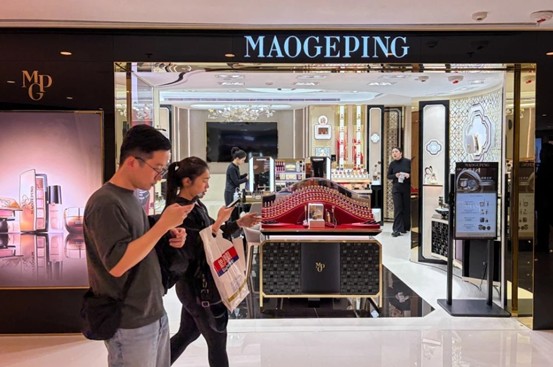
(Photo Credit: Li Cao, SCMP)
The expansion of Chinese retailers’ presence in Hong Kong comes amid a recovering in retail sales, with the city being used by mainland brands as a testing ground for global expansion. This trend is seen as bringing more diversity to the city’s retail market, which has previously only attracted food and beverage retail brands such as Lam Heung Ling and Luckin Coffee.
In the first four months of the year, more than one fifth of new entrants to the city’s retail market were mainland brands. Cathie Chung, senior director of research at Jones Lang LaSalle, a Fortune 500 global commercial real estate and investment management company, said that “new entrants now span fashion, beauty, skincare, fragrances, leather goods and jewellery” and are placing greater emphasis on “aligning with more premium consumer expectations”.
The latest batch of mainland retailers is supported by a growing number of tourists, the city welcoming 18.52 million visitors over the first four months, a 15 percent increase from the same period last year. Hongkongers have also become familiarised with mainland brands based on frequent trips to Shenzhen in search of better value for money.
Despite demand from the new mainland entrants, Jack Tong, director for research and consultancy at Savills, said that Hong’s Kong’s neighbourhood malls still face “significant pressure from outbound spending and the rise of e-commerce”.
(2) These Designers Prove “Made in China” is Anything But Cheap
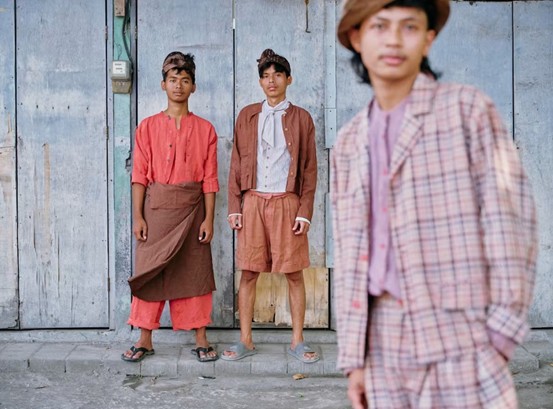
(Photo Credit: ZAMX)
The “Made in China” label, once reflecting cut-rate quality, is not affixed to some of the world’s finest clothes, thanks to a new generation of Chinese designers focused on shifting the narrative.
Changemakers such as Aviva Jifei Xue and Wynn Yuen are at the forefront of this new approach, opting to collaborate with small manufacturers and skilled artisans, offering an alternative to the stigma that comes with clothes making in China.
Some of these designers draw from the “neo-Chinese style”, a shorthard for historical silhouettes and palettes reworked into something contemporary, with an awareness of China’s multi-ethnic character, while others living abroad take on an imaginative form of Chinese-inspired fashion.
Xue says that many smaller Chinese labels aren’t known or stocked outside China, and instead rely on the self-sufficient “ecosystem” of the Chinese domestic market. However, more brands are beginning to look outwards, despite difficulties in connecting with audiences overseas.
(3) AI reshapes Korea’s fashion retail, manufacturing landscape
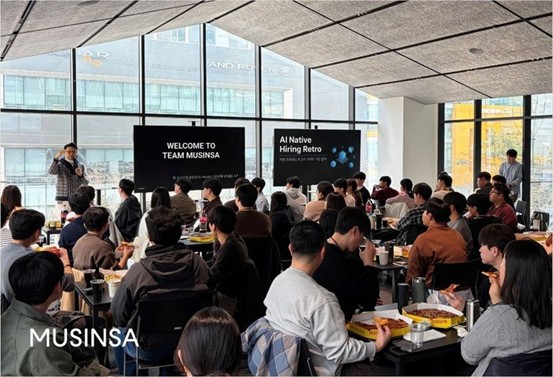
(Photo Credit: MUSINSA)
As fashion has become more oriented for e-commerce, online technologies have been supported businesses by making trading platforms more sensitive to consumer demands. AI has become a rising force with the highest levels of efficiency and precision, and is already being used by Korean companies in order to survive new changes brought about to the fashion industry.
British heritage brand Barbour’s official Korean website is now supported by Ottok VTON, a virtual clothing try-on solution developed by Samatti, a fashion AI firm. Results from the “AI fitting” is detailed enough to show selected clothing patterns, textures and silhouettes on the uploaded photos.
Musinsa, Korea’s largest fashion retailer, has adopted something similar by launding a model context protocol technology for e-commerce platform, Kaokao, in hopes of enabling more powerful customized recommendations for customers. AI has also improved precision for Musinsa’s product search engines and product data summary features to improve customer satisfaction.
AI has also helped slash time spent for designing, with original design manufacturer Hansae using AI to generate high-quality samples to pitch to clients, indicating the usefulness of AI to both consumers and companies across the country.
News Source: https://www.koreatimes.co.kr/business/companies/20260522/ai-reshapes-koreas-fashion-retail-manufacturing-landscape
(4) Chinese Fast-fashion brand Shein accused of stealing designs from Winnipeg-based Indigenous company
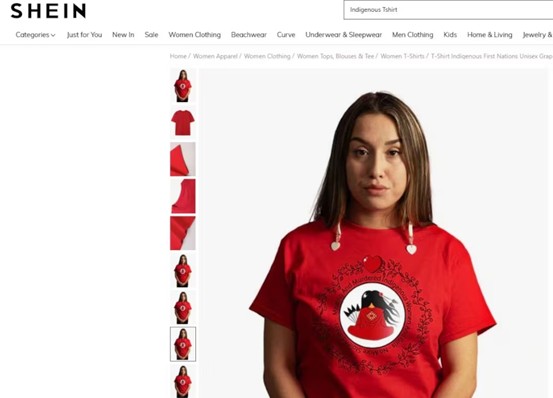
(Photo Credit: Image screenshotted from SHEIN, CBC News)
The Indigenous Nations Apparel Company (INAC), a Winnipeg-based Indigenous clothing company, accused Chinese fast-fashion brand Shein of stealing dozens of its designs, after customers alerted the owner Michelle Cameron that 20 designs were being sold on the site without permission.
Many of INAC’s designs are commentary on the mistreatment Indigenous people faced in the past, and after reaching out to Shein to file a complaint, as sellers at Shein are required to certify their products do not infringe on intellectual property. Cameron now seeks legal advice.
Each store design involves a hefty amount of planning from up to a year in advance, with Indigenous staff that brainstorm and create.
Cameron told CBC News that the disputed products were being sold by third party sellers on its marketplace and said it had removed the listings and launched an investigation after being notified. She was encouraged to trademark its designs to protect them, but the cost of trademarking each design was too high. Someone can alter a logo slightly and it may no longer be considered the same, so trademarking everything does not always make financial sense.
News Source: https://www.cbc.ca/news/canada/manitoba/indigenous-nations-apparel-company-shein-designs-9.7212257