Asia Gaming Weekly News Bulletin – ISSUE 60 Week of 13 April 2026
(1) Macao is hosting the Global Gaming Expo Asia next month, with greater AI focus
The 17th Global Gaming Expo Asia and the Asian IR Expo will return to Macao in May, bringing together global industry leaders for a major showcase of AI, robotics and other new technologies shaping gaming and integrated resorts.
(2) Can Asia’s gambling industry weather the fuel crisis the way it rode out the pandemic?
Rising fuel costs are putting pressure on Asia’s gambling market by cutting into travel and entertainment spending, while online gambling may gain some ground as a cheaper and more convenient option.
(3) Korea Sports Leisure rolls out reward scheme to target illegal betting networks
South Korea has launched a cash reward scheme to encourage the public to report illegal sports gambling, with payouts of up to KRW200 million for major cases.
(4) Hong Kong puts launch of basketball betting on hold
Hong Kong has put its plan to launch legal basketball betting on hold as authorities review the rapid rise of prediction markets and their potential link to illegal gambling.
(1) Macao is hosting the Global Gaming Expo Asia next month, with greater AI focus
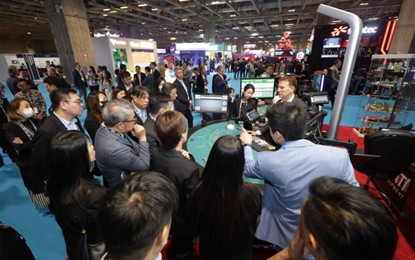
(Photo Credit: The Macao News)
The 17th Global Gaming Expo Asia (“G2E Asia”) and the 5th Asian Integrated Resort Expo will be held together at the Venetian Macao from 12 to 14 May, bringing a strong focus on technology and innovation to this year’s events. Organised by Reed Exhibitions, the twin shows will spotlight how digital tools are changing both the gaming and hospitality industries, with themes centered on AI, robotics and entertainment technology.
Around 8,000 industry professionals from over 90 countries and regions are expected to attend, showing the international importance of the events. Together, the expos will cover more than 30,000 square metres and feature about 150 brands, including major regional and overseas gaming companies. New attractions this year include a display and gaming entertainment zone, where visitors can see digital products, live demonstrations, robot shows and AI-powered networking activities.
Talks and seminars will also be a major part of the programme. The G2E Asia Conference will cover subjects such as the Asian gambling market, gaming technology, AI governance, sustainability and regulation. The Asian IR Summit, meanwhile, will focus more on integrated resorts, hospitality technology and sports entertainment. In total, the events will host more than 30 talks with over 50 speakers.
Well-known industry figures are expected to attend, including executives from resort operators, investment research firms and e-sports businesses. First launched in 2007, G2E Asia has become one of the region’s longest-running gaming trade events. After a three-year pause during the Covid-19 pandemic, it returned to Macao in 2023, now continuing alongside the Asian IR Expo as a major meeting point for the sector.
News Source: https://macaonews.org/news/business/macau-global-gaming-expo-asia-g2e-2026-macao/
(2) Can Asia’s gambling industry weather the fuel crisis the way it rode out the pandemic?
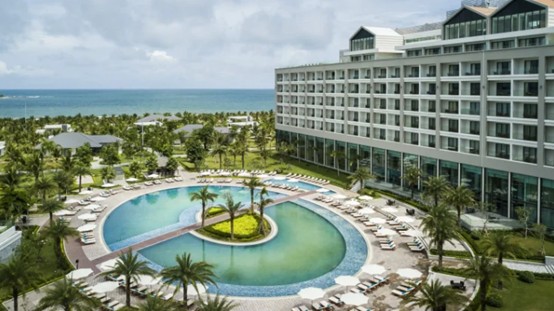
(Photo Credit: Asia Gaming Brief)
Asia’s gambling industry is under pressure as rising fuel prices and tighter household budgets make it harder for many people to spend on casino trips, especially in the Philippines. Land-based gambling is feeling the squeeze most clearly, as higher transport and living costs reduce discretionary spending and make travel less appealing for mid-market customers.
The biggest contrast is between this crisis and the pandemic. During COVID, gambling demand moved online because physical casinos were shut and people were stuck at home. This time, casinos remain open, but many players simply have less money to spend. That creates a different kind of pressure, especially for resorts that rely on visitors flying in from other countries. Mid-market travelers are the most exposed, as some may still travel less often while others may stop making such trips altogether.
At the same time, online gambling could benefit again because it is cheaper and easier to access. People do not need to pay for transport, hotels or resort spending, and a mobile phone is enough to place a bet. This makes online platforms more attractive when living costs are rising. Still, the shift is not expected to be as dramatic as during the pandemic, when lockdowns pushed entertainment almost entirely onto screens.
The Philippines may be better positioned than some other markets because it has a strong local gambling base, from neighborhood gaming venues to large integrated resorts. High-end VIP players are also less likely to cut spending because of fuel prices. Some premium traffic may even shift back to Asian casino hubs if instability in the Middle East affects travel patterns. Overall, the industry is facing a slowdown, but not a collapse, and online gambling may once again gain ground.
(3) Korea Sports Leisure rolls out reward scheme to target illegal betting networks

(Photo Credit: Asia Gaming Brief)
South Korea’s Korea Sports Leisure Co. Ltd. has launched a new rewards system to encourage the public to report illegal sports gambling. The program offers cash payouts for information that helps authorities identify and confirm unlawful betting activity, with the highest reward reaching KRW200 million (USD135,000) for reports linked to the operation of illegal sports gambling businesses.
The reporting system covers a wide range of offenses, including illegal gambling websites, operators, users and people involved in promoting or supporting these activities. Reports can be submitted online or by phone. Separate rewards are also available for match-fixing tied to Sports Toto events, with payouts of up to KRW50 million (USD33,500). Lower rewards of up to KRW15 million (USD 10,000) apply to cases involving the use, promotion or brokering of illegal gambling, as well as the supply of related sports data or technical systems.
The scheme also targets illegal gambling websites and bank accounts connected to unlawful operators. Website reports require users to provide details such as the URL, evidence and supporting information, while successful cases may earn smaller payments per site. Reports involving operator-linked bank accounts carry a fixed reward of KRW100,000 (USD 67) each.
The company said the initiative is meant to make public reporting a bigger part of enforcement. It also reflects the growing challenge of dealing with illegal gambling networks, especially sites that quickly reappear under new domains. Overall, the program is designed to strengthen monitoring, improve enforcement and increase public involvement in tackling illegal sports betting.
News Source: https://agbrief.com/news/south-korea/14/04/2026/korea-sports-leisure-rolls-out-reward-scheme-to-target-illegal-betting-networks/
(4) Hong Kong puts launch of basketball betting on hold
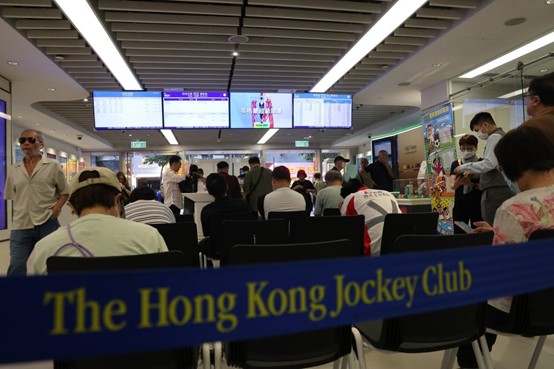
(Photo Credit: Jelly Tse / SCMP)
Hong Kong’s plan to launch legal basketball betting has been paused as authorities take a closer look at the fast-growing prediction market. Although lawmakers approved the legal framework last year, the government now believes it is too early to move ahead while this new form of betting continues to expand quickly and create uncertainty.
Officials are concerned that launching basketball betting now could increase interest in illegal prediction market gambling and unintentionally support underground betting activity. Prediction markets, where people trade on the outcome of future events, have grown at a remarkable pace worldwide. The government noted that trading volume surged sharply last year and warned that sports-related prediction trading could become an even bigger force in the years ahead.
The Hong Kong Jockey Club, which was expected to run the new betting service, said it respected the government’s decision and would wait for further guidance on its licence application. The club had already started preparation work and invested heavily so it could launch basketball betting as early as late 2026. It also said it would continue building its new sports wagering platform so it could move quickly if approval is eventually given.
The delay is significant because the Jockey Club had projected that legal basketball betting could eventually generate around HK$1.5 billion in annual tax revenue, though that level was not expected immediately. For now, the government’s position is clear: no new betting project should go ahead until the risks linked to prediction markets are better understood. The move shows that officials want to proceed carefully rather than rush into a new gambling product.
News Source: https://www.scmp.com/news/hong-kong/society/article/3349953/hong-kong-puts-launch-basketball-betting-hold