Asia Gaming Weekly News Bulletin – ISSUE 70 Week of 22 June 2026
(1) Japan warns over fake MGM Osaka casino websites targeting local players
Authorities in Japan warned against unauthorized websites falsely claiming ties to MGM Osaka, the country’s first planned integrated resort. Officials stressed the project has no online casino affiliation, noting the sites redirect users to illegal offshore gambling platforms. Online casino gambling remains prohibited under Japanese law.
(2) Thailand Blocks Nearly 14,000 World Cup Gambling Links in AI-driven Crackdown
Thailand has blocked nearly 14,000 illegal gambling websites linked to the 2026 FIFA World Cup in a crackdown using artificial intelligence. Authorities intensified enforcement against betting networks and warned businesses against unauthorized World Cup broadcasts, stressing compliance with copyright rules to protect sports and media sectors.
(3) China Police Bust Multiple World Cup Gambling Networks in Several Provinces
Chinese police have shut down several World Cup related gambling operations across multiple provinces, as authorities step up enforcement during the 2026 tournament. Cases in Shaanxi, Guangxi and Liaoning show how betting rings and online promoters were using football fever, social media and illegal apps to target users.
(4) South Korea reports first results from teen gambling programme
South Korea received 294 voluntary reports of youth online gambling in the first month of a new disclosure programme, with most filed by teenagers themselves. The figures highlight both the scale of underage gambling and a growing willingness among students and families to seek help through official channels.
(1) Japan warns over fake MGM Osaka casino websites targeting local players

(Photo Credit: MGM Osaka)
Japanese authorities have issued a warning over unauthorized websites misrepresenting themselves as connected to MGM Osaka, the country’s first planned integrated resort (IR). Osaka Prefecture and the developers, Orix Corporation and MGM Resorts International, clarified in a joint statement that the project does not operate, promote, or advertise online casino services.
The warning follows the appearance of several Japanese‑language websites using domain names that combine terms such as “MGM,” “Osaka,” “Japan,” and “casino.” These sites claim to offer access to online casino games, including slots and baccarat, and advertise thousands of titles. Authorities believe the platforms are designed to redirect users to illegal offshore gambling services. Reports indicate the sites provide Japanese‑language support, accept wagers in yen and cryptocurrencies, and claim licensing from Curaçao.
Officials emphasized that online casino gambling remains prohibited under Japan’s current legal framework, regardless of whether services are operated from overseas jurisdictions. They urged residents to exercise caution and verify the authenticity of any platforms claiming association with MGM Osaka or Japan’s future IR sector.
MGM Osaka is scheduled to open in 2030, marking Japan’s first integrated resort with casino gaming. Regulators and stakeholders are working to safeguard the project’s reputation as preparations continue. The warning underscores Japan’s efforts to prevent misleading promotions and protect consumers from illegal gambling activity ahead of the landmark IR launch.
News Source: https://agbrief.com/news/24/06/2026/japan-warns-over-fake-mgm-osaka-casino-websites-targeting-local-players/
(2) Thailand Blocks Nearly 14,000 World Cup Gambling Links in AI-driven Crackdown
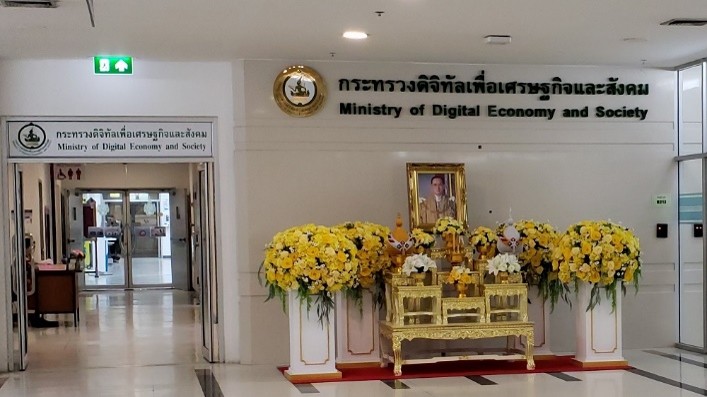
(Photo Credit: Variety)
Thailand’s government has launched a major crackdown on illegal online gambling tied to the 2026 FIFA World Cup, blocking or removing nearly 14,000 websites and pages between June 1 and June 18. The campaign, directed by Prime Minister Anutin Charnvirakul, combines cyber enforcement with intellectual property protection. Authorities are using artificial intelligence tools to detect and filter suspicious content more efficiently, enabling large-scale action against betting networks, particularly on social media platforms.
Deputy Government Spokesperson Ploytalay Laksameesangchan emphasized that security and technology agencies have strengthened cooperation to disrupt online gambling activity. The Ministry of Digital Economy and Society has spearheaded the AI-driven monitoring, which has resulted in 13,888 sites being taken down during the period. Officials warned that the World Cup traditionally sees a surge in betting-related activity, prompting heightened enforcement across Asia.
Beyond gambling, Thai authorities also cautioned businesses against unauthorized use of World Cup broadcasts. Restaurants, entertainment venues, and shops were reminded that rebroadcasting or streaming matches without permission constitutes commercial copyright infringement. Penalties include prison terms of six months to four years and fines ranging from THB100,000 to THB800,000 (USD3,040 to USD24,320).
The government stressed that compliance with intellectual property rules and avoidance of illegal gambling are essential to support the sustainable development of Thailand’s sports, media, and commercial sectors. This campaign underscores Thailand’s dual focus on curbing betting networks and safeguarding broadcast rights during one of the world’s largest sporting events.
(3) China Police Bust Multiple World Cup Gambling Networks in Several Provinces

(Photo Credit: IGAMING TODAY)
Chinese police have moved against several illegal gambling operations linked to the 2026 FIFA World Cup, with cases reported in Shaanxi, Guangxi and Liaoning as authorities tighten enforcement during the tournament.
In Xi’an, police detained seven suspects accused of running an online betting platform tied to World Cup matches. Investigators said the group created different gambling schemes and profited through commissions, with transactions exceeding 100,000 yuan. All seven were placed in criminal detention after confessing.
In Yulin, Guangxi, police dismantled a network that promoted World Cup gambling websites through social media. Authorities said the group had been posting large volumes of betting advertisements since May in an effort to direct users to illegal platforms.
Another case emerged in Liaoyang, Liaoning, where police cracked an online football betting operation on the opening day of the tournament. The suspect allegedly accepted wagers on match results and scores through illegal gambling apps, with payments handled via WeChat. Administrative detention was imposed.
Ahead of the competition, the Ministry of Public Security warned the public against gambling scams and stressed that no online platform is authorized to sell official lottery tickets. Police have urged football fans to avoid suspicious links, stay away from unverified apps and buy related products only through official channels.
News Source: https://www.igamingtoday.com/china-police-bust-multiple-world-cup-gambling-networks-in-several-provinces/
(4) South Korea reports first results from teen gambling programme

(Photo Credit: Focus Asia Pacific)
South Korea recorded 294 voluntary reports of youth online gambling during the first month of a new nationwide disclosure programme, with most of the cases submitted by teenagers themselves.
Data released by the Korean National Police Agency showed that 244 reports were filed directly by under 19s, while 50 came from parents or guardians. The programme, launched on 18 May, allows minors and their families to report online gambling activity through the country’s School Violence Reporting and Counselling Centre.
Authorities said the average reported gambling period was about 12 months, with average spending reaching around KRW3 million, or roughly $2,200. Male students made up 93 percent of reported cases. High school students accounted for 60 percent, while middle school students represented the remaining 40 percent.
The figures also pointed to concentrated problems in some areas. In Gangwon Province, one high school recorded 48 self reports, while another nearby school accounted for 20 cases.
Officials said students who come forward voluntarily may receive more lenient treatment depending on the extent of their gambling and whether they take part in counselling or recovery programmes. After an initial review, participants can be referred to specialist support services for addiction treatment.
The voluntary reporting programme will remain open until the end of August.
News Source: https://focusgn.com/asia-pacific/south-korea-reports-first-results-from-teen-gambling-programme