China Media and Entertainment Weekly News Bulletin – ISSUE 87 Week of 9 February 2026
(1) A very Chinese time? How memes are paving the way for a soft power shift
A viral meme “you met me at a very Chinese time in my life” has sparked Western influencers to embrace everyday Chinese habits, recasting “Chineseness” as comfort and wellness. The light-hearted trend boosts China’s cultural soft power, even as experts warn its surface-level and detached from China’s harsher realities.
(2) ‘Symphonic Jazz Odyssey’: Kenneth Li’s bold new chapter for Hong Kong music
Hong Kong violinist Kenneth Li readies concert “Symphonic Jazz Odyssey” on 22 February, launching the city’s first jazz symphony orchestra after founding its pioneering quartet.
(3) China tightens crypto crackdown with onshore RWA tokenisation ban
China banned onshore RWA tokenisation and tightened offshore crypto rules Friday, targeting virtual currencies, stablecoins and mining. The People’s Bank of China-led notice demands approvals and compliance amid rising risks.
(4) Silver surfers: how China ‘granfluencers’ steal spotlight, taking over social media
China’s “granfluencers” are exploding online, with 30 million seniors active on China’s social medial app RedNote alone. Rapping grannies and stylish grandpas drive the silver economy amid a 320 million-strong ageing population, though multichannel network exploitation shadows the trend.
(5) Hollywood stars to headline Hong Kong’s first Comic Con
Hong Kong’s first Comic Con will run between 29-31 May, headlined by Mads Mikkelsen, Giancarlo Esposito, and Christopher Lloyd.
(6) Alibaba’s $431M CNY giveaway crashes in 9 hours
Alibaba’s 3 billion RMB Qwen AI New Year giveaway crashed after nine hours from overwhelming demand, pausing coupons amid 10 million orders. The bold push triples rivals’ efforts, turning festive spending into China’s fierce AI adoption battle.
(7) Sony exits Blu-ray disc recorder market
Sony will halt sales of all Blu-ray recorders globally after February 2026 with no replacements, ending a legacy line while sparing playback players. The move caps years of optical media retreat.
(8) China Box Office: ‘Zootopia 2’ Remains on Top in Pre–Lunar New Year Lull
Zootopia 2 earned $3.6 million to lead China’s softening pre-Lunar New Year box office, topping holdovers like Busted Water Pipes and The Fire Raven, while year-to-date revenue plunged 84.4 percent amid holiday anticipation.
(9) China’s ‘micro drama’ industry emerges as jobs lifeline in tough graduate labour market
China’s micro drama industry has emerged as a crucial employment lifeline for over 10 million jobless university graduates. It created 690,000 direct jobs in 2025 through low-barrier, high-output production of bite-sized series that outpaced traditional film revenue.
(10) ByteDance’s new video model sparks rally in China AI app stocks
ByteDance’s Seedance 2.0 AI video model sparked a stock rally, with COL Group hitting 20 percent gains and Shanghai Film, Perfect World up 10 percent. Analysts hail it as a film-TV singularity moment.
(11) Hong Kong Film Awards 2026 nominations in full: Sons of the Neon Night leads disputed race
Filmmaker Juno Mak Chun-lung’s sophomore film Sons of the Neon Night tops Hong Kong Film Awards with 12 nods, as controversy brews over four dropped films and a missing Asian category. Ciao UFO nabs 10, including Best Picture.
(12) Rise in emotional economy: China ‘love-brained’ youth seek strangers’ scolding for guidance
China’s love brain youth pay influencers like Taozai and Xiakespeare to harshly scold their love obsessions online, finding relief in public berating cheaper than therapy. The trend fuels a 2.3 trillion yuan emotional economy amid rationalization struggles.
(1) A very Chinese time? How memes are paving the way for a soft power shift

(Photo Credit: Xinhua)
A new viral phrase “you met me at a very Chinese time in my life” has sparked a global trend on TikTok and Instagram, where users showcase everyday “Chinese” habits such as drinking hot water, eating congee, and wearing slippers indoors. The movement reflects a growing fascination with Chinese culture framed through comfort and lifestyle rather than politics. While Trump is currently taking a very anti-China stance, Gen Zs in the US have started to embrace Chinese culture and rebuke the anti-China rhetoric. This trend, although emerging since 2025, has taken on a mainstream dominance across social media platforms this month. Scholars say the trend highlights China’s expanding cultural “soft power,” as audiences encounter “Chineseness” through entertainment and wellness rather than official messaging.
State media have embraced the meme as evidence of China’s rising cultural influence, with Xinhua calling it a shift from superficial imitation to shared values between East and West. Yet some experts caution that the trend says more about social media’s reduction of cultural identity into consumable aesthetics than about genuine attitudes toward China. While Beijing promotes these posts alongside narratives contrasting U.S. struggles, analysts note that the phenomenon is fleeting. Even so, it may shape a generation’s view of China as relatable and modern: a form of soft power built not on ideology, but on everyday comfort.
News Source: https://www.scmp.com/news/china/diplomacy/article/3342819/very-chinese-time-how-memes-are-paving-way-soft-power-shift
(2) ‘Symphonic Jazz Odyssey’: Kenneth Li’s bold new chapter for Hong Kong music

(Photo Credit: Kenneth Li)
Violinist Kenneth Li, the driving force behind the upcoming Symphonic Jazz Odyssey on February 22, dismisses complaints about Hong Kong’s tough music scene with a blunt challenge. Musicians who find the local environment difficult should commit to their craft with greater seriousness.
Li’s tenacity has yielded breakthroughs. He founded Korvi Quartet, Hong Kong’s first professional jazz string quartet and one of fewer than five worldwide. Post-concert, he plans the city’s inaugural jazz symphony orchestra, another global rarity. Symphphonic jazz fuses jazz bands with full orchestras, a niche genre demanding mastery of both worlds, which Li embodies.
The interplay is not a case of the jazz band dominating while the orchestra merely supports. Instead, it creates collaborative alchemy, mirroring Hong Kong’s multilingual bustle by blending different languages into something fresh and equal. His global training, shadowing jazz masters across Europe and absorbing Latin, African and Indian influences, fuels compositions rich in storytelling, from Duke Ellington tributes to local lore like Aberdeen’s dog’s grave and Yim Tin Tsai folklore.
Facing a skeptical local audience and scarce venues, Li refuses to relent. When ingredients for music are lacking, one must work harder to source them and accept the challenge without excuses. He embodies this till the soil ethos as a proud Hong Kong product. The concert promises a bold soundscape blending myth, history and innovation.
(3) China tightens crypto crackdown with onshore RWA tokenisation ban

(Photo Credit: China News Service/VCG via Getty Images)
Chinese authorities escalated their cryptocurrency crackdown Friday, issuing new rules banning onshore tokenisation of real-world assets (RWA) and tightening oversight of offshore activities. Led by the People’s Bank of China and seven other agencies, the notice prohibits domestic RWA tokenisation, securities issuance, financial operations or fundraising via virtual currencies, with rare exceptions requiring explicit approval.
Overseas entities face strict limits on providing RWA-related services to Chinese firms, while onshore entities pursuing offshore RWA or quasi-asset securitisation must secure regulatory clearance under a “same business, same risk, same rules” principle. Offshore subsidiaries of Chinese financial institutions, along with intermediaries and tech providers, must bolster compliance, client suitability checks, anti-money laundering protocols and regulatory reporting.
The rules also bar unapproved issuance of yuan-pegged offshore stablecoins by any domestic or controlled offshore entity. Businesses cannot register names containing terms like “stablecoin,” “RWA” or “cryptocurrency.” Regulators pledged enhanced cross-agency monitoring, online content controls, advertising restrictions and continued crackdowns on crypto mining.
Issued as a 2021 guidance update amid “new challenges,” the measures aim to build comprehensive risk supervision through data sharing and platform oversight.
(4) Silver surfers: how China ‘granfluencers’ steal spotlight, taking over social media

(Photo Credit: Reuters/Tingshu Wang)
China has seen a surge in senior influencers, or “granfluencers”, since 2019 as its ageing population flocks online. Platforms like RedNote now boast over 30 million active users aged 60-plus by 2024, posting more than 100 million videos, while Douyin has racked up 600 million senior-created clips since 2021.
Popular accounts thrive across niches. A 68-year-old from Shandong province drew 1.1 million followers re-enacting TV dramas with friends. Three Beijing women in their 70s amassed 4.5 million fans rapping while cooking. An 89-year-old Wuhan grandfather with an account managed with his grandson, has hit 6 million followers. His content generally involves showcasing trendy outfits and creating short videos regarding rediscovering life’s joys. Silver expert key opinion leaders (KOLs), often retired professors, share wisdom akin to American counterparts on TikTok.
This boom coincides with China’s rapidly greying society, projected at 320 million over-60s by late 2025, or 23 percent of the population, rising to over 30 percent by 2035. The silver economy, now a national priority valued at 7 trillion yuan, fuels demand in health, fashion and tourism, with “granfluencers” driving senior consumption.
Experts praise the mental health benefits making these videos have brought to the elderly in China, noting reduced loneliness of the elderly and an increase in intergenerational bonds via comments and messages left by the netizens. Yet risks loom, including cyberbullying and exploitation by multichannel network firms that manage hits like 84-year-old Wang Biyun’s 12-million-follower account, often taking 60-70 percent of earnings. Live-streaming’s demands raise concerns over late-night sessions targeting young viewers’ sympathy.
(5) Hollywood stars to headline Hong Kong’s first Comic Con

(Photo Credit: EPA)
Hong Kong will host its first-ever Comic Con in May, joining the global circuit of major pop culture conventions. Organizers of Hong Kong Comic Con 2026, set for May 29 to May 31 at the Hong Kong Convention and Exhibition Centre, announced that Hollywood stars Hannibal’s Mads Mikkelsen, Breaking Bad’s Giancarlo Esposito and Back to the Future’sChristopher Lloyd will headline the inaugural event, with more guests to be revealed soon.
The three-day convention will feature celebrity panels, autograph and photo sessions, cosplay competitions, an artist alley for original comics, and displays of rare collectibles and exclusive merchandise.
Organizers say the event will also serve as a platform for pop culture and intellectual property launches, underscoring Hong Kong’s ambitions to boost international cultural and entertainment events after the pandemic. The show follows the success of ComplexCon, which debuted in 2024 and drew major global acts and audiences. Hong Kong Comic Con is organized by Optics Ventures in partnership with One Cool Group, with ticket details and further guest announcements expected soon.
(6) Alibaba’s $431M CNY giveaway crashes in 9 hours

(Photo Credit: Bloomberg)
Alibaba launched a massive 3 billion RMB Chinese New Year promotion for its Qwen AI app on February 6, targeting dining, entertainment and leisure rewards during the peak festive spending season. The campaign triples rival efforts from Tencent and Baidu, positioning Lunar New Year as a key battleground in China’s AI race.
Demand surged immediately, with over 10 million orders in the first nine hours, overwhelming systems and forcing Qwen to pause coupon distribution over the weekend. The company posted on Weibo asking for patience as users attempting repeat purchases received refusal notices due to excessive traffic. The initiative aims to integrate Qwen with Alibaba’s app ecosystem for seamless in-chat payments, echoing Tencent’s 2014 WeChat red envelope success that digitized traditions and boosted adoption.
Alibaba’s bold spending reflects renewed confidence from its accelerating cloud business amid multi-year recovery. Yet the technical strain highlights risks of subsidy-driven growth in China’s digital economy, where heavy discounts drive habit formation but can distort behavior, strain infrastructure and prioritize price over product value. As the nine-day holiday unfolds alongside new AI model launches, the giveaway underscores how incentives fuel rapid scale, though sustainability remains uncertain once promotions end.
For global brands, the episode illustrates mastering timing, experiences and rewards in saturated markets.
News Source: https://jingdaily.com/posts/alibaba-s-usd431m-cny-giveaway-crashes-in-9-hours
(7) Sony exits Blu-ray disc recorder market

(Photo Credit: Sony)
Sony confirmed it will cease global shipments of all Blu-ray disc recorder models after February 2026, with no successor devices planned, ending a category the Japanese giant pioneered over two decades ago. Production has already stopped, and remaining inventories will phase out as demand fades.
The decision reflects the trend of streaming and cloud storage eroding physical media recording. Sony launched the world’s first Blu-ray recorder in 2003, fueling the formats victory over HD DVD, but Japan shipments peaked at 6.39 million units in 2011 before plunging to 620,000 by 2025. The retreat follows Sony’s mid-2024s 40 percent cut in its optical media division and early 2025s halt on recordable Blu-ray discs, MiniDiscs and cassettes.
Crucially, the exit targets only recorders with built-in playback. Standard Blu-ray and Ultra HD Blu-ray players for movies remain in production, preserving Sony’s role alongside Panasonic for enthusiasts. The company thanked loyal customers while shifting focus to entertainment content, including a January joint venture spinning off home entertainment with TCL Electronics.
Rivals like Samsung, LG and Oppo have fully abandoned Blu-ray hardware, leaving questions about Sony’s long-term optical media commitment.
News Source: https://www.channelnews.com.au/sony-exits-blu-ray-disc-recorder-market-as-streaming-takes-over/
(8) China Box Office: ‘Zootopia 2’ Remains on Top in Pre–Lunar New Year Lull
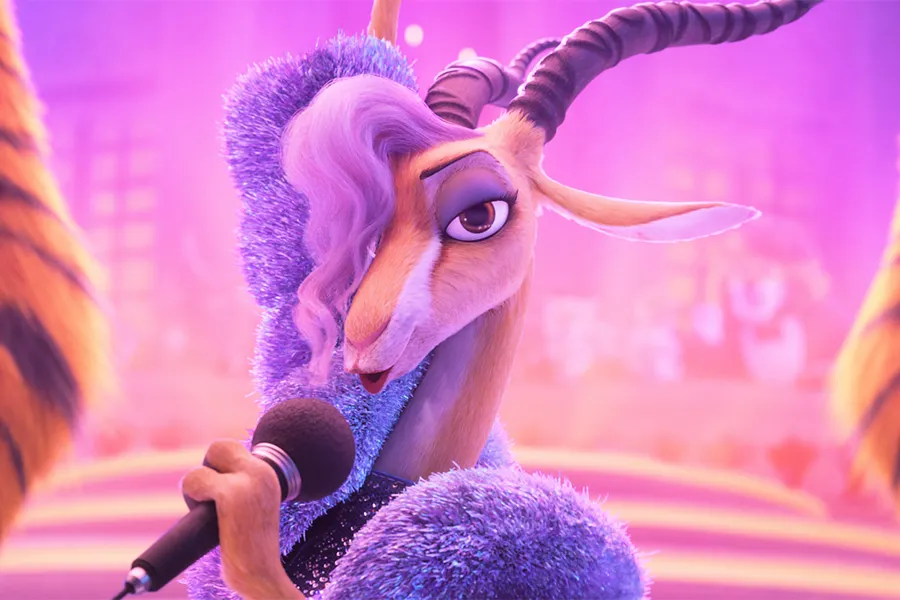
(Photo Credit: Zootopia 2. Directed by Jared Bush and Byron Howard, produced by Walt Disney Animation Studios, USA, 2025)
Disney’s Zootopia 2 dominated the China box office for the February 6-8 weekend, earning RMB25.9 million and pushing its cumulative total to RMB4.5 billion, per Artisan Gateway data. The animated sequel led a holdover-heavy top five as the market softened ahead of Lunar New Year.
Local crime comedy Busted Water Pipes took second with $2.5 million in its third weekend, lifting its running total to $14 million. The Taopiaopiao release follows an underachieving police unit fabricating minor cases until a burst water main reveals tomb raiders posing as repair workers.
Sam Quah’s crime thriller The Fire Raven added $2.1 million for third place and a $65.5 million cume. Starring Peng Yuchang, Alan Aruna and Chang Ning, it centers on a reopened murder case amid systemic corruption.
James Cameron’s Avatar: Fire and Ash placed fourth with $1.8 million, reaching $164.8 million in China. Return to Silent Hill rounded out the top five on $1.3 million for a $17.3 million total.
The weekend generated $17.6 million overall, with year-to-date revenue at $318 million, down 84.4 percent from last year. Exhibitors now eye the Lunar New Year holiday frame later in February for a rebound.
News Source: https://variety.com/2026/film/box-office/china-box-office-zootopia-2-prelunar-new-year-lull-1236656671/
(9) China’s ‘micro drama’ industry emerges as jobs lifeline in tough graduate labour market

(Photo Credit: Reuters)
China’s micro drama industry has become a vital employment lifeline annually for over 10 million university graduates facing a saturated job market. The sector directly created about 690,000 jobs in 2025, mostly for young people, and over 2 million including upstream and downstream roles, according to a Peking University report.
These bite-sized series, with episodes running just minutes and packed with rapid twists, offer low entry barriers and steady work amid persistent youth unemployment. National monthly output has stabilized at around 3,000 dramas, with an increasingly mature division of labour. Crews have expanded from initial 12-person teams to 60-90 members handling directing, cinematography, lighting, costumes and management. Shoots last only five to 10 days, enabling high-frequency production and reliable gigs that attract long-term jobless graduates, even returnees from abroad.
University of Sussex master’s graduate Shutian Yu, in her early 30s, has found stability acting in micro dramas from 2024, earning up to 15,000 yuan monthly and self-producing one with 70,000 yuan of savings. Graduates from finance to arts now flock to the field. The market hit 50.5 billion yuan in 2024, surpassing box office revenue, with 660 million viewers and projections to 85.6 billion yuan by 2027.
Vacant malls and offices are often repurposed as sets, such as a vacant mall in Xinzheng, a county in Henan province. Independent producer Guan Zhi notes that the traditional film industry struggles to absorb talent, while the micro drama industry explode with audiences, investment and careers.
(10) ByteDance’s new video model sparks rally in China AI app stocks
(Photo Credits: Reuters)
Shares of Chinese media and AI firms surged after ByteDance unveiled its advanced Seedance 2.0 video generation model on 7 February 2026, impressing analysts with high-quality content creation from text, images, videos and audio inputs. Publishing firm COL Group hit its 20 percent daily trading limit, while Shanghai Film and gaming entertainment company Perfect World each climbed 10 percent as the CSI 300 Index rose 1.4 percent.
The rally reflects investor excitement over homegrown AI breakthroughs, following last year’s bull run in the world’s second-largest stock market. Kaiyuan Securities analysts, led by Fang Guangzhao, called the launch a potential singularity moment for AI in film and television, predicting benefits for companies with intellectual property and platform traffic.
ByteDance, parent of TikTok, joins rivals like Kuaishou Technology, whose Kling AI video tool topped iPhone graphics app charts in South Korea and Russia as of January 2. Demand for shares in firms with standout AI applications has accelerated recently, underscoring China’s intensifying tech competition.
(11) Hong Kong Film Awards 2026 nominations in full: Sons of the Neon Night leads disputed race

(Photo Credits: Sons of the Neon Light. Directed by Juno Mak Chun-lung, produced by Sons Company Ltd., Hong Kong, 2025)
The 44th Hong Kong Film Awards nominations reflect both the ambition and struggles of the city’s film industry, dominated this year by long-delayed “urban myth” productions that wrapped years ago but languished until 2025. Leading the pack is Juno Mak Chun-lung’s neo-noir crime thriller Sons of the Neon Night with 12 nominations, followed closely by nostalgic sci-fi drama Back to the Past with 11, the latter of which is a big-screen sequel to the 2001 TVB hit A Step into the Past.
Patrick Leung Pak-kin’s Ciao UFO, meanwhile, has emerged as a critics’ favorite with 10 nominations, including best film, director and screenplay. The story of three childhood friends united by a UFO encounter in 1985 already won Best Picture at the Hong Kong Film Critics Society Awards last month.
Yet the awards season has been overshadowed by controversy. Four major local films were excluded from eligibility without explanation, although industry insiders alleged that the four films feature actors or themes unpopular with authorities in Hong Kong and mainland China. Such exclusion prompted questions over the HKFA’s transparency. Chairman Derek Yee Tung-sing did not address the issue while speaking about industry challenges and the rise of AI in filmmaking during the nominations ceremony. The winners of this year’s awards will be announced on April 19 at a ceremony at the Hong Kong Cultural Centre in Tsim Sha Tsui.
(12) Rise in emotional economy: China ‘love-brained’ youth seek strangers’ scolding for guidance

(Photo Credit: 36kr)
Young Chinese enamored with unrequited love are paying influencers to publicly berate them online, turning humiliation into emotional catharsis amid the love brain phenomenon, where obsession clouds rationality. In viral live streams, influencers like curly-haired Taozai, with nearly 2 million followers, deliver brutal truths to educated, affluent women chasing older, indifferent men, blaming subconscious class biases as karmic payback.
Taozai charges 1,800 yuan annually for queue-skipping access and private text consultations. His top videos savage clingy partners, likening devoted boyfriends to flies on excrement. Similarly, 54-year-old Xiakespeare, dressed in pig tails and a lab coat as a mock counselor, skewers excuses made by obsessed girlfriends on behalf of their “ghosting” boyfriends with witty jabs. E-commerce shops sell scolding calls from 60 yuan for 30 minutes, undercutting therapists at 500-2,000 yuan hourly, with buyers praising the wake-up calls cheaper than professional counseling.
Psychologist Zhang Yong of Wuhan University of Science and Technology explains negative emotions block self-reflection, making harsh external feedback a trigger for awareness, amplified by social medias anonymity. The trend taps into Chinas 2.3 trillion yuan emotional economy, which is projected to double by 2029, from Labubu toys to cosplay dates. State media notes commodified feelings now prioritize happiness over utility, though experts warn of unqualified coaches spreading toxic love views.