China Media and Entertainment Weekly News Bulletin – ISSUE 99 Week of 4 May 2026
(1) SM Entertainment opens first offline merch store in Shanghai
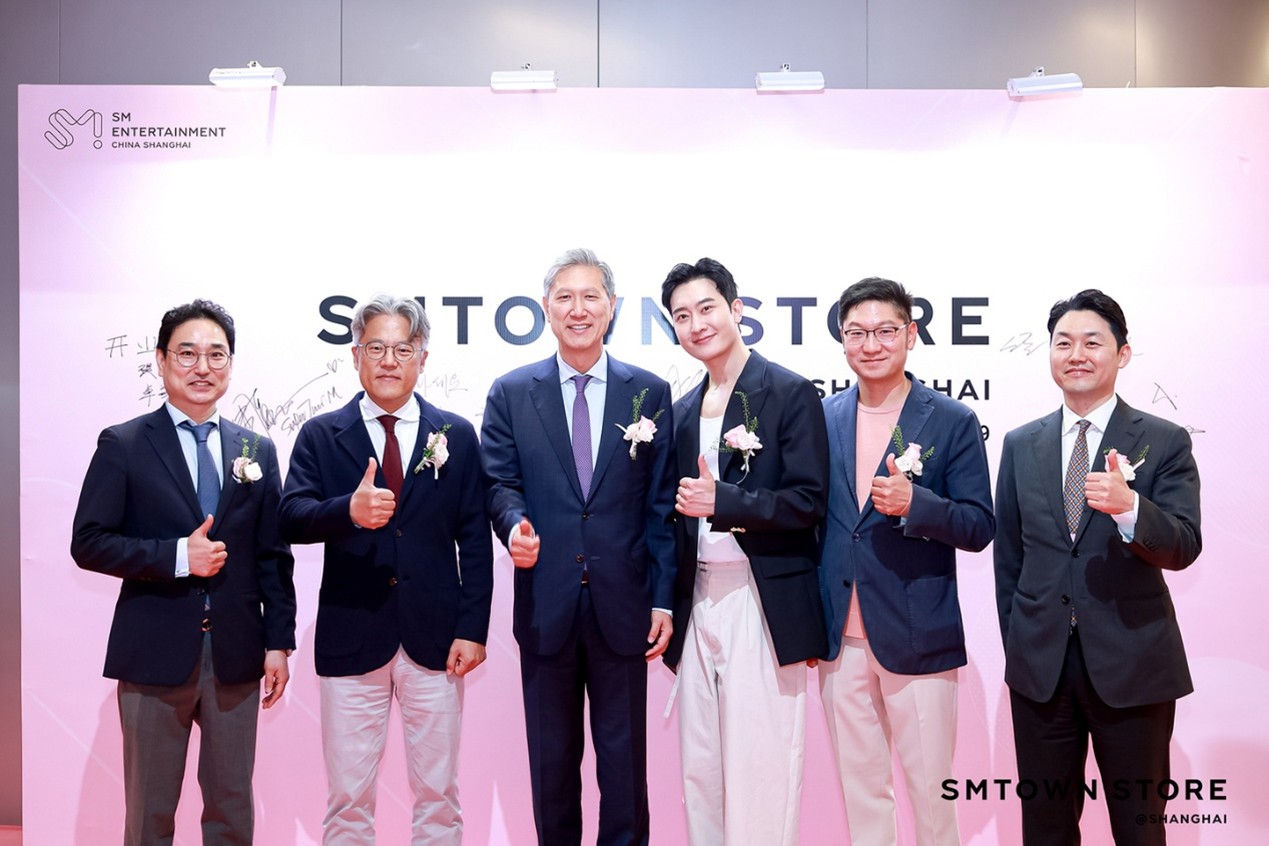
SM Entertainment has officially launched “SMTown Store Shanghai,” the first dedicated offline K-pop merchandise hub in mainland China. Situated in the heart of the Xujiahui commercial district, the 335-square-meter flagship marks a strategic return to large-scale physical retail for the South Korean music giant, signaling a potential thawing of cross-border cultural relations.
(2) China’s live music boom spreads to smaller cities as consumption drive expands
China is shifting its cultural focus as high-profile concerts migrate from megacities to smaller, lower-tier counties. This expansion serves a strategic role in the nation’s 15th five-year plan to boost domestic demand. By funding live entertainment, local governments aim to ignite regional spending and revitalize previously overlooked economies.
(3) Tencent Media Entertainment Chart Unveils 30 under 30 Young Singers, highlighting a new generation of Chinese music talent
Tencent Music Entertainment (TME) has unveiled its 2026 “30 UNDER 30” list, spotlighting the definitive young voices of the C-pop landscape. Through a sophisticated tiered system and data-driven metrics using “Big Data” metrics, the initiative has crowned Lars Huang, Yu Zi, and Zhicheng Mu as the top representative singers of their generations, marking a new benchmark for industry potential and audience engagement.
(4) Crowds flood Causeway Bay as Keung To continues 27th birthday celebrations
Hong Kong boyband MIRROR sensation Keung To celebrated his 27th birthday on April 30, triggering massive fan-led festivities that saw Causeway Bay rebranded as “Keung To Bay.” The celebrations followed a deeply personal charity show at the Kai Tak Arena, where the star made a candid confession regarding his academic struggles and mental health.
(5) Donnie Yen directs and stars in “CAINE”, Hollywood spin-off of the “John Wick” series filming in Budapest
Hong Kong legend Donnie Yen is currently in Budapest filming CAINE, a “John Wick” spin-off where he serves as both director and lead star. The production marks a historic milestone for Asian filmmakers in Hollywood and is expected to move to Hong Kong later this year to explore the blind assassin’s origins and personal life.
(6) Why are modern Chinese audiences shying away from dubbed films?
The re-release of the 1957 American classic Witness for the Prosecution has reignited a debate over the survival of Chinese dubbing. While veteran artists like 83-year-old Qiao Zhen argue that high-quality dubbing is “the reshaping of a soul,” the art form faces a steep decline. Shifting audience habits, rising English proficiency, and a preference for “authentic” acting have left the profession at a historic low point.
(7) HK concert date for Japanese group XG sparks mainland backlash over Unit 731 link
A scheduled Hong Kong performance by the Japanese-Korean girl group XG has ignited a firestorm on Chinese social media. Netizens have linked the July 31 concert date to Japan’s notorious wartime Unit 731, fueling calls for a reschedule. This controversy follows a string of recent cancellations by Japanese artists amid heightened regional tensions.
(8) Chinese animation “Nobody” selected for prestigious animation film festival
The Chinese 2D animated phenomenon Nobody has been selected for the Official Feature Film Competition at the 2026 Annecy International Animation Film Festival. Following its record-breaking domestic run, this satirical twist on Journey to the West will compete at the world’s premier animation event this June, marking a historic milestone for Shanghai Animation Film Studio.
(9) China’s defining musical theater voice Ayanga joins the artist roster of Universal Music
Universal Music Greater China has signed musical theater artist Ayanga to its global artist roster. Announced during the opening of Universal’s new Beijing headquarters on April 23, 2026, the partnership aims to elevate Chinese musical theater through international touring and genre-blurring studio albums designed for a global audience.
(10) China’s Labour Day box office underwhelms even with Hong Kong crime thriller “Cold War 1994” and highly-anticipated Hollywood sequel “The Devil Wear Prada 2”
China’s Labor Day box office has delivered underwhelming results as cautious consumer spending continues to impact the film market. Despite a crowded release schedule featuring high-profile titles, revenue hovered near half of pre-pandemic levels. While domestic thrillers led the charts, major Hollywood sequel “The Devil Wears Prada 2” struggled following social media backlash.
(11) MasterChef Asia’ Revived After 10-Year Hiatus, to be shot in Macau
“MasterChef Asia” returns after a decade-long hiatus, choosing Macao as the exclusive backdrop for its highly anticipated 10-episode revival. Partnering with the Macao Government Tourism Office, the series highlights the region’s status as a UNESCO Creative City of Gastronomy by pitting ten veteran contestants against one another in a pan-Asian culinary showdown.
(12) Canadian Singer The Weeknd to return to Hong Kong after 8 years with Kai Tak show in October
The Weeknd is set to make a historic return to Hong Kong this October as part of his record-breaking “After Hours Til Dawn Tour.” Rumored to be the centerpiece of the tour’s final leg, the performance at the 50,000-seat Kai Tak Stadium marks the singer’s first local appearance in eight years and a major milestone for the city’s new premier sports and entertainment hub.
(1) SM Entertainment opens first offline merch store in Shanghai
(Photo Credit: SM Entertainment)
SM Entertainment, one of South Korea’s largest entertainment companies and birthplace of multiple mainstream K-Pop artists such as Super Junior, Red Velvet and NCT 127, has launched their first offline merch store in Shanghai. More than just a retail expansion, the opening of the “SMTown Store Shanghai” is K-Pop’s meticulously choreographed re-entry into one of the world’s most lucrative fan economies. Located within the Xinyibai Young shopping complex, a hub for Gen Z consumers and university students, the space functions as a “living gallery” of K-pop. Beyond selling merchandise, the store features immersive light stick zones and multimedia exhibition walls designed to provide a tangible touchpoint for fans of groups such as EXO and NCT. The launch event was also a high-profile affair, attended by SM’s own senior executives and South Korean diplomatic officials, underscoring the project’s broader importance to international soft power.
This move is particularly significant as it represents the most visible breach of the unofficial “K-pop ban” that has restricted South Korean cultural exports in China since 2016. For a decade, the industry was largely forced into the digital shadows, with offline concerts and physical stores becoming virtually non-existent due to geopolitical tensions. By securing a flagship presence in Shanghai’s busiest retail district, SM Entertainment is signaling that K-pop is moving back into the Chinese mainstream. The presence of diplomatic envoys at the opening suggests that both nations may be ready to move beyond “digital-only” engagement, using fandom and physical retail to rebuild a bridge that was previously closed.
News Source: https://koreajoongangdaily.joins.com/news/2026-05-01/business/industry/SM-Entertainment-opens-first-offline-merch-store-in-Shanghai/2582733
(2) China’s live music boom spreads to smaller cities as consumption drive expands
(Photo Credit: Reuters)
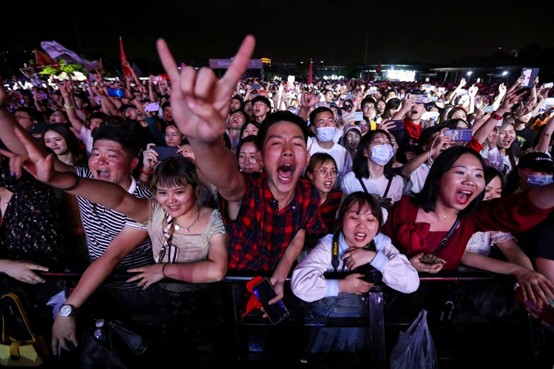
In a significant shift for China’s entertainment industry, high-profile musical events are moving beyond the glittering skylines of Beijing and Shanghai. Small regions like Dianjiang County recently transformed into vibrant hubs for Mandopop fans. These areas are now hosting massive spectacles, such as Jeff Chang’s “Continuum” tour and the widely popular Strawberry Music Festival. This trend reflects a broader national strategy to stimulate consumption in less-developed areas. According to a 2025 industry report by the Music Industry Promotion Committee of the China Audio-video and Digital Publishing Association, nearly half of the country’s multi-artist concerts and music festivals now take place in third-tier cities or smaller.
Economists note that this migration addresses a long-standing imbalance in the domestic market. While rural residents often face delays for physical goods, the demand for high-quality service and entertainment remains largely untapped. Beijing is now streamlining approvals for live performances to bridge this gap. This policy pivot aims to reduce China’s historical reliance on exports by strengthening the internal economy through culture and tourism.
Local governments are responding with aggressive financial incentives. In the Guangxi region, authorities now offer subsidies of up to 1 million yuan per show to attract organizers. These investments yield substantial returns for local businesses. For instance, the “Huaxia Voice” concert in Nanchong in September boosted hotel occupancy by 30 percent and generated over 170 million yuan in secondary spending. By hosting these events, smaller cities gain vital media exposure and establish themselves as new destinations for domestic travelers.
(3) Tencent Media Entertainment Chart Unveils 30 under 30 Young Singers, highlighting a new generation of Chinese music talent

(Photo Credit: TME Chart)
In a major reveal on Wednesday, TME Chart announced its 2026 “30 UNDER 30” honorees. By integrating performance data from the TME Uni Chart, which analyzes streaming numbers, sales, and virality, with the data from the TME Wave Chart, which includes scores judged by a “professional committee”, the selection highlights 30 artists who represent both commercial dominance and artistic depth. This balanced approach ensures the honorees are validated by both listeners and industry experts.
The centerpiece of this year’s list is a tiered structure categorized by birth year. Lars Huang secured the top spot in the Core Group (artists born between 1996–1999), representing established performers shaping mainstream trends. Yu Zi led the Pioneer Group (those born between 2000–2005), reflecting the versatile “Gen Z” sound. Zhicheng Mu dominated the Rising Star Group (those born after 2006), signaling a new wave of teenage talent.
This year’s mechanism bridged the gap between “Big Data” and listener preference. By blending streaming volume with professional peer reviews, the rankings reflect the “concert routine” culture of younger fans, who integrate music into their daily lives through ritualistic listening and attendance at festivals and shows. This holistic approach ensures that the honorees are not merely social media sensations but well-rounded artists capable of high-quality production. As these singers push genre boundaries, the TME initiative serves as a vital roadmap for the future of the Chinese music industry, fostering a diverse and sustainable market for global cultural exchange.
(4) Crowds flood Causeway Bay as Keung To continues 27th birthday celebrations
(Photo Credit: the Standard)
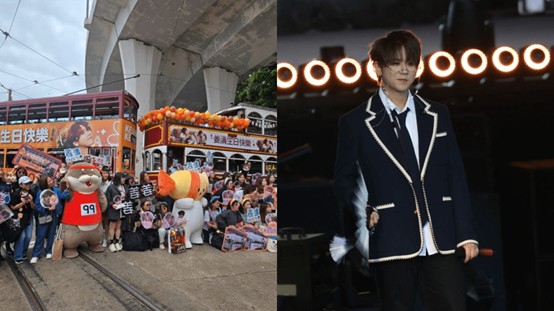
For the fifth consecutive year, the “Keung Sugar”, the name for boyband MIRROR’s Keung To’s fanbase, transformed Hong Kong’s streets into a sea of support for the pop star’s birthday. The highlights included the signature “Free Tram Ride Day,” with specially decorated trams traversing Hong Kong Island, and various pop-up markets in Causeway Bay. Fans from as far as San Francisco flew in to participate, demonstrating the global reach of the “Mirror effect” and the unwavering loyalty of his supporters despite the costs of international travel.
A day prior to his actual birthday, Keung headlined a charity event at the Kai Tak Arena before a crowd of 6,500. The evening took a poignant turn when the singer delivered a 10-minute speech, correcting his own public record regarding his education. He admitted that, contrary to earlier claims made out of embarrassment, he had only completed Form 1 and had repeated grades multiple times. He detailed a difficult youth marked by social isolation and academic failure, which was only turned around after a social worker steered him toward vocational training.
Keung also addressed the “emotional instability” he has faced since his meteoric rise to fame, admitting to significant psychological stress. His transparency regarding his past and his mental health struggles was met with overwhelming support from the fan community. Many attendees noted that his willingness to be vulnerable about his “imperfect” past has only strengthened their emotional connection to him, solidifying his role as a relatable figure for a generation of Hong Kong youth.
(5) Donnie Yen directs and stars in “CAINE”, Hollywood spin-off of the “John Wick” series filming in Budapest
(Photo Credit: the Standard)
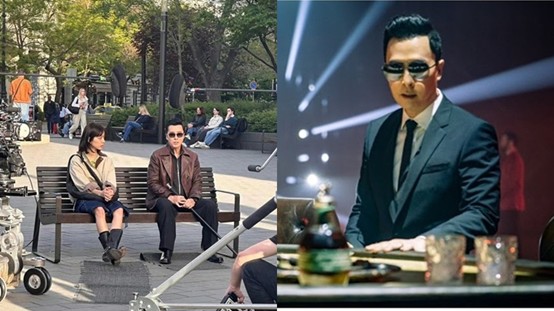
Martial arts icon Donnie Yen is expanding the “John Wick Universe” with his new solo feature, CAINE, currently in production in Budapest, Hungary. In a rare move for a major Hollywood studio project, Yen is pulling double duty as both the director and the titular star. This dual role underscores Yen’s growing influence in Western cinema following his breakout performance as the blind assassin in John Wick: Chapter 4.
Recent set photos have offered a first look at the film’s tone, showing a leather-jacketed Yen in character alongside a young woman. Sources identify the actress as rising Chinese star Zhuang Dafei, who is rumored to be playing Caine’s daughter, Mia. This casting suggests the spin-off will pivot from the pure high-octane action of the main franchise to a more character-driven narrative, focusing on Caine’s family ties and the emotional weight of his lethal profession.
Yen has confirmed that while the European leg of filming is underway, he has successfully pushed for production to move to Hong Kong later this year. By including his home city, Yen aims to showcase Caine’s origins and provide a more authentic backdrop to the character’s personal life. The film is one of the most anticipated action releases of the coming year, promising to blend “Hong Kong-style” action choreography with the gritty aesthetic of the John Wick series.
(6) Why are modern Chinese audiences shying away from dubbed films?

(Photo credit: Handout)
At a recent Shanghai premiere for the Chinese-dubbed version of Agatha Christie’s Witness for the Prosecution, the emotional reception from a small group of fans masked a harsher reality: the traditional art of film dubbing is struggling to remain relevant. Despite the film featuring legendary voices from the Shanghai Dubbing Studio, it grossed a modest 6.31 million yuan by late January, only a fraction of what modern domestic blockbusters achieve in days.
The decline marks a stark contrast to the 1980s and early 90s, when dubbed foreign films were the primary window to the outside world for Chinese audiences. During that “golden era,” the industry dubbed over 600 films from 43 countries. Today, however, a 2022 survey revealed that a staggering 75% of viewers prefer original audio with subtitles, while only 2.27% favor dubbing. Younger viewers often view the traditional “dubbese” style as stiff or detached from the raw emotions of modern cinema.
The profession is now forced to adapt to a landscape where domestic films command 80% of the market. Many professional voice actors have pivoted to Chinese animation or high-budget domestic epics. To survive, the Shanghai Dubbing Studio is even exploring a reversal of its historical role: dubbing Chinese films into foreign languages to project China’s cultural soft power abroad. While nostalgia keeps the spirit of the art form alive for older generations, the “soul-reshaping” work of artists like Qiao Zhen faces an uncertain future in an increasingly bilingual and subtitle-reliant society.
(7) HK concert date for Japanese group XG sparks mainland backlash over Unit 731 link
(Photo Credit: the Standard)
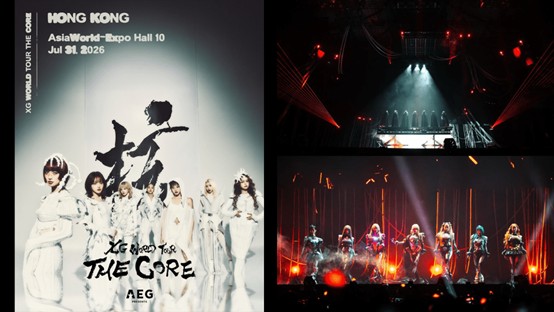
Plans for the Japanese-Korean girl group XG to perform in Hong Kong’s Asia World-Expo have sparked intense controversy among mainland Chinese netizens. The backlash centers on the chosen date of July 31, which many social media users have linked to the historical Unit 731, a Japanese military division known for human experimentation during the Second Sino-Japanese War. Although there is no formal connection between the calendar date and the unit’s name, netizens argue the numerical association is deeply insensitive given the fraught history between the two nations.
This outcry arrives at a precarious time for Japanese cultural exports in the region. Recent months have seen a wave of sudden cancellations and adjustments to performances by Japanese artists. These include the abrupt cancellation of a show by the band Hitsujibungaku and the postponement of a concert by singer-songwriter Yoasobi. Industry observers suggest these disruptions reflect a “chilling effect” caused by strained China-Japan diplomatic relations and a more rigorous approval environment for foreign acts.
Despite calls for XG’s organizers to reconsider the schedule, no official changes have been announced for the event. The seven-member group now faces a polarized reception. As fans prepare for ticket sales, the situation highlights how historical memory continues to shape the modern entertainment landscape, turning a standard tour date into a significant geopolitical flashpoint.
(8) Chinese animation “Nobody” selected for prestigious animation film festival
(Photo Provided to China Daily)
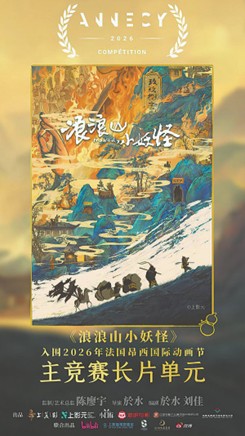
The acclaimed Chinese animated feature Nobody has been selected for the official feature film competition at the 2026 Annecy International Animation Film Festival. Announced by organizers in late April, this selection places the film within the most prestigious section of the world’s premier animation event. Scheduled to take place in France this June, the festival will showcase the film’s unique 2D aesthetic to an international audience.
Domestically, the film has already achieved phenomenal status under its Chinese title, The Little Monsters of Langlang Mountain. Directed by Yu Shui, the feature-length spin-off of the Yao-Chinese Folktales anthology earned a cumulative box office of 1.72 billion yuan. This performance set a new all-time record for Chinese 2D animation, though it remains in the shadow of the 3D animation Ne Zha. While Nobody dominates the 2D landscape, Ne Zha continues to hold the overall record for Chinese animation with a staggering 5.03 billion yuan, highlighting the massive commercial scale of the domestic industry.
Despite the statistical gap between 2D and 3D records, the international momentum for Nobody is exceptionally strong. The film has already broken into the top five highest-grossing Chinese-language films in Vietnam and is currently expanding into North American and Australian markets. By exploring universal themes of growth and friendship through the lens of a neglected “pig monster,” the film promises to bring a fresh, grassroots perspective of the Journey to the West mythos to a broader global audience.
News Source: https://global.chinadaily.com.cn/a/202605/07/WS69fbc75ba310d6866eb47280.html#:~:text=The%20Chinese%20animated%20feature%20Nobody,organizers%20announced%20in%20late%20April.
(9) China’s defining musical theater voice Ayanga joins the artist roster of Universal Music
(Photo Credit: Universal Music Greater China)
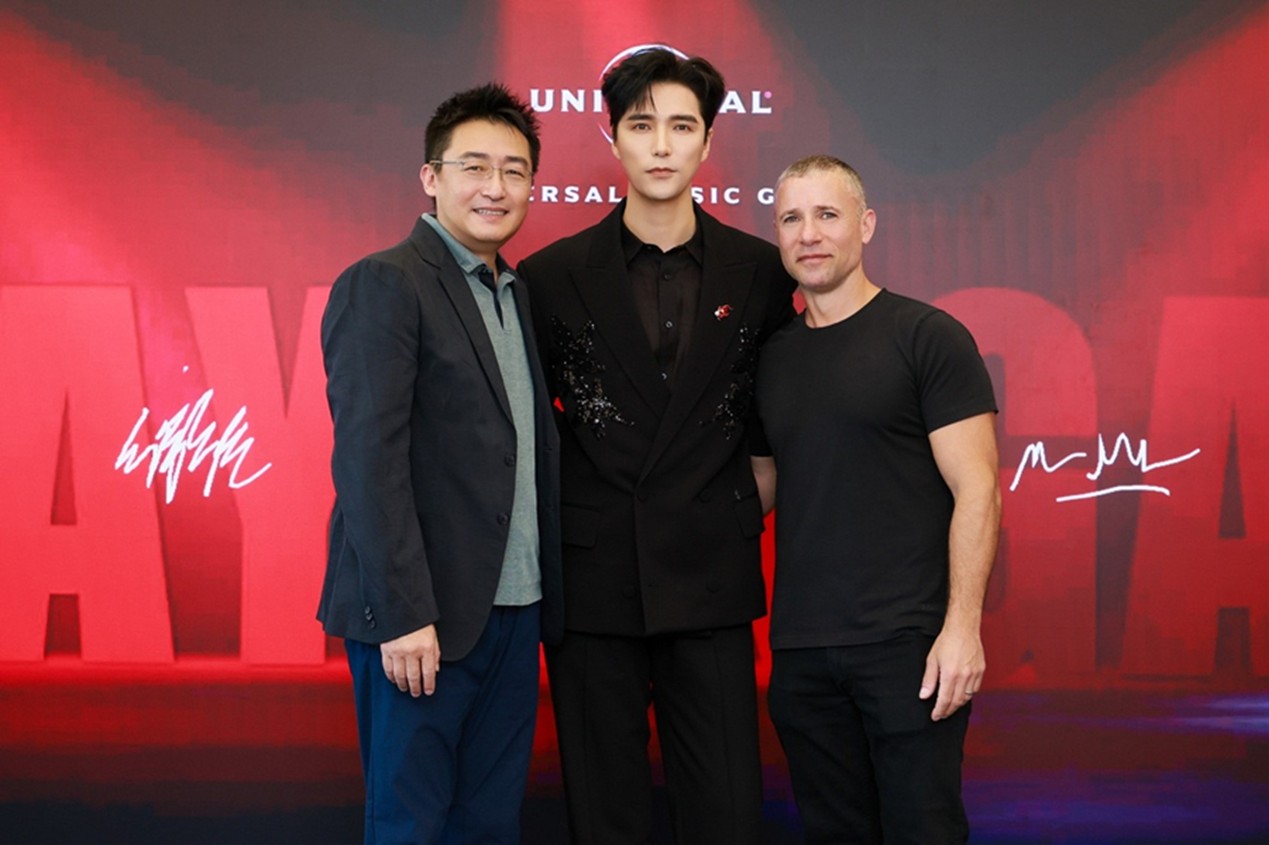
In a landmark move for the domestic entertainment industry, Universal Music Greater China (UMGC) has officially welcomed Ayanga into its global artist family. The signing took place as the company unveiled its new Beijing office, marking a strategic expansion led by newly appointed Managing Director Sam Hu. This collaboration seeks to bridge the gap between traditional stage performance and contemporary global pop, leveraging Universal’s vast network to export Chinese cultural talent.
Ayanga, whose name translates to “Thunder” in Mongolian, serves as the artistic director of musical theater at Beijing Dance Drama & Opera Theater. Since rising to national prominence as the 2019 champion of Super Vocal, he has become the definitive face of the genre in China.
Beyond the stage, Ayanga has established a massive digital footprint. His 2020 album, The Art, achieved diamond certification on digital platforms in less than two days. He has also voiced soundtracks for major global franchises, including Disney’s The Little Mermaid, the Zootopia expansion at Shanghai Disney Resort, and the hit game Genshin Impact.
Universal Music Group executives emphasized that Ayanga’s work is grounded in a storytelling tradition that transcends cultural boundaries. The label’s upcoming strategy will focus on expanding his recording career and launching international tours. By integrating the narrative depth of theater with modern musical production, UMGC intends to help Ayanga craft a distinctive cross-genre identity that resonates with audiences far beyond the Chinese mainland.
News Source: http://www.china.org.cn/2026-05/03/content_118475221.shtml
(10) China’s Labour Day box office underwhelms even with Hong Kong crime thriller “Cold War 1994” and highly-anticipated Hollywood sequel “The Devil Wear Prada 2”
(Photo Credit: VCG via Getty Images)
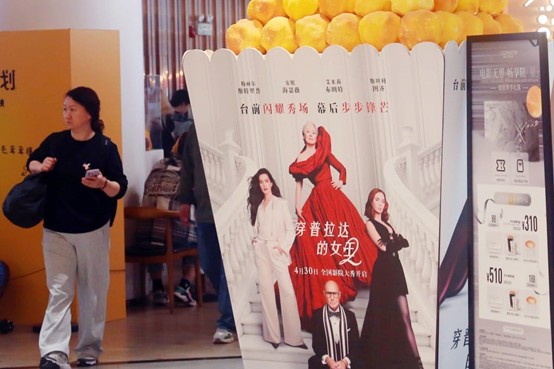
China’s five-day Labor Day holiday concluded with a sluggish 759 million yuan in ticket sales, a figure that barely surpassed last year’s performance and remains significantly lower than previous peaks. Although nearly a dozen new films debuted to capture the holiday audience, the world’s second-largest film market continues to struggle with a year-to-date revenue deficit. Industry analysts note that total earnings for 2026 currently stand at less than half of the levels seen during the same period last year.
The holiday season saw a surprising shift in audience preferences. The homegrown suspense thriller Vanishing Point dominated the charts, grossing 264 million yuan. In contrast, the highly anticipated Hollywood sequel The Devil Wears Prada 2 fell short of expectations, earning only 58 million yuan. The film’s lackluster performance was largely attributed to a social media firestorm over its portrayal of an Asian character, which many viewers condemned as stereotypical and culturally insensitive. Even the star power of Hong Kong crime thriller Cold War 1994 was not enough to fully revitalize the flagging market.
Despite the quiet holiday turnout, industry experts are optimistic about a summer recovery. The upcoming months are slated to feature a robust lineup of international blockbusters, including Steven Spielberg’s Disclosure Day and Christopher Nolan’s The Odyssey. Additionally, the market is preparing for the experimental debuts of China’s first artificial-intelligence-generated feature films. Analysts believe this influx of diverse content and innovative technology may finally bridge the gap between cautious consumer behavior and a return to pre-pandemic growth.
News Source: https://www.scmp.com/economy/china-economy/article/3352523/chinas-labour-day-box-office-underwhelms-consumer-spending-stays-cautious?module=perpetual_scroll_0&pgtype=article
(11) ‘MasterChef Asia’ Revived After 10-Year Hiatus, to be shot in Macau
(Photo Credit: MasterChef)
After a ten-year absence, the iconic “MasterChef Asia” reality TV show is making a grand return to the screen, with Macao serving as the primary production hub. The new 10-part series is a collaborative effort between Banijay Rights, Warner Bros. Discovery, and CreAsia Studio. By filming entirely within the region, the production aims to leverage Macao’s prestigious designation as a UNESCO Creative City of Gastronomy, showcasing the unique blend of Portuguese and Chinese influences that define its local food culture.
The Macao Government Tourism Office has joined the project as an official production partner, viewing the show as a vital platform to broadcast the city’s rich culinary heritage to a global audience. Maria Helena de Senna Fernandes, the director of the tourism office, emphasized that food remains at the heart of Macao’s identity. The series will feature ten former contestants from across the continent who are returning for a second chance at the title, with their challenges deeply integrated into the city’s vibrant landmarks and kitchen traditions.
Scheduled to air across major networks including TLC and the Asian Food Network, the show will reach viewers throughout Greater China, Southeast Asia, and the Middle East. Industry leaders believe that hosting the competition in Macao reflects the region’s growing creative scale and its reputation as a premier destination for international media production. As the world’s most successful cookery franchise, “MasterChef” now looks to Macao to provide the inspiration for its next chapter of high-stakes storytelling and gastronomic excellence.
News Source: https://variety.com/2026/tv/news/masterchef-asia-returns-warner-bros-discovery-macao-1236733988/
(12) Canadian Singer The Weeknd to return to Hong Kong after 8 years with Kai Tak show in October
(Photo Credit: Getty Images)
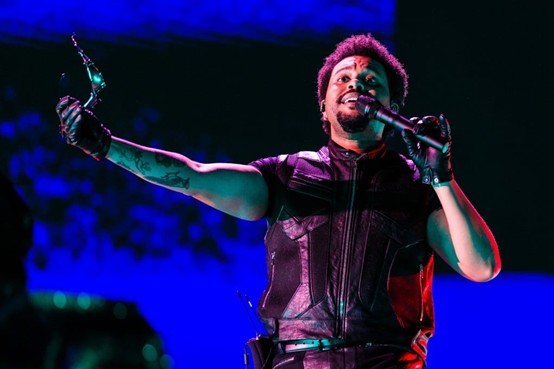
Canadian superstar Abel Tesfaye, professionally known as The Weeknd, is poised to headline one of the most anticipated musical events in Hong Kong this year. Sources indicate that the “Blinding Lights” singer will perform at the newly opened Kai Tak Sports Park in October 2026. This announcement follows a cryptic “foreshadowing” teaser released by Live Nation Asia, which hinted at the final leg of a tour that has already surpassed $1 billion in global ticket sales.
The upcoming show represents a significant scale-up from The Weeknd’s last Hong Kong visit in 2018 at AsiaWorld-Arena. The “After Hours Til Dawn Tour” is renowned for its high-concept production, featuring dystopian cityscape sets, giant statues, and an immersive atmospheric experience that blends tracks from his hit albums After Hours and Dawn FM.
The move to Kai Tak Stadium highlights the venue’s rapid emergence as a critical stop for global tours. Since its debut in early 2025, the 50,000-seat stadium has hosted massive acts like Coldplay and Blackpink. The Weeknd joins an impressive 2026 lineup at the Sports Park, which includes local and international artists alike, including K-Pop girl group (G)I-DLE, Cantopop icons Sandy Lam and Sammi Cheng, as well as American artists Post Malone and Charlie Puth.
While official ticket details are still pending, the coordinated teasers across Hong Kong, Singapore, and Thailand suggest that a full Asia-Pacific itinerary is imminent. For local fans, the concert is not just a musical homecoming but a testament to Hong Kong’s revitalized status as a premier global entertainment destination.
News Source: https://www.scmp.com/news/hong-kong/hong-kong-economy/article/3352729/weeknd-return-hong-kong-after-8-years-kai-tak-show-october