Asia Art Weekly News Bulletin – ISSUE 72 Week of 6 July 2026
(1) Hong Kong to Introduce Market-Oriented Operators for 26 Public Cultural Facilities to Boost Art Tourism
Hong Kong will introduce commercial operators for 26 key public venues, including the Hong Kong Museum of Art, by late 2026. The shift will open cultural landmarks to brand partnerships and private events, creating vibrant new opportunities for lifestyle brands and event organizers targeting the Asian entertainment market.
(2) Urban Living Art: Venice Biennale Roving Exhibition Sparks Cross-City Design Dialogue Between Shanghai and Hong Kong
The roving architectural exhibition Projecting Future Heritage: A Hong Kong Archive recently wrapped its Shanghai run, fostering cross-cultural design dialogues on high-density urban living. Highlighting everyday landmarks like the Choi Hung Estate through unique archival cabinets, the Venice Biennale-spun show will return to Hong Kong for its final design showcase later this year.
(3) Global Artisans Converge on Jingdezhen to “Borrow Fire” From China’s Porcelain Capital
China’s porcelain capital, Jingdezhen, hosted the 2026 Congress of the International Academy of Ceramics, drawing global creators to its historic artisan community. Home to 60,000 studios, the city’s centuries-old specialized craftsmanship provides international artists with an unparalleled collaborative playground, solidifying its reputation as Asia’s ultimate destination for heritage arts and design lifestyle.
(4) Cross-Border Creativity: Seoul’s “Asia to Asia” Forum Unites Major Arts Institutions to Boost Regional Exchange
The Korea Arts Council will host the “Asia to Asia” forum in Seoul on 13 July 2026, uniting cultural leaders from Uzbekistan, India, Thailand, Pakistan, and South Korea. The initiative aims to spark fresh international residencies, joint productions, and institutional ties, fostering a deeply connected future for the Asian arts and entertainment ecosystem.
(1) Hong Kong to Introduce Market-Oriented Operators for 26 Public Cultural Facilities to Boost Art Tourism
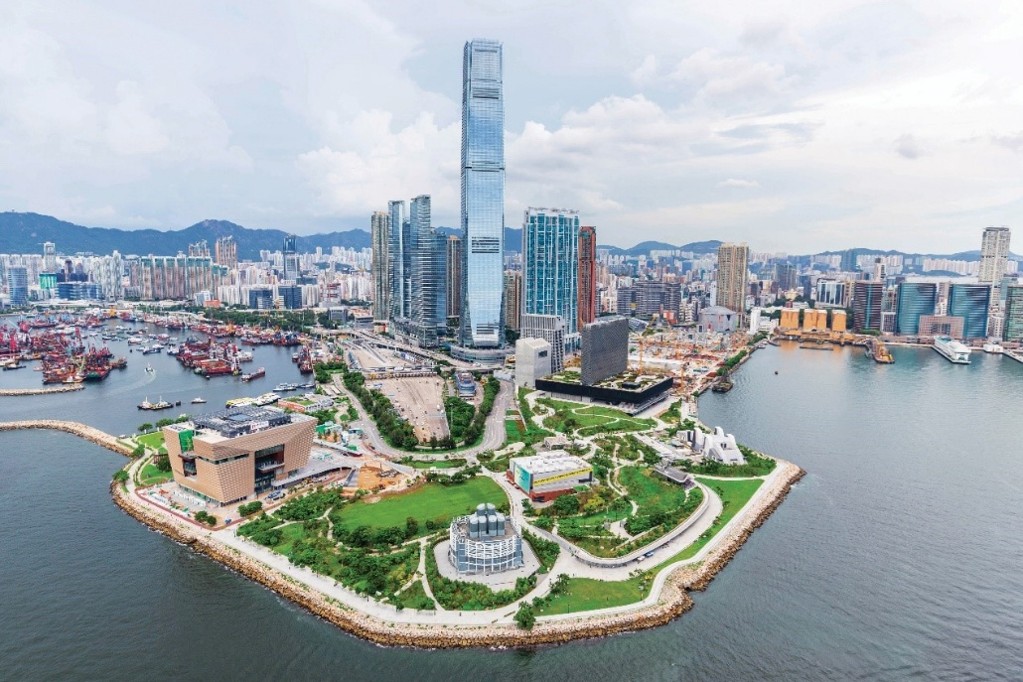
(Photo Credit: Culture, Sports and Tourism Bureau)
Hong Kong is set to transform the management of its public cultural sector by introducing market-oriented operational models across 26 major government facilities, including the renowned Hong Kong Museum of Art and Hong Kong Science Museum. According to Secretary for Culture, Sports and Tourism, Rosanna Law, the government launched a tendering process in April and expects to appoint private operators by the end of 2026. This initiative follows an expression of interest exercise that drew 14 proposals from property developers and event agencies.
The strategy allows public venues to unlock new revenue streams without compromising their educational roots. Private operators will introduce high-value programs, such as renting out museum spaces for private or commercial events on closing days and spearheading brand crossovers to create trendy lifestyle merchandise like building blocks and lifestyle accessories. Meanwhile, independent institutions like M+ and the Hong Kong Palace Museum are already proving the viability of this commercial blend, recording a combined revenue surge of over 20% in the 2025–2026 fiscal year. While lawmakers urge for greater self-sustainability, officials stress that public venues will strike a delicate balance, preserving their artistic mission without becoming overly commercialized.
News Source: https://www.stheadline.com/politics/3591390/
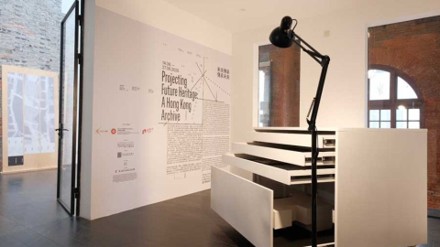
(Photo Credit: Asia News Network)
The newly concluded architectural exhibition, Projecting Future Heritage: A Hong Kong Archive, has successfully fostered a deep cultural and design dialogue between Shanghai and Hong Kong during its temporary stop at Shanghai’s Manifesto Gallery. Serving as a crucial leg of the Hong Kong Institute of Architects (HKIA) Venice Biennale and Roving Architecture Exhibitions 2025/26, the two-year initiative brings together 32 research teams to document Hong Kong’s built environment. By utilizing an innovative presentation of 21 wooden archival cabinets and 115 drawers, the showcase spotlights often-overlooked everyday design typologies.
Exhibits featured intimate blueprints, technical drawings, and historical photographs of public spaces, ranging from the vibrant platforms of the iconic Choi Hung Estate to Hong Kong’s unique vertical, multi-functional market complexes. Co-curator Fai Au and HKIA President Julia Lau noted that both global port cities share deep historical ties and face identical contemporary pressures regarding high-density lifestyle management and sustainable infrastructure. For international art and design enthusiasts, this traveling showcase elevates ordinary public architecture into high-concept urban art, demonstrating how local Asian communities adapt cultural heritage to combat climate change and hyper-dense living. Following stops in Bangkok and Shanghai, the exhibition is scheduled to return to Hong Kong for a highly anticipated local response show.
News Source: https://asianews.network/architectural-exhibition-from-venice-sparks-dialogue-between-shanghai-and-hong-kong/
(3) Global Artisans Converge on Jingdezhen to “Borrow Fire” From China’s Porcelain Capital
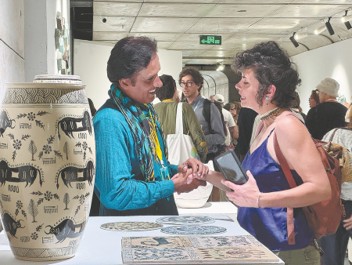
(Photo Credit: Xinhua)
Jingdezhen, China’s historic ceramic capital in Jiangxi province, has firmly reestablished its status as a premier global hub for artisan culture and artistic exchange. Boasting a massive network of over 60,000 ceramic studios and a thriving ecosystem of 100,000 industry workers, the city recently hosted the prestigious 2026 Congress of the International Academy of Ceramics (IAC). The grand event drew international artists and scholars eager to explore the delicate tension between historical inheritance and cutting-edge design innovation.
Dating back to the Song Dynasty, Jingdezhen has exported its prized porcelain along the Silk Road. Today, its enduring appeal rests on a highly specialized, centuries-old division of labour where local master craftsmen dedicate lifetimes to single steps in the production line, such as clay preparation or kiln firing. For global creatives—including French visual artist Karima Duchamp and Croatian visual artist Boris Roce—this hyper-collaborative industrial chain is an invaluable resource. Rather than just borrowing hands, visiting artists describe the experience as “borrowing Jingdezhen’s fire,” collaborating with seasoned kiln masters to bring high-concept contemporary ideas to life. For foreign lifestyle followers, the city serves as a living, breathing artisan community that seamlessly turns ancient crafts into global entertainment and design trends.
News Source: https://global.chinadaily.com.cn/a/202607/09/WS6a4eca6fa310986e2b4643d3.html
(4) Cross-Border Creativity: Seoul’s “Asia to Asia” Forum Unites Major Arts Institutions to Boost Regional Exchange
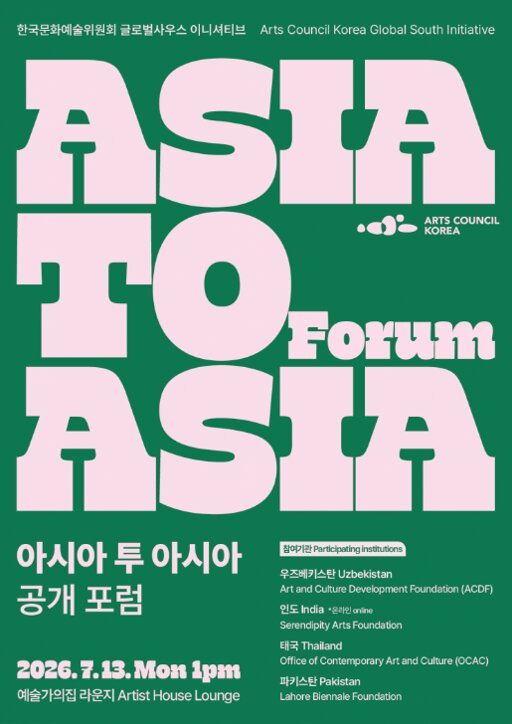
(Photo Credit: Korea Arts Council)
The Korea Arts Council (ARKO) has announced its upcoming “Asia to Asia” public forum, scheduled for July 13, 2026, at the House of Artists in Seoul. As part of South Korea’s broader Global South Initiative, the landmark inbound program brings together key cultural and artistic leaders from five nations—South Korea, Uzbekistan, India, Thailand, and Pakistan—to establish new frameworks for cross-border creative partnerships and field-based collaboration. Following the public discussions, the international delegation will embark on a week-long tour of major cultural and entertainment hotspots across Seoul and Busan.
The forum is divided into two major sessions focusing on the operational challenges of contemporary Asian institutions and new strategies for post-globalization cultural exchange. High-profile attendees include Azizbek Mannopov from Uzbekistan’s Art and Culture Development Foundation, Patcharapon Thantatanai from Thailand’s Office of Contemporary Art and Culture, and Kudsia Rahim of Pakistan’s Lahore Biennale Foundation. India’s Serendipity Arts Foundation will also participate virtually. For foreign observers, this initiative offers a vital preview of future pan-Asian co-productions, international artist residencies, and joint funding models that will shape the next wave of contemporary Asian visual arts and festival entertainment.
News Source: https://www.asiae.co.kr/en/article/2026070613002425489