Asia Fashion Weekly News Bulletin – ISSUE 75 Week of 27 July 2026
(1) Hermès Outperforms Asia’s Market Expectations Driven by Strong Leather and Silk Demand
Hermès reported strong first half results for 2026, with revenue reaching 8.16 billion euros. Sales grew due to robust demand for leather goods and silk scarves in the Americas and Japan. However, growth in Asia-Pacific slowed as luxury retail consumption across Greater China experienced a temporary moderation.
(2) Xiamen Court Refutes Rumors of Louis Vuitton Lawsuit Over Building Architecture
The Huli District People’s Court in Xiamen refuted viral online rumors claiming Louis Vuitton sued a real estate developer over building decorations. The court clarified that the lawsuit actually targets a local apparel retailer for trademark infringement on clothing items, alongside co-defendants accused of management negligence.
(3) Shein Files Hong Kong Prospectus as Supply Chain Digitalization Shapes Sino Retail Landscape
Fast fashion giant Shein has filed a draft prospectus for a Hong Kong initial public offering. Although trade policy shifts in Western markets led to recent financial losses, the company aims to leverage listing capital to expand its digital supply network across Greater China and broader global markets.
(4) France Approves Anti-Fast-Fashion Law Targeting Chinese E-Commerce Platforms
France’s National Assembly has passed an “Anti-Ultra-Fast-Fashion Law” imposing tiered eco-fines and advertising bans. While framed around sustainability, the criteria explicitly target Chinese cross-border e-commerce platforms while exempting European brands. China’s Commerce Ministry criticized the restrictions as discriminatory, warning of potential countermeasures.
(1) Hermès Outperforms Asia’s Market Expectations Driven by Strong Leather and Silk Demand
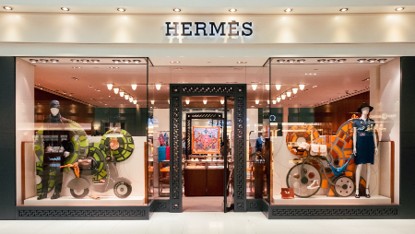
(Photo Credit: Shutterstock)
French luxury house Hermès International reported a resilient financial performance for the first half of 2026, generating 8.16 billion euros in total revenue. Driven by sustained demand for signature leather goods alongside double-digit growth in the Americas and Japan, the luxury group beat analyst expectations despite broader economic uncertainty.
The company’s core leather goods and saddlery division posted strong momentum, supported by high demand for popular handbag models. To meet overflowing order books, Hermès opened its 25th leather workshop in France earlier this year and plans to construct three additional facilities by 2030. Silk and textiles also emerged as key growth drivers, while watch sales rebounded modestly.
Regional performance highlighted shifting dynamics across global luxury markets. While sales surged in the Americas and Japan, growth in the Asia-Pacific region outside Japan moderated to 2.4 percent. The regional moderation reflects cautious consumer spending across Greater China, which directly influences luxury retail, high-end entertainment endorsements, and media sponsorship ecosystems throughout the Sino market.
Despite currency fluctuations eating into overall revenue, Hermès maintained high profitability with recurring operating income reaching 3.35 billion euros. Robust inventory management boosted adjusted free cash flow, leaving the group with 12.92 billion euros in net cash reserves. Executive leadership reaffirmed confidence in mid-term growth targets, underscoring the enduring appeal of traditional craftsmanship in an evolving retail landscape.
(2) Xiamen Court Refutes Rumors of Louis Vuitton Lawsuit Over Building Architecture
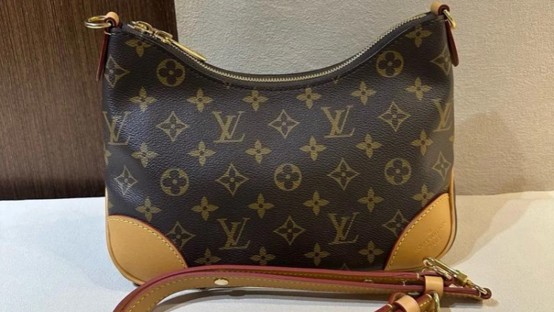
(Photo Credit: 香港商報網綜合)
A local court in Xiamen, Fujian province, has clarified online rumors regarding a high-profile intellectual property lawsuit filed by luxury giant Louis Vuitton. The Huli District People’s Court issued an official statement addressing widespread internet claims that the fashion house sued a property developer over four-leaf floral exterior building carvings that allegedly infringed on its iconic logo.
According to the court statement, the lawsuit actually targets a clothing shop operator surnamed Peng for selling apparel that infringes on Louis Vuitton’s registered trademarks. The remaining named defendants, including local property development and management companies, were included in the suit due to alleged failures in fulfilling their supervisory responsibilities. The judiciary confirmed that the legal dispute has no connection to the residential building’s architectural design or decorative motifs.
The controversy originated after a formal public court notice listed Louis Vuitton Malletier alongside the property and management entities as co-defendants. The public court listing sparked speculation across social media platforms before judicial authorities intervened to clarify the facts. The case remains pending before the court.
The clarification highlights ongoing public interest in international luxury brand enforcement across Mainland China. As global fashion houses actively enforce trademark protections within the Sinophone market, intellectual property disputes involving luxury brands continue to draw intense scrutiny from consumers, media outlets, and commercial entertainment sectors.
News Source: https://www.hkcd.com.hk/hkcdweb/content/2026/07/26/content_8766721.html
(3) Shein Files Hong Kong Prospectus as Supply Chain Digitalization Shapes Sino Retail Landscape

(Photo Credit: DR)
Online fast fashion giant Shein has officially filed a draft prospectus with the Hong Kong Stock Exchange, laying the groundwork for a long-anticipated initial public offering. The filing offers a rare look at the performance of the company, which grew revenue from 32.1 billion dollars in 2023 to 41.8 billion dollars in 2025 despite heightened geopolitical headwinds.
The trade environment in Western markets has exerted noticeable pressure on Shein’s bottom line. Policy updates in the United States, including higher tariffs and the removal of the de minimis tax exemption, alongside new import duties in the European Union, have increased logistics expenses. Consequently, net income declined from 3.36 billion dollars in 2024 to 2.06 billion dollars in 2025, while the company recorded a first quarter loss in 2026 due to valuation adjustments on preferred shares.
In response to these international pressures, Shein is shifting its operational focus towards emerging markets and brand services. Through initiatives like the Shein Xcelerator program, the company provides supply chain intelligence and brand management services to third party partners. This segment yields operational margins roughly double those of its core retail business, offering a lucrative pathway to diversification.
Shein’s listing marks a crucial turning point for Asia’s digital commerce landscape. The company relies on thousands of mainland suppliers integrated through automated demand forecasting and digital logistics tools. An injection of capital from the Hong Kong market will fund further investments in supply chain automation, cross border e commerce technology, and influencer driven media marketing, cementing China’s position as a dominant hub for global digital retail innovation.
(4) France Approves Anti-Fast-Fashion Law Targeting Chinese E-Commerce Platforms

(Photo Credit: bastillepost)
France has formally passed targeted legislation designed to curb the influx of ultra-fast-fashion imports. The law establishes a tiered penalty system starting at €0.25 per qualifying item and escalating up to €20 by 2030, capped at half the pre-tax price. Additionally, the legislation bans advertising and influencer marketing for non-compliant platforms, backed by administrative fines of up to €100,000.
The regulatory framework applies strict thresholds, subjecting companies to enforcement if they release over 15,000 new styles annually, maintain an average price below €5, or offer products lasting under 30 washes. These criteria effectively capture Chinese digital platforms such as Shein, Temu, and AliExpress, while traditional European retailers like Zara and H&M remain exempt. French officials openly defended the selectivity as a necessary shield for domestic retail, following a wave of bankruptcies among traditional middle-class apparel brands.
China’s Ministry of Commerce responded with a formal protest, accusing France of violating World Trade Organization non-discrimination principles and creating arbitrary trade barriers. Beijing signaled that it will monitor enforcement closely and implement countermeasures if Chinese business interests are infringed.
By restricting social media influencer campaigns and raising fulfillment costs alongside the European Union’s broader tariff adjustments, the measure limits key marketing channels for Chinese digital brands. As neighboring European nations consider similar Extended Producer Responsibility rules, Chinese cross-border platforms face a shifting regulatory environment across their primary overseas expansion markets.