Asia Fashion Weekly News Bulletin – ISSUE 78 Week of 17 August 2026
(1) Hong Kong Textile and Garment Industry Submits Proposal to Help China Build Global Fashion Brands
Hong Kong’s textile and garment sector submitted over 70 proposals for the 2026 Policy Address. Key recommendations include offering tax incentives for global procurement centers, upgrading Clothing Industry Training Authority (CITA), expanding BUD Fund tech subsidies, and promoting Chinese fashion culture internationally.
(2) 2026 Dalian Fashion Week Opens August 22, Blending Eastern Aesthetics and Global Trends
2026 Dalian Fashion Week will take place from August 22–28, 2026, featuring 23 brand launches and the 34th Dalian Cup design contest. Uniting international designers like Zeng Fengfei and Tatiana Smirnova, the event blends Eastern aesthetics with global trends across historical urban venues to boost local industrial growth.
(3) Shein’s HK IPO Faces Valuation Plunge Amid Q1 Losses, Carbon Emissions, and Ending Duty-Free Loophole
Fast-fashion giant Shein faces a steep valuation drop ahead of its Hong Kong IPO following Q1 2026 losses. Regulatory crackdowns on duty-free imports in the U.S. and Europe, alongside high supply-chain carbon emissions, are severely compressing the company’s growth momentum.
(4) Beyond Traditional Batik: BRI JF3 Fashion Festival 2026 Redefines Indonesian Style via Korean Collaborations
The BRI JF3 Fashion Festival 2026 in Jakarta highlighted the evolution of Indonesian fashion through modern Batik craftsmanship and South Korean design partnerships. Featuring brands like LAKON Indonesia and Euneun, the event connected local artisans with East Asian markets.
(1) Hong Kong Textile and Garment Industry Submits Proposal to Help China Build Global Fashion Brands
(Photo Credit: Orange News)
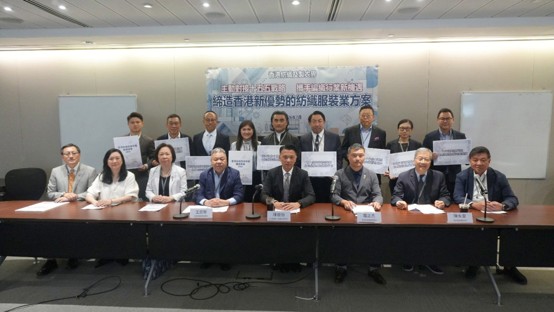
Representatives from Hong Kong’s textile and garment sector submitted a joint proposal for the 2026 Policy Address and First Five-Year Plan to the Chief Executive’s Policy Unit. Aligning with the national 15th Five-Year Plan and global supply chain restructuring, the industry outlined over 70 recommendations designed to leverage Hong Kong’s “super value-adder” status and international network to help mainland China develop into a global fashion powerhouse.
Textile and Garment sector lawmaker Sunny Tan proposed aggressive tax incentives, recommending a reduced corporate tax rate of 8.25% or 5% for eligible domestic and overseas procurement centers. Alternatively, Tan suggested expanding the existing Corporate Treasury Centre (CTC) framework into a “CTC+” model to attract corporate supply chain headquarters and stimulate local SME growth.
Additionally, Charles Yeung, President of the Hong Kong General Chamber of Textiles, advocated upgrading the Clothing Industry Training Authority (CITA) into a dedicated governing agency to coordinate with international fashion weeks. Yeung also urged optimizing the BUD Fund matching ratio to a 1:1 scheme for AI adoption and e-commerce expansion. Meanwhile, Bosco Law, Chairman of the Hong Kong Textile Federation, recommended expanding flagship events like Hong Kong Fashion Fest and integrating fashion with pop culture—such as music, film, and television—to project Chinese cultural soft power to global audiences.
News Source: https://epaper.tkww.hk/a/202608/14/AP6a7e293fe4b099d2ba488618.html
(2) 2026 Dalian Fashion Week Opens August 22, Blending Eastern Aesthetics and Global Trends

(Photo Credit: 宋偉 / TKWW)
2026 Dalian Fashion Week—a core component of the Dalian International Garment & Textile Fair—will take place from August 22 to August 28, 2026, alongside the 34th Dalian Cup International Youth Fashion Design Contest. Themed “Time & Expression”, the fashion week will feature its main opening and 23 brand collection launches at the Z28 Fashion Silicon Valley venue, concluding with a closing runway show at the historic Dongguan Street sub-venue.
Hu Dongmei, President of the Dalian Clothing and Textile Association, highlighted that the event brings together top international and domestic talent, including China Fashion Week “Golden Top” winner Zeng Fengfei, renowned Russian designer Tatiana Smirnova, alongside emerging designers from top global design academies. The event focuses on four core strategic highlights: positioning Dalian as a North-East Asian fashion hub, utilizing historic urban landmarks, establishing commercial conversion systems, and driving multi-industry cross-border collaboration under a “Fashion+” model.
Concurrently, Pan Li, President of the Dalian Fashion Designers Association, noted that the 34th Dalian Cup features an upgraded dual-track competition. Out of the global entries, 20 finalists from countries including Thailand and Australia—as well as domestic designers from Beijing and Guangxi—have entered the final production phase alongside 10 local Dalian finalists. Zheng Xiaojie, Deputy Director of the Dalian Bureau of Industry and Information Technology, emphasized that both platforms serve as key drivers for industrial transformation, talent cultivation, and cultural tourism growth across Northeast China.
News Source: https://www.tkww.hk/a/202608/14/AP6a7eaf61e4b099d2ba488d81.html
(3) Shein’s HK IPO Faces Valuation Plunge Amid Q1 Losses, Carbon Emissions, and Ending Duty-Free Loophole

(Photo Credit: Wikipedia)
Global fast-fashion platform Shein is facing intense valuation pressure as it enters the final stages of its Hong Kong IPO. Once valued at USD 100 billion, Shein’s market valuation has plummeted below USD 30 billion following Q1 2026 net losses of USD 99 million—a sharp reversal from its 2024 net profit of USD 3.4 billion on revenue of USD 38.8 billion.
The decline is driven by regulatory policy shifts in key overseas markets. The United States ended its duty-free exemption for small-value packages (de minimis exemption), while European nations are dismantling low-cost import concessions across Europe—which accounts for 35% of Shein’s total revenue. Additionally, despite relocating its headquarters to Singapore, Shein remains heavily dependent on its Chinese supply chain, fueling ongoing geopolitical concerns regarding U.S.-China trade relations.
Beyond regulatory headwinds, international investors are scrutinizing Shein’s environmental costs. To maintain fast delivery, Shein’s global air-freight model produced 8.52 million metric tons of CO2 equivalent in 2024—over three times that of Zara’s parent company, Inditex. While Shein pledged through the Science Based Targets initiative (SBTi) to reduce Scope 3 emissions by 25% by 2030, analysts note that transitioning to regional ocean or truck freight will lengthen delivery times and squeeze profit margins. Ultimately, Shein’s IPO struggles highlight the growing conflict between ultra-fast disposable fashion and global ESG standards.
News Source: https://esg.gvm.com.tw/article/123164
(4) Beyond Traditional Batik: BRI JF3 Fashion Festival 2026 Redefines Indonesian Style via Korean Collaborations
(Photo Credit: ZTYLEZ)
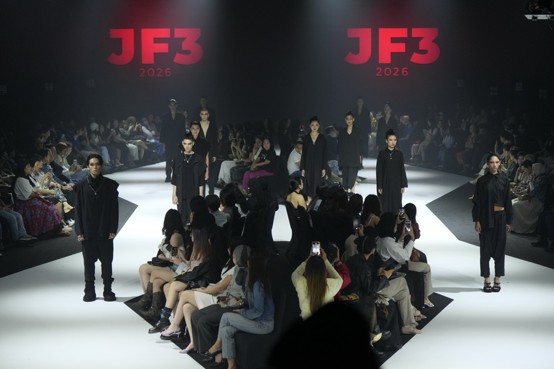
The BRI JF3 Fashion Festival 2026 took place at Jakarta’s Summarecon Mall Kelapa Gading under the theme “Recrafted: Shaping the Future.” Moving beyond traditional perceptions of Indonesian fashion, the festival served as a comprehensive industry platform—uniting designers, artisans, buyers, and educational institutions to foster cross-regional talent and commercial exchange between Southeast and East Asia.
A central highlight was LAKON Indonesia’s “HARSA” collection, directed by Creative Director Irsan. Featuring 36 looks, the collection modernized traditional Indonesian Batik and hand embroidery using contemporary tailoring, varied silhouettes, and contrasting fabrics like duchess satin, organza, and cotton poplin. LAKON Indonesia founder and JF3 Advisor Thresia Mareta emphasized that sustaining Indonesia’s cultural identity requires a robust ecosystem connecting local artisans, embroiderers, and tailors directly with modern markets.
The 2026 festival also expanded its ongoing partnership with South Korea, building upon a strategic memorandum signed with the Busan Textile & Fashion Industry Association (BTFA). South Korean labels Studio di Perla, OHGYO, and CONSTELLER D.L showcased their collections on the Jakarta runway. Additionally, South Korean accessory brand Euneun—founded by actress and singer Hahm Eun-jung—paired its handbag designs with LAKON’s apparel. As JF3 Chairman Soegianto Nagaria noted, the festival bridges Jakarta, Busan, and Seoul, demonstrating how traditional Indonesian craftsmanship can integrate into global fashion markets.
News Source: https://ztylez.com/fashion/fashion-news/2026/08/17/354039/