Asia Gaming Weekly News Bulletin – ISSUE 73 Week of 13 July 2026
(1) South Korea’s foreigner-only casinos hit jackpot as Chinese tourists return
South Korea’s foreigner-only casinos are hitting the jackpot in 2026 as Chinese tourist arrivals rise 25% year-on-year, reaching 2.56 million from January to May. Backed by visa-free travel policies for tour groups, major operators like Paradise Group and Lotte Tour are set for substantial gains as international flight capacities fully recover.
(2) Covid-era collapse of Southeast Asia gaming-compounds biz helped fuel scam hubs: APG
An APG report reveals that the Covid-19 pandemic’s collapse of Southeast Asian gambling operations forced crime syndicates to convert idle casinos and hotels into highly lucrative cyber-fraud complexes. Run by complex international money-laundering networks and trafficked workforces, these repurposed hubs present a persistent regulatory challenge across the region’s special economic zones.
(3) Macau Authorities Crack Down on Illegal Live-Stream Proxy Betting
Macau police have arrested three mainland residents in a series of casino raids targeting illicit “proxy betting” live-streams. Utilizing pinhole cameras sewn into custom clothing to broadcast baccarat games to remote clients, the suspects face severe charges under Macau gaming laws, which carry a maximum prison sentence of eight years.
(4) Konami Submits Casino Equipment License Applications Ahead of MGM Osaka’s 2030 Opening
Konami Gaming has become one of the first suppliers to formally apply for casino equipment manufacturing licenses in Japan. Initiated ahead of the 2030 debut of MGM Osaka, Konami’s proactive filing aims to establish a crucial foothold in Japan’s highly anticipated, rigorously regulated integrated resort supply chain.
(1) South Korea’s foreigner-only casinos hit jackpot as Chinese tourists return
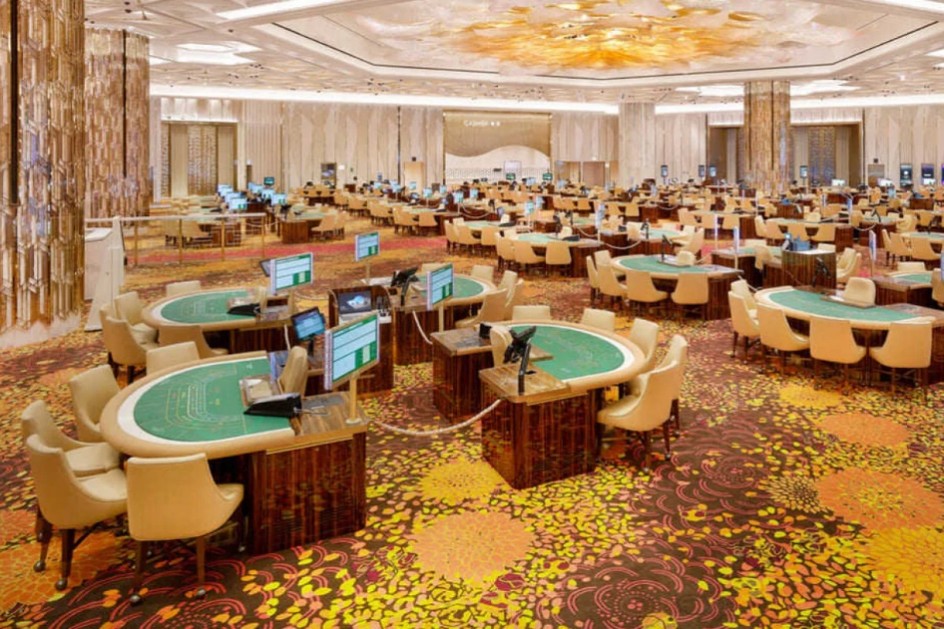
(Photo Credit: Jeju Dream Tower)
According to a Shinhan Securities analysis featured in the South China Morning Post, South Korea’s foreigner-only casino industry is experiencing a massive wave of growth. Unlike other domestic travel segments, the performance of these exclusive venues is deeply tethered to inbound passenger flows, which are currently soaring. Driven by a major recovery in global travel and a temporary visa-free policy introduced for Chinese tour groups, cumulative arrivals of Chinese visitors surged to approximately 2.56 million between January and May 2026—marking an impressive 25% year-on-year increase.
Because South Korean law strictly restricts domestic gambling to a single location (Kangwon Land), operators are heavily reliant on this influx of international high rollers and holidaymakers. Financial analysts project that industry leaders are positioned for a lucrative second half of 2026. Major beneficiaries include Paradise Group, which operates the high-end Paradise City in Incheon; Lotte Tour Development, which is capitalizing on rising flight capacities at its Jeju Dream Tower Integrated Resort; and Grand Korea Leisure, which is seeing a strong rebound in VIP foot traffic across its properties in Seoul and Busan.
News Source: South China Morning Post
(2) Covid-era collapse of Southeast Asia gaming-compounds biz helped fuel scam hubs: APG

(Photo Credit: GGR Asia)
According to an 83-page report titled Cyber Scam Hubs and Human Trafficking released by the Asia/Pacific Group on Money Laundering (APG), the dramatic downturn of Southeast Asia’s gambling industry during the Covid-19 pandemic directly catalyzed the regional rise of notorious cyber scam compounds. When borders closed and strict lockdowns went into effect starting in early 2020, organized crime syndicates operating illegal, unlicensed, or marginal casino-hotel properties in cross-border special economic zones faced a sudden revenue collapse. To offset losses, syndicates rapidly retrofitted these physical infrastructures into high-security cyber scam hubs, populating them with trafficked workforces primarily composed of Chinese-speaking managers alongside Indian, South Asian, and African victims.
The APG report highlights critical regional hotspots across the borders of Thailand, Myanmar, Laos, Cambodia, and the Philippines. In many cases, scam operations relied heavily on complex corporate structures—with 65% of APG member jurisdictions noting the use of shell or front companies to successfully launder fraudulent proceeds. However, the report also underscored the efficacy of proactive intervention, pointing to the Philippines’ recent legislative ban on offshore gaming operations as an immediate depressant on local scam activity. For global compliance officers, financial intelligence units, and regional policy advisors, this development emphasizes that modern cyber-fraud resilience is deeply intertwined with the rigorous oversight and cleanup of local physical gaming sectors.
News Source: Sigma World
(3) Macau Authorities Crack Down on Illegal Live-Stream Proxy Betting

(Photo Credit: TVB News)
According to a report by TVB News, Macau’s Judiciary Police (PJ) have successfully dismantled a series of illicit “proxy betting” (locally known as din tau) operations, arresting three mainland Chinese residents. The syndicates utilized high-tech, covert equipment to stream live casino games directly to remote clients in mainland China, taking real-time betting commands via hidden earpieces. During the stings, officers intercepted suspects at various Cotai and NAPE district casinos behaving unnaturally. Investigations revealed the couriers wore customized clothing—such as altered denim jackets with mesh pockets or dresses with pinhole lenses—to broadcast baccarat tables through specialized mobile apps.
Macau authorities have issued a stern warning to the public and potential criminal actors, emphasizing that participating in “proxy betting” is a severe criminal offense under the city’s gaming laws. Under Macau’s strict regulatory framework, operating unauthorized online lucky gambling or mutual gambling is classified as a serious felony, carrying a maximum penalty of up to eight years in prison. The PJ successfully seized over HK$200,000 in cash and casino chips, along with numerous modified garments, transmitters, and bluetooth devices, signalling a zero-tolerance approach toward high-tech backchannels attempting to bypass local regulatory boundaries.
News Source: TVB News
(4) Konami Submits Casino Equipment License Applications Ahead of MGM Osaka’s 2030 Opening

(Photo Credit: Exmoo News)
According to a report by Macao Exmoo News, the supply chain for Japan’s emerging gaming market has officially entered its regulatory review phase. Konami Gaming, the US-based casino gaming and systems arm of Japanese entertainment giant Konami Group, has formally submitted its application for casino equipment manufacturing licenses to Japan’s Casino Regulatory Commission. This move positions Konami as one of the first major equipment suppliers to formally initiate the vetting process under Japan’s strict and highly detailed integrated resort regulatory framework.
The timing of the application aligns with the steady construction of MGM Osaka, Japan’s first-ever integrated resort, which is slated to open on the artificial island of Yumeshima in Osaka Bay by 2030. Because Japan’s stringent regulations extend beyond casino operators to cover the manufacturing, import, sales, and maintenance of all gaming hardware and software, the approval process requires long-term testing for system safety and game fairness. Leveraging its dual strength of a Japanese corporate heritage and extensive regulatory experience across 400 global markets, Konami’s early filing is a calculated strategy to secure a dominant first-mover advantage in supplying slots, table gaming equipment, and player tracking systems to Japan’s multi-billion dollar casino market.
News Source: GGRAsia