China Media and Entertainment Weekly News Bulletin – ISSUE 95 Week of 6 April 2026
(1) Chinese target Americans with micro-dramas designed for phones
Chinese short‑love and fantasy micro‑drama producers are expanding into the US by casting English‑speaking actors and filming in Los Angeles. These shows use TikTok and Meta marketing to draw viewers into apps, tapping into an underserved niche in the American micro‑drama market.
(2) Are China’s TV dramas obsessed with beauty? An industry regulator thinks so
Chinese regulators are urging TV drama producers to move beyond “beauty‑obsessed,” traffic‑driven content and focus instead on quality storytelling and healthier, more realistic aesthetics.
(3) ‘People are exhausted by Blackpink and BTS’: the DIY Chinese bands redefining corporate ‘idol’ pop
Since China’s 2021 crackdown on idol‑training shows, an underground “alt‑idol” scene has emerged in which grassroots groups like Transparent Classroom and 7Sins reject the rigid, corporate idol model
(4) Subsidies boost film market across China during Qingming Festival holiday
A troupe of left‑behind rural women in Henan’s Junying village has gained online fame through Gen Z‑managed live‑streamed dance performances, turning livestreaming into a source of income.
(5) Renowned China university apologises for mini-film depicting career man, family-focused woman
Shanghai Jiao Tong University has apologised and withdrawn a 130th‑anniversary mini‑film after it was widely criticised for portraying a male student’s gaming hobby as a career path while reducing a female student’s journey to the role of mother, sparking debate over gender bias.
(6) The Chinese box office isn’t the Hollywood kingmaker it used to be. Here’s why
Hollywood has lost much of its easy access to China’s once‑lucrative box office as the expired U.S.–China film deal, tighter censorship, and Beijing’s push for local films have sharply reduced how many American blockbusters can earn big money there.
(7) Netflix hikes Hong Kong subscription fees by up to 11.4pc
Netflix is raising its subscription fees in Hong Kong by about 6.8 to 11.4 percent across its three main plans while also increasing charges for extra members.
(8) Hong Kong actor Lee Do-yu dies aged 58
Hong Kong actor Lee Do‑yu, best known for his role as Hung Hing adviser Chen Yao in the Young and Dangerous franchise, has died at 58 after suffering a head injury and brain hemorrhage following a fall while drunk.
(9) Controversy Erupts Over Chinese AI Actors in Upcoming Short Drama
A Shanghai‑based micro‑drama studio’s decision to cast two AI‑generated actors in a new 60‑episode short drama has sparked heated debate in China over portrait‑rights risks, job losses for human performers and crew, and the broader impact of AI on the authenticity and future of the entertainment industry.
(10) Xun Zhan: Nepal–China cinema partnership needs more dialogue
Chinese professor Xun Zhan, visiting Kathmandu as a jury member of the Nepal International Film Festival, sees strong potential for Nepal–China film and media collaboration through shared Himalayan culture, co‑writing and co‑production, and the use of AI and social media.
(11) Chinese short-drama platform Hongguo Short Drama has removed or penalized 670 improper AI generated content
Hongguo Short Drama has removed or penalized 670 AI‑generated short dramas after a review found widespread misuse of likenesses, trademarks, and copyright material.
(12) ONE OK ROCK’s Hong Kong gigs axed, after a string of Japanese artists see Chinese concerts cancelled
Two Hong Kong concerts by Japanese rock band ONE OK ROCK have been cancelled due to “unforeseen circumstances,” reflecting how diplomatic tensions between Tokyo and Beijing are spilling over into the live‑music scene even as Hong Kong promotes itself as Asia’s “Events Capital.”
(1) Chinese target Americans with micro-dramas designed for phones
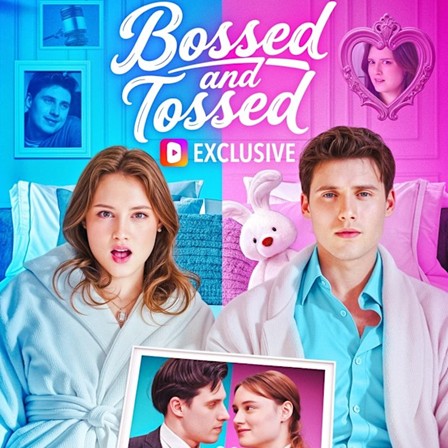
(Photo Credit: Financial Review)
Chinese short‑love and fantasy micro‑drama producers are expanding beyond Asia by hiring English‑speaking actors, filming in the US, and adapting their ultra‑short, hook‑driven romance and fantasy formats for Western audiences, with companies like Cypress Bai’s Storypod Studio leading the charge from Los Angeles.
The format first exploded in China, where low‑budget, one‑to‑two‑minute episodes loaded with emotional beats, dramatic conflict, and constant cliffhangers attracted nearly 700 million viewers in 2025 and generated more revenue than the country’s cinema box office, often yielding over $2 million per series on budgets under $200,000. Those economics have encouraged Chinese platforms to push overseas, especially into the US, where the top four China‑backed micro‑drama apps have amassed about 97 million downloads and brought in $966 million in net in‑app revenue in 2025, up from $21 million in 2022.
Producers typically take proven Chinese hits, think domineering CEOs falling for ordinary women or romantic fantasy hybrids such as “Food, Love, Robots,” where a woman courts a resurrected soulmate in robot form, and translate or lightly rework them for American viewers, sometimes adding elements like werewolves or vampires to target US tastes. Filming is fast and cheap, often completed in seven to 10 days by film‑school graduates and aspiring actors, with the bulk of the budget going not to production but to aggressive marketing on Meta and TikTok, which channels viewers into the platforms’ own apps and converts them into paying users. Executives such as DramaBox’s Zhu Shicong praise Chinese writers’ mastery of tightly structured, emotionally charged arcs, while US‑based producers like Erick Opeka of Cineverse note that the Chinese‑initiated “three‑act structure and rapid hooks” has filled a gap in the American market, where there is almost no local micro‑drama industry.
News Source: https://www.afr.com/world/asia/chinese-micro-dramas-target-us-with-familiar-tropes-for-phone-audience-20260407-p5zlyu
(2) Are China’s TV dramas obsessed with beauty? An industry regulator thinks so

(Photo Credit: Handout)
TV drama regulators in China are urging the industry to move away from “beauty-obsessed” and traffic-driven content, calling instead for more “quality” storytelling and healthier aesthetics.
The National Radio and Television Administration’s drama department made the push at a conference attended by major platforms such as iQIYI, Tencent Video, Mango TV and Youku, as well as leading production houses like Daylight Entertainment, Linmon Media and Huace TV, which are behind hits including Nirvana in Fire, Love Between Fairy and Devil, and Flourished Peony.
Officials warned against overvaluing physical appearance and chasing online buzz, stressing that acting skill, script quality and authentic character development should come first.
The call follows backlash over the battlefield portrayal of Zhang Linghe’s general in the 2025 historical romance Pursuit of Jade, whose polished, “foundation-wearing” look was mocked for clashing with the gritty setting and historical expectations. State media and military commentators have criticised such “overly softened” depictions of soldiers, arguing they distort healthy beauty standards and weaken the sense of masculine vigour linked to perseverance, responsibility and courage.
Authorities also urged producers to ditch distorted beauty norms, reduce reliance on star power, and ensure costume, make-up and props serve the story and a “distinctly Chinese ethos,” while Xinhua warned that audiences oppose not beauty itself but the sacrifice of realism and strong storytelling for superficial glamour.
(3) ‘People are exhausted by Blackpink and BTS’: the DIY Chinese bands redefining corporate ‘idol’ pop
(Photo Credit: The Guardian)
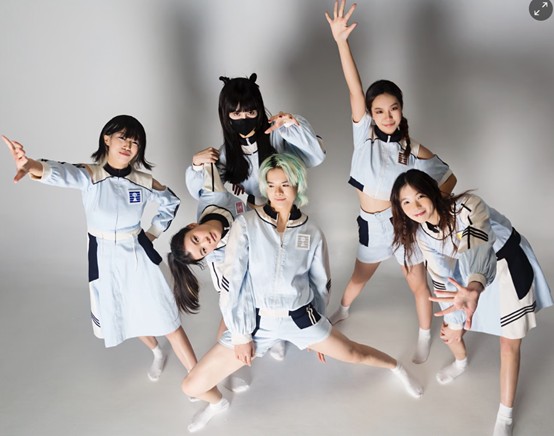
Since China cracked down on idol‑training shows and “toxic” fandom in 2021, an underground “alt‑idol” scene has grown up in opposition to the rigid, corporate blueprint of mainstream K‑pop‑style groups, including the global model set by acts like BTS.
Grassroots collectives such as Transparent Classroom and 7Sins, based in cities like Changsha and Guangzhou, keep some idol conventions, choreographed dance, coordinated outfits and member personas, but replace the polished, factory‑style perfection of acts such as BTS with sincerity, stylistic experimentation and self‑produced shows in small live houses.
These groups mix genres like punk, rock, jazz and house and adopt gothic or space‑explorer aesthetics, offering fans an alternative to the glossy, mass‑market idol acts that once dominated state‑sanctioned talent shows.
Because large‑scale TV exposure and star‑maker systems are blocked, alt‑idol work is usually part‑time: members teach, study or run side projects, and line‑up changes can quickly destabilise tightly knit bands such as 7Sins, which recently announced it will disband. Performers like Silver, from Transparent Classroom, insist that their career is music, not just a side hustle, and that the scene survives on passion rather than the promise of big payouts. In this way, China’s alt‑idol culture illustrates that while authorities can cut off the mainstream idol pipeline modelled loosely on the BTS‑style machine, they cannot fully extinguish the desire of young performers and fans to create their own music, on their own terms.
News Source: https://www.theguardian.com/music/2026/apr/02/diy-chinese-bands-redefining-corporate-idol-pop
(4) Subsidies boost film market across China during Qingming Festival holiday
(Photo Credit: Bastille Post Global)
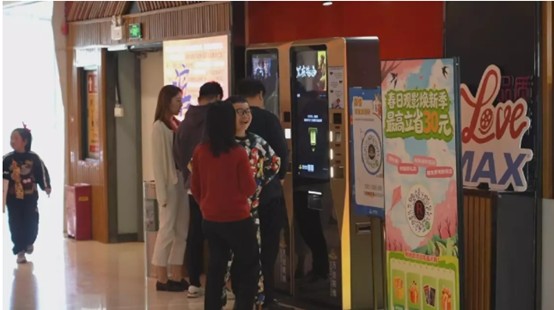
A wave of movie‑going subsidy schemes rolled out across China over the Qingming Festival holiday has helped re‑energise the national film market, with lower ticket prices, targeted allowances and expanded screening schedules driving a noticeable jump in cinema attendance.
In Jiangxi’s Linchuan District, local cinemas cut costs for online buyers by offering a 50 percent discount plus an extra 3.1 yuan off, and an additional 6.1 yuan reduction for front‑row seats, bringing some tickets down from over 30 yuan to just above 20 yuan and boosting daily visitor numbers by around 50 percent. Membership top‑ups and bundled benefits have further made cinema trips more affordable and frequent for ordinary viewers.
Beyond Jiangxi, cities such as Wuxi in Jiangsu have used integrated online platforms like Taopiaopiao’s mini‑program to deliver 20‑yuan viewing subsidies directly to consumers over several days, which they can then apply to discounted tickets for their preferred showtimes. In Tianshui, Gansu, cinemas have opened all auditoriums and increased screenings across all time slots for six new releases, expecting more than 2,600 visitors over the holiday, a roughly 30 percent rise compared with normal days, thanks to a diverse mix of high‑quality films across genres.
Beijing has also joined the push, launching a city‑wide movie‑watching subsidy initiative backed by a 5 million yuan municipal fund for cultural consumption, signaling a broader effort to sustain audience enthusiasm and support the film industry through targeted financial incentives.
(5) Renowned China university apologises for mini-film depicting career man, family-focused woman

(Photo Credit: Shutterstock)
One of China’s most prestigious universities, Shanghai Jiao Tong University, has apologised and withdrawn a short film produced to mark its 130th anniversary after it was widely criticised for reinforcing gender stereotypes. The mini‑film, No 800 of Dongchuan Road, named after the address of SJTU’s Minhang campus, followed a male student who plays e‑games in his dormitory and later becomes a programmer, while a female student, a central figure in a campus dance troupe, is captioned simply as having become a mother.
The contrast, framing the man’s path as a career trajectory and the woman’s mainly as a family role, ignited public backlash, with many accusing the film of diminishing women’s achievements and propagating narrow gender roles.
Shanghai Jiao Tong University issued a formal apology, admitting that the film’s release resulted from “careless review and errors in our work” and said it had removed the video and apologised directly to the student actors involved.
The affected female dancer said she was “stunned” and “furious” at the caption, arguing that her performance was reduced to a role she did not accept. The episode has become a flashpoint in online discussions about how even top universities in China still struggle with gender‑sensitive storytelling, despite their international rankings and reputation.
(6) The Chinese box office isn’t the Hollywood kingmaker it used to be. Here’s why

(Photo credit: Getty Images)
Hollywood has lost much of the easy access it once had to China’s box office, one of its most lucrative overseas markets, as the 2012 U.S.–China Film Agreement expired in 2017 and was never renewed.
In the meantime, Beijing expanded local film production and imposed blackout periods and tight censorship on foreign releases. In the post‑pandemic era, U.S. studios have seen far fewer blockbusters crack the $100 million mark in China, dropping from nine such titles in 2019 to only 10 across the entire past five years, with only two crossing $200 million, highlighting a steep structural decline. Analysts warn that the rare success of Disney’s Zootopia 2 in 2025, which earned record‑breaking $650 million in China, is likely an outlier rather than a sign of a broad revival.
China’s film bureau actively controls distribution, scaling U.S. releases up or down depending on how well domestic films are performing and maintaining political and cultural levers over what kinds of stories can circulate.
Analysts also note that American intellectual property does not always translate automatically to Chinese audiences, as seen when Star Wars underperformed because earlier films never reached them. Even so, studios still treat China as a vital part of any global rollout, with upcoming releases such as The Super Mario Bros. Movie 2, Michael, Mortal Kombat II, and big Marvel titles like Avengers: Doomsday expected to secure Chinese theatrical slots, as the potential for hundreds of millions in revenue keeps the market strategically important despite the constraints.
News Source: https://www.cnbc.com/2026/04/04/china-box-office-hollywood-films.html
(7) Netflix hikes Hong Kong subscription fees by up to 11.4pc

(Photo Credit: The Standard)
Netflix is raising its subscription fees in Hong Kong by about 6.8 to 11.4 percent across its three main plans, as the streaming giant increases prices worldwide. The basic plan for 720p streaming will go up by HK$5, from HK$73 to HK$78, the smallest hike at 6.8 percent. The standard plan, which offers 1080p resolution, will rise by HK$10, from HK$88 to HK$98, a 11.4 percent increase, while the premium plan for four‑device use and 4K viewing will also rise by HK$10, from HK$108 to HK$118, or about 9.3 percent.
Users in Hong Kong are now receiving in‑app or email notifications about the adjusted pricing, including higher charges for adding extra members. One example email showed a subscriber’s total bill, including one extra member, jumping from HK$136 to HK$149, an overall increase of roughly 9.6 percent.
The move in Hong Kong follows a similar round of price hikes in the United States, where Netflix has also raised fees on all its plans. The increases come as Netflix, with more than 325 million subscribers globally, seeks to offset rising content and operating costs while maintaining investment in original programming and regional content.
News Source: https://www.thestandard.com.hk/news/article/328686/Netflix-hikes-Hong-Kong-subscription-fees-by-up-to-114pc
(8) Hong Kong actor Lee Do-yu dies aged 58
(Photo Credit: Weibo)
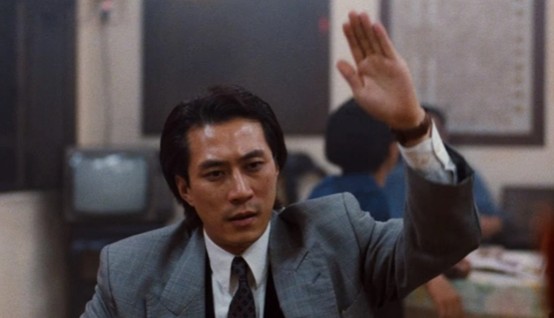
Hong Kong movie star Lee Do‑yu, 58, best known for his role as Hung Hing Society adviser Chen Yao in the hit franchise Young and Dangerous, has died following an accident on 4 April.
Tin Kai Man, actor and spokesperson for the Federation of Hong Kong Filmmakers, confirmed his passing, with reports from Sina indicating that Lee fell and hit the back of his head while drunk, suffering a fractured skull and a brain hemorrhage that required surgery but proved fatal.
Fellow actor Frankie Chi‑Hung Ng said he was deeply saddened by the loss, noting that Lee had recently attended the opening of his restaurant to show his support.
Lee graduated from TVB’s actor training class in 1976, entered the film industry in the 1980s, and went on to appear in more than 30 films, becoming a familiar face in Hong Kong cinema.
After TVB’s decline and the industry’s shifting landscape, he stepped away in the early 2000s to focus on business, with his last on‑screen role in My Wife is a Gambler Maestro in 2008. In 2022, he still appeared publicly at the launch of a film and entertainment production company in China, underscoring his enduring connection to the industry even after his official retirement.
News Source: https://e.vnexpress.net/news/life/celebrities/hong-kong-actor-lee-do-yu-dies-aged-58-5059225.html
(9) Controversy Erupts Over Chinese AI Actors in Upcoming Short Drama

(Photo Credit: SIXTH TONE)
A Shanghai‑based short‑drama studio, Youhug Media, has announced that two AI‑generated actors, Qin Lingyue and Lin Xiyan, will star in its upcoming 60‑episode micro‑drama The Qinling Bronze Occult Chronicles, reigniting debate over portrait rights, data use and the future of human performers in China’s booming micro‑drama market.
The AI leads, introduced on Weibo and since launched on Douyin and Xiaohongshu, will time‑travel to China’s Bronze Age in a series of 2–3 minute episodes, with their profiles blending fictional story content and curated “daily life” updates to deepen audience engagement.
Data from the digital‑content firm DataEye show that AI‑led short dramas already account for almost 40 percent of the top 100 animated micro‑dramas, up from under 10 percent a year ago, as the sector’s total market value has reached around 100 billion yuan, nearly double the country’s box‑office revenue.
The project has drawn strong online criticism, with viewers pointing out that the AI characters bear uncanny resemblances to real actors such as Zhai Zilu, Zhao Jinmai and Zhang Zifeng, raising concerns that AI‑driven productions could displace not just stars but also extras, crew, caterers and other behind‑the‑scenes workers.
Some recent AI‑shorts that used faces resembling Xiao Zhan were either removed or adjusted under public pressure, prompting legal experts to warn that even virtual faces can violate China’s Civil Code if they clearly evoke identifiable individuals. Prominent actors like Feng Yuanzheng, chairman of the Beijing People’s Art Theatre, have pushed back, arguing that AI‑generated tears and behaviours lack the lived experience and cultural depth that human performers bring, underscoring the tension between technological efficiency and artistic authenticity in China’s entertainment industry.
News Source: https://www.sixthtone.com/news/1018329
(10) Xun Zhan: Nepal–China cinema partnership needs more dialogue

(Photo Credit: Onlinekhabar)
Chinese professor Xun Zhan, head of the Department of Journalism and Communication at the University of Electronic Science and Technology of China, has arrived in Kathmandu as a jury member of the Nepal International Film Festival and used the opportunity to highlight the potential for Nepal–China collaboration in film and media.
Drawing on her expertise in new media, international communication and intercultural studies, Zhan praised NIFF for its professionalism and inclusive treatment of foreign filmmakers, while emphasising the irreplaceable emotional power of the big‑screen experience in an age of mobile‑screen viewing. She noted that although she is still learning about Nepali cinema, early impressions of its song‑and‑dance energy and cultural vibrancy are positive, and that universal emotional themes, love, separation, death, can help Nepali films connect with international audiences, especially if storytelling and visual language are prioritised over exoticism.
Zhan suggested that joint Nepal–China projects could grow from co‑writing and research, using shared Himalayan and Buddhist cultural motifs such as prayer flags and historical links, then expanding into co‑production that combines locations, talent and experiences from both countries. She encouraged small‑scale exchange programmes through universities and think tanks on themes like wildlife, the Himalayas and AI‑assisted filmmaking, arguing that such dialogues can build the trust needed for larger collaborations.
For both countries, she sees AI and diversified genres, beyond family and romance, as ways to overcome budget constraints and technical barriers, while social media, English subtitles and AI translation can help smaller industries like Nepal’s reach global audiences with stories about mountains, tourism and nature. Zhan concluded that, despite initial hurdles, she is optimistic about the future of Nepal–China media ties and that, for her as a juror, it is compelling story and emotional resonance, rather than pure technical polish, that define a film’s real value.
News Source: https://english.onlinekhabar.com/xun-zhan-nepal-china-cinema.html
(11) Chinese short-drama platform Hongguo Short Drama has removed or penalized 670 improper AI generated content
(Photo Credit: VCG)
Hongguo Short Drama, a ByteDance‑owned Chinese short‑form drama platform, said it removed or penalized 670 short dramas after a targeted review uncovered misuse of AI‑generated materials, as part of a wider inspection of 15,000 works. The company has already taken down 1,718 comic‑inspired short‑drama titles in the first quarter of 2026. It violated its governance standards, and warned that “content compliance” is a strict requirement for creators, with serious or repeat offenders facing takedowns, account bans, cooperation termination, or even legal action.
The platform highlighted four main violation types: unauthorized use of famous cartoon characters, improper AI‑generated brand images and trademarked logos (including two scrapped seasons of a series), near‑identical copying of original game characters, and AI‑generated content that used actors’ likenesses without permission.
The crackdown followed online complaints that AI‑generated short dramas on a short‑form platform had misappropriated the likeness and voice of Chinese actor Yi Yangqianxi (Jackson Yee) without authorization; Hongguo Short Drama removed several implicated titles after the National Business Daily reported the issue, and Yee’s studio confirmed neither he nor his team had approved such productions. Industry analysts say the case reflects growing systemic risks as generative AI slashes production costs and turbocharges AI‑assisted short‑drama output, with AI‑like human short dramas jumping from 7 percent to 38 percent of the top 100 manju list in January and a projected user base of 280 million and market value of about 24 billion yuan ($3.4 billion) in 2026.
The platform frames its actions as part of broader efforts to enforce lawful use and authorization in the AI era, while regulators and industry groups have started calling for rules against AI face‑swapping, voice cloning, and unauthorized image capture, urging a multi‑stakeholder governance model instead of outright bans.
News Source: https://www.globaltimes.cn/page/202604/1358317.shtml
(12) ONE OK ROCK’s Hong Kong gigs axed, after a string of Japanese artists see Chinese concerts cancelled
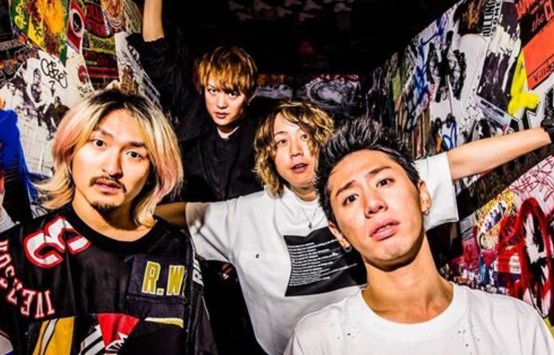
(Photo Credit: ONE OK ROCK)
Two Hong Kong concerts by Japanese rock band ONE OK ROCK have been cancelled due to “unforeseen circumstances,” with organisers saying the decision was beyond the control of either the artist or the production team.
The events, scheduled for 2 and 3 May at Central Harbourfront Event Space, were to be part of the city’s busy events calendar, but the cancellation follows a broader pattern of Japanese artists seeing shows axed across mainland China. Earlier this year, ONE OK ROCK’s Shanghai concert on 9 May was also called off, and in November a string of gigs by artists including Ayumi Hamasaki and Hiromi Uehara were scrapped or halted mid‑soundcheck, reflecting how diplomatic tensions are increasingly spilling into the live‑music sector.
The disruptions coincide with heightened friction between Tokyo and Beijing, sparked in part by Japan’s new prime minister signaling that the country could respond militarily if China attacks Taiwan, which Beijing claims as a renegade province.
In response, Beijing has restricted trade, scaled back flights, and stepped up military activity, while Chinese cultural programming has grown more sensitive to political messaging. The ONE OK ROCK cancellations in Hong Kong also contrast with the city’s official branding as Asia’s “Events Capital” and “World’s Meeting Place,” illustrating the vulnerability of large‑scale entertainment plans to regional geopolitics and the delicate balance between promoting Hong Kong as a global hub and navigating the political sensitivities of its hinterland.
News Source: https://hongkongfp.com/2026/04/09/one-ok-rocks-hong-kong-gigs-axed-after-a-string-of-japanese-artists-see-chinese-concerts-cancelled/