China Media and Entertainment Weekly News Bulletin – ISSUE 96 Week of 13 April 2026
(1) China’s K-pop worries: The reasons why a ban on Korean entertainment has lasted a decade
K-pop supergroup BTS has launched its 20th anniversary world tour without any dates in China. The omission highlights the ongoing unofficial Chinese ban on most South Korean entertainment, which has been in place since 2016.
(2) “Project Hail Mary” China Box Office: Set To Beat “Barbie”’s $35M+ Lifetime In Its 4th Weekend
“Project Hail Mary” continues to dominate the China box office, maintaining strong momentum in its fourth weekend. The Ryan Gosling sci-fi adventure is on track to surpass “Barbie”’s box office revenue in China this weekend.
(3) China Issues Draft Regulations on AI Copyright Infringement in short dramas
China has released draft regulations to combat AI copyright infringement, particularly the unauthorised use of likenesses and voices in short dramas. The rules aim to protect actors, influencers and ordinary citizens from AI-generated content that steals their identity.
(4) Controversial Hong Kong documentary pulled from Italian film festival
Award-winning Hong Kong documentary To My Nineteen-Year-Old Self has been withdrawn from Italy’s Far East Film Festival following a dispute among stakeholders. The film’s distributor cited “recent developments” and said it would protect its legal rights.
(5) China curbs live stream tipping with new rules to protect minors
China’s internet regulator has introduced new rules for live-stream tipping, banning children under eight from the practice and introducing a tiered consent system for older minors. The measures aim to curb manipulative inducements and irrational spending.
(6) Chinese micro drama apps power global expansion of new mass culture
Chinese micro dramas are expanding rapidly overseas through dedicated apps, offering short, fast-paced stories that appeal to global audiences. This platform-driven model marks a new phase in China’s cultural export, moving beyond traditional content distribution.
(7) The blind spot in Australia’s approach to Chinese social media platforms
Australia’s new social media age restrictions have highlighted an inconsistency in how regulators treat Chinese platforms. While WeChat and TikTok face heavy scrutiny, several other major Chinese apps were absent or ambiguously listed, revealing gaps in understanding non-Western digital platforms.
(8) Beijing film festival opens with record submissions
The 16th Beijing International Film Festival opened on Thursday, attracting top figures from the global film industry. A record 1,826 feature films from 139 countries and regions were submitted for the Tiantan Award, the festival’s highest honor.
(9) How Hong Kong-set series “The Season” depicts the dark side of the city’s high society
Hong Kong-set revenge thriller miniseries The Season is set to launch in June. The six-episode English-language drama explores dark undercurrents in the city’s high-society boating scene and features an international cast led by East Asian actors.
(10) Taiwan’s Entertainment tax cut gets initial nod
Taiwan’s Legislative Yuan Finance Committee has approved amendments to the Amusement Tax Act that would abolish the tax on films, cultural activities and competitive sporting events, while retaining it only for dance halls and golf courses.
(11) Veteran Hong Kong actor Kong To dies aged 89
Veteran Hong Kong actor Kong To passed away on April 15 at the age of 89 from cardiovascular disease. He was best known for his long television career and recent acclaimed film role in Suk Suk.
(12) Streep, Hathaway dazzle at “The Devil Wears Prada 2” movie gala in Shanghai
Meryl Streep and Anne Hathaway reunited in Shanghai for a glamorous gala promoting The Devil Wears Prada 2. The sequel, set two decades later, explores the fashion magazine world’s struggle in the digital age.
(1) China’s K-pop worries: The reasons why a ban on Korean entertainment has lasted a decade
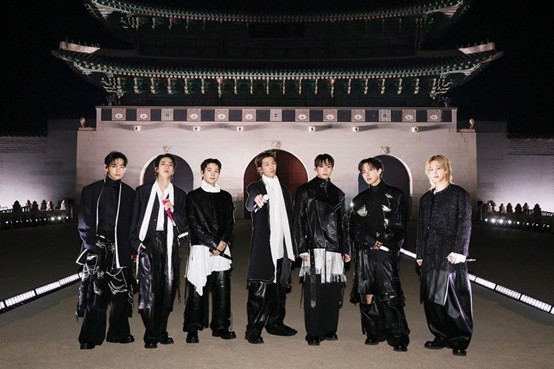
(Photo Credit: Reuters)
BTS kicks off its 12-month world tour after over three years of hiatus, but China is missing from the tour dates despite its huge fan base. Since 2016, China has blocked most South Korean entertainment over a U.S. anti-missile system which was deployed in South Korea to counter North Korea. China, over national security concerns, has hit back with trade curbs, including banning K-dramas, movies, and K-pop concerts.
The ban has lasted longer than usual due to worries about K-pop’s massive popularity heavily influencing the Chinese youth. Nevertheless, this ban is not entirely total. For example, non-Korean K-pop members are still welcome to perform in China. In addition, pop-up stores still find their way into China’s malls selling k-pop merch. K-pop artists still find opportunities to host concerts in China’s special autonomous regions, such as Hong Kong and Macau.
Amidst the ban, Chinese fans continue to travel abroad to attend concerts. One fan, Tian Xin, said she frequently flies to Seoul for performances and appreciates the availability of nearby destinations such as Taiwan. Back in South Korea, South Korean President Lee Jae Myung has indicated that he hopes to improve Sino-Korean relations with Xi Jinping. Ironically, China continues to deny that any formal ban on South Korean entertainment exists.
For the South Korean entertainment industry, the response to this ban is a strategic shift away from reliance on the China market. Major K-pop companies such as HYBE have shifted to cater their promotion to Japan and North America instead. Even so, demand from Chinese fans remains strong, and many continue to hope that leading acts such as BTS will eventually be able to perform again in mainland China.
News Source: https://apnews.com/article/china-korea-kpop-entertainment-ban-bts-thaad-61f517d9ca5c468ca5b9bceeb60d5b21
(2) “Project Hail Mary” China Box Office: Set To Beat “Barbie”’s $35M+ Lifetime In Its 4th Weekend

(Photo Credit: Koimoi)
“Project Hail Mary” continued to generate solid box-office revenue in China in its fourth weekend, although its takings were lower than the previous Saturday..
According to box office analyst Luiz Fernando, the sci-fi adventure collected USD 1.4 million on its fourth Saturday from 32,000 screenings. Although it is marking a 36.4% drop from the previous Saturday, its cumulative total in China now stands at USD 32.4 million after 23 days. It is still drawing substantial revenue at a relatively late stage in its theatrical run.
Pre-sales for Sunday are tracking at USD220,000, with the film expected to earn between USD 3 million and USD 3.5 million over the three-day weekend. If achieved, this would push its China total past USD 35 million, allowing it to surpass the box office revenue of “Barbie” (USD 35.2 million) in less than a month in theatrical release.
Globally, the Ryan Gosling starrer is also performing impressively. It added USD 6.8 million on its fourth Friday in North America (down 34.1%), bringing its total domestic box office to USD 238.8 million. International earnings stand at USD 203.9 million, for a worldwide cumulative of USD 442.8 million. The film is expected to cross the USD 500 million global mark this weekend.
Released on March 20, “Project Hail Mary” has established itself as one of the strongest sci-fi releases of the year, even surpassing the domestic haul of Christopher Nolan’s “Interstellar” in North America.
(3) China Issues Draft Regulations on AI Copyright Infringement in short dramas

(Photo Credit: VCG)
China’s Cyberspace Administration has released draft “Administrative Measures for Digital Virtual Human Information Services” to address growing concerns over AI-generated short dramas that use people’s likenesses without permission.
The draft, released on April 3 and open for public comment until May 6, requires companies to obtain explicit consent from individuals whose images or voices they wish to use. For minors, consent must come from parents or guardians. If consent is withdrawn, companies must delete the related personal data. The rules also ban caricatures, disparagement, or any actions that harm a person’s portrait or reputation rights.
Industry insiders note that AI videos can be produced from just a few photos at a fraction of the cost and time of traditional filming. Top actors typically charge 15,000 to 30,000 yuan per day, while an entire AI short drama can cost only a few thousand yuan and be completed in under five days.
Recent cases highlight the issue. Short drama app Hongguo removed hundreds of videos in early 2026 after discovering they used stolen AI likenesses. Influencer “Baicai” revealed his image from public New Year’s photos was used without consent in the popular drama “Peach Blossom Hairpin,” which gained over 41 million views before being taken down.
News Source: https://www.sixthtone.com/news/1018405
(4) Controversial Hong Kong documentary pulled from Italian film festival
(Photo Credit: Golden Scene)
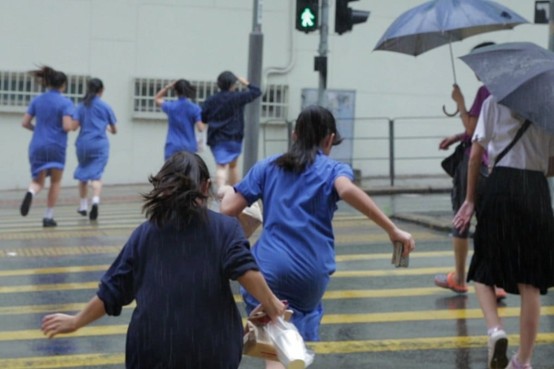
Golden Scene, the distributor of the acclaimed Hong Kong documentary To My Nineteen-Year-Old Self, announced on Sunday that the film will not screen at the Far East Film Festival in Udine, Italy.
The documentary had been listed in the festival’s “out of competition” section just 10 days earlier. Golden Scene expressed deep regret over the withdrawal and said it reserves all legal rights to protect its reputation and interests.
Co-directed by Mabel Cheung Yuen-ting, the film follows six students from Ying Wa Girls’ School over a decade between 2011 and 2021, documenting their personal growth during a turbulent period. It was originally produced as part of the school’s alumni fundraising campaign to rebuild its Mid-Levels campus and enjoyed a brief theatrical release in February 2023.
The film was pulled from cinemas shortly after release when one of the featured students, Ah Ling, publicly stated she had not consented to the screening. Despite the controversy, it won Best Picture at the 41st Hong Kong Film Awards in 2023.
The dispute resurfaced this month when the documentary was announced for the Italian festival. Ah Ling reiterated her objection to ”the film being screened in any form”, while Ying Wa Girls’ School, the film’s owner, stated it had not authorised the film’s participation at the film festival and would not permit screenings without the consent of the main cast.
(5) China curbs live stream tipping with new rules to protect minors
(Photo Credit: Xinhua)
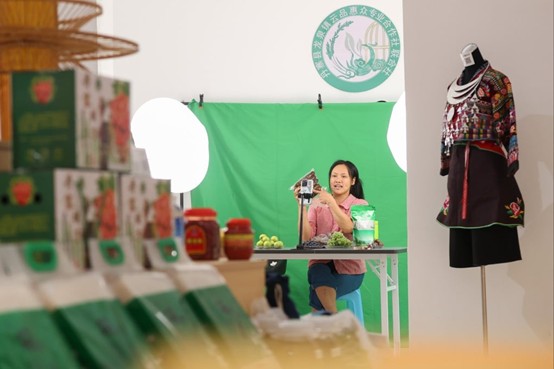
China’s Cyberspace Administration has tightened regulations on live-stream tipping to protect minors and reduce manipulative practices in the booming industry.
The new rules, announced on Monday, ban all children under eight from tipping content creators. For users aged eight to 16, platforms must obtain consent from guardians before allowing tipping. Those above the age of 16 must provide one of either the guardian’s consent or the child’s proof of income.
This represents a relaxation from the 2022 rule, which imposed a total ban on all minors tipping. The updated measures also require platforms to clearly disclose tipping rules, set daily and per-transaction limits, and prompt users to establish spending caps during their first transaction.
Platforms must now regulate rankings and interactions, avoid disclosing users’ tipping statistics without consent, and stop relying solely on tipping volume to promote streamers or rank users. They are also prohibited from using cashback schemes, self-tipping, or granting special privileges to high spenders.
Violating accounts will face extended suspensions of tipping privileges, with restoration possible only three months after any disciplinary period ends.
News Source: https://www.scmp.com/tech/policy/article/3349912/china-curbs-live-stream-tipping-new-rules-protect-minors?pgtype=live
(6) Chinese micro drama apps power global expansion of new mass culture

(Photo credit: Liu Xiangya/GT)
Chinese micro dramas have achieved notable success in overseas markets thanks to their short, punchy format and vertical-screen aesthetics. In Q1 2025 alone, Chinese micro-drama apps recorded more than 270 million global downloads. In 2025, the top 50 overseas vertical-drama platforms generated over US$2.05 billion in estimated in-app purchase revenue. Behind this wave of popularity is a distinctive platform-led strategy that uses dedicated apps as the main vehicle for global expansion.
Unlike traditional film and television exports, Chinese micro drama platforms are not simply distributing individual works. Instead, they are building comprehensive ecosystems that combine content distribution, user interaction, creator support and monetization. Each episode typically lasts 60 to 90 seconds, with full series running 50 to 90 episodes, a lightweight format perfectly suited to fragmented viewing on mobile devices.
Several PRC apps, including ReelShort, DramaBox, DramaWave, which are dedicated to overseas markets, have successfully entered app stores in multiple countries and regions. They started with key breakthroughs in Southeast Asia and North America before expanding into Europe, Latin America and beyond. In Southeast Asia, cultural proximity helped rapid adoption, while in North America, differentiated storytelling has attracted young paying users despite strong local competition.
By operating independent apps, Chinese micro drama platforms gain full control over distribution, user data and monetization. This independence allows faster adaptation to different cultural contexts, regulations and user preferences, demonstrating strong resilience in complex global markets.
News Source: https://www.globaltimes.cn/page/202604/1358825.shtml
(7) The blind spot in Australia’s approach to Chinese social media platforms
(Photo Credit: Noel Celis/AFP via Getty Images)
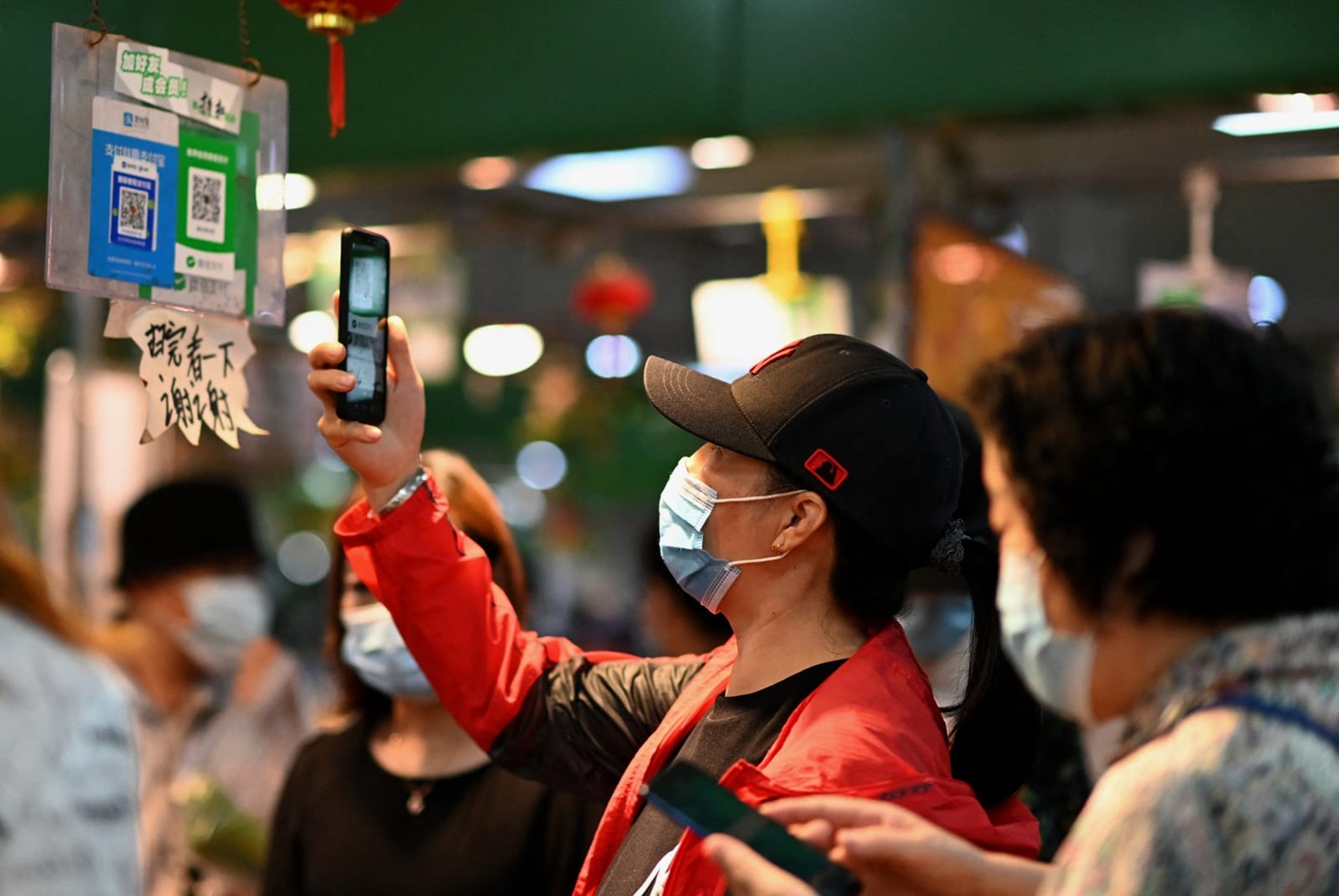
Australia’s social media age restrictions, launched in December 2025, identify a range of major global platforms but appears either to omit or to address only ambiguously some significant Chinese apps, including WeChat and Xiaohongshu.
This is notable given Australia’s broader concerns about Chinese technology platforms, including restrictions on the use of certain apps on government devices because of national security and foreign interference risks, as well as concerns about Xiaohongshu’s role in the spread of election-related misinformation. This inconsistency reflects a wider blind spot in the way Australian policymakers, media outlets and researchers approach non-Western digital platforms.
The public and academics’ attention focused heavily on TikTok and WeChat, largely because of broader U.S.-China strategic tensions. Other Chinese services like DiDi, Trip.com, or HungryPanda get little notice despite heavy global use in payments, rides, and food delivery. The lack of attention is even more pronounced in relation to non-Western platforms outside China, including services such as LINE and KakaoTalk. Current policy approaches remain too heavily shaped by Western and monolingual assumptions, leading either to the securitisation of such apps or to their neglect.
More fundamentally, this regulatory and analytical gap can be attributed to a decline in Australia’s broader Asia-related knowledge base. In an increasingly multipolar digital environment, Australia needs a more systematic understanding of regional and non-Western platforms, not only to assess security risks, but also to better understand questions of influence, trust, belonging and economic integration. On this view, improving knowledge of such platforms is relevant not only for digital governance, but also for social cohesion, geopolitics and trade.
News Source: https://www.lowyinstitute.org/the-interpreter/blind-spot-australia-s-approach-chinese-platforms
(8) Beijing film festival opens with record submissions
(Photo Credit: Beijing International Film Festival)
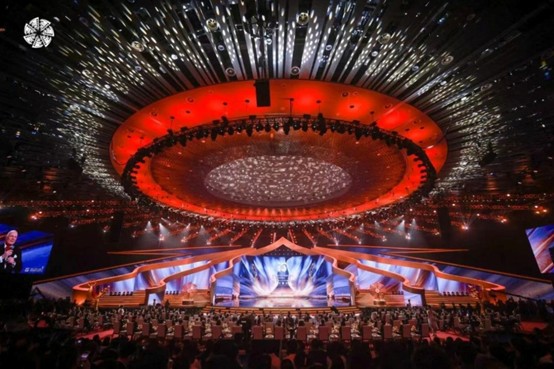
The 16th Beijing International Film Festival opened on Thursday in northern Beijing’s Huairou district, drawing a large gathering of domestic and international film industry leaders.
A record 1,826 feature-length films from 139 countries and regions were submitted for the festival’s highest honor, the Tiantan Award. International submissions accounted for 1,607 entries, or 88% of the total. Both the number of and the proportion of international submissions mark a historic high, reflecting the festival’s growing recognition within the global film industry.
Artificial intelligence emerged as a major theme. The festival introduced a dedicated AIGC (AI-generated content) section last year, becoming the first international film festival to recognize AI generated films. Filmmaker Stanley Tong, jury president of the AIGC Unit, noted that AI tools are advancing rapidly, with some visual effects now reaching 8K resolution. However, he emphasized that compelling characters, strong storytelling, and human performances remain essential.
Scriptwriter Yu Baimei, another AIGC juror, said AI could enable more people to tell their own stories. He pointed to the imbalance between the relatively small number of Chinese films released each year and the country’s 1.4 billion population, adding that AI could make filmmaking more accessible to the population.
News Source: https://www.chinadaily.com.cn/a/202604/16/WS69e0fc4ea310d6866eb43de5.html
(9) How Hong Kong-set series “The Season” depicts the dark side of the city’s high society

(Photo Credit: PCCW Media)
The Season, a six-episode English-language revenge thriller produced by PCCW Media, is scheduled to debut in June. Shot in Hong Kong between April and June 2025, the miniseries delves into the glamorous yet shadowy world of the city’s elite boating scene.
The cast is led by East Asian actors, including Karena Lam Ka-yan as the calculating socialite Fiona Hext, Jessie Mei Li as the mysterious newcomer Cola Pierce, and Chris Pang as new-money elite Andrew Fung. British actor Toby Stephens plays Fiona’s husband, Christopher.
Lam, usually known for sweeter roles, described her character as a “falcon” who fiercely protects her empire, always calculating and hiding her true motives. Li’s Cola arrives with a hidden agenda and a double life, while Pang’s character brings flashy new-money energy to the story.
Showrunner Yalun Tu, who lived in Hong Kong for over a decade, chose the city as the setting because of its unique juxtapositions: old and new, tradition and modernity, glamour on the surface with intense competition underneath.
The series is co-produced with SK Global, the company behind Crazy Rich Asians. It will premiere on Hulu and Disney+ in the US, Now TV in Hong Kong, and Viu in other parts of Asia, the Middle East and South Africa.
(10) Taiwan’s Entertainment tax cut gets initial nod
(Photo Credit: CNA)
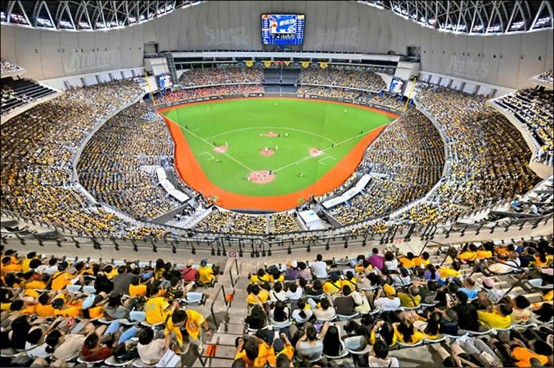
Taiwan’s Legislative Yuan Finance Committee on Wednesday approved proposed amendments to the Amusement Tax Act that would significantly reduce the tax burden on the entertainment and cultural sectors.
The amendments would abolish the amusement tax on films, cultural activities, drama, musical performances, skill competitions and contests. The tax would be retained only for dance halls and golf courses, with maximum rates set at 50% and 20% respectively. Local governments would be authorised to suspend the tax depending on circumstances.
The Executive Yuan had originally proposed halving the maximum tax rate for most categories and allowing local governments to suspend taxes on arts, culture and sporting events. The Finance Committee went further by completely removing the tax for the first four categories in the current law.
The committee also capped the maximum tax rate at 25% for any other venues or activities designated by the Ministry of Finance as providing amusement. Local governments would be allowed to suspend collection of the tax based on industrial development, policy needs and fiscal conditions, subject to approval by the local representative body and reporting to the Ministry of Finance.
The changes are expected to benefit the film industry, live performances, sports events and cultural activities across Taiwan.
News Source: https://www.taipeitimes.com/News/taiwan/archives/2026/04/15/2003855661
(11) Veteran Hong Kong actor Kong To dies aged 89

(Photo Credit: AsiaOne)
Veteran Hong Kong actor Kong To died on April 15 at the age of 89 from cardiovascular disease. He was unmarried.
Born into a family of Cantonese opera singers, Kong began performing with his uncle in mainland China at age 19. He transitioned to television in 1964 and worked for several Hong Kong broadcasters throughout his career.
He was best remembered for memorable roles in popular drama series such as Fatherland (1980), The Legendary Fok (1981) and My Date with a Vampire (1998).
After suffering hearing problems in 2010, Kong kept a low profile until 2019, when he appeared in the critically acclaimed film Suk Suk.
His longtime friend and fellow actress Siu Yam Yam paid tribute on Instagram, recalling that their friendship began when they played love interests in a 1970s RTV drama. She described Kong as very filial and remembered how he and his mother would attend her performances. The two later became mahjong partners.
The news was confirmed by actor Tin Kai Man, spokesperson for the Federation of Hong Kong Filmmakers.
News Source: https://www.asiaone.com/entertainment/veteran-hong-kong-actor-kong-to-dies-89
(12) Streep, Hathaway dazzle at “The Devil Wears Prada 2” movie gala in Shanghai
(Photo Credit: 20th Century Studios)
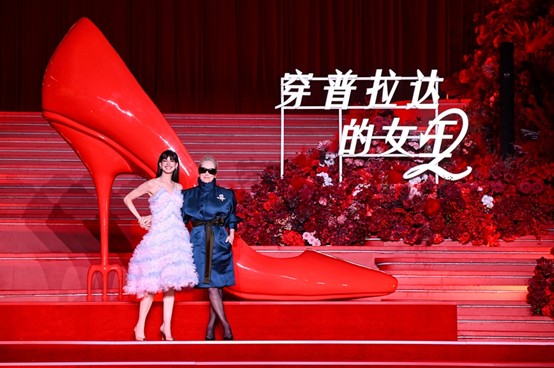
Meryl Streep and Anne Hathaway turned heads at a star-studded gala in Shanghai to promote the highly anticipated sequel The Devil Wears Prada 2.
Directed once again by David Frankel, the film reunites Streep as the formidable Miranda Priestly, Hathaway as Andy Sachs, Stanley Tucci and Emily Blunt. A 20-minute clip screened for media and guests showed both Miranda and Andy facing career crises as traditional media declines. Andy, now a laid-off veteran journalist, returns to Runway magazine and teams up with Miranda against Emily Charlton (Blunt), who has become a powerful luxury-group executive controlling the magazine’s funding.
Hathaway reflected that she was very young when making the first film and is now happy with the choices she has made, much like her character. Streep noted that the original movie gave hope to many young people starting their careers and said the sequel celebrates creativity, self-expression and the joy of being human.
The event featured an immersive “front row at the fashion show” experience with a giant red high-heel installation on the red carpet. Chinese stars including Eileen Gu, Zhou Ye, Ju Xiaowen and He Cong also walked the carpet.
The Devil Wears Prada 2 will open in China on April 30, with an IMAX version exclusive to the Chinese market.
News Source: http://www.china.org.cn/2026-04/12/content_118432513.shtml