Asia Art Weekly News Bulletin – ISSUE 64 Week of 11 May 2026
(1) “Hong Kong showcases cultural rise at Venice Biennale” says Rosanna Law
Hong Kong has reinforced its growing cultural profile at the Venice Biennale with a dedicated exhibition showcasing works by Kingsley Ng and Angel Hui. Framed as a city where art shapes daily life, the show highlights Hong Kong’s East meets West character and aims to draw global audiences to its wider cultural scene.
(2) Affordable Art Fair Hong Kong 2026: 106 exhibitors, Cantopop stars and London vibes
Affordable Art Fair Hong Kong returns with accessible prices, more exhibitors and a strong focus on new collectors. Beyond buying art, visitors can explore installations, photography, emerging talent and hands on workshops, making the fair both a marketplace and a wider cultural experience for the city’s art audience.
(3) How hotels become living galleries, in Hong Kong and beyond
Hotels across Greater China are using art to create stronger cultural identities and more memorable stays. Through exhibitions, commissions and public programmes, properties in Hong Kong, Beijing and Macau are turning luxury hospitality into a platform for creative exchange, while also supporting artists and enriching the cultural life of their cities.
(4) The National Museum of Modern and Contemporary Art exhibition revisits Korea-Japan artistic ties since 1945
A new exhibition at South Korea’s MMCA explores 80 years of artistic exchange between Korea and Japan, showing how artists navigated colonial history, conflict and division while building dialogue across borders. Featuring 200 works, it presents art as a means of reflection, empathy and connection despite long standing political and historical tensions.
(1) “Hong Kong showcases cultural rise at Venice Biennale” says Rosanna Law
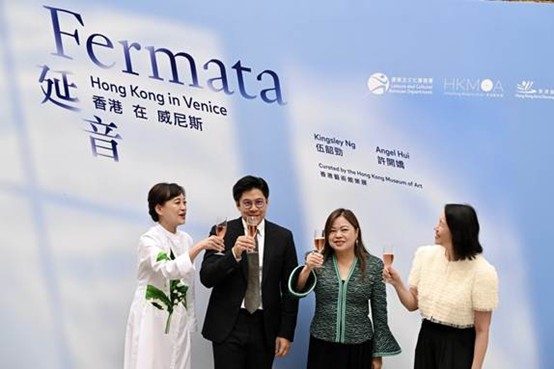
(Photo Credit: The Standard)
Hong Kong has solidified its status as a vibrant international cultural hub with the opening of its dedicated exhibition at the 61st Venice Biennale. During the ceremony in Venice Italy, Rosanna Law Shuk-pui, the Secretary for Culture, Sports and Tourism, emphasized that Hong Kong is no longer just a financial center but a premier destination where art is woven into daily life. This shift has been propelled by the West Kowloon Cultural District and major events like Art Basel. Curated for the first time by the Hong Kong Museum of Art, the “Fermata: Hong Kong in Venice” exhibition explores the poetic rhythms of urban existence through the works of local artists Kingsley Ng and Angel Hui.
The exhibition features five installations that draw parallels between the “cities of water,” Hong Kong and Venice. Kingsley Ng’s multimedia works, such as Laundry Nocturne, use projections and field recordings to transform everyday sights like hanging laundry into meditative experiences. Meanwhile, Angel Hui blends traditional Chinese craftsmanship with contemporary life by featuring Suzhou embroidery on plastic bags and handcrafted iron window grilles. These unique “East-meets-West” aesthetics have captivated international visitors, many of whom noted the sharp contrast to European styles. Government officials believe this flagship overseas program is vital for sharing the Hong Kong narrative and attracting global art enthusiasts to the city’s year-round cultural festivities.
News Source: https://www.thestandard.com.hk/news/article/331645/Hong-Kong-showcases-cultural-rise-at-Venice-Biennale-Rosanna-Law-says
(2) Affordable Art Fair Hong Kong 2026: 106 exhibitors, Cantopop stars and London vibes
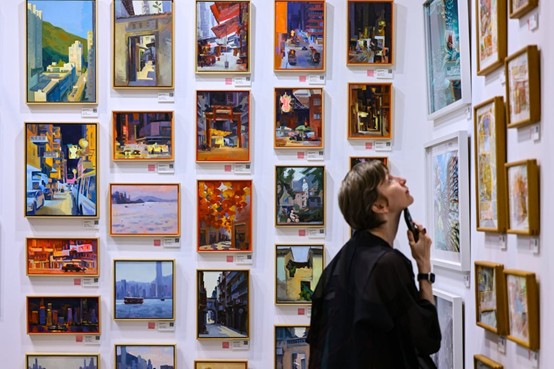
(Photo Credit:Nora Tam)
Affordable Art Fair Hong Kong is set to revive the city’s cultural momentum after April’s lull, offering collectors another chance to buy rather than just browse. With the theme “See Art. Love Art. Own Art.”, the fair presents art as something approachable, with prices starting at HK$1,000 and 106 exhibitors taking part, more than last year.
The event arrives as lower priced works continue to anchor much of the global art trade. Pieces priced below US$50,000 remain the most active segment of the market, and galleries increasingly see fairs as a valuable way to reach new buyers, build trust and encourage in person sales. That makes the event especially attractive for first time collectors, who may find Hong Kong’s art scene exciting but also difficult to navigate.
This year’s fair also aims to offer more than sales. Large scale and interactive installations will appear in the Special Projects section, including works by Stephy Tang, Wesley Wong and Yihan Zhang. Other highlights include a British themed showcase organised by the British consulate, a photography section focused on Hong Kong, and a Young Talent programme featuring emerging artists exploring identity, memory and change.
Visitors can also take part in workshops covering printmaking, sketching and Chinese ink painting. The mix of accessible pricing, varied programming and hands on activities positions the fair as both a marketplace and a broader cultural experience.
(3) How hotels become living galleries, in Hong Kong and beyond
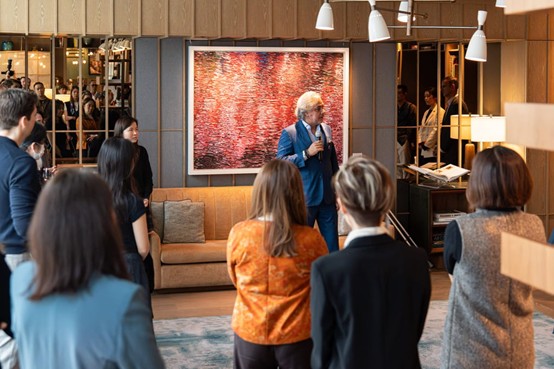
(Photo Credit: Handout)
Luxury hotels across Greater China are increasingly using art to shape identity, deepen guest experience and strengthen their cities’ cultural life. Rather than treating artworks as decoration, they are building programmes that turn hotels into spaces for discovery, conversation and public engagement.
At The Hari Hong Kong, this approach includes exhibitions that support emerging local talent and talks that connect guests and residents with leading creative figures. Recent programmes have highlighted young artists and explored cultural themes such as the fading legacy of Hong Kong’s neon signs. The aim is to make art part of everyday life and to create stays that feel memorable and rooted in the city.
The Four Seasons Hotel Beijing takes a different but equally deliberate path, using a collection inspired by the Tang dynasty to bring together tradition and modernity. Works throughout the hotel reinterpret classical Chinese themes through contemporary forms, while future plans include rotating exhibitions and commissions from emerging artists across Greater China.
In Macau, MGM has expanded its long running arts strategy with dedicated exhibition venues and large scale cultural collaborations. Its programming draws on Macau’s heritage and presents art as part of a broader lifestyle experience, with an emphasis on innovation and lasting emotional connection.
Together, these hotels reflect a wider shift in luxury hospitality. Art is no longer an added flourish. It has become a way to create cultural character, support artists and leave guests with a stronger sense of place.
News Source: https://www.scmp.com/special-reports/article/3350890/how-hotels-become-living-galleries-hong-kong-and-beyond?pgtype=live
(4) The National Museum of Modern and Contemporary Art exhibition revisits Korea-Japan artistic ties since 1945
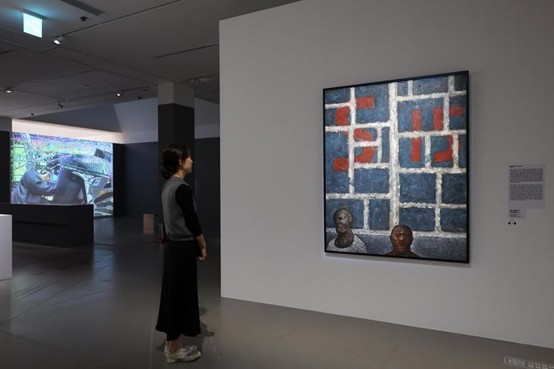
(Photo Credit: Newsis / The Korea Times)
A major exhibition at South Korea’s National Museum of Modern and Contemporary Art is examining 80 years of artistic exchange between Korea and Japan, using art to explore a relationship shaped by familiarity, tension and a difficult shared history. Running at the museum’s Gwacheon branch through 27 September 2026, the show marks 60 years since the two countries normalized diplomatic ties in 1965.
Titled “Art between Korea and Japan since 1945,” the exhibition brings together about 200 works by 43 artists and traces connections formed in the shadow of colonial rule, war, national division and political strain. Organised in five sections, it follows these exchanges from the postwar period to the present, showing how artists continued to build dialogue across borders even when relations between the two societies remained uneasy.
The exhibition begins with Zainichi Korean artists in Japan, whose work reflected both personal hardship and broader geopolitical pressures. It also features archival materials, some shown publicly for the first time, alongside major works by Nam June Paik, whose collaborations with Japanese avant garde artists highlighted the power of technology and experimentation to cross national boundaries.
Later sections examine formal and informal exchanges after diplomatic normalization, the shifting cultural mood of the 1990s, and more recent works shaped by shared trauma and historical memory. Together, the exhibition presents art as a way to confront painful history while opening space for empathy, reflection and future connection.