Asia Art Weekly News Bulletin – ISSUE 67 Week of 1 June 2026
(1) Centre Pompidou Hanwha opens in Seoul amid art-washing criticism
Centre Pompidou Hanwha opened in Seoul facing sharp criticism that the museum helps burnish Hanwha Group’s image despite its links to Israeli defence firms. Supporters call it a serious cultural investment, but opponents say the controversy exposes deeper concerns about corporate influence, ethics and the politics of museum funding.
(2) Art builds bridges as Chinese artist Yi Ming honored at China-US dialogue
Chinese artist Yi Ming’s award in Beijing highlighted the role of culture in China US relations, as officials and scholars stressed that art can build understanding where politics often falls short. The ceremony framed creative exchange as a practical bridge between societies, not just a symbolic gesture.
(3) FOOMA JAPAN 2026 opens with global fanfare as 5th FOOMA Award crowns Fujiwara Techno-Art grand prize winner
FOOMA JAPAN 2026 opened in Tokyo with support from senior Japanese officials and international industry figures, underscoring its importance to food manufacturing. The event quickly turned to innovation, with Fujiwara Techno Art taking the top award for a fermentation machine that helps producers test processes before scaling up.
(4) Hiroshi Sugimoto brings five decades of art to Singapore
Singapore Art Museum’s Hiroshi Sugimoto exhibition shows how an artist of radical restraint turned photography into a meditation on time, illusion and impermanence. With images reduced to horizon, light and repetition, Form Is Emptiness argues that what looks empty may in fact hold the deepest meaning.
(1) Centre Pompidou Hanwha opens in Seoul amid art-washing criticism
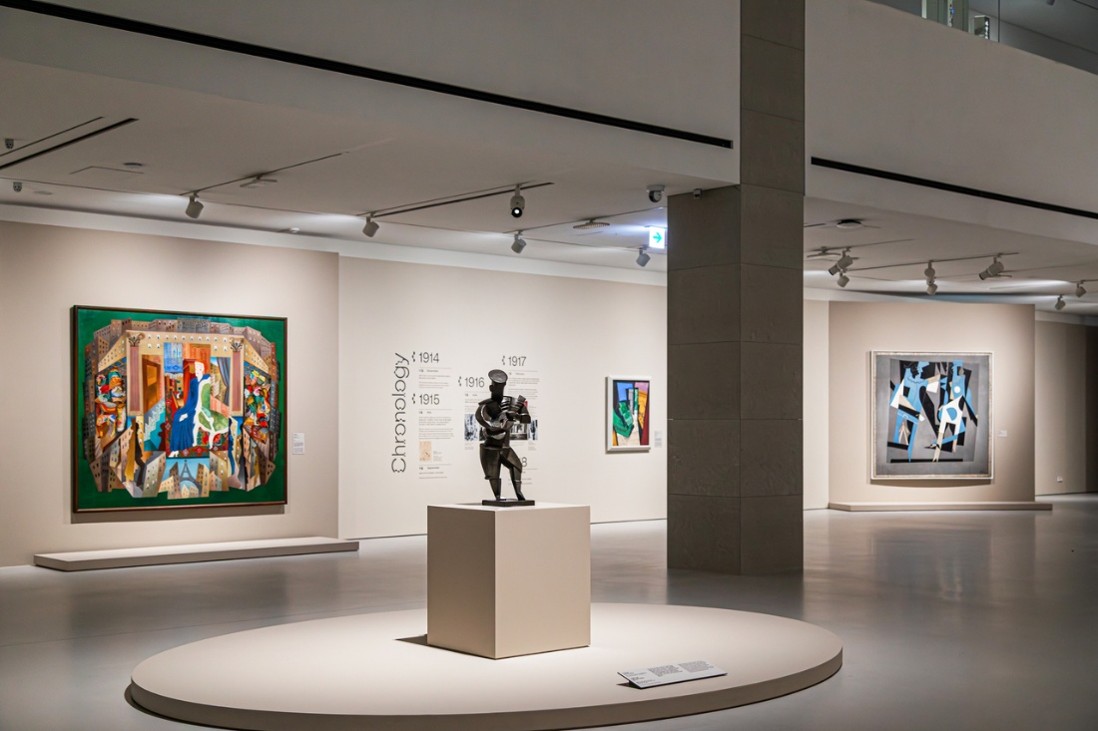
(Photo Credit: Centre Pompidou Hanwha)
Centre Pompidou Hanwha opened in Seoul on 4 June 2026 amid intensifying criticism that the project serves as a form of art washing for Hanwha Group, whose ties to Israeli defence companies have drawn opposition from civic groups and arts organizations at home and abroad.
The backlash grew after protesters demonstrated during the museum’s press opening on 19 May 2026, focusing attention on Hanwha’s expanding presence in the cultural sector through the Hanwha Foundation of Culture, which was established in 2007. Critics say the issue is not only the museum itself, but the broader question of whether corporate funding can be separated from a sponsor’s business interests.
The controversy has gained traction online, where some users argue the partnership reflects a troubling effort to polish the conglomerate’s image, while others describe that claim as exaggerated and defend the museum as a legitimate cultural investment. More than 100 French artists have also signed an open letter calling for a boycott, saying the Seoul institution masks profits linked to armed conflict and compromises the moral standing of cultural institutions.
Hanwha Foundation has rejected the allegations, saying it is a nonprofit dedicated to supporting artists and international exchange. Even so, debate has continued around the museum’s high profile debut, including its inaugural Cubism exhibition and its KRW 28,000 adult admission fee.
News Source: https://www.koreaherald.com/article/10763764
(2) Art builds bridges as Chinese artist Yi Ming honored at China-US dialogue
(Photo Credit: China Daily)
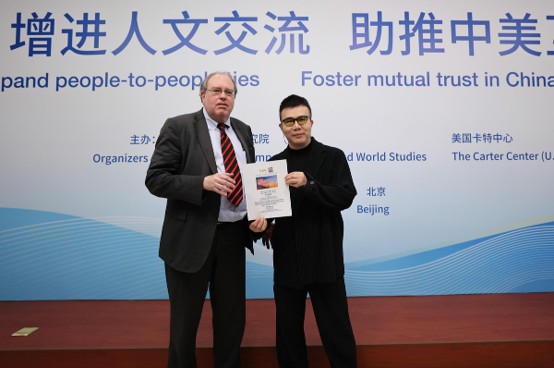
Contemporary Chinese artist Yi Ming was honored in Beijing on 27 May 2026 with an Artistic Achievement Award during the China US High Level Think Tank Dialogue, an event focused on strengthening people to people ties and building trust between the two countries.
The ceremony took place as Beijing and Washington search for ways to stabilize relations beyond official diplomacy. Organized by the Academy of Contemporary China and World Studies and The Carter Center, the gathering underscored the view that cultural exchange remains one of the most effective channels for dialogue when political communication becomes difficult.
Yi was recognized for developing an artistic language that blends traditional Chinese aesthetics with contemporary expression. His work draws on ink painting, calligraphic sensibilities and Chinese philosophy, while also engaging with abstraction and modern visual forms that can reach international audiences. Through exhibitions and exchanges in Europe, he has sought to present Chinese cultural traditions in ways that remain accessible across borders.
Speakers at the event said art can foster empathy, curiosity and mutual respect in ways policy debates often cannot. Yi echoed that idea, describing art as a universal language that can cross cultural and linguistic barriers. After the ceremony, he donated one of his works to the China International Communications Group, reinforcing the event’s broader emphasis on lasting cultural exchange.
News Source: https://www.chinadaily.com.cn/a/202606/02/WS6a1df73fa310d6866eb4bdd8.html
(3) FOOMA JAPAN 2026 opens with global fanfare as 5th FOOMA Award crowns Fujiwara Techno-Art grand prize winner
(Photo Credit: Fooma Japan)
FOOMA JAPAN 2026 opened at Tokyo Big Sight on June 2 with a ribbon cutting ceremony that drew senior officials from Japan’s major government ministries, the Tokyo Metropolitan Government and overseas industry representatives. The four day exhibition runs through June 5 and reflects the event’s central role in Japan’s food processing and machinery sector.
Officials from the ministries overseeing industry, agriculture and health attended the opening, underlining the exhibition’s policy and commercial significance. International participation was led by Adis Lukman of the Indonesian Beverage and Food Manufacturers Federation, a sign of FOOMA’s growing influence across the Asia Pacific.
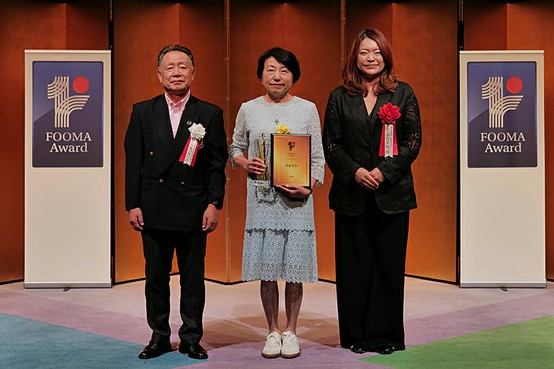
Following the ceremony, organizers presented the 5th FOOMA Award, which recognizes advances in food machinery that can improve productivity, ease labor shortages and support new food development. This year, 27 products were reviewed by an independent expert panel, with final judging carried out on the exhibition floor.
The Grand Prize went to Fujiwara Techno Art for its laboratory scale solid state fermenter, a compact machine that reproduces the air flow and temperature controls of full scale industrial systems. Judges said the technology could help manufacturers test fermentation processes more reliably before large investments. A rare Special Prize was awarded to Shinagawa Machinery Works for its steam type egg roasting machine, honouring its long term contribution to the industry.
(4) Hiroshi Sugimoto brings five decades of art to Singapore
(Photo Credit: SAM / The Business Times 50)
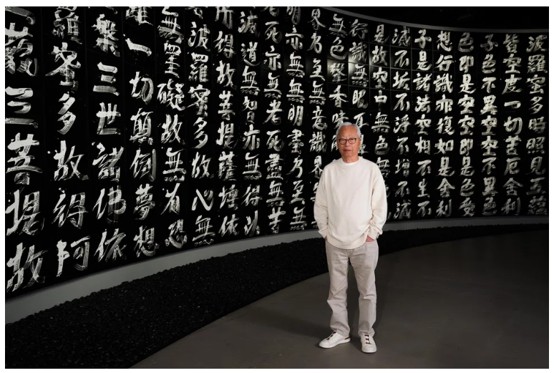
At first glance, Hiroshi Sugimoto’s work seems to offer very little. A horizon dividing sea and sky, a candle burning down, a cinema screen washed in white, a Buddha image repeated until it dissolves into haze. But Hiroshi Sugimoto: Form Is Emptiness at Singapore Art Museum reveals how these austere images carry remarkable philosophical weight.
Bringing together more than 60 works across 11 series, along with 14 fossils from the artist’s personal collection, the exhibition is less a conventional retrospective than a meditation on disappearance, perception and time. Its title, drawn from the Buddhist Heart Sutra, points to a central idea in Sugimoto’s practice: that nothing is as fixed or solid as it appears.
That idea runs through his best known series. In Seascapes, begun in 1980, sea and sky merge into elemental views that feel untouched by history. In Theaters, long exposures turn entire films into glowing white screens, collapsing narrative into pure light. Other series challenge the reliability of vision more directly. Dioramas transforms museum displays into convincing scenes of life, while Portraits makes wax figures appear uncannily human.
Over more than five decades, Sugimoto has helped redefine photography as a medium for philosophical inquiry as much as visual record.
News Source: https://www.businesstimes.com.sg/lifestyle/arts-design/hiroshi-sugimoto-brings-five-decades-art-singapore