Asia Art Weekly News Bulletin – ISSUE 68 Week of 8 June 2026
(1) How 3 artists redefined the traditional Chinese art of ink at Art Basel Hong Kong
At Art Basel Hong Kong, contemporary artists are reshaping the tradition of ink art. Through calligraphy, abstraction and cross-cultural influences, Xu Jiong, Chao Chung-hsiang and Tang Chang show how ink can speak to identity, memory and language while moving far beyond its classical roots.
(2) Satsuma Yaki Art Museum introduced in Da Nang’s world heritage site
A museum dedicated to Satsuma Yaki has opened in Hoi An, adding a new layer to the city’s long cultural ties with Japan. With 1,500 ceramic pieces on display, the venue highlights a celebrated Japanese art form and strengthens Hoi An’s role as a meeting point for shared heritage.
(3) German, Russian visual artists explore Korea through art and everyday experience
Sweet Bread, a group exhibition in Seoul, brings together international artists reflecting on life in Korea as outsiders. Through postcards, photography and technology based installations, the show captures how everyday encounters, urban imagery and cultural adjustment can alter perception while opening space for warmth, curiosity and connection.
(4) The Modern and Contemporary Art Festival 2026 Highlights the Philippines’ Growing Role in Asia’s Art Scene
The Modern and Contemporary Art Festival will return to Taguig in July with its largest edition yet, featuring more than 50 local and international galleries. As the festival expands into digital art, artisan showcases and community programmes, it is strengthening its position as one of the Philippines’ most important platforms for contemporary art and creative exchange.
(1) How 3 artists redefined the traditional Chinese art of ink at Art Basel Hong Kong
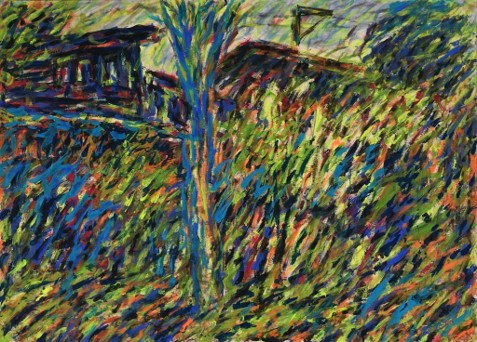
(Photo Credit: Handout)
Ink has anchor-points in the bedrock of traditional Chinese art, remaining deeply tied to literati philosophy and classical landscapes for centuries. However, the contemporary showcases at Art Basel reveal a profound conceptual evolution. Modern artists are breaking away from literal mountainscapes and classical Tang poetry, treating ink instead as a flexible tool to challenge language boundaries and fuse cross-cultural sensibilities.
Among the prominent works featured is the Spring Monster series by Hangzhou-born artist Xu Jiong, presented by Each Modern gallery. Rigorously trained in classical calligraphy, Xu infuses Western contemporary abstraction into his dynamic brushwork, prioritizing the raw release of energy and movement over a direct textual narrative. Similarly, the late Sino-Thai artist Tang Chang, represented by Galerie du Monde, pushed boundaries by creating abstract, large-scale ink strokes. While his 1970s paintings mimic traditional single-character Chinese calligraphy at a distance, a closer look reveals completely deconstructed, non-linguistic forms that challenge cultural and structural boundaries.
This aesthetic dialogue extends to hybrid media explorations at the Alisan Fine Arts booth, which highlights the legacy of Chinese ink artist Chao Chung-hsiang. A student of the legendary Lin Fengmian, Chao spent decades in Europe and New York absorbing Abstract Expressionism and Pop Art. His showcased pieces, such as Golden Garden, juxtapose traditional ink washes with bold, neon acrylic geometric shapes. Rather than merely preserving historical lineage, these diverse artists are using the ancient medium to map out their own unique biographic identities within the modern global art dialogue.
(2) Satsuma Yaki Art Museum introduced in Da Nang’s world heritage site
(Photo Credit: Photos courtesy of Mori Takero)
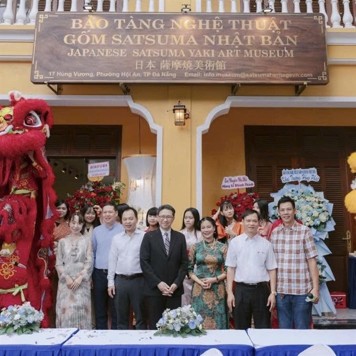
A new museum devoted to Satsuma Yaki, the traditional Japanese ceramic art form that emerged in present day Kagoshima during and after the Edo period, has opened in Hoi An. Located on Hung Vuong Street within the Japanese Bridge and Japanese Culture Gallery complex, the Japanese Satsuma Yaki Art Museum introduces visitors to one of Japan’s best-known ceramic traditions.
The museum displays 1,500 pieces, ranging from Meiji era crackle glazed ware from Kagoshima to Imperial Satsuma works. Among its standout exhibits is a Kyoto tea set decorated with scenes of the four seasons and finished with embossed brocade painting techniques and 24 carat gold gilding.
Japanese Consul General in Da Nang Mori Takero said the collection reflects the strong appeal of Satsuma Yaki among Vietnamese collectors and described Hoi An as a fitting location because of its long history as a trading link between Vietnam and Japan.
The venue becomes Hoi An’s second Japanese cultural space, following the Japanese Culture Gallery that opened in 2017. That gallery presents activities and displays centred on calligraphy, tea ceremony traditions, origami and yukata.
The opening also builds on long standing cultural ties between the two countries. Hoi An has hosted the annual Hoi An Japan Cultural Exchange Festival for more than two decades, while the Japanese Bridge remains a symbol of friendship shaped by centuries of trade, migration and shared heritage.
News Source: https://vietnamnet.vn/en/satsuma-yaki-art-museum-introduced-in-da-nang-s-world-heritage-site-2524573.html
(3) German, Russian visual artists explore Korea through art and everyday experience
(Photo Credit: Courtesy of Bereket Alemayehu)
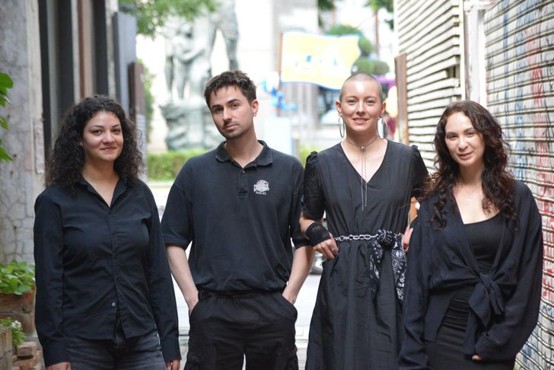
A group of international artists living and studying in South Korea have come together for Sweet Bread, a group exhibition at KOTE in Seoul’s Insa-dong district that turns the experience of being foreign in Korea into a shared visual language.
Created by four art students from Germany and a photographer from Russia, the show reflects how daily life in Korea can reshape perception, habit and attention. Their works revisit familiar urban details, digital imagery and social encounters, presenting them as appealing and comforting, but at times excessive or disorienting.
Among the featured works is Laila Kamil’s Seoul Postcard Compositor, a program that generates one of a kind postcards using photographs of subway stations, signs, labels and stickers collected across the city. Instead of highlighting tourist landmarks, her project preserves the overlooked scenery of everyday Seoul.
Niklas Kleemann’s Argus Disc examines a different form of adjustment. Inspired by the way Seoul’s skyline can obscure the sun, his installation uses software and microcontrollers to track the sun’s position in real time through a series of moving eyes.
The exhibition also addresses the emotional side of adaptation. Ava Korte’s photographic and sculptural work explores the tension between sweetness and discomfort, drawing on her changing understanding of how she is seen in Korea. Together with photographer Amalia Ekshenger, she also found that chance encounters with curious locals often became moments of warmth, participation and unexpected connection.
(4) The Modern and Contemporary Art Festival 2026 Highlights the Philippines’ Growing Role in Asia’s Art Scene
(Photo Credit: Tatler)
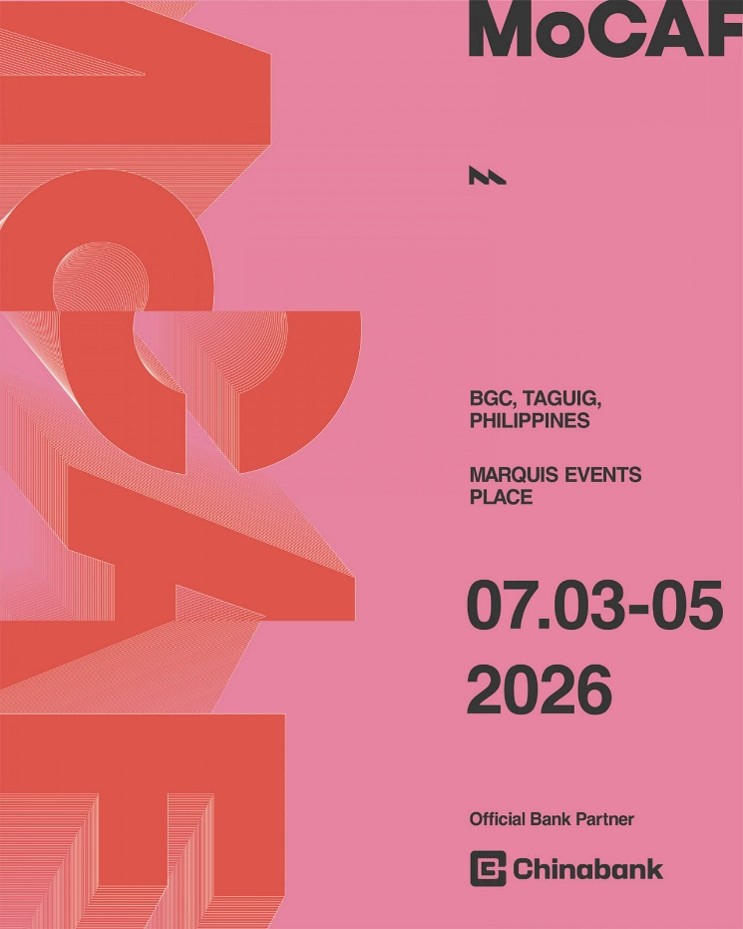
The Modern and Contemporary Art Festival (“MoCAF”), will return to Taguig from 3 to 5 July 2026 for its fifth edition, with organisers promising its biggest and most ambitious programme yet. Set at Marquis Events Place in Bonifacio Global City, the 2026 event will bring together more than 50 local and international galleries, marking a sharp expansion from the 19 galleries that joined its inaugural edition in 2022.
Over five years, MoCAF has developed into one of the Philippines’ key platforms for contemporary art, broadening its reach to include not only visual artists but also artisans, illustrators and other creatives. Festival director Coleen Wong said this year’s edition would feature a stronger mix of returning participants and first-time exhibitors.
The line-up includes established local galleries such as Ysobel Art Gallery, Fundacion Sansó, Art Underground and White Walls Gallery, alongside international names from Japan, Singapore and Spain. Special presentations will feature artists including Jerika See, Sheila Go and Jappy Agoncillo, while Chinabank returns as a major partner with a large-scale exhibition of 100 works by 100 artists.
This year’s programme also expands MoCAF’s support for younger and emerging talent through MoCAF Discoveries and wider exhibition spaces under MoCAF XTN. Digital artists and illustrators will join for the first time, while workshops, artisan showcases, food stalls and charity initiatives aim to reinforce the festival’s broader role as both an art fair and a community event.
News Source: https://www.tatlerasia.com/lifestyle/arts/mocaf-2026-expands-for-its-fifth-edition