Asia Fashion Weekly News Bulletin – ISSUE 64 Week of 11 May 2026
(1) New Wave Fashion Awards showcase Shanghai’s rising creative talent
Shanghai’s New Wave Fashion Awards highlights a new generation of designers by asking them to build immersive brand spaces across the city. The competition reflects fashion’s growing focus on storytelling, emotional connection and cultural identity, while reinforcing Shanghai’s role as a rising centre for Chinese design and creative talent.
(2) Xinhua Silk Road: Profound world cultural heritage empowers Quanzhou’s transformation into “fashion capital”
Quanzhou is rebranding itself as a fashion city by pairing its World Heritage status with a powerful manufacturing base. With strong tourism growth and thousands of textile and footwear firms, the city is using culture, industry and trade to build a more distinctive identity in China’s evolving fashion landscape.
(3) Jean-Loup Rebours pushes Chinese fashion talent into the Paris spotlight
Jean-Loup Rebours is promoting Chinese designers in Paris to challenge stereotypes about Chinese creativity. He highlights labels including Ruohan and Her Senses for their craftsmanship, originality and strong identity, arguing that a new generation of brands is reshaping perceptions of “Made in China” while strengthening China’s place in global fashion.
(4) Chinese fast fashion rivals Shein and Temu clash over copyright
Shein and Temu’s legal fight also reflects the fierce pressures reshaping fast fashion. At the centre is control over design, product images and trend driven clothing, as Chinese online retailers compete to produce styles faster, cheaper and at greater scale, while raising fresh questions about originality, copying and fashion’s creative value.
(1) New Wave Fashion Awards showcase Shanghai’s rising creative talent
(Photo Credit: China Daily)
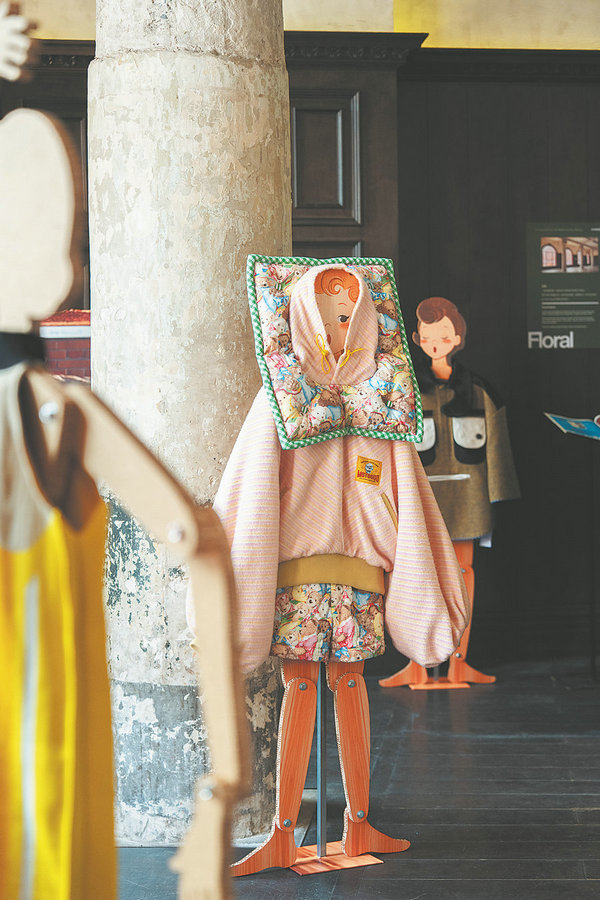
Shanghai’s New Wave Fashion Awards has turned the city into a live stage for creative direction, asking designers to build immersive brand worlds rather than simply present clothes. The format reflects a wider shift in fashion, where storytelling, identity and emotional connection now matter as much as the garments themselves.
Among the standout installations is Feng Chen Wang’s Fengji Old Teahouse, set inside a historic Shanghai building once tied to tea exports to Britain. Created for her brand’s 10th anniversary, the space links Fujian tea, Shanghai heritage and her own East to West design journey. It also marks her return to China for her first independent runway show in the country.
Other finalists brought equally distinct ideas. Motoguo’s installation transformed fear into a playful and surreal experience, earning praise for its emotional depth and clear brand universe. Projects by 8ON8, Angus Chiang, MAYALI and Chen Sifan also showed how fashion can be expressed through space, memory and everyday life rather than the runway alone.
Judges said the competition captures what creative direction means today: shaping a full cultural vision, building public connection and translating ideas into lived experiences. That broader ambition aligns with Shanghai’s growing role as a hub for Chinese fashion, where local designers are gaining confidence, commercial support and a stronger voice in the global conversation.
News Source: https://www.chinadaily.com.cn/a/202605/08/WS69fd159fa310d6866eb47607.html
(2) Xinhua Silk Road: Profound world cultural heritage empowers Quanzhou’s transformation into “fashion capital”
(Photo Credit: Xinhua / Bastille Post Global)
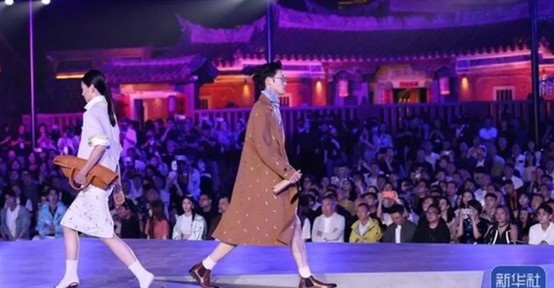
Quanzhou is repositioning itself from a traditional manufacturing centre to a rising fashion city by linking its industrial strength with its rich cultural heritage. Known historically as one of the greatest ports on the Maritime Silk Road, the city gained renewed global attention when its Song and Yuan era trading legacy was recognised as a UNESCO World Heritage site in 2021. Today, that past is being used to support a new development strategy that combines heritage, tourism and fashion.
The city’s 22 heritage sites, including landmarks such as Kaiyuan Temple and Luoyang Bridge, have helped turn Quanzhou into a major cultural tourism destination. In 2025, it recorded 112 million tourist visits, reflecting the growing appeal of its historic identity. Officials have moved to build on this momentum by setting up a dedicated framework to integrate cultural resources with the development of the fashion sector.
That strategy rests on a strong industrial base. Quanzhou is home to about 13,000 textile, garment and footwear companies, with industrial output exceeding 700 billion yuan in 2025. It has also produced some of China’s best known sportswear and apparel brands, including Anta, Xtep, Septwolves, 361 Degrees and Peak.
By combining world heritage status with a vast manufacturing network, Quanzhou is seeking to create a more distinctive and competitive identity. The city’s goal is not only to make products, but to shape trends, attract visitors and strengthen its place in both Chinese and global fashion.
(3) Jean-Loup Rebours pushes Chinese fashion talent into the Paris spotlight
(Photo Credit: F. Julienne / Fashionunited)
Jean-Loup Rebours, director of press and influencer agency Faxion PR based in Paris, is working to challenge the view that China is a market of consumers rather than creators. By helping Chinese brands build a presence in Paris, Rebours argues that the city’s fashion prestige can give them greater credibility, not only internationally but also in their domestic market.
Rebours believes this effort also benefits France. In his view, Paris must stay open to new designers if it wants to maintain its position as a global fashion capital. He says Chinese labels have long faced prejudice, especially the idea that “Made in China” signals poor quality or imitation rather than originality and craftsmanship.
At Faxion PR, Rebours helps international brands connect with journalists, stylists and media networks in Paris. He mainly discovers labels through Shanghai Fashion Week, Chinese social platform Xiaohongshu and industry referrals. His focus is on designers who showcase the depth of Chinese craft traditions, from textiles and dyes to silverwork and ceramics.
Among the brands he highlights, Ruohan stands out for its unique silhouette, sophisticated use of materials and strong artistic and philosophical depth. He praises Her Senses for creating refined, high quality lingerie in China that is sensual without feeling vulgar, and notes that the brand has already attracted international celebrity supporters.
Rebours also sees fashion in cities such as Shanghai and Chengdu as more open and experimental than in France. Even so, he does not believe Shanghai is ready to overtake Paris as the world’s fashion capital
News Source: https://fashionunited.uk/news/people/jean-loup-rebours-of-faxion-pr-there-is-a-real-need-to-re-evaluate-chinese-fashion-in-france/2026051387969
(4) Chinese fast fashion rivals Shein and Temu clash over copyright

(Photo Credit: The Times of India)
Shein and Temu, two of China’s biggest online fashion retail rivals, are locked in a widening legal battle that highlights growing tensions inside the country’s fast fashion and e commerce sector. Shein has accused Temu in London’s High Court of carrying out copyright infringement on an industrial scale, alleging that Temu used thousands of Shein product photos to advertise copycat versions of its own clothing and gain an unfair competitive edge.
Temu has rejected the claims and responded with a counterclaim, arguing that Shein is using the lawsuit to suppress competition rather than simply defend its intellectual property. Temu is also reportedly seeking damages after it was forced to remove thousands of listings following an injunction obtained by Shein.
The dispute adds to an already bitter rivalry between the two platforms, both of which have disrupted global retail and challenged established players such as Zara, H&M and Amazon with ultra low prices and fast moving supply chains. Previous legal complaints between the companies have also included allegations over supplier exclusivity, deceptive business practices and trade secret theft, showing that the fight extends well beyond product images alone.
The latest case underscores how competition between China’s digital shopping giants is increasingly being fought not just through pricing and scale, but also through courts, copyright claims and control over suppliers.