Asia Sports Weekly News Bulletin – ISSUE 64 Week of 11 May 2026
(1) China and FIFA Face Off Over World Cup Broadcast Rights
FIFA and China Media Group remain at odds over a record World Cup broadcasting fee, leaving the tournament’s coverage in China uncertain. China Media Group says the price is too high given weak local demand and poor match timings, while online criticism has grown over what many see as FIFA’s inconsistent pricing.
(2) Lionel Messi tipped for Hong Kong return, football expert rejects Fifa overseas games idea
Lionel Messi is expected to return to Hong Kong and mainland China for future commercial or sporting projects, with sports marketer Michael Rocha-Keys saying better planning and time could help repair the fallout from Inter Miami’s controversial 2024 visit, while Argentina’s brand appeal in Asia remains strong.
(3) Hong Kong’s largest Hyrox event attracts fitness fanatics from more than 60 countries
More than 19,500 athletes from over 60 countries and regions joined Hong Kong’s biggest Hyrox yet, highlighting the event’s rapid growth. The competition drew elite racers, newcomers and adaptive athletes alike, with strong community spirit, rising international appeal and standout local performances reinforcing the city’s status as a regional fitness hub.
(4) Sun Yingsha leads China to 7th consecutive women’s table tennis world team title
China defended the women’s world team table tennis title in London by beating Japan in a tense final, extending its dominance with a seventh straight crown. Sun Yingsha led the fightback with two crucial wins, as the latest chapter in one of the sport’s fiercest rivalries ended in another Chinese triumph.
(1) China and FIFA Face Off Over World Cup Broadcast Rights
(Photo Credit: SIXTHTONE)
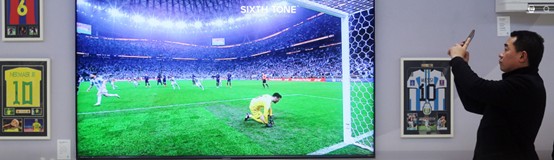
FIFA and China Media Group (“CMG”) remain locked in negotiations over the broadcasting rights for the 2026 World Cup, raising uncertainty over whether the tournament will be shown in China. At the centre of the dispute is a rights package reportedly priced far above CMG’s budget, making it the most expensive World Cup television deal ever proposed for the Chinese market.
FIFA is said to have initially sought between $250 million and $300 million from CMG, before later lowering the figure to around $120 million to $150 million. Even that reduced price remains significantly above what the state broadcaster is believed willing to pay. FIFA has justified the increase by pointing to the expanded 2026 tournament, which will feature 104 matches over 39 days across the United States, Canada and Mexico.
CMG, however, argues that the fee does not reflect conditions in China. Interest has been weakened by the national team’s failure to qualify for six straight World Cups, while many matches are expected to be played during morning hours in Beijing, limiting prime time audiences and advertising returns.
The dispute has also triggered criticism online, where many Chinese users have accused FIFA of applying inconsistent pricing standards across markets. FIFA has said negotiations with China are continuing but has declined to discuss details publicly. With the tournament now little more than a month away, the absence of a final deal has cast doubt over access to one of football’s biggest events in one of its largest audiences.
News Source: https://www.sixthtone.com/news/1018514
(2) Lionel Messi tipped for Hong Kong return, football expert rejects Fifa overseas games idea
(Photo Credit: Elson Li / SCMP)
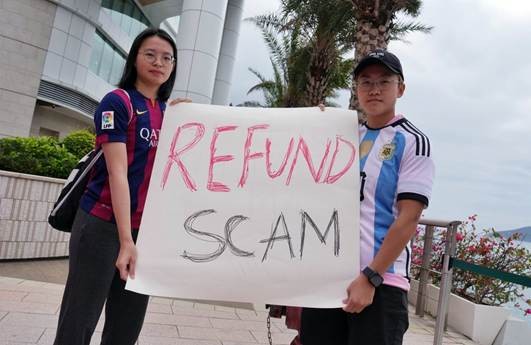
Lionel Messi is likely to revisit Hong Kong and mainland China as part of future sporting or commercial ventures, according to Michael Rocha-Keys, a leading sports marketing entrepreneur. Speaking on the fallout of the 2024 Inter Miami match, where Messi’s absence from the pitch sparked widespread public resentment, Rocha-Keys noted that the situation was “sad and controversial,” but believed that time and more meticulous organization could heal the rift. He emphasized that the Argentine star still loves the region and expects him to return as part of his ongoing legacy with the world champion Argentina national team.
Rocha-Keys, whose agency EMW Global bridges the gap between Eastern brands and Western sports icons, has been instrumental in securing nearly a dozen high-end partnerships for the Argentine Football Association (AFA) across Asia. He highlighted that despite the “no-show” incident, the intellectual property of the Argentina squad remains a powerful draw for brands looking to expand internationally, especially as Messi approaches his final World Cup appearance this summer.
Beyond individual player appearances, Rocha-Keys voiced caution regarding the broader trend of “internationalizing” domestic league matches. Drawing from his extensive experience working with FIFA and UEFA, he argued that while staging games overseas is commercially lucrative, the increasing physical demands and travel strain on players could ultimately damage the quality of the sport. He stressed that protecting player welfare must remain a priority over financial expansion to ensure the game’s long-term sustainability.
(3) Hong Kong’s largest Hyrox event attracts fitness fanatics from more than 60 countries
(Photo Credit: SCMP)
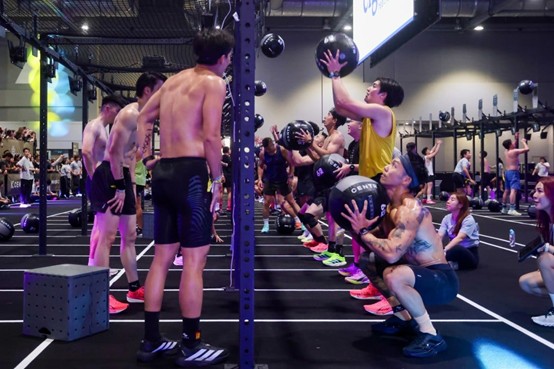
Athletes from more than 60 countries and regions gathered in Hong Kong for the fifth edition of Hyrox, as the city hosted its biggest event yet at AsiaWorld Expo. Organisers expected more than 19,500 competitors over three days, more than doubling last year’s turnout and underlining the race’s rapid growth in the city.
The fitness competition, which combines eight workout stations with eight 1km runs, drew a mix of elite racers, first timers and returning enthusiasts. Among the standouts was Hong Kong trainer Clayton Law Chun yip, who entered eight races across the weekend after already completing 37 Hyrox events elsewhere. He began with a time of 59 minutes and 43 seconds in the men’s doubles and said the home crowd gave him extra energy.
The event also highlighted Hyrox’s broad appeal. South Korean competitors based in Hong Kong praised the improved race setup, while returning participants from the Philippines and Taiwan pointed to the city’s convenience, familiar atmosphere and strong community spirit. Many said the challenge of testing personal limits kept them coming back.
The adaptive category also continued to expand after being introduced last year. More than 20 athletes took part, including overseas competitors and local participants supported by non governmental groups. Among them was Wuhan athlete Ding Jianyi, who does not have a right arm and completed his first adaptive solo race in 1 hour, 15 minutes and 32 seconds.
News Source: https://www.scmp.com/sport/hong-kong/article/3352941/hong-kongs-largest-hyrox-event-attracts-fitness-fanatics-more-60-countries
(4) Sun Yingsha leads China to 7th consecutive women’s table tennis world team title
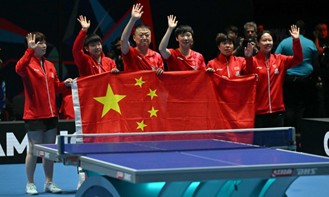
(Photo Credit: VCG / Global Times)
China retained the women’s team title at the World Team Table Tennis Championships Finals in London, overcoming Japan in a tense final to keep hold of the Corbillon Cup. The victory extended China’s remarkable dominance in the event, giving the team a seventh straight crown and a 24th women’s world team championship overall.
Japan struck first when 17 year old Miwa Harimoto defeated Wang Manyu in five games, briefly putting China on the back foot. World number one Sun Yingsha quickly restored balance by beating Hina Hayata in straight games, but Japan regained the lead after Honoka Hashimoto overcame China’s Kuai Man 3 to 1. With the tie slipping away, Sun once again delivered under pressure, sweeping Harimoto in dominant fashion to make it 2 to 2 and force a deciding fifth match.
In that final contest, Wang responded strongly, defeating Hayata in straight games to seal the title for China. The result underlined both the team’s depth and Sun’s central role, with the world number one winning both of her matches to keep China in contention.
The final also reinforced the scale of the China Japan rivalry in women’s table tennis. The two sides have now met in six consecutive world team finals since 2012, making it one of the sport’s defining matchups. This year’s championship carried extra historical weight as the centenary edition of the tournament, held in London, where the event was first staged in 1926.
News Source: https://www.globaltimes.cn/page/202605/1360674.shtml