Asia Fashion Weekly News Bulletin – ISSUE 68 Week of 8 June 2026
(1) Japanese Fashion Enterprise TOKYO BASE Opens New Stores at Hong Kong’s 1881 Heritage
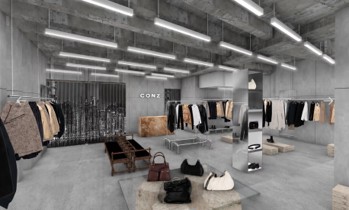
Japanese modern fashion brand “KEY TIMEZ” celebrates the opening of its first Hong Kong store at the 1881 Heritage, adjacent to its sister brand CONZ’s first overseas store. The brands work to bringing elegant contemporary fashion alongside a roster of edgy, indie Japanese labels, injecting Hong Kong’s shopping scene with a new take on Japanese select shop culture.
(2) New Chinese Law Clouds Fashion Supply Transparency, Poses Hurdles for European Monitoring
China’s new supply chain security rules are setting up a clash with EU transparency demands, putting fashion companies in a difficult position. As Brussels requires deeper due diligence and traceability, Beijing is tightening control over supplier information, leaving brands to navigate growing legal risk across global sourcing operations.
(3) How costume designer Vera Chow decoded the fashion of Hong Kong’s elite
In The Season, fashion is not decoration but narrative force. Costume designer Vera Chow uses clothing to decode Hong Kong high society, showing how power, heritage and identity are expressed through style, while the series offers a rarer and more insider portrayal of the city’s wealthy elite.
(4) China’s global e-commerce push stalls as Iran war lifts costs, dampens demand
Rising air freight costs, new trade barriers and weaker consumer demand are squeezing China’s ultra cheap fashion export model. As shipping costs climb and regulation tightens in the US and Europe, platforms such as Shein and Temu face slower growth and mounting pressure to rethink how they move goods overseas.
(1) Japanese Fashion Enterprise TOKYO BASE Opens New Stores at Hong Kong’s 1881 Heritage
(Photo Credit: HYPEBEAST)
Japanese retail enterprise TOKYO BASE CO., LTD. has expanded its international footprint with the simultaneous grand opening of its premium boutique concepts, CONZ and KEY TIMEZ, in Hong Kong. The launch marks the official entry of CONZ into the local market, while KEY TIMEZ celebrates its first physical retail destination outside of Japan.
Right beside Key Timez, sister brand, Japanese brand CONZ occupies another plot of the historic 19th century Victorian landmark, which once served as the Hong Kong Marine Police Headquarters and is one of Hong Kong’s most prestigious and highly sought-after retail spots today. To mark its territorial debut, CONZ is showcasing its signature eclectic style philosophy by releasing a highly exclusive apparel collaboration with celebrated Japanese fashion label NEEDLES. The collaborative capsule features bespoke versions of structural track pants and leisure shorts alongside a curated roster of independent streetwear designers.
Circling around the notion of ‘Now, Mix, Soul’, CONZ uniquely proposes the Japanese mixed style, blending elegance with street style men and womenswear, creating a favourful ensemble of styles. The delicate curation of articles promoted at the store aims to empower those who appreciates fashion, all while straying away from the traditional fashion’s strict and formal undertones.
On the other hand, KEY TIMEZ operates on the ethos focused on delivering “valuable moments existing between the everyday and the special”, a set of elevated wardrobe essentials designed to bridge everyday clothing with functional style. To do so, they have brought a heavy roster of premium men’s and women’s fashion brands such as contemporary brands AND WANDER and NANAMICA, as well as the fashionista collective, BLURHMS.
By launching these distinct retail properties together, the parent enterprise hopes to capture fashion-conscious local consumers and mainland Chinese tourists who are seeking authentic Tokyo subcultures within Hong Kong’s luxury shopping landscape.
News Source: https://hypebeast.com/2026/6/conz-key-timez-stores-hong-kong-1881-heritage-opening-info
(2) New Chinese Law Clouds Fashion Supply Transparency, Poses Hurdles for European Monitoring
(Photo Credit: Modaes)
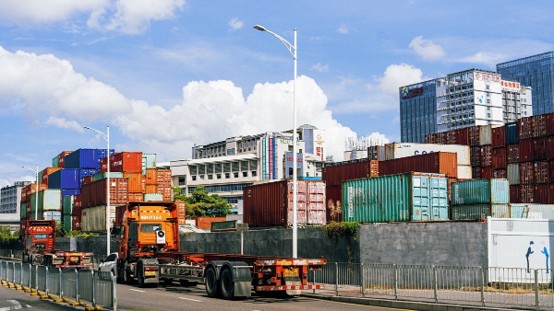
A growing regulatory clash between China and the European Union is creating fresh pressure for fashion companies with supply chains in China. At the centre of the tension is China’s newly approved State Council Decree 834, which treats supply chain information as a matter of strategic security and could restrict how foreign companies collect, audit and transfer supplier related data.
That approach conflicts with the EU’s expanding due diligence regime, which requires companies to improve traceability across their value chains, carry out deeper sustainability checks and gather detailed information from both direct and indirect suppliers. For fashion groups, which often depend on complex sourcing networks, the mismatch presents a serious compliance challenge.
The dispute is not only regulatory but also operational. Brussels is pushing companies towards greater transparency on environmental, social and governance risks, including the prevention of forced labour. Beijing, by contrast, is tightening control over information it considers sensitive within its domestic framework.
Legal and compliance specialists have warned that these overlapping rules could place multinational companies in difficult positions, especially in sectors such as fashion and footwear, where supply chains are broad, layered and highly international.
As a result, brands may need to rethink how they conduct supplier audits, manage internal compliance systems and document sourcing practices. The emerging picture is one of rising legal complexity, with companies caught between Europe’s demands for disclosure and China’s stricter controls over supply chain data.
(3) How costume designer Vera Chow decoded the fashion of Hong Kong’s elite
(Photo Credit: Tatler)
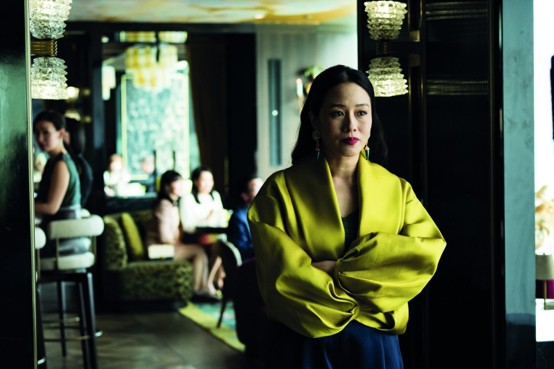
New drama The Season uses fashion as a defining lens to portray Hong Kong high society, with costume designer Vera Chow shaping a world built on status, heritage and unspoken codes. Debuting this month, the six-episode series presents a glossy but tense portrait of the city’s elite, combining luxury, family power and revenge.
Chow, who was born in the United States to Hong Kong parents and raised in the city, says the series avoids the familiar screen clichés that often reduce Hong Kong to either chaos or empty glamour. Instead, it draws on the experience of creators and cast members who understand the city from within, particularly the internationally educated community that exists between expatriate and local identity.
That perspective is expressed most clearly through clothing. Chow uses costume not simply as styling, but as storytelling. For Jessie Mei Li’s character Cola, an American-coded outsider, loose and casual looks gradually give way to sharper, more structured silhouettes as her hidden motives and growing power emerge.
For the powerful Hext family, fashion signals something different. Their wardrobe reflects old money discretion, private craftsmanship and heirloom driven exclusivity rather than obvious labels. Fiona Hext’s sculpted looks, strong shoulders and controlled elegance project authority while hinting at emotional strain beneath the surface.
In The Season, fashion is more than visual detail. It becomes a language of class, identity and survival, revealing the values and anxieties that shape Hong Kong’s upper circles.
News Source: https://www.tatlerasia.com/style/fashion/the-season-vera-chow-hong-kong-high-society-fashion
(4) China’s global e-commerce push stalls as Iran war lifts costs, dampens demand

(Photo Credit: Fashion Network)
The low-cost fashion model built on flying ultra cheap goods from Chinese factories to overseas shoppers is coming under growing strain. After tariff moves by US President Donald Trump and the removal of customs waivers on low value parcels last year, online retailers are now facing another blow from rising logistics costs linked to conflict in the Middle East.
Industry data and executives say higher fuel expenses are pushing up air freight rates, with major carriers adding surcharges that are making low margin sales harder to sustain. Chinese low-cost e commerce exports fell 10.9 per cent in April from a year earlier to US$9.81 billion, marking a fifth straight month of decline.
Sellers are already passing some of that pressure on to consumers. One Shenzhen based Temu merchant said she raised prices by US$2 after shipping costs increased by about US$1 per garment, though sales have so far only dipped slightly.
Analysts say the downturn also suggests the breakneck growth of platforms such as Shein and Temu may be easing. Rather than relying solely on direct air shipments from China, companies are increasingly moving goods in bulk to overseas warehouses for local delivery, a strategy Shein has been expanding in Europe.
The outlook remains difficult. The European Union is set to introduce a €3 fee on low value e commerce parcels from 1 July 2026, while high fuel costs and weaker consumer spending in the US and Europe are likely to keep pressure on the sector.