China Media and Entertainment Weekly News Bulletin – ISSUE 100 Week of 11 May 2026
(1) Tencent Music Entertainment criticizes “AI Chaos” and “Song Laundering” in Chinese Streaming Market
Tencent Music Entertainment (TME) executives have warned of “industry chaos” in China caused by an influx of AI-generated, copyright-infringing content. During the company’s Q1 2026 earnings call, leadership accused competitors of using AI to rapidly fill libraries and lure users. TME is now calling for stricter enforcement to protect the music ecosystem’s long-term value.
(2) Abrupt end to Kai Tak concert tarnishes Hong Kong’s mega-event ambitions
The early end of an Emperor Entertainment concert last week at Kai Tak Stadium has raised questions about whether the venue imposes an unspoken 10:30pm cut-off time. Critics say the lack of clarity risks hurting Hong Kong’s ambitions to become a major events hub, especially if touring artists face strict limits on encores and show length.
(3) Public investors invited into Louis Koo backed stage play through digital tokens
Investors can now fund a new stage play produced by movie star Louis Koo through tradeable digital tokens. This “real-world asset” model allows the public to own small shares of the production via blockchain. The initiative aims to modernize entertainment financing and attract international investment to Hong Kong.
(4) New spy thriller “Black Silk” signals deeper China-Russia film collaboration
Black Silk reflects the growing scale of China Russia film cooperation, as both countries deepen cultural ties through joint productions. Backed by a long-term cooperation plan and following the overseas success of Red Silk, the project highlights cinema’s expanding role in cross border exchange and shared storytelling.
(5) From Westeros to HK: Aidan Gillen joins all-star cast in crime epic “Cold War 1994”
Acclaimed actor Aidan Gillen has made his Asian cinema debut in the prequel Cold War 1994. Known for his role as Littlefinger in Game of Thrones, Gillen portrays a British intelligence operative in the film. He cited his admiration for Hong Kong’s cinematic history and a desire for adventure as his primary motivations.
(6) QQ Music Expands Global Reach With New AI Features and Licensing Deals
Chinese streaming giant QQ Music is launching AI-driven tools and international licensing deals to expand its global reach. By integrating with Tencent’s social ecosystem and improving discovery for Mandopop and K-pop, the platform aims to bridge the gap between Asian artists and US listeners while challenging Western streaming models.
(7) Lin Heung Lau turns dim sum into Hong Kong’s newest party trend
Hong Kong’s century-old Lin Heung Lau is reinventing itself with “dim sum raves,” turning its teahouse into a nightlife venue to attract younger customers. Mixing traditional Cantonese snacks with DJs and tea cocktails, it reflects how old brands are adapting to industry pressures, shifting consumer habits and a difficult post-pandemic dining market.
(8) Film-plus initiatives spur new consumption trends across Chinese cities
China is revitalizing its urban economy through “film-plus” initiatives that transform cinemas into central consumption hubs. By linking ticket sales with retail, dining, and tourism, cities are creating a “ticket stub economy.” This integrated model turns movies into powerful intellectual properties that drive foot traffic and cross-sector growth.
(9) China’s first film music museum opens on Gulangyu Island
China’s first film music museum has opened on Gulangyu in Xiamen, showcasing a century of cinematic sound heritage. Housed in a historic former US consulate, the venue combines archival displays, interactive technology and regular screenings to bring Chinese film music closer to the public and celebrate the island’s musical legacy.
(10) Dennis To’s ‘Ip Man: Kung Fu Legend’ Sells Wide Ahead of Cannes Film Market
Ip Man: Kung Fu Legend has secured widespread international distribution ahead of the Cannes Film Market. Reprising his role as the Wing Chun grandmaster, Dennis To leads the sequel. American film distributor Well Go USA is set to release the martial arts film in North America on July 14. The film features high-profile martial arts talent and seasoned action choreography.
(11) “Melania” and “Rush Hour” Director Brett Ratner returns to China with Trump Delegation to prepare fourth film
Director Brett Ratner’s inclusion in a recent presidential delegation to Beijing has signaled a major revival for U.S.-China film co-productions. By leveraging high-level diplomatic ties to advance Rush Hour 4, the move underscores the entertainment industry’s shift toward direct state-level engagement to secure market access and production resources.
(12) Hollywood taking notes from China’s micro-drama playbook
China’s vertical-screen micro-dramas are rapidly capturing the U.S. market, prompting Hollywood to study and adopt Chinese production strategies. High demand for these short-form series among diverse American audiences has flipped the traditional script, with US industry professionals now looking to China for the next big commercial breakthrough.
(1) Tencent Music Entertainment criticizes “AI Chaos” and “Song Laundering” in Chinese Streaming Market

(Photo Credit: Shutterstock AI)
Tencent Music Entertainment’s Executive Chairman, Cussion Pang, and CEO, Ross Liang, delivered a sharp critique of the Chinese music streaming landscape during their Q1 2026 earnings call this week. They described that the Chinese music market is now plagued by “disorderly price competition” and a surge in unauthorized AI tracks – a practice they referred to as “song-washing” or “song laundering.” TME leadership alleged that some rivals are using AI tools to bypass traditional copyright costs and quickly inflate their catalogues to attract lower-tier, price-sensitive users.
The warnings come as TME faces intensified pressure from competitors such as ByteDance’s Soda Music and NetEase Cloud Music. While TME’s overall revenue grew to RMB 7.90 billion, its membership services revenue saw a slight dip over the past two quarters. CEO Ross Liang specifically attributed to Soda Music’s aggressive growth, which recently surpassed 150 million monthly active users, as a factor. Liang claimed that Soda Music’s growth came from poaching low-cost users who are willing to switch platforms in return for free or ad-supported AI content, so long as it bears the resemblance of “music”. While other music platforms are embracing AI-generated songs, TME reported that it had instead removed over 250,000 policy-violating songs last year to combat risks of “song laundering”.
In contrast to some Western music executives who have downplayed the threat of AI replacement, TME is taking a hard stance against AI by establishing a dedicated rights protection mechanism to safeguard human creators. TME maintains that original human creativity remains its ultimate differentiator in a market increasingly saturated by AI-generated content.
News Source: https://www.musicbusinessworldwide.com/if-you-thought-the-us-music-industry-was-concerned-about-ai-you-should-hear-what-theyre-saying-in-china/
(2) Abrupt end to Kai Tak concert tarnishes Hong Kong’s mega-event ambitions

(Photo Credit: SCMP)
Hong Kong has long marketed itself as a vibrant destination for world-class entertainment. However, the recent “Emperor Entertainment Group Family Concert” at the Kai Tak Stadium has sparked a debate regarding the city’s readiness for major events. Despite a star-studded lineup including Cantopop icons Nicholas Tse and Joey Yung, the show ended suddenly and unexpectedly at 10:22 p.m., leaving fans without a highly anticipated encore.
Immediately after singing “Jade Butterfly”, Nicholas bowed left the stage. Against typical concert tradition, no artist returned to the stage for an encore despite the chanting audience. Worst still, a large-scale medley involving multiple artists, which had reportedly been listed on a pre-circulated production rundown, never occurred.
While organizers attributed the short set to rehearsal issues, many attendees believe a rigid stadium curfew was the true cause. Speculation has grown online that organizers face heavy penalties if performances run past 10:30 p.m. So far, the stadium management has not commented on these claims. Some netizens commented that this lack of transparency is troubling for a venue that aims to compete with regional rivals like Singapore and Tokyo.
Modern stadium tours often exceed two hours and rely on spontaneous encores to satisfy audiences. Unlike the Hong Kong Coliseum, which traditionally allows shows to run later, Kai Tak is gaining a reputation for “curfew anxiety”. Some netizens pointed out that while crowd control and noise management are important, strict time limits may deter international stars from booking the venue. If Hong Kong wants to secure its status as a global stage, it must provide clear rules that support the needs of a live performance.
(3) Public investors invited into Louis Koo backed stage play through digital tokens
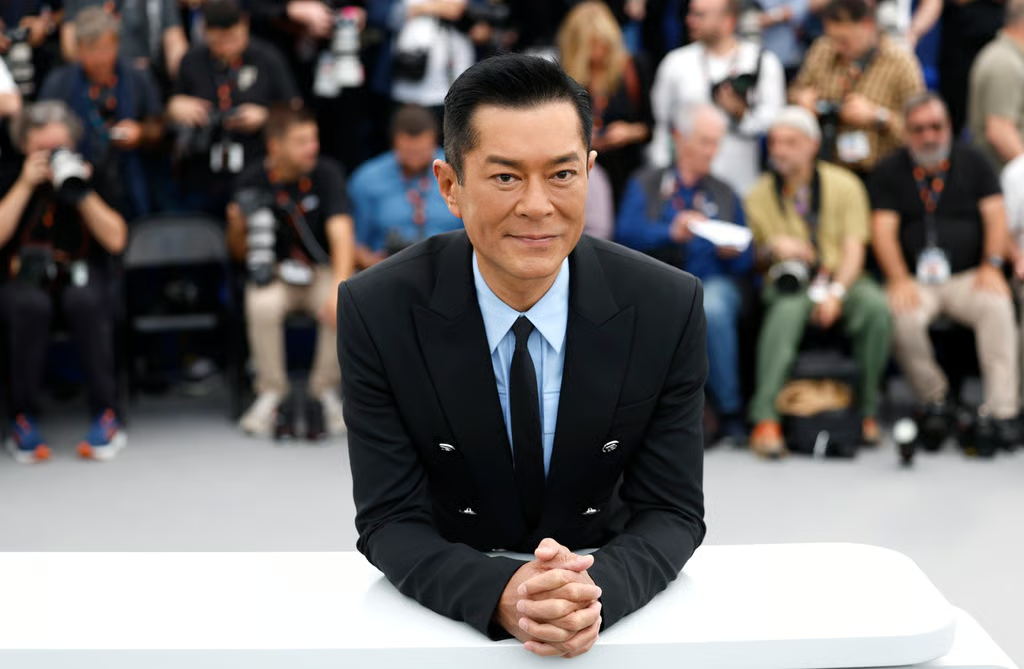
(Photo Credit: EPA-EFE / SCMP)
The Hong Kong entertainment scene is entering a bold new era where fans can do more than just buy tickets, but also help finance major productions. This summer, a new stage play titled The Big Big Day, produced by film icon Louis Koo and starring award-winning actress Fish Liew, will serve as a flagship project for this community-driven funding model.
By allowing the public to contribute to production costs through tradeable digital tokens, the initiative shifts the financial landscape of the local arts. Traditionally, only large corporations held the power to back major shows, but this shift allows individual fans and smaller institutions to share in the risks and rewards of a production. This inclusive approach is designed to breathe fresh life into the sector, reducing the heavy upfront financial burden on creators while building a more loyal audience base.
Beyond ticket sales, the project introduces “tokenized experiences” to add value for supporters. By purchasing digital tokens, investors may gain access to exclusive perks, such as backstage tours and special event access, which helps promote Hong Kong’s broader “mega-events” strategy. Industry leaders believe this model could eventually expand to include long-term investments in singers, actors, and television series. By inviting consumers to participate in the investment phase, Hong Kong is transforming the entertainment experience from a simple purchase into a deeper, collaborative partnership between artists and their fans.
(4) New spy thriller “Black Silk” signals deeper China-Russia film collaboration
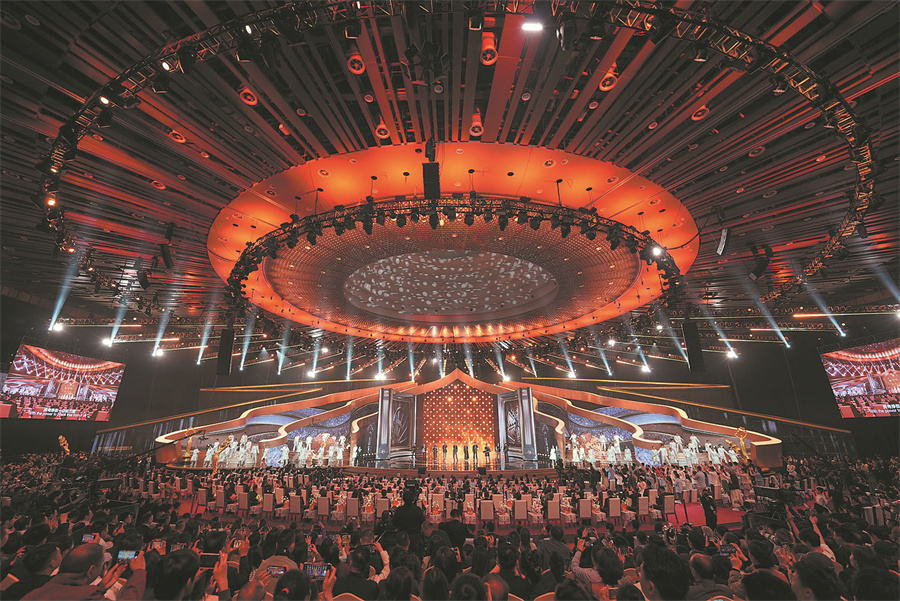
这是4月16日拍摄的第十六届北京国际电影节开幕式现场。
4月16日,第十六届北京国际电影节在北京雁栖湖国际会展中心开幕。
新华社记者 谢晗 摄
(Photo Credit: Xie He / Xinhua)
On the outskirts of Moscow, the production of the spy thriller Black Silk is signaling a transformative era for international film cooperation. This ambitious project follows a 2025 strategic agreement between China and Russia, which established a long-term roadmap for joint productions through 2030. Russian officials have praised the partnership, noting that such large-scale cultural synergy was nearly “unimaginable” just a decade ago.
The film serves as a sequel to the 2025 hit Red Silk, which became the highest-grossing Russian film of all time at China’s foreign box office. Set in 1930s Shanghai, Black Silk centers on a mysterious cargo search amidst a backdrop of international intrigue. To capture the intensity of the era, the production features an international cast and sophisticated technical sets, including a massive hydraulic ship designed to simulate storms at sea.
Beyond the technical spectacles, the project emphasizes shared historical narratives and mutual resilience. Screenwriters and actors alike describe the set as a hub for cultural exchange where different traditions learn from one another. By focusing on shared values and historical bonds, the filmmakers hope to resonate with modern audiences in both nations. Slated for a 2027 release, Black Silk is expected to broaden the global reach of this growing cinematic partnership while fostering deeper diplomatic and cultural dialogue.
News Source: https://www.chinadaily.com.cn/a/202605/12/WS6a0267caa310d6866eb48020.html
(5) From Westeros to HK: Aidan Gillen joins all-star cast in crime epic “Cold War 1994”

(Photo Credit: the Standard)
Aidan Gillen, the British veteran actor famous for his roles in Game of Thrones and Peaky Blinders, has officially entered the world of Asian cinema with his role in the crime epic Cold War 1994. The film serves as a prequel to the highly successful Hong Kong police thriller franchise. Gillen expressed that joining the project was an easy decision because he has long admired the work of legendary local directors like John Woo and Wong Kar-wai.
In the film, Gillen portrays F.M., a British intelligence operative navigating the complex political landscape of pre-1997 Hong Kong. He described his character as a manipulative yet charming figure, drawing comparisons to his own role in Game of Thrones as Petyr Baelish. To prepare for the part, Gillen studied the historical power shifts of the handover era and drew inspiration from the spy novels of John le Carré.
Reflecting on his time in Hong Kong, Gillen praised the professional and respectful atmosphere of the local film crew. He also enjoyed reuniting with co-star Daniel Wu, with whom he has crossed paths with previously while filming in Ireland. This project also marks a return to Gillen’s roots with Hong Kong legends, having previously trained with Jackie Chan’s stunt team for Shanghai Knights in 2003. Gillen expressed a strong desire to return for future projects, signaling that this debut is likely just the beginning of his work in the region.
(6) QQ Music Expands Global Reach With New AI Features and Licensing Deals

(Photo credit: QQ Music)
QQ Music, one of China’s largest music streaming platforms, is rolling out advanced AI features and cross-border licensing agreements to reshape the global streaming market. Unlike its Western competitors, the platform benefits from its deep integration into Tencent’s massive ecosystem. For example, when a user watches a short video on WeChat with an embedded song, the tap of a “listen to full track” button allows users to be redirected to the full track on the QQ music app.
Now, it is leveraging that social advantage to help US listeners discover Chinese and Asian genres more easily.
The platform’s latest updates include an AI recommendation engine that curates music based on the user’s mood and time of day, alongside a voice-search tool that identifies songs from humming. These technical upgrades coincide with new partnerships that bring more Western music to China while exporting Asian tracks to the international market, such as a recent partnership with US label Warner Music Group to explore live performance collaborations in China.
For investors, these moves offer a glimpse into the broader strategy of Tencent Music Entertainment. While the platform faces challenges regarding brand recognition and data privacy concerns in the US, its focus on social discovery provides a unique alternative to other streaming platforms such as Spotify and Apple Music. For fans of Mandopop and Cantopop, the platform offers a comparatively larger Chinese catalogue. For others, QQ Music offers niche music discovery tools that Western services often lack. As competition intensifies, QQ Music’s success abroad may demonstrate the global potential of China’s social-centric media models.
(7) Lin Heung Lau turns dim sum into Hong Kong’s newest party trend

(Photo Credit: Reuters)
Lin Heung Lau, a landmark teahouse that has served Hong Kong since the 1920s, is embracing an unconventional strategy to stay relevant: hosting “dim sum raves.” In a bid to capture the interest of Gen Z and millennials, the restaurant recently transformed its traditional dining room into a nightclub, complete with strobe lights, a disco ball, and a DJ spinning Cantonese electronic tracks. Attendees were served iconic delicacies like shrimp dumplings and siu mai alongside tea-infused alcoholic beverages, creating a unique cultural fusion that attracted partygoers from across the region.
The move comes at a critical time for Hong Kong’s culinary scene. The industry has struggled significantly since the pandemic, as tourism patterns shift and local residents travel to mainland China for more affordable dining options. In the first four months of the year alone, at least 14 established restaurants were reported to have closed. By tapping into global trends that combine food with nightlife and wellness, Lin Heung Lau hopes to leverage its century-old brand recognition to survive a challenging economic climate.
Despite recently relocating from its historic Central site, the restaurant’s management plans to make these themed raves a monthly occurrence. Chairman Rocky Wong expressed confidence that continuous innovation and improved service will help the brand stand out. By evolving from a traditional breakfast spot into a dynamic evening hub, the teahouse is attempting to bridge the generational gap and ensure its survival in a rapidly changing market.
News Source: https://www.reuters.com/world/asia-pacific/dim-sum-raves-aim-revive-hong-kongs-appeal-2026-05-11/
(8) Film-plus initiatives spur new consumption trends across Chinese cities

(Photo Credit: Bastille Post)
China is undergoing a strategic shift as the “film-plus” model reshapes how audiences interact with the big screen. Led by the China Film Administration, this nationwide initiative aims to move beyond simple ticket sales by integrating cinema outings with a broader range of lifestyle activities. In cities like Fuzhou, going to the movies has become the starting point for a long day of consumption, effectively linking the film industry with cultural products, retail, and tourism.
For businesses, this model creates a symbiotic relationship between silver screens and shopping malls. Through new “cross-marketing” programs, consumers can exchange shopping loyalty points for movie tickets or use their daily ticket stubs to unlock exclusive discounts at dozens of restaurants and retail outlets. Industry experts describe this as the “all-around radiation capacity” of film, where a movie acts as a central intellectual property that empowers an entire commercial district.
Cinema managers are now viewing their venues as comprehensive experience spaces rather than mere screening rooms. By upgrading service quality and collaborating with neighboring merchants, theaters are successfully boosting local popularity and driving urban economic growth. As films continue to connect diverse sectors like catering and leisure, China is setting a new standard for a full-industry-chain approach to entertainment, ensuring that the influence of a blockbuster extends far beyond the closing credits.
News Source: https://www.bastillepost.com/global/article/5848537-film-plus-initiatives-spur-new-consumption-trends-across-chinese-cities
(9) China’s first film music museum opens on Gulangyu Island
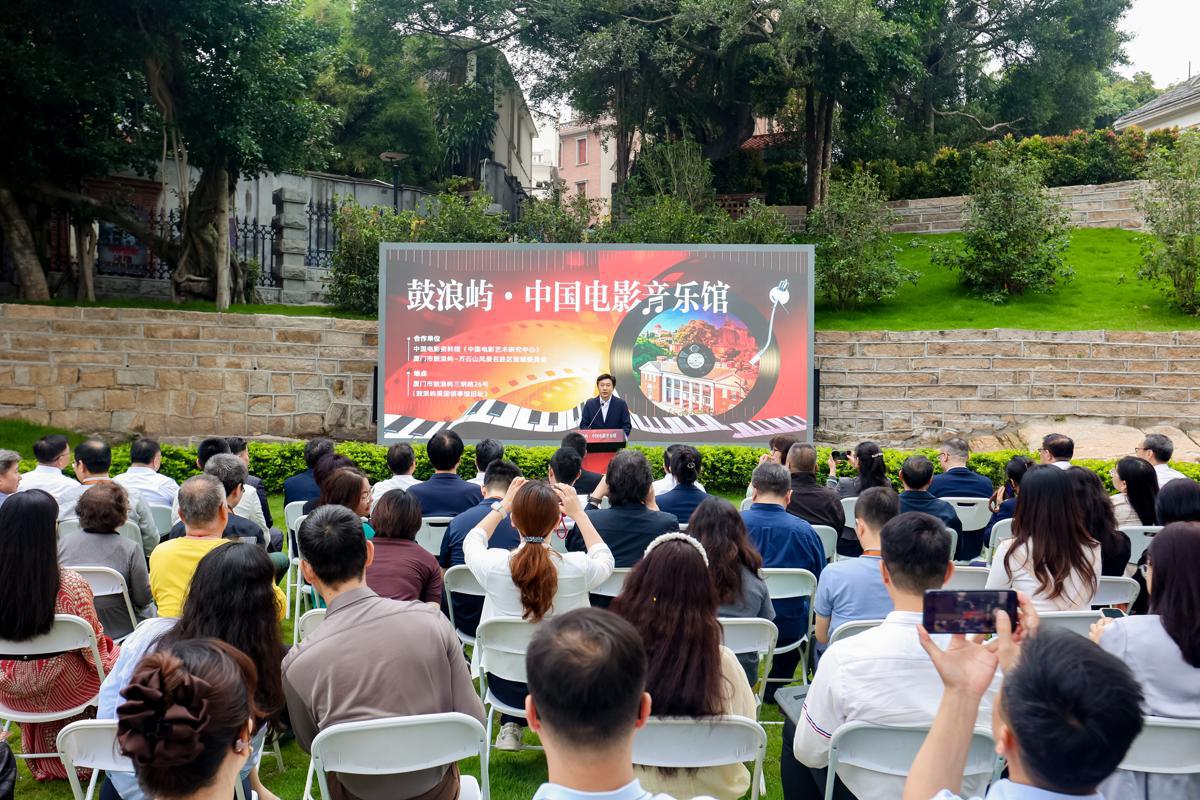
(Photo Credit: Chinadaily)
China’s first museum devoted to film music has opened on Gulangyu, the historic island in Xiamen, marking a new effort to preserve and showcase the country’s cinematic sound heritage. The China Film Music Exhibition Hall began operations last Friday inside the former United States consulate, a landmark built in 1929 and part of Gulangyu’s UNESCO World Heritage site. Developed by the Gulangyu Scenic Area Administrative Committee and the China Film Archive, the venue brings together a century of Chinese film music on an island long known for its musical culture.
Spread across 16 exhibition spaces, the hall traces the development of Chinese film scores through more than 100 well known works from different eras. The collection includes the song that will later become China’s national anthem, which was first introduced as a film’s theme song, along with other melodies that reached wider international audiences through cinema.
The venue combines archival material with interactive features designed to draw in visitors. Retro style handsets allow guests to listen to classic pieces, while an artificial intelligence station produces personalised film scores in seconds by combining material from classic movie clips.
Organisers said regular screenings will also be held, with the aim of connecting historic film music resources more closely to the public and giving visitors a more accessible way to engage with China’s screen history.
News Source: https://www.chinadaily.com.cn/a/202605/09/WS69fe9521a310d6866eb47a95_1.html
(10) Dennis To’s ‘Ip Man: Kung Fu Legend’ Sells Wide Ahead of Cannes Film Market

(Photo Credit: All Rights Entertainment)
Hong Kong films sale agent All Rights Entertainment has finalized a series of major territorial sales for the martial arts sequel Ip Man: Kung Fu Legend just as the Cannes Film Market begins. American film distributor Well Go USA, serving as both co-producer and distributor, has scheduled the North American theatrical release for July 14. Additional key markets secured include German-speaking regions, Italy, the UK, Latin America, India, and the Middle East. Negotiations are also reportedly in the final stages for distribution across France and French-speaking Africa.
The film marks the return of director Li Liming and star Dennis To. To, who trained under Ip Man’s son, has portrayed the legendary Wing Chun master in several previous projects, including The Legend Is Born. The ensemble cast is bolstered by genre veterans such as Zhou Xiaofei, known for her roles in The Grandmaster and Ip Man 4, and Steven Dasz. Action sequences were choreographed by Sun Fei, whose extensive credits include The Banquet and Ip Man: Kung Fu Master.
While the original Ip Man tetralogy starring Donnie Yen transformed the character into a global icon, this spinoff series focuses on a more traditionalist portrayal of a younger Ip Man. Market screenings for the newly completed English-language version were scheduled for 13 May 2026 and 14 May 2026 in Cannes. The continued expansion of this spinoff franchise highlights the enduring global appetite for the Ip Man legacy and high-quality Wing Chun cinema.
News Source: https://variety.com/2026/film/markets-festivals/dennis-to-ip-man-kung-fu-legend-sales-cannes-film-market-1236744426/
(11) “Melania” and “Rush Hour” Director Brett Ratner returns to China with Trump Delegation to prepare fourth film
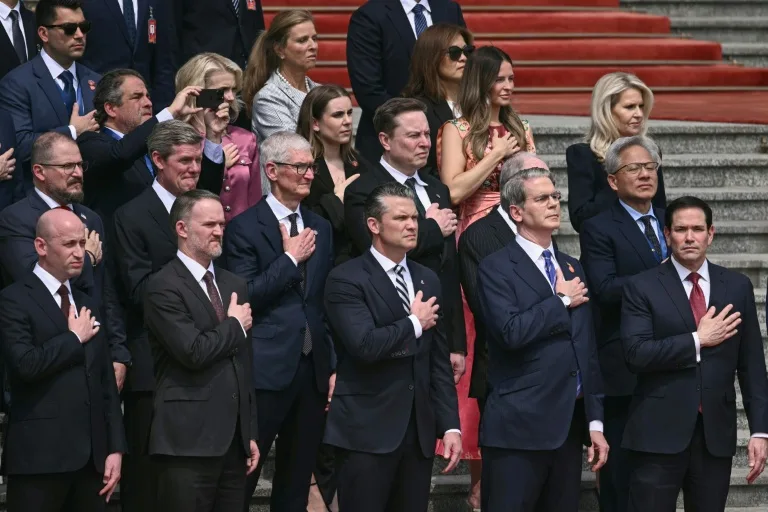
(Photo Credit: AFP)
The recent US state visit to China marked a major turning point for the movie business, as Rush Hour director Brett Ratner joined the high-level delegation to scout filming locations in China. Seeing a Hollywood filmmaker alongside tech giants like Elon Musk and Tim Cook highlights how important movies have become to the relationship between the two nations. For China’s film industry, this visit is a breakthrough, suggesting a return to the large-scale, international partnerships that have been rare for years.
The trip indicates that Rush Hour 4 is officially moving forward, with plans to film most of the movie in China. This is a massive win for local production crews and distributors, as it brings in significant foreign investment and allows Chinese studios to showcase their skills to a global audience. The Rush Hour series, which famously made Jackie Chan into a mainstream Hollywood icon, remains a vital link between audiences of the East and West. By coordinating these plans during a presidential visit, Ratner has matched Hollywood’s business goals with China’s desire for world-class content.
Beyond just action movies, the trip points to a new trend of “diplomatic filmmaking.” With Ratner potentially filming scenes for future documentaries about the visit, the line between entertainment and high-level public relations is starting to blur. For China’s entertainment sector, this suggests that the next generation of “mega-projects” will require both creative talent and careful political timing. This strategy ensures that the world’s two largest film markets stay closely connected through shared goals and global distribution.
News Source: https://www.scmp.com/news/china/diplomacy/article/3353296/melania-rush-hour-director-returns-china-trumps-delegation
(12) Hollywood taking notes from China’s micro-drama playbook

(Photo Credit: China Daily)
The global influence of Chinese entertainment is reaching a new peak as the US film and television industry races to replicate the success of vertical-screen micro-dramas. Once considered a niche format, these short-form series have exploded into a mainstream American phenomenon. Industry data reveals that major Chinese-backed vertical drama apps such as “ReelShort” and “DramaBox” recorded a combined 97 million downloads in the United States, with total in-app purchase revenue jumping to $966 million in 2025.
Matt William Knowles, a Beijing Film Academy alumnus and a leading face of the U.S. boom, notes that the speed of this growth has been surreal, with audiences ranging from casual viewers to blue-collar workers on construction sites. American viewers are now spending more daily time on these apps, averaging 35.7 minutes more than they do on mobile versions of traditional streaming platforms such as Netflix or Disney+.
This trend represents a significant shift in international media dynamics. For decades, the flow of expertise typically moved from Hollywood to China. However, the commercial dominance of the vertical format has reversed this flow. Backed by impressive market data, American producers are now eager to decode the “Chinese playbook” to understand how to monetize and produce content specifically for smartphone consumption.
As Hollywood professionals study Chinese business models, the industry is seeing a wave of “China-inspired” content designed for Western viewers. This cross-cultural exchange suggests that the future of global digital entertainment will be heavily influenced by Chinese innovation, ensuring that the vertical screen remains a dominant force in the international market.
News Source: https://www.bastillepost.com/global/article/5851799-hollywood-taking-notes-from-chinas-micro-drama-playbook-u-s-actor