China Media and Entertainment Weekly News Bulletin – ISSUE 104 Week of 8 June 2026
(1) Hong Kong’s iconic live music club The Wanch returns after refurbishment
The Wanch has reopened in Wan Chai after a major renovation, combining upgraded acoustics, a new gastropub menu and expanded drinks offerings. As grassroots venues grow scarcer in Hong Kong, the long running livehouse aims to strengthen its role as a vital stage for local musicians and community driven music events.
(2) China Nan Xin’s Film Workshops Highlight Struggles Facing China’s Indie Directors
In Henan’s Lingbao, indie director Nan Xin is training young filmmakers through low cost workshops while navigating China’s strict censorship system. Although technology has made filmmaking more accessible, independent creators still face major barriers, with official approval rules limiting what can be shown at home or even submitted abroad.
(3) Bowie Wu, also known as Wu Fung, the 94-year-old veteran Hong Kong actor, singer and director, sets Guinness World Record at star-studded concert
At 94, Bowie Wu Fung has made history as the oldest Chinese artist to stage a solo concert, delivering a nearly five-hour show at the Hong Kong Coliseum. Backed by stars including Andy Lau, Jacky Cheung and Eason Chan, the performance became a moving tribute to Hong Kong entertainment across generations.
(4) Universal Music Greater China acquires Carrier Creative catalog, home to ‘golden-era’ Mandopop recordings by Little Tigers and Johnny Chiang
Universal Music Greater China has made its first regional catalog acquisition by securing the recorded music rights to Carrier Creative’s classic Mandopop repertoire. The deal brings major 1980s and 1990s releases under its control, as the company expands in a fast-growing Chinese music market and deepens its push into legacy content.
(5) HK singer Tyson Yoshi sued over HK$640,000 concert box set dispute
Hong Kong singer songwriter Tyson Yoshi is facing a contract dispute over concert merchandise, after a production company filed a civil claim seeking about HK$640,000 in damages. The case centres on an alleged failed deal for custom Blu ray and DVD box sets tied to his 2025 Kai Tak Arena shows.
(6) Hong Kong indie music hub The Aftermath rallies for support to keep its lights on
Hong Kong livehouse The Aftermath is fighting to survive as rent pressures and Covid era debt threaten its future. Long a key grassroots venue for indie music, comedy and spoken word in Central, it now reflects the wider struggle of the city’s shrinking independent arts scene.
(7) UMG Deepens Asia Strategy with Chinese pop star Jason Zhang Partnership and Thailand Investment
Universal Music Group has expanded further in Asia through a major partnership with Mandopop star Jason Zhang and a minority investment in Thailand’s Solution One. The twin deals strengthen its regional strategy by combining star power in Greater China with a deeper foothold in one of Southeast Asia’s fastest growing music markets.
(8) Why international music acts are choosing Shenzhen over Hong Kong
Shenzhen is emerging as a serious live music rival to Hong Kong, with more international touring acts crossing the border as venues, costs and logistics become increasingly attractive. While Hong Kong retains strengths in profile and production quality, Shenzhen’s rise is broadening options for artists and giving regional audiences greater access to live shows.
(9) Theatre director Tang Shu-Wing re-packages classics Shakespearean literature, featuring Cantonese renditions of several plays
Tang Shu-Wing is set to host the second Hong Kong Shakespeare Festival in June, featuring a Cantonese adaptation of the play Othello starring TVB actress Mandy Wong and a story of Hamlet’s Ophelia. The festival will also include award-winning dance and theatre troupes from across the world, including Hong Kong, Guangzhou, Tibet and more, presenting nine unique adaptations of Shakespeare’s works.
(10) Has a diplomatic feud prompted China to press pause on Japanese film and music?
Rising tensions between Beijing and Tokyo appear to be spilling into the arts, with Japanese films, music and books facing growing obstacles in China. Though no formal cultural ban has been announced, festival omissions, cancelled performances and publishing delays suggest an unofficial boycott may already be taking shape.
(11) How Hong Kong’s wuxia drama ‘princess’ Michelle Yim has kept her star shining for 55 years
Michelle Yim, known to generations of audiences as Mai Suet, is marking 55 years in entertainment with the same warmth and staying power that have defined her career. From her breakthrough as Huang Rong to acclaimed later roles and public advocacy, the 70-year-old remains one of Hong Kong’s most enduring and admired stars.
(12) The British singer, Jessie J, is now cancer-free, returns to stage for ‘Singer’ in China: “I exhaled for the first time in a year”
The British singer,Jessie J, has revealed she is now cancer free, sharing the news after a year of treatment and uncertainty, surgery and uncertainty. The singer makes an emotional return to China’s hit TV competition Singer, where her comeback performances have added a note of resilience, relief and renewed gratitude.
(13) Shanghai Internet Audio and Video Creators Conference – AI will be “good help”, but not a “replacement”
The third Shanghai Internet Audio and Video Creators Conference gathers both well-established and aspiring filmmakers all over China to discuss the innovation of artificial intelligence and how it is reshaping content creation. The underlying notion of the conference celebrates the usefulness of Artificial Intelligence as an assistant, however reminds people of the irreplaceable nature of human emotions and experiences.
(1) Hong Kong’s iconic live music club The Wanch returns after refurbishment
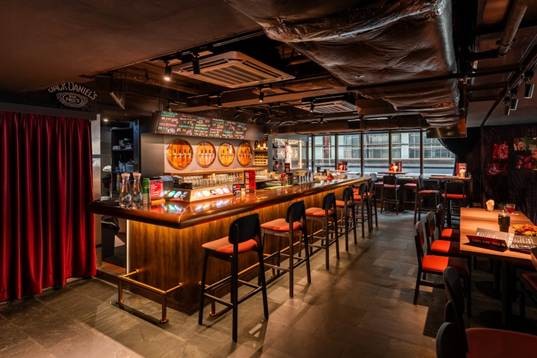
(Photo Credit: The Standard)
The Wanch, a definitive anchor of Hong Kong’s live music scene since 1987, has officially reopened its doors following an extensive renovation. Located in the bustling entertainment district of Wan Chai, the legendary independent livehouse has upgraded its facilities to protect its legacy while future-proofing the space for a changing cultural market.
At the center of the venue’s overhaul is a brand-new, state-of-the-art acoustics layout. Spearheaded by local musician and booking agent Paul MacLean, the advanced sound system delivers enhanced, balanced audio across the entire room. Beyond the stage upgrades, the venue has transitioned into a full-scale gastropub. A completely redesigned kitchen menu now offers premium comfort foods, including sharing platters, fillet steaks, and late-night dining options. To elevate its beverage selection, the establishment partnered with local independent craft brewers Yardley Brothers, introducing a rare, traditional hand-pumped real ale system to patrons.
The strategic renovation aims to preserve a crucial platform for homegrown talent at a time when grassroots independent stages are facing severe scarcity in the territory. Moving forward, the club will maintain its robust community-led programming, which includes open-mic nights, student showcase initiatives, and weekly genre jams. Management also confirmed the upcoming return of the iconic H2 Festival, a free, week-long summer celebration that showcases dozens of rising and established local alternative acts.
News Source: https://www.thestandard.com.hk/screen-and-music/article/334257/Hong-Kongs-iconic-live-music-club-The-Wanch-returns-after-refurbishment
(2) China Nan Xin’s Film Workshops Highlight Struggles Facing China’s Indie Directors
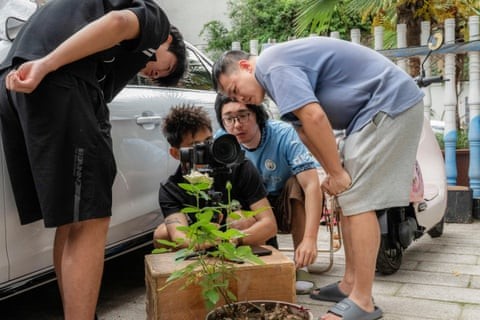
(Photo Credit: Gilles Sabrié/The Guardian)
In the small city of Lingbao, located in central China’s Henan province, self-taught indie director Nan Xin runs grueling ten-day workshops to offer aspiring artists affordable, hands-on cinema training. Nan achieved critical success with his low-budget 2022 feature Go Fishing. However, the film remains legally unreleased at home because authorities denied it a domestic screening permit, claiming the story failed to align with core socialist values.
To exhibit any motion picture legally in mainland China, production houses must obtain an official distribution certificate administered by the China Film Administration. This permit is widely known in the industry as the longbiao, or the “dragon seal.” Under strict national media legislation, filmmakers must secure this state approval before screening a project domestically or even submitting it to international film festivals. This framework has placed tight creative constraints on independent storytellers, filtering out sociopolitical critiques.
Despite these regulatory boundaries, modern technological accessibility allows students to continue shooting short films on portable devices. Many young creators sidestep systemic scrutiny by purposefully narrowing their creative focus. Rather than examining complex societal issues, they produce lighthearted stories revolving around family, romance, or isolated personal dynamics. While these minor productions face less initial government pushback, seasoned industry veterans emphasize that the moment these student directors transition from short-form exercises to professional feature-length features, state censorship becomes an inevitable creative nightmare.
News Source: https://www.theguardian.com/world/2026/jun/07/china-independent-cinema-filmmakers-censorship
(3) Bowie Wu, also known as Wu Fung, the 94-year-old veteran Hong Kong actor, singer and director, sets Guinness World Record at star-studded concert
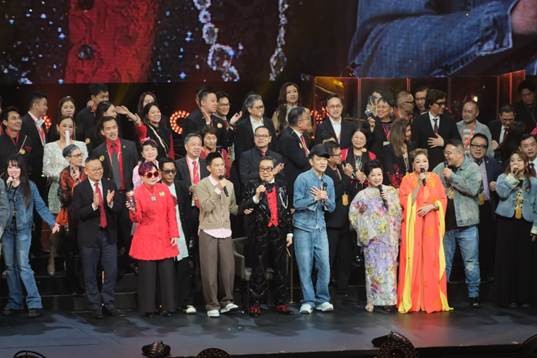
(Illustration Credit: The Standard)
Veteran Hong Kong actor and singer Bowie Wu Fung achieved a historic milestone at the Hong Kong Coliseum by successfully staging a grueling, nearly five-hour anniversary performance. At 94 years old, Wu officially became the oldest Chinese artist to ever hold a solo concert, an achievement formally verified by Guinness World Records.
Titled the Bowie Wu 95 Supreme Infinite Charm Concert, the milestone event transformed the iconic coliseum into a massive, multi-generational celebration of Hong Kong’s entertainment history. The performance drew an exceptional lineup of high-profile surprise guests from across the industry. Cantopop legends Jacky Cheung Hok-yau, Eason Chan Yick-shun, and Andy Lau Tak-wah all took the stage to support the veteran entertainer. The evening included a series of rare cross-generational collaborations, including lighthearted banter and special live duet performances with stars Karen Mok and Chan.
The concert reached its emotional peak when Andy Lau presented Wu with flowers and helped support the visibly fatigued star mid-show. The mood quickly shifted into playful nostalgia as Lau and actor Nick Cheung Ka-fai exchanged comedic banter about Lau’s signature track “Forget Love Potion.” The historic evening concluded with Wu’s great-grandchildren presenting him with flowers on stage, followed by an all-cast mass singalong of the classic track “Friends.” .
(Photo Credit: MBW)
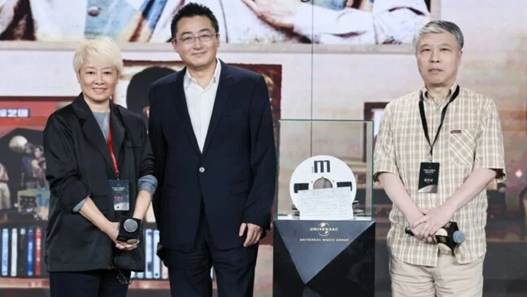
Universal Music Greater China has officially acquired the recorded music rights to the historic Carrier Creative catalog, marking the entertainment giant’s very first catalog acquisition within the region. Announced at UMGC’s inaugural China Summit in Beijing, the landmark deal secures a vast collection of definitive 1980s and 1990s Mandopop. The portfolio features foundational youth pop recordings from legendary male idol group Little Tigers, acclaimed singer-songwriter Johnny Chiang, and prominent solo acts like Nicky Wu and Alec Su.
The acquisition builds upon a successful restoration partnership launched in 2025 between Universal and Taiwan-based music manager Skyhigh Entertainment. Through this collaboration, technicians successfully remastered over 600 classic recordings and 66 original albums to relaunch them across modern digital streaming platforms like Spotify, Apple Music, and QQ Music. Shirley Miao, the founder of Carrier Creative, formally handed over the portfolio, expressing confidence that Universal would preserve the identity and legacy of the tracks.
The transaction arrives during an aggressive market expansion phase for the major music group, led by regional Chairman and CEO Timothy Xu. Driven by a surge in digital consumption, China officially overtook Germany to become the world’s fourth-largest recorded music market, boasting an impressive 20.1% year-over-year revenue growth rate. To capitalizes on this momentum, UMGC has steadily scaled its localized M&A strategy. Alongside the legacy catalog buyout, executives highlighted their frontline roster growth by announcing a major international signing with contemporary Chinese pop superstar Jason Zhang.
(5) HK singer Tyson Yoshi sued over HK$640,000 concert box set dispute
(Photo Credit: Londoner Macau)
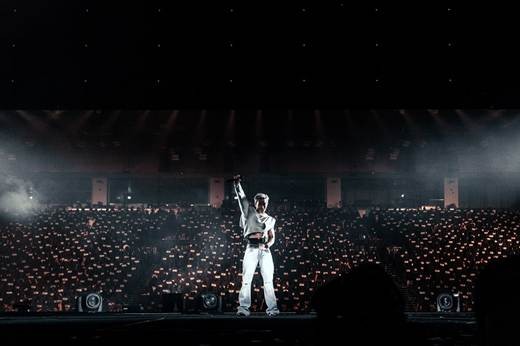
Hong Kong independent singer and songwriter Tyson Yoshi is facing legal action over a merchandise manufacturing dispute. Arturistic (International) Limited filed a civil writ in the District Court on 8 June 2026, accusing the artist and his affiliated agencies of breaching a contract. The production company is seeking total damages of approximately HK$640,000 to cover unpaid design fees, manufacturing costs, and accumulated warehouse storage expenses.
According to court filings, the dispute stems from a verbal and written agreement reached between late 2024 and early 2026 for a premium, custom-designed Blu-ray and DVD box set. The collectible merchandise was intended to commemorate Tyson’s high-profile two-night concert series, The Villain Live in Hong Kong, which took place at the newly opened Kai Tak Arena in July 2025. The plaintiff alleges that the defendants, including Tyson’s management firm Just Kidding Limited and Cart Cart Cart Limited, committed to purchasing 1,000 finished units for roughly HK$641,000.
The lawsuit states that after sample units were delivered for fan pre-sales in January, the complete production run was completed and placed in storage. However, the plaintiff claims that the singer’s team repeatedly declined to take delivery of the items, ultimately attempting to terminate the contract and refusing to clear the final invoices. As independent artists increasingly rely on physical media and high-end collectibles for revenue generation, this litigation highlights the legal risks surrounding fast-moving entertainment merchandise partnerships.
News Source: https://www.dimsumdaily.hk/hk-singer-tyson-yoshi-sued-over-hk640000-concert-box-set-dispute/#google_vignette
(6) Hong Kong indie music hub The Aftermath rallies for support to keep its lights on

(Photo Credit: The Aftermath)
For nearly eight years, descending the dark staircase beneath the blue neon sign at 57-59 Wyndham Street has meant entering an entirely different Central. Founded by Alicia Beale and Kyle Haynes in late 2018, The Aftermath has stood as a defiant, grassroots alternative to the commercialized corporate clubs nearby, offering a crucial stage for indie rock bands, stand-up comedians, spoken word artists, and community theater.
Now, the basement livehouse is in a critical fight for its life. The venue’s financial strain escalated sharply at the end of the financial year during lease renegotiations. While the landlady, recognizing the venue’s integrity as a local passion project, granted a “very reasonable” rental reduction for the upcoming term, the grace period depends entirely on the venue honoring a strict repayment schedule for significant back-rent accrued during the COVID-19 pandemic. Central rent accounts for over half of the venue’s monthly operating costs, leaving no margin for error as the repayment deadlines loom.
The venue’s struggle is painfully familiar to the local creative arts community. The Hong Kong indie scene is still recovering from the historical regulatory crackdowns that closed Hidden Agenda (and its successor This Town Needs) in 2020, compounded by the recent demolition of the mid-sized performance space Music Zone at KITEC. With local promoters running out of physical locations, remaining institutions are pivoting to highly creative business models, including MOM Livehouse in North Point and The Wanch in Wanchai.
(7) UMG Deepens Asia Strategy with Chinese pop star Jason Zhang Partnership and Thailand Investment
(Photo Credit: Getty Images)
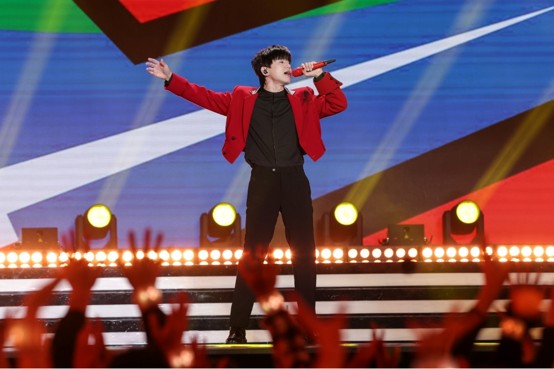
Universal Music Group has deepened its push across Asia with two new deals: in Greater China, Universal Music Greater China has signed Mandopop star Jason Zhang in a broad partnership covering recorded music, management, live performance and international development; in Thailand, the company has taken a significant minority stake in music distribution and publishing business Solution One. Together, the moves underline UMG’s strategy of pairing major established talent with fast-growing local music infrastructure.
Zhang, one of the biggest names in Chinese-language pop, brings a formidable commercial record to the agreement. Over a career spanning more than 20 years, he has released more than 17 albums and EPs, built a social media following of more than 100 million, and become the first Chinese artist to receive the American Music Awards’ International Artist Award. His recent 16-show sold-out run at Beijing’s Bird’s Nest, which drew more than one million fans, further highlighted his scale as a live performer.
The Thailand investment points to the same regional ambition from a different angle. Solution One, founded in 2001, has built a strong local business across distribution, publishing, production, licensing and artist development, with releases that perform strongly on YouTube and streaming services. With Thailand accounting for the largest recorded music market in Southeast Asia, the partnership gives UMG a stronger foothold in one of the region’s most important growth markets.
News Source: https://variety.com/2026/music/news/jason-zhang-universal-music-greater-china-1236766491/
(8) Why international music acts are choosing Shenzhen over Hong Kong

Shenzhen is fast emerging as an unlikely live music rival to Hong Kong, thanks to a growing number of ambitious livehouses drawing international touring acts across the border. Venues such as B10 Live, CH8 Livehouse and MAO Livehouse have recently hosted or booked respected overseas artists, from English indie rock band English Teacher and American post-rock bandTortoise to Canadian group Badbadnotgood and American rock band DIIV, prompting more performers to treat Shenzhen and Hong Kong as competing Greater Bay Area stops.
The appeal is largely practical. Promoters say Shenzhen offers more suitable venues, lower production costs and simpler logistics, especially for acts already touring multiple mainland cities on a single visa and efficient high-speed rail network. In contrast, Hong Kong’s shortage of mid-sized venues, higher accommodation and staging costs, and pricier work visas can make many shows harder to justify financially, particularly for mid-tier indie artists.
Yet Hong Kong still holds important advantages. Its production standards, reliability and international profile remain strong, and new venues such as Tides and Portal are helping plug longstanding gaps in the city’s live music ecosystem. For many artists, the decision is less about choosing one city over the other than about timing, audience positioning and tour strategy.
For fans, Shenzhen’s rise may be less a threat than a bonus. Easier cross-border travel means Hong Kong audiences now have access to a broader range of shows, making the region’s overall live music scene richer and more connected.
News Source: https://www.scmp.com/lifestyle/entertainment/article/3356440/why-international-music-acts-are-choosing-shenzhen-over-hong-kong
(Photo Credit: SCMP)
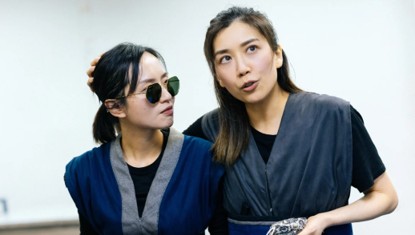
World-renowned theatre director and actor Tang Shu-Wing will be hosting the second Hong Kong Shakespeare Festival across the Hong Kong’s Cultural Centre and WestK venues from the 5th of June till the 21st of June. Audiences get the chance to appreciate renditions to traditional Shakespeare masterpieces including Othello, Macbeth, Hamlet, Romeo and Juliet and Twelfth Night.
The coming festival commences with Tang’s brand-new interpreted version of Othello. Similar to his 2009 reproduction of Shakespeare tragedy Titus Andronicus, Othello’s remake adopts a simplistic and minimalist approach featuring only four cast members, with TVB star Mandy Wong starring multiple characters.
Drawing inspiration from fragmented Chinese history of the arrival of Catholic missionaries and Black soldiers to ancient China, Othello sets its scene in the late Ming dynasty, meticulously guiding audiences through Tang’s “half-comedic, half-tragic” play.
“To be or not to be” is often the question confronted by modern-interpretations of Shakespeare plays. Kaczmarek, Polish director to Hamlet’s rendition, works entirely within the framework, including aspects of physical and puppet theatre. By stripping to play to its essential elements, the play presents Hamlet’s dilemma as a universal struggle with existence, cruelty, and human violence, making the audience confront the essence of Shakespeare’s soliloquy, in doing so, contemplating on the relationship of life and death.
While Tang admits that attracting HongKongers to works of a long dead English poet will be difficult, he believes that amid today’s “Shakespearean pop-culture renaissance” such as the accredited film Hamlet or Taylor Swift energetic lyrical nods to Ophelia, the timelessness of Shakespearean stories still hold a mirror to our world today, addressing human conditions under a modern lens.
(10) Has a diplomatic feud prompted China to press pause on Japanese film and music?

(Photo Credit: SCMP)
A worsening diplomatic rift between Beijing and Tokyo appears to be spilling into the cultural sphere, with signs of an unofficial boycott affecting Japanese films, music and books in China. While Beijing has already imposed formal restrictions on tourism and trade since tensions escalated in November, there has been no announced ban on cultural imports. Even so, recent developments suggest the arts are increasingly being caught in the fallout.
The clearest signal has come from the film industry. The Shanghai International Film Festival, opening this week, has no Japanese titles on its programme for the first time in two decades. The Beijing International Film Festival had already dropped Japanese films earlier this year, despite both events having maintained annual exchange programmes with Japan since 2006, even through earlier diplomatic disputes and the pandemic.
The apparent chill has spread beyond cinema. Reports say releases of Japanese films in China have been postponed, Japanese musicians have cancelled performances, and regulators have stopped approving new Chinese translations of Japanese books. Hong Kong has also been affected, with several Japanese acts cancelling appearances and one reported casting change involving a Japanese actor.
Analysts say cultural industries are often an early target in political disputes because they are highly visible and emotionally charged, yet economically less disruptive than trade or finance. Still, while such pressure may send a political message, it could also encourage foreign companies to reduce long term reliance on the Chinese market.
News Source: https://www.scmp.com/news/china/diplomacy/article/3356318/has-diplomatic-feud-prompted-china-press-pause-japanese-film-and-music
(11) How Hong Kong’s wuxia drama ‘princess’ Michelle Yim has kept her star shining for 55 years

(Photo Credit: TVB)
Michelle Yim, better known as Mai Suet, remains one of Hong Kong entertainment’s most durable and beloved figures, and at 70 she is still evolving. As she prepares for her June concert marking 55 years in show business, she projects the same warmth and approachability that have defined a career spanning television, film, theatre and music.
Her rise began almost by accident when her mother enrolled her in an acting programme in the late 1960s. After joining Commercial Television, Yim became a household name in 1976 through her breakthrough role as Huang Rong in The Legend of the Condor Heroes, a performance that helped make the series a regional hit and established her as one of Hong Kong’s great wuxia stars.
When network upheavals reshaped the television industry, Yim adapted with ease, moving across broadcasters and later working freelance. She continued to build her reputation through popular period dramas, stage productions and later television roles, including her award-winning turn as the scheming Yan Hung in Moonlight Resonance.
Off screen, Yim’s life has also been marked by resilience, loyalty and generosity. She maintained a close bond with her sister Shirley Yim, stood by partner Wan Chi-keung through his illness, and has used her public profile to support causes including cancer awareness and mental health. Her enduring appeal lies not just in longevity, but in grace, flexibility and heart.
News Source: https://www.scmp.com/lifestyle/entertainment/article/3355768/how-hong-kongs-wuxia-drama-princess-michelle-yim-has-kept-her-star-shining-55-years?module=top_story&pgtype=subsection
(12) The British singer, Jessie J, is now cancer-free, returns to stage for ‘Singer’ in China: “I exhaled for the first time in a year”

(Photo Credit: Press)
Jessie J has shared that she is now cancer-free, describing the news as a moment of immense relief after a year marked by fear, treatment and repeated medical procedures. The singer, who revealed last June that she had early breast cancer, underwent surgery soon after her diagnosis and later postponed a tour so she could have another operation.
She announced the update in an emotional Instagram post after a recent breast MRI and annual health check. Writing that the results showed she was cancer-free, Jessie said she cried for hours and felt as though she had exhaled properly for the first time in a year.
The announcement adds a joyful new chapter to what has been an intensely difficult period in her life. Over the past year, she has spoken openly about her diagnosis and treatment, giving fans a candid view of the uncertainty and physical toll that came with it. Her latest message was therefore received not just as a health update, but as a release of long-held tension.
Jessie has also returned to the spotlight with renewed energy. She recently reappeared on the hugely popular Chinese singing competition Singer, which she won in 2018, performing Frank Sinatra’s “My Way” and her own song “California” from her recent album Don’t Tease Me With A Good Time. Her comeback has carried a sense of gratitude, resilience and relief.
News Source: https://www.nme.com/news/music/jessie-j-is-now-cancer-free-returns-to-stage-for-singer-in-china-i-exhaled-for-the-first-time-in-a-year-3949556
(13) Shanghai Internet Audio and Video Creators Conference – AI will be “good help”, but not a “replacement”
(Photo Credit: ChinaDaily)
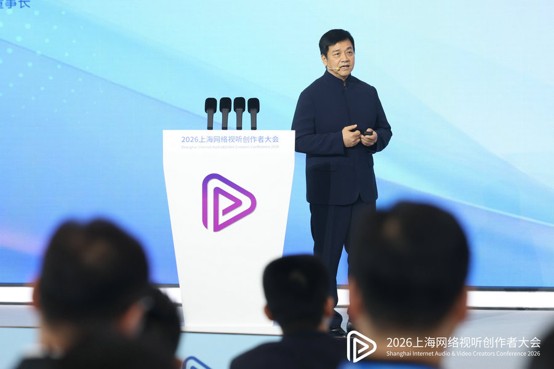
The third Shanghai Internet Audio and Video Creators Conference, hosted at Shanghai’s Yangpu district, brought together filmmakers, influencers and young innovators to discuss the role played by AI amongst content creation.
Keynote speaker Stanley Tong, director to Jackie Chan’s Rumble in the Bronx, shares the behind-the-scenes story of his AI-generated micro-drama, Feng Shui Tian Shi (The Feng Shui Master). Now in its third season, the series has become one of the most viewed AI-generated series, attracting more than 600 million views. Reflecting on the production process, Tong states that AI filmmaking presents unique challenges that would not otherwise be present in traditional production models.
While AI can be helpful with visualising stories and acting as a bridge prompting Chinese films to go abroad, Tong reminds people that as visual effects heavily rely on repeated randomized generation, final results are often difficult to control. Therefore, he believes that rather than further investment into AI applications within media, filmmakers and producers should focus on “writing quality scripts that truly resonates with audiences.
News Source: https://www.chinadaily.com.cn/a/202605/29/WS6a193f4da310d6866eb4b6ea.html